• Skip to primary navigation
  • Skip to main content
  • Skip to primary sidebar

Earth Wise

A look at our changing environment.

  • Home
  • About Earth Wise
  • Where to Listen
  • All Articles
  • Show Search
Hide Search
You are here: Home / Archives for meadows

meadows

Parks for bugs

May 27, 2025 By EarthWise Leave a Comment

Urban areas can have a variety of green spaces:  gardens, parks, and roadside and median plantings.  It turns out that these spaces can serve as pollinator refuges.

A study by researchers at the University of British Columbia found that reducing lawn mowing and creating pollinator meadows – essentially parks for bugs – significantly boosts pollinator diversity and creates healthier and more resilient ecosystems.

The 3-year study surveyed pollinators in 18 urban parks across the city of Vancouver.  It compared parks where meadows were planted and mowing was restricted with parks that were kept as standard turfgrass lawns.

Parks with meadows saw an immediate increase in pollinator species – from 21 to 47 more wild bee and hoverfly species – compared to parks without meadows.  These increases continued over the entire three-year study period.

The researchers identified more than 100 species of wild bees and hoverflies and 35 of them were only found in parks with meadows.

People think of urban landscapes as poor environments for biodiversity, but this study demonstrated that even relatively small changes can have significant impacts.  Even a patchwork of small habitats can allow species to move freely and settle into multiple areas quickly.

The researchers had advice for urban residents as well.  They suggest that people reduce mowing, plant native flowering shrubs and trees, create diverse habitats that incorporate a variety of plants that bloom at different times, avoid pesticide use, and leave natural nesting sites for pollinators.

Preserving pollinators is an important task and having a few parks for bugs can really help.

**********

Web Links

How ‘parks for bugs’ boost pollinators in Vancouver

Photo, posted September 19, 2011, courtesy of Eric Bridiers / U.S. Mission Geneva via Flickr.

Earth Wise is a production of WAMC Northeast Public Radio
Restoring Coastal Ecosystems | Earth Wise

February 1, 2021 By EarthWise Leave a Comment

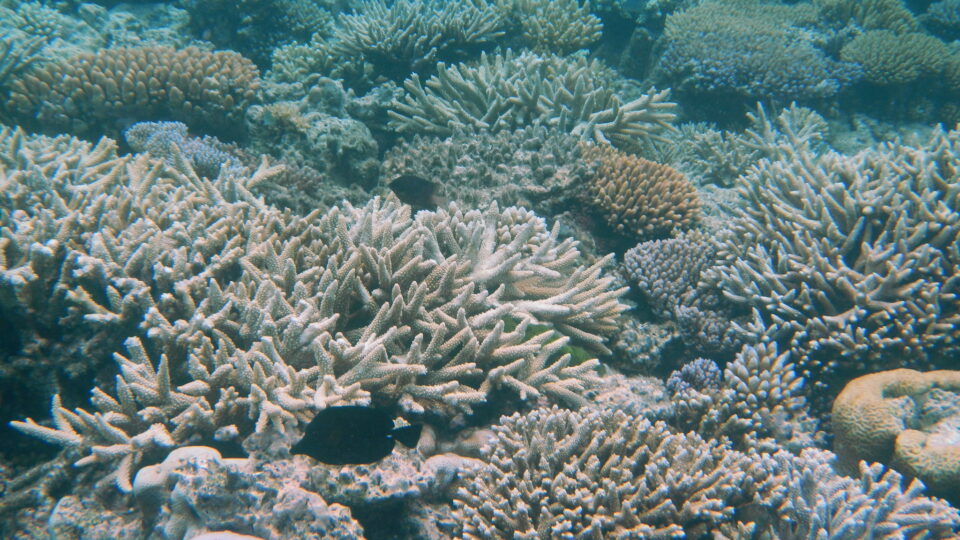
Developing hardier corals for endangered reefs that resist the effects of climate change

Research published by CSIRO, Australia’s national science agency, examined the positive effects of restoration efforts for coastal ecosystems in terms of biodiversity, local economies, and human wellbeing.

Coastal ecosystems include saltmarshes, mangroves, seagrasses, oyster reefs, kelp beds, and coral reefs.  All of these have suffered declines of up to 85% over recent decades.  The research identified a number of successful coastal and marine restoration projects in recent years that indicate the likelihood that such efforts could be expanded by as much as a factor of ten to support human health and wellbeing, boost the adaptation response to climate change, and generate jobs. 

Some of the successful efforts identified included projects in the Great Barrier Reef to harvest coral larvae to boost large-scale coral restoration efforts.   Simple changes to how saltmarshes are planted have resulted in doubled survivorship and biomass.  In the U.S., the propagation of seagrass seeds has resulted in seagrass meadows recovering in areas where they had been lost decades ago.  In Indonesia, recovery of reefs impacted by blast fishing has been achieved by placing rocks or other hard structures underwater to help with coral colonization.

Investing in coral restoration creates jobs and can be used as a strategy to boost economic recovery and coastal marine health.  Restoration of marine habitats like kelp forests and oyster reefs has improved commercial and recreational fishing.

The United Nations has recognized the importance of coastal restoration and has declared the Decade on Ecosystem Restoration to start from 2021.

**********

Web Links

Scientists shine light on ‘bright spots’ to restore coastal ecosystems

Photo, posted November 29, 2012, courtesy of Robert Linsdell via Flickr.

Earth Wise is a production of WAMC Northeast Public Radio.

Restoring Seagrass In Virginia | Earth Wise

December 10, 2020 By EarthWise Leave a Comment

Restoring seagrass in Virginia

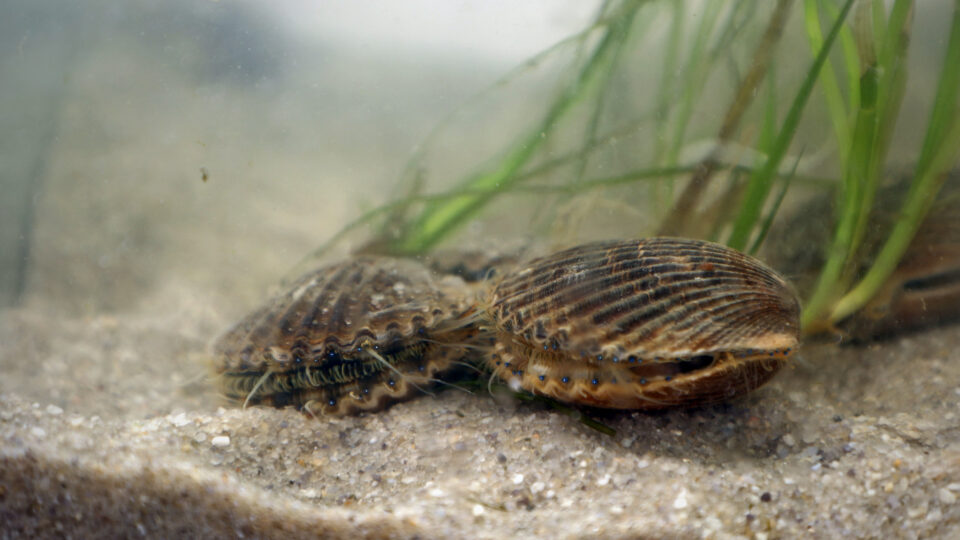
Seagrass is found in shallow waters in many parts of the world.  They are plants with roots, stems, and leaves, and produce flowers and seeds.  They can form dense underwater meadows that constitute some of the most productive ecosystems in the world.  Seagrasses provide shelter and food to a diverse community of animals including tiny invertebrates, fish, crabs, turtles, marine mammals and birds.

In the late 1920s, a pathogen began killing seagrasses off the coast of Virginia.  In 1933, a hurricane finished them off completely.  For nearly 70 years thereafter, the bay bottoms of the Virginia coast were muddy and barren, essentially devoid of fish, shellfish, mollusks and other creatures that inhabit seagrass meadows.  The local scallop industry was no more.

The largest seagrass restoration project ever attempted has changed all that.  During the past 21 years, scientists and volunteers have spread more than 70 million eelgrass seeds within four previously barren seaside lagoons.  This has spurred a natural propagation of meadows that have so for grown to almost 9,000 acres, the largest eelgrass habitat between North Carolina and Long Island Sound.

The long-term research conducted by the team from the University of Virginia shows that the success of the seagrass restoration project is improving water quality, substantially increasing the abundance of fish and shellfish in the bays, and capturing carbon from the water and atmosphere and storing it in the extensive root systems of the grasses and in the sediment below. 

The study shows that marine restorations are possible on scales that contribute directly to human well-being.

**********

Web Links

Some Good News: Seagrass Restored to Eastern Shore Bays is Flourishing

Photo, posted May 17, 2019, courtesy of Virginia Sea Grant via Flickr. Photo credit: Aileen Devlin | Virginia Sea Grant.

Earth Wise is a production of WAMC Northeast Public Radio.

Primary Sidebar

Recent Episodes

  • An uninsurable future
  • Clean energy and jobs
  • Insect declines in remote regions
  • Fossil fuel producing nations ignoring climate goals
  • Trouble for clownfishes

WAMC Northeast Public Radio

WAMC/Northeast Public Radio is a regional public radio network serving parts of seven northeastern states (more...)

Copyright © 2026 ·