• Skip to primary navigation
  • Skip to main content
  • Skip to primary sidebar

Earth Wise

A look at our changing environment.

  • Home
  • About Earth Wise
  • Where to Listen
  • All Articles
  • Show Search
Hide Search
You are here: Home / Archives for massive

massive

A giant plane for giant wind turbines

May 22, 2025 By EarthWise Leave a Comment

Wind turbines have been getting bigger all the time.  Larger turbines have real advantages.  They can operate at lower speeds so they can be deployed in more places.  They capture more wind, so they make more power.  Large wind turbines can have blades more than 200 feet long and even larger ones are on the way.  An offshore wind farm in China has turbines with 400-foot blades.

Giant wind turbines face a thorny problem:  getting the blades to where they are to be installed.  The enormous blades can’t be easily shipped across aging roads and bridges.   Tunnels are too narrow, bridges are too low, and roads can be too tight to allow turns when transporting these massive turbine parts.  Some developers have actually had to build special roads for wind projects.

For nearly a decade, a Boulder Colorado company called Radia has been working on what would be the world’s largest plane.  The WindRunner aircraft would have a dozen times the cargo volume of a Boeing 747.  The WindRunner will be 356 feet long and 79 feet tall.  While its primary purpose would be transporting wind turbine blades, the plane could also be used to aid the military or businesses that are thinking really big.  Product developers often don’t even try to invent really big things because there is no way to transport them.  Radia expects the WindRunner to be rolled out before the end of the decade.

The wind industry is currently facing strong opposition from the Trump administration, but wind energy is not going away and bigger and better wind turbines will ultimately be built and will have to be transported.

**********

Web Links

Building the World’s Biggest Plane to Help Catch the Wind

Photo, October 10, 2013, courtesy of Allan Der via Flickr.

Earth Wise is a production of WAMC Northeast Public Radio
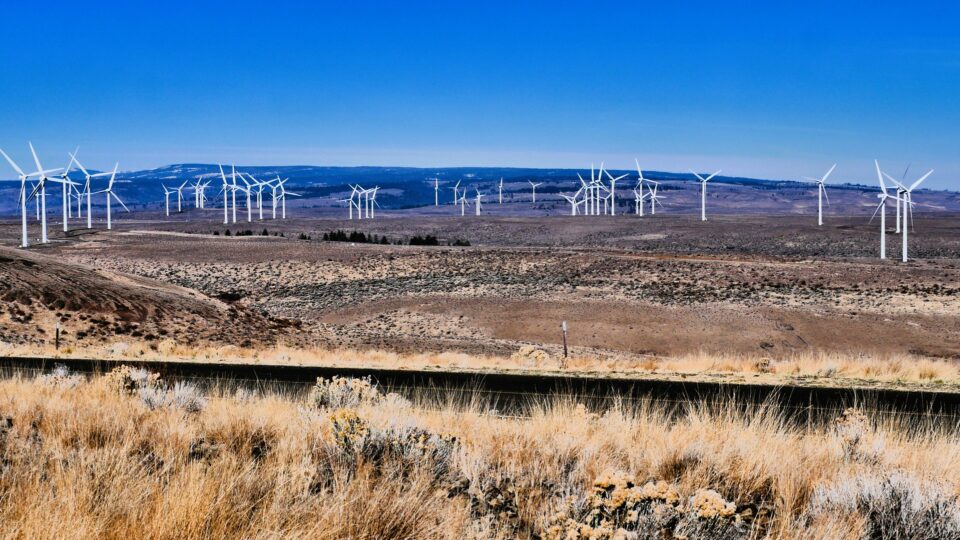
Renewables progress

November 5, 2024 By EarthWise Leave a Comment

Making progress on renewable power

According to a new report by the International Energy Agency, the world is on track to produce nearly half of the electricity it uses from renewable sources by the end of this decade.  The report also finds that in nearly every country, large wind and solar plants are the cheapest forms of new power.

Between now and 2030, countries will add more than 5,500 gigawatts of new renewable capacity.   That is as much as China, India, the U.S., and the EU combined have at present.  Most of the new capacity will come from solar power.

China is aggressively pursuing renewable power installations with massive solar and wind projects.  By 2030, China will account for nearly half of the world’s renewable power capacity.

This year’s UN Climate Change Conference, held in the United Arab Emirates, established the goal of tripling renewable energy capacity worldwide by 2030. 

The growth in solar power continues to outperform industry expert projections as manufacturing ramps up.  India and the U.S. are both expected to triple their solar manufacturing capacity by the end of this decade.  Manufacturing, largely based in China, is already outstripping demand.

By 2030, solar and wind power are expected to account for about 30% of global electricity generation, hydropower about 13%, and other renewables such as geothermal power about 5%.

These estimates are based on existing policies and market conditions.  Governments could speed up the shift to clean energy by cutting red tape and by making it cheaper for poorer countries to finance solar and wind projects.

**********

Web Links

Renewables 2024

Photo, posted November 23, 2023, courtesy of Rick Obst via Flickr.

Earth Wise is a production of WAMC Northeast Public Radio

Sequoias in Britain

April 16, 2024 By EarthWise Leave a Comment

Giant sequoias are the most massive trees on earth.  They can grow as tall as nearly 300 feet and have trunk diameters from 20 to 26 feet.  They are also among the oldest living organisms on Earth; some of them are well over 3,000 years old.  The trees are native to the western slopes of the Sierra Nevada mountain range in California.

Lengthy droughts and wildfires have been pushing giant sequoias in California into decline.  Up to 20% of all large giant sequoias in California died in wildfires in 2020 and 2021.  There are estimated to be only about 80,000 remaining in the native groves in the Sierra Nevada.  These old-growth forests are very much in jeopardy and represent rare ecosystems of considerable ecological and historical value.

Giant sequoias have been planted in many places around the world.  They were introduced to country estates in Britain during the 19th century.  They were seen as symbols of wealth and power.  Over time, they have been widely planted in parks and woodlands.   As a result, there are now half a million giant sequoias growing in Britain and they are thriving there.

The British sequoias are rather young by sequoia standards, so they are relatively squat in stature.  The tallest of them measures about 180 feet.  But recent research, published in the journal Royal Society Science, found that in Britain’s cool and mild climate, the trees are growing nearly as fast as they do in California. 

The British sequoias are probably more important for their aesthetic and historical interest than their impact on the environment, but it is good to know they are there.

**********

Web Links

Under Threat in Their Native California, Giant Sequoias Are Thriving in Britain

Photo, posted November 4, 2010, courtesy of John Buie via Flickr.

Earth Wise is a production of WAMC Northeast Public Radio

Phoenix Is Frying | Earth Wise

August 15, 2023 By EarthWise Leave a Comment

Phoenix heat wave

The mythical Phoenix is a bird that repeatedly dies in a fire of its own making.  During July, the five million inhabitants of greater Phoenix Arizona may have felt like they were reliving that myth as multiple temperature records were shattered in a massive heatwave.

On June 30, the high temperature in Phoenix was 110 degrees.  From then on, the daily highs were relentlessly at or above 110 degrees, topping out at 119 on July 20.  The previous record for consecutive days at or above 110 was 18 set in June 1974.  The streak continued all the way until July 31, when incoming desert monsoons resulted in the high temperature dropping to 107 degrees – ending the streak at 31 days.  Along the way, there were 16 days with temperatures at or above 115 degrees. 

During the month, there were 17 consecutive days when the lowest temperature in Phoenix was at least 90 degrees.  The previous record for that was 7 days, set in 2020.  Because of these lofty low temperatures, July was also the hottest month in terms of average temperature with a reading well above 102 degrees.  It was the first time that the average temperature has ever been in three digits.  The previous record was 99.1 degrees in 2020.

Phoenix is an extreme case, but it was not alone in having a hot July.  Globally, it was the hottest July on record that included major heat waves in the U.S., Mexico, China, southern Europe, and elsewhere.  The daily record for the hottest average temperature on Earth ever measured was also broken several times during the month.

**********

Web Links

Phoenix heat wave is shattering temperature records

Photo, posted September 22, 2022, courtesy of Flickr.

Earth Wise is a production of WAMC Northeast Public Radio

Forecasting A Massive Dead Zone

June 18, 2019 By EarthWise Leave a Comment

The Gulf of Mexico dead zone occurs every summer, and is considered one of the largest dead zones in the world.  This cyclical event occurs where the Mississippi River empties into the Gulf of Mexico, just off the coast of Louisiana and Texas. 

This annual dead zone is primarily caused by excess nutrient pollution from human activities, such as urbanization and agriculture, occurring throughout the Mississippi River watershed.  Washed off the land by spring rains, these excess nutrients stimulate an overgrowth of algae once they reach the Gulf of Mexico.  The algae in the Gulf eventually die, and then sink and decompose in the water. The resulting area of the ocean ends up with a condition known as hypoxia, which is an insufficient amount of oxygen to support most marine life.  In hypoxic or dead zones, animals that can’t swim away will often suffocate and die. 

Scientists from the National Oceanic and Atmospheric Administration estimate that this year the dead zone in the Gulf of Mexico will be approximately 8,000 square miles, which is roughly the size of Massachusetts.  The research team uses U.S. Geological Survey river flow and nutrient data to make its forecast. 

According to NOAA, the abnormally high amount of spring rainfall is a major factor contributing to this year’s dead zone.  Last month, nitrate loads entering the Mississippi River watershed were 18% above the long-term average, and phosphorus loads were about 49% above the long-term average. 

While the 2019 forecast is slightly less than the record size of more than 8,700 square miles set in 2017, it’s still much larger than the five year average size of 5,700. 

**********

Web Links

Very large dead zone forecast for the Gulf of Mexico

Massive 8,000-mile ‘dead zone’ could be one of the gulf’s largest

Photo, posted May 22, 2009, courtesy of Michael McCarthy via Flickr.

Earth Wise is a production of WAMC Northeast Public Radio.

A Giant Solar Power Plant In India

October 19, 2016 By WAMC WEB

https://earthwiseradio.org/wp-content/uploads/2016/10/EW-10-19-16-Giant-Solar-Power-Plant-In-India.mp3

In late September, the world’s largest solar power plant went online in the Indian state of Tamil Nadu.   It is a 648 MW array of solar panels that is spread across 2,500 acres in the town of Kamuthi and will supply enough energy to power 300,000 homes.

[Read more…] about A Giant Solar Power Plant In India

Primary Sidebar

Recent Episodes

  • An uninsurable future
  • Clean energy and jobs
  • Insect declines in remote regions
  • Fossil fuel producing nations ignoring climate goals
  • Trouble for clownfishes

WAMC Northeast Public Radio

WAMC/Northeast Public Radio is a regional public radio network serving parts of seven northeastern states (more...)

Copyright © 2026 ·