• Skip to primary navigation
  • Skip to main content
  • Skip to primary sidebar

Earth Wise

A look at our changing environment.

  • Home
  • About Earth Wise
  • Where to Listen
  • All Articles
  • Show Search
Hide Search
You are here: Home / Archives for lithium-ion

lithium-ion

The cost of electric vehicle batteries

April 4, 2025 By EarthWise Leave a Comment

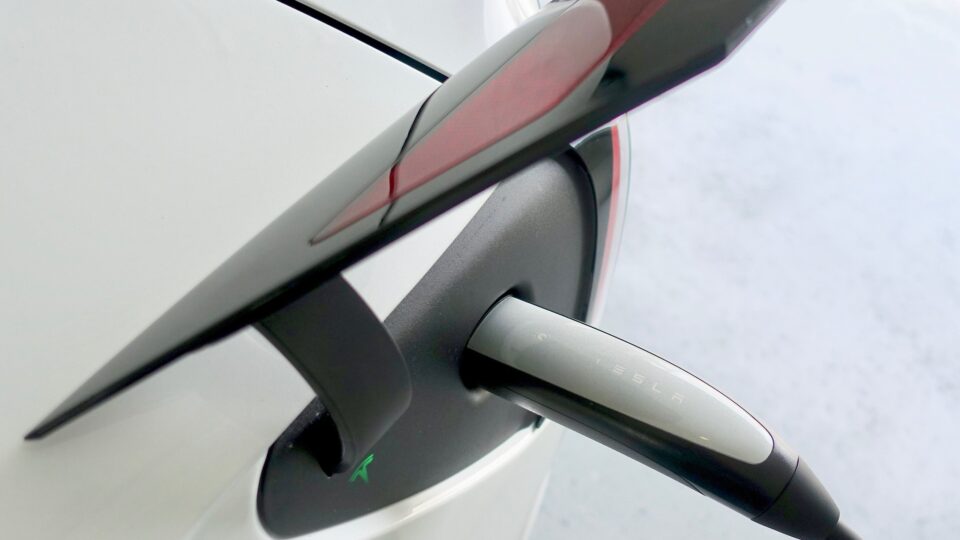
The battery pack in an electric car is the most expensive part of the car. Currently, it accounts for as much as 30% of the price.  But EV batteries last a long time.  Most are guaranteed for 8-10 years and are likely to last as long as 20 years.  In practice, only 1.5% of electric cars need battery replacements for one reason or another.

The economics of EV batteries has changed dramatically over time and will continue to do so.  EV battery capacity is measured in kWh, the units you are charged for your home electricity.  An EV with a 300-mile driving range will have a battery pack that holds something like 75 kWh.

In 2008, when electric cars were just starting to enter the market again after earlier false starts, lithium-ion battery packs cost $1,355 per kWh.  When the Tesla Model S was introduced in 2012, packs were about $800. By 2019, packs broke the $200 per kWh barrier. Last year, lithium-ion battery packs reached $115 per kWh.

A combination of technology improvements and strong market competition with growing supplies is driving prices ever lower.  Industry analysts expect battery prices to drop well below $100 this year and reach about $80 next year.

The result of all of this cost reduction is that EVs will be cheaper than equivalent internal combustion vehicles, which in fact is already the case in China. Apart from cost, batteries for cars continue to improve so that the driving range of EVs will continue to increase making the cars more attractive and very practical for nearly all drivers.

**********

Web Links

How Much Do Electric Car Batteries Cost to Replace?

Photo, posted January 22, 2019, courtesy of Steve Rainwater via Flickr.

Earth Wise is a production of WAMC Northeast Public Radio
Recycling lithium-ion batteries

March 28, 2025 By EarthWise Leave a Comment

Lithium-ion batteries are used to power computers and cellphones and, increasingly, vehicles.  The batteries contain lithium as well as various other valuable metals such as nickel, cobalt, copper, and manganese.  Like other batteries, lithium-ion batteries have a finite lifetime before they can no longer perform their intended function.

Recycling lithium-ion batteries to recover their critical metals is an alternative to mining those metals.  A recent study by Stanford University analyzed the environmental impact of obtaining those metals using lithium-ion battery recycling compared with mining.  They found that the recycling process is associated with less than half of the greenhouse gas emissions of conventional mining.  The process uses about one-fourth of the water and energy of mining new metals.  North America’s largest industrial-scale lithium-ion battery recycling facility is Redwood Materials, located in Nevada, which uses a clean energy mix that includes hydropower, geothermal, and solar power.

These calculated advantages are associated with recycling batteries that have been in use.  The advantages are even greater for recycling scrap:  defective material from battery manufacturers.

The advantages of recycling are dependent on the sources of electricity at the recycling plant and the availability of fresh water. 

At present, the U.S. recycles about half of its available lithium-ion batteries.  By comparison, 99% of lead-acid batteries (like those found in cars and trucks) have been recycled for decades.  As the supply of used lithium-ion batteries continues to increase, it is important for the availability of industrial-scale battery recycling to keep pace. 

**********

Web Links

Recycling lithium-ion batteries delivers significant environmental benefits

Photo, posted May 7, 2020, courtesy of Mark Vletter via Flickr.

Earth Wise is a production of WAMC Northeast Public Radio

The year in energy

February 5, 2025 By EarthWise Leave a Comment

Last year saw some major trends in the global energy sector. Perhaps the most dramatic was the shift to renewable power, which continued to outpace the projections of both financial analysts and industry experts.  2024 saw new highs in renewable installation, largely due to China, which accounted for more than half of all the solar power installed globally.  Huge solar installations also came online in California and Nevada during the year.  On the other hand, the amount of coal burning for the year also exceeded expert predictions, also largely due to China.

A second trend was increasing sales of electric vehicles, which reached a new high, although short of expectations.  A major driving force in EV sales is the dropping price of lithium-ion batteries, which fell by 20% in 2024.  Again, China was a major factor with roughly half of all its domestic vehicle sales being electric.

Coal’s decline is being slowed by the rising demand for electricity.  The increased use of electric heating and cooling along with the increasing use of EVs are major factors.  But the proliferation of energy-hungry data centers incorporating artificial intelligence capabilities is driving up the demand for power even more. 

Perhaps the clearest indication of the future for global energy comes from investors, who put about $2 trillion into clean energy last year.  That is twice as much as invested in oil, coal, and natural gas.

The history of energy has seen the Age of Coal and the Age of Oil.  By all indications, we are now heading into the Age of Electricity.

**********

Web Links

The Year in Energy in Four Charts

Photo, posted November 23, 2024, courtesy of Mussi Katz via Flickr.

Earth Wise is a production of WAMC Northeast Public Radio

Giant batteries in the Earth

December 23, 2024 By EarthWise 1 Comment

The wind and the sun are inexhaustible sources of energy, and we are tapping into them to produce electricity at a growing rate around the world.  But neither of them is always available when we need them.  When the sun isn’t shining and the wind isn’t blowing, they don’t work.

An opposite problem also exists.  When our energy needs are low, but it is sunny or windy, solar and wind power are all dressed up with nowhere to go.  Energy storage is the answer to both of these problems.   When there is excess generation, store the energy for later use.  When there is need for energy and not enough is being generated, tap into the energy that is stored.

Giant banks of lithium-ion batteries are the rapidly growing form of energy storage, and they are increasingly providing resilience in the electric grid.  But battery storage is short-term energy storage.  Even the largest battery banks can only provide a few hours of electricity. 

So, there is a real need for “long-duration energy storage” – systems that provide at least 10 hours of backup power and sometimes much more – for the grid to be fully reliable.

Pumped hydro storage, which uses water from elevated reservoirs to drive turbines, has been around for a long time.  Historically, this is the largest form of energy storage in the world.  Other methods include pumping compressed air into underground caverns or lifting massive blocks into elevated positions.  All of these techniques use excess electricity to place things like water, air, or cement into a position where they can be used to drive electrical generators.

The grid of tomorrow will store energy in giant battery banks, but also in the ground, in reservoirs, and in large structures.

**********

Web Links

How giant ‘batteries’ in the Earth could slash your electricity bills

Photo, posted March 21, 2024, courtesy of Sandra Uecker/USFWS via Flickr.

Earth Wise is a production of WAMC Northeast Public Radio
Solid-state batteries for cars

September 19, 2024 By EarthWise Leave a Comment

Battery-powered electric vehicles have historically faced the challenges of limited driving range and long charging time.  In recent years, both of these limitations have been largely overcome for many if not most drivers.  Popular EVs on the market can go 300 miles and more on a charge and today’s fastest charging networks can add 200 miles of range in 20 minutes.  But many people want even more range and even faster charging.  Both of these things will happen in the not-too-distant future.

Multiple companies are working on solid-state batteries, which hold more energy in a given volume than current batteries.  The lithium-ion batteries that power today’s EVs (as well as our phones and computers) have a liquid or gel electrolyte.  Solid-state batteries use a solid ceramic or polymer electrolyte that provides higher energy density, faster charging times, and reduced fire risk as well.

Samsung announced that it will produce solid-state batteries for vehicles by 2027.  Toyota says it is on track to develop a solid-state battery by 2027 or 2028.  California-based QuantumScape has an agreement to supply solid-state batteries to Volkswagen for mass production.  Tesla has not said what it is doing with regard to solid-state batteries, but it is likely that it’s also pursuing the technology.

The upshot of all of this is that EV ranges are likely to increase dramatically over the next several years leading to the availability of vehicles that can go 600 miles or more on a charge.  Given that the cost of EVs is already rapidly becoming at least competitive with if not lower than that of gasoline-powered cars, the days of internal combustion are becoming numbered.

**********

Web Links

Want an EV With 600 Miles of Range? It’s Coming

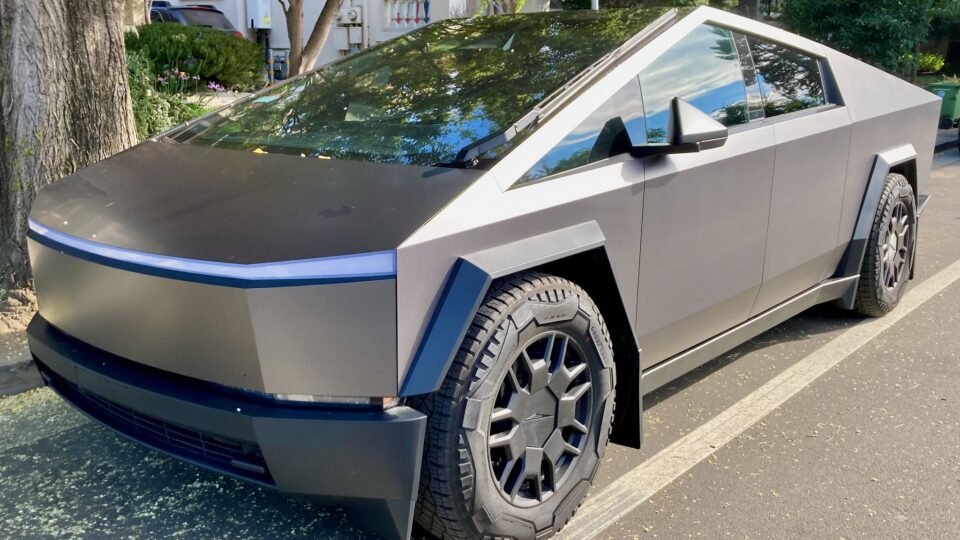
Photo, posted August 17, 2024, courtesy of Bill Abbott via Flickr.

Earth Wise is a production of WAMC Northeast Public Radio
Lithium in Arkansas

April 11, 2024 By EarthWise Leave a Comment

New method being explored to tap lithium deposits in Arkansas

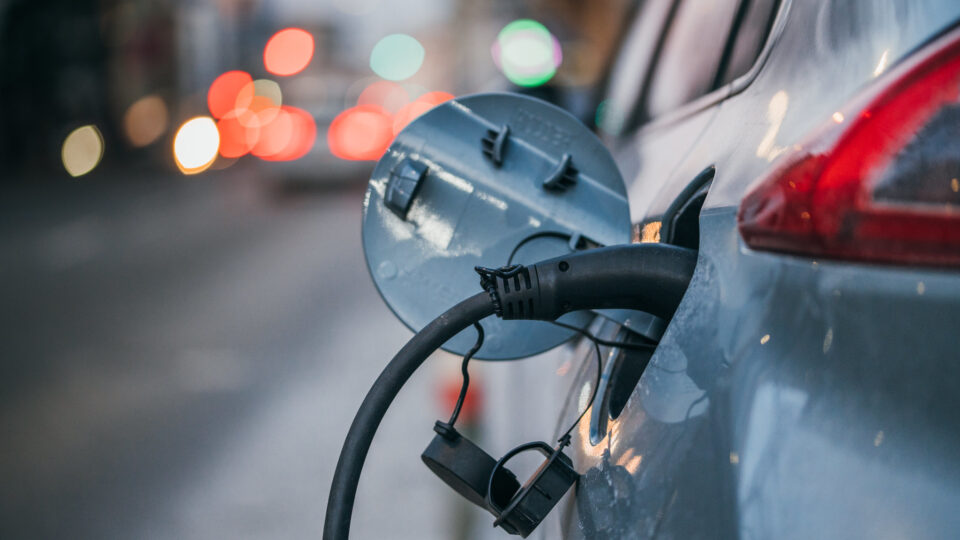
There are more and more electric cars on the road and utilities are installing record amounts of battery storage to back up solar and wind power generation.  Both of these things currently use lithium-ion batteries so the need for them keeps growing.

There is actually plenty of lithium in the world.  Sources of more than 100 million tons have been identified, which is enough to meet the projected needs for decades.  But lithium is not easy, cheap, or environmentally friendly to extract.  It is either blasted out of rocks that are then roasted at 2000-degree temperatures, or it is extracted from brine in places like the high Andes where it leaves behind toxic residues.  Ramping up lithium production could greatly diminish the environmental benefits derived from green technologies.

A technique called direct lithium extraction, or DLE, may be a possible solution.  The lithium is pulled out of brine while leaving other dissolved compounds behind.  It is being tested in many places around the world and appears to offer the lowest negative impacts of available extraction technologies.

The Salton Sea area in California has rich deposits of lithium and is a good candidate for DLE.  But conditions may be even better in Arkansas whose Smackover Formation is a brine-rich expanse of limestone. 

The area was a productive oil field a hundred years ago and then undertook brine-processing in the 1950s to extract bromine.  So, the area already has industrial infrastructure and no new land would need to be cleared.

The former oil fields of Arkansas may become an important domestic source of lithium.

**********

Web Links

In Rush for Lithium, Miners Turn to the Oil Fields of Arkansas

Photo, posted February 26, 2021, courtesy of Ivan Radic via Flickr.

Earth Wise is a production of WAMC Northeast Public Radio
Sodium-ion batteries

January 31, 2024 By EarthWise Leave a Comment

The transition away from fossil fuels is driving a rapidly increasing need for batteries.  Both electric vehicles and energy storage for the electric grid are enormous consumers of batteries.  At present, lithium-ion batteries are almost universally used for these purposes.  They have been getting better all the time and cheaper all the time and are likely to be the answer for the foreseeable future.  But they are not perfect.

Lithium is only found in a relatively small number of places and mining and extracting it is fairly expensive and environmentally unfriendly.  Lithium-ion batteries also frequently contain cobalt, which has its own set of problems.  There are also safety issues related to the flammability of lithium-ion batteries. 

As a result, there continue to be numerous efforts to identify and develop alternative battery technologies.  One of these is sodium-ion batteries, which are similar in many ways to lithium-ion batteries but in which sodium replaces lithium as the cathode material.

Sodium is extremely common – it’s found in ordinary salt – and sodium-ion batteries have a high energy density and are easy to produce.  They should have a long lifetime and have a more benign environmental impact than lithium-ion.  Many companies and researchers are working on sodium-ion batteries and are making good progress.

A study by Chalmers University in Sweden looked at the potential for sodium-ion batteries and found that the batteries are particularly promising for use in energy storage even in their current state of development and could eventually be used in cars.  Whether sodium-ion batteries can be good enough and cheap enough quickly enough to give lithium-ion a run for its money remains to be seen.

**********

Web Links

Resource-efficient and climate-friendly with sodium-ion batteries

Photo, posted March 12, 2013, courtesy of Chris Hunkeler via Flickr.

Earth Wise is a production of WAMC Northeast Public Radio
Aluminum In Batteries | Earth Wise

September 1, 2023 By EarthWise 1 Comment

Researchers working on a new battery

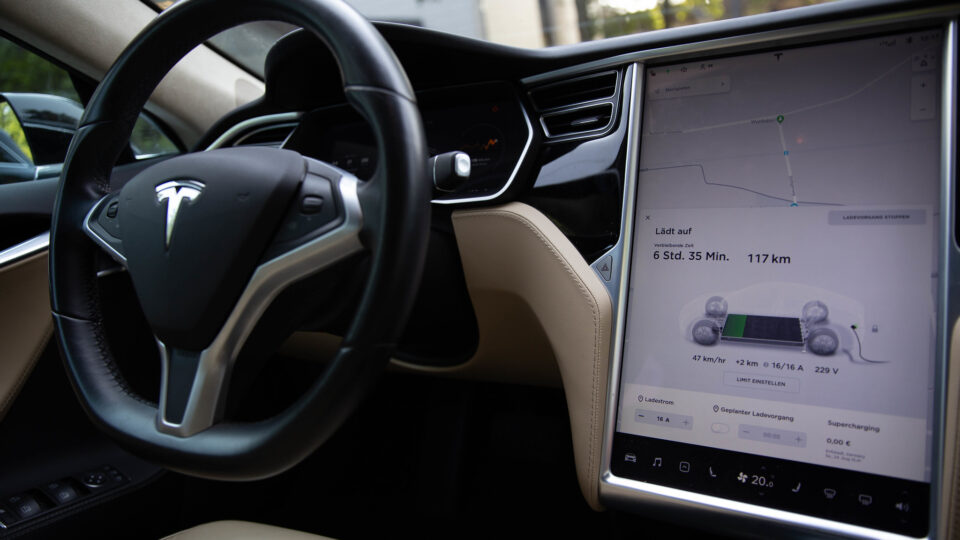
Batteries are playing a bigger and bigger role in our lives.  Apart from their use in ubiquitous smartphones, laptops, and other devices, millions of electric vehicles are hitting the roads, and utilities are installing giant banks of batteries to store energy generated by wind and solar farms.

The necessary characteristics of batteries are high energy density and stability.  The latter is needed so that batteries can be safely and reliably recharged thousands of times.  For decades, lithium-ion batteries have been the go-to for all these modern battery applications.  And they have gradually gotten better and cheaper all the time.  But the improvements are getting smaller, and the price reductions have limits.

For these reasons, researchers are always looking for batteries with higher energy density – so that, for example, electric cars can drive farther on a charge – and that can be made more cheaply, are not flammable, and are very stable.

Since the 1970s, researchers have investigated the use of aluminum for the anode of batteries because its properties would allow more energy to be stored.  However, when used in lithium-ion batteries, aluminum developed fractures and failed after a few cycles.

Researchers at Georgia Tech University have developed a type of aluminum foil with small amounts of other materials that create specific microstructures.  Used in battery anodes, this material does not degrade and appears to be a path to a better battery.  When incorporated into a solid-state battery that does not contain the flammable liquid found in standard lithium-ion batteries, the result is a battery that checks most of the boxes in the search for a better battery.

Much more work is needed to assess the potential for the aluminum-based battery, but it looks very promising.

**********

Web Links

Aluminum Materials Show Promising Performance for Safer, Cheaper, More Powerful Batteries

Photo, posted August 27, 2019, courtesy of Marco Verch via Flickr.

Earth Wise is a production of WAMC Northeast Public Radio
An Iron-Air Battery Plant | Earth Wise

February 9, 2023 By EarthWise Leave a Comment

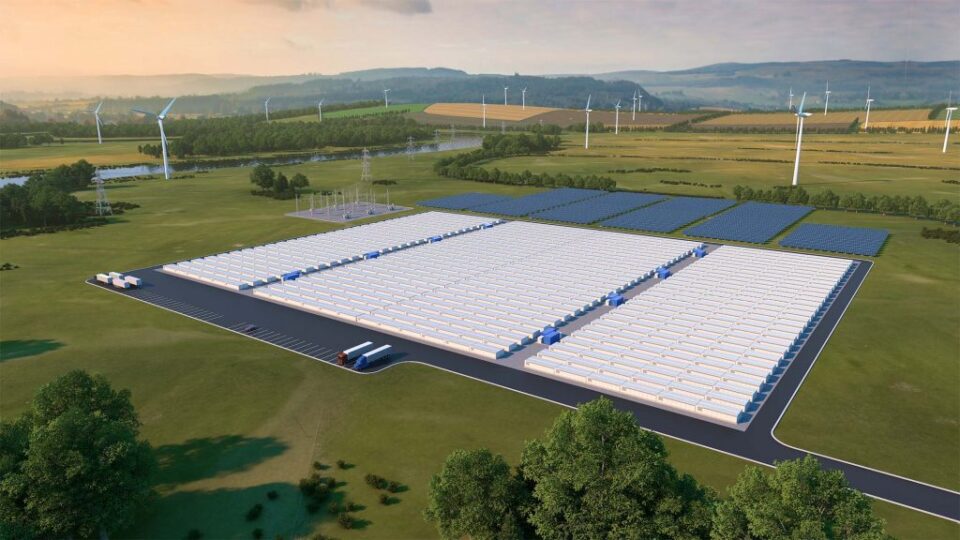
Form Energy is building a iron-air battery storage facility

Lithium-ion batteries are the standard energy source for electric vehicles, and they are also the dominant technology for storing energy in the electric grid.  However, they are not the only game in town.  There are other battery technologies that have various potential advantages over lithium-ion and some of them are getting the chance to show what they can do.

One is the iron-air battery.  Unlike lithium-ion batteries that require expensive and strategically challenging materials like lithium, cobalt, nickel, and graphite, iron-air batteries make use of one of the most common elements in the earth’s crust.

Iron-air batteries operate on a principle known as “reversible rusting”.  When discharging, the battery takes in oxygen from the air and converts iron into rust.  While charging, electrical current converts rust back into iron and the battery releases oxygen.  Batteries consist of a slab of iron, a water-based electrolyte, and a membrane that feeds a controlled stream of air into the battery. 

A Massachusetts-based company called Form Energy is building a $760 million iron-air battery storage facility in the city of Weirton in West Virginia.  Investment financing along with a $290 million government incentive package is paying for the facility. 

The facility is designed to address the need for long-duration energy storage and will be capable of storing electricity for 100 hours at competitive prices.  The battery modules will be about the size of a side-by-side washer/dryer and will contain a stack of 50 3-foot-tall cells.  Such batteries are too big and heavy for use in cars but will be cheaper and higher-capacity than equivalent lithium-ion battery systems.

**********

Web Links

Form Energy selects West Virginia for its first iron-air battery plant

Photo credit: Form Energy

Earth Wise is a production of WAMC Northeast Public Radio

The Race For EV Batteries | Earth Wise

February 1, 2023 By EarthWise Leave a Comment

The race for electric vehicle batteries is on

Lithium-ion batteries have been the power source for electric vehicles since 2008, when the Tesla Roadster was introduced.  They took over for nickel-metal hydride batteries that powered most hybrid electric cars such as the Prius.  Lithium-ion batteries store much more energy for a battery of a given weight, which leads to greater driving range.

But lithium-ion is not an ideal solution.  The batteries depend on critical materials that are obtained by hacking into mountains, utilizing scarce desert groundwater, and in some cases, making use of child labor. Many materials depend on countries with whom economic ties have complicated geopolitical consequences.

State and federal mandates and incentives are pushing auto companies to prioritize electric vehicles in their future plans.  The Inflation Reduction Act in particular provides credits and other incentives for both consumers and manufacturers to electrify. So, sources for EV batteries are a key issue.

The Department of Energy is funding 20 different companies with $2.8 billion to bolster the production and processing of critical minerals in the U.S.  The goal is to bring the electric vehicle supply chain onshore to the greatest extent possible.  Some of the work involves redesigning lithium-ion batteries to reduce or eliminate problematic materials such as cobalt.  Other efforts seek to find domestic sources of critical materials such as lithium without causing serious environmental problems.

Given all this, it is no surprise that academic and industrial researchers are also exploring a wide variety of alternative battery technologies. 

The future of transportation is electrification and the race for EV batteries is on.

**********

Web Links

For U.S. Companies, the Race for the New EV Battery Is On

Photo, posted August 27, 2021, courtesy of Ron Frazier via Flickr.

Earth Wise is a production of WAMC Northeast Public Radio
Lithium-Sulfur Batteries | Earth Wise

July 19, 2022 By EarthWise Leave a Comment

Existuje také spousta přípravků ve formě vitaminových a minerálních komplexů, které nasycují tělo všemi užitečnými zdroji pro správné fungování celého těla a sexuálního systému. Nejoblíbenější jsou dnes syntetické stimulanty, protože poskytují silný apothekeein.com a stabilní účinek, doplňky stravy a homeopatické léky se častěji používají pro prevenci problémů tohoto druhu.

The growing use of electric vehicles as well as energy storage systems has created a major focus on the batteries for these applications.  Lithium-ion batteries dominate these applications and the demand for the materials needed to manufacture them continues to grow.

The raw materials for these batteries include not only lithium, but also can include nickel, manganese, and cobalt. 

Sulfur has been a desirable alternative for use in lithium-based batteries for quite a while because it is an abundant element and can be extracted in ways that are safe and environmentally friendly.  However, previous attempts to create lithium batteries that combine sulfur cathodes and the standard carbonate electrolytes used in lithium-ion batteries have not been successful because of irreversible chemical reactions between intermediate sulfur products and the electrolytes.

A group of chemical engineers at Drexel University has now found a way to introduce sulfur into lithium-ion batteries that solves the stability problem and also has major performance advantages.  The new batteries have three times the capacity of conventional lithium-ion batteries, and last more than 4,000 recharges, which is also a substantial improvement.

The new battery technology involves creating a stable form of sulfur called monoclinic gamma sulfur by depositing the sulfur on carbon nanofibers.   Previously, this sulfur phase was only observed at high temperatures and was only stable for 20 or 30 minutes.  This chemical phase of sulfur does not react with carbonate electrolytes and therefore produces a battery that is chemically stable over time.

 Incorporating this sulfur into battery cathodes results in a better battery that doesn’t need any cobalt, nickel, or manganese.  It could be the next big thing in electric vehicle batteries.

**********

Web Links

Breakthrough in Cathode Chemistry Clears Path for Lithium-Sulfur Batteries’ Commercial Viability

Photo, posted April 5, 2022, courtesy of Oregon Department of Transportation via Flickr.

Earth Wise is a production of WAMC Northeast Public Radio.

Cheaper Electric Cars | Earth Wise

January 18, 2022 By EarthWise 1 Comment

Electric vehicles will soon be less expensive than gasoline cars

The price of the batteries that power electric cars has fallen by about 90% since 2010.  This continuing trend will eventually make EVs less expensive than gas cars.

For many years, researchers have estimated that when battery packs reach the price of $100 per kilowatt-hour of energy storage, electric cars will cost about the same as gasoline-powered vehicles.  In 2021, the average price of lithium-ion battery packs fell to $132 per kilowatt-hour, down 6% from the previous year.  According to analysts, batteries should hit the average of $100 as soon as 2024.

It is not the case that as soon as the $100 level is reached, EVs will abruptly reach cost parity.  Across different manufacturers and vehicle types, the price shift will occur at different rates.  However, by the time batteries reach $60 a kilowatt-hour, EVs will be cheaper than equivalent gasoline models across every vehicle segment.

It is not known exactly when EVs will cost less than gasoline models, but there is little doubt that this point is coming.  We have only been talking about the purchase price of a new vehicle.  When one looks at the total cost of ownership of a vehicle, including fuel, insurance, maintenance, and depreciation, it is a different story.

Because of savings on fuel and maintenance, EVs are already in many if not most cases cheaper to own than gas-powered cars.  The Department of Energy provides an online calculator to help consumers estimate the cost differences between gasoline and electricity.

In any case, the number of electric cars on the market is increasing and the number of gas-powered cars will be shrinking.  Sooner or later, we will all drive electric.

**********

Web Links

Inside Clean Energy: Batteries Got Cheaper in 2021. So How Close Are We to EVs That Cost Less than Gasoline Vehicles?

Photo, posted July 29, 2017, courtesy of Steve Jurvetson via Flickr.

Earth Wise is a production of WAMC Northeast Public Radio.

Primary Sidebar

Recent Episodes

  • An uninsurable future
  • Clean energy and jobs
  • Insect declines in remote regions
  • Fossil fuel producing nations ignoring climate goals
  • Trouble for clownfishes

WAMC Northeast Public Radio

WAMC/Northeast Public Radio is a regional public radio network serving parts of seven northeastern states (more...)

Copyright © 2026 ·