• Skip to primary navigation
  • Skip to main content
  • Skip to primary sidebar

Earth Wise

A look at our changing environment.

  • Home
  • About Earth Wise
  • Where to Listen
  • All Articles
  • Show Search
Hide Search
You are here: Home / Archives for linger

linger

Wildfires and water quality

August 11, 2025 By EarthWise Leave a Comment

Wildfires affect water quality long after the flames are out

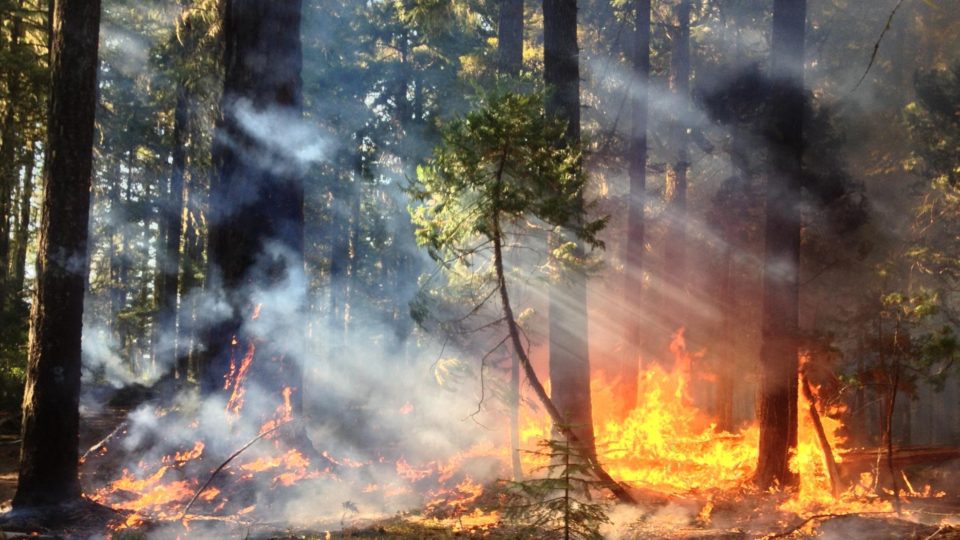
Hotter and drier conditions driven by climate change are leading to an increasing number of wildfires in North America and around the world. The damage wildfires cause – to forests, homes, and communities – is well-known. But long after the flames are gone, the effects can linger, especially in rivers and streams, where water quality may suffer for years.

A new study by scientists at the CIRES institute at the University of Colorado Boulder analyzed more than 100,000 water samples from more than 500 sites across the Western U.S. and found that wildfires can degrade water quality for up to eight years after a fire. The research, which was recently published in the journal Nature Communications Earth & Environment, found elevated levels of organic carbon, nitrogen, phosphorus, sediment, and turbidity – the cloudiness of water – in basins affected by fire.

This large-scale analysis reveals watersheds take longer to recover from wildfires than previously thought, with widespread, long-lasting impacts often going undetected for years.

Organic carbon, phosphorus, and turbidity remain elevated for one to five years after a fire. Nitrogen and sediment levels stay notably high for up to eight years. Fire-driven impacts are worse in more forested areas.

Each watershed in the study responded differently depending on local conditions.  In some places, sediment levels surged to as much as 2,000 times normal levels, while others remained relatively unchanged.

The research team hopes its findings can help guide future planning efforts to improve wildfire resilience.

**********

Web Links

Wildfires threaten water quality for years after they burn

Photo, posted April 6, 2017, courtesy of Bonnie Moreland via Flickr.

Earth Wise is a production of WAMC Northeast Public Radio

Pesticides and beeswax

December 25, 2023 By EarthWise Leave a Comment

Pesticides linger in beeswax

Honey bee colonies in the United States have experienced annual population declines since 2006.  Commercial beekeepers have reported honey bee colony loss rates averaging 30% each winter, which is startling when compared to historical loss rates of just 10-15%.  According to the USDA, there are many factors contributing to this decline, including parasites, pests, diseases, pesticides, and a phenomenon called Colony Collapse Disorder, in which worker bees abandon a hive and leave behind the queen.

According to a new study by researchers from Cornell University, beeswax in managed honey bee hives contains a variety of pesticide, herbicide, and fungicide residues.  Because bees reuse wax over years, these harmful chemicals can accumulate inside hives, exposing current and future generations of bees to long-term toxicity. 

The study, which was recently published in the Journal of Veterinary Diagnostic Investigation, adds that humans may also be exposed to these pesticides through contaminated honey, pollen, and beeswax (which is used in certain soaps, lotions, and cosmetics).  However, the amounts in these products are unlikely to pose a major threat to human health.

Pesticides get into the beeswax when bees feast on the nectar and pollen of plants that have been treated with the chemicals. According to the researchers, understanding which contaminants are impacting domestic honey bee populations could help better protect them and other pollinators, including birds, bats, wild bees, and other insects.

**********

Web Links

Pesticides detected in beeswax

Photo, posted November 22, 2008, courtesy of Andrew Rivett via Flickr.

Earth Wise is a production of WAMC Northeast Public Radio
Geoengineering And Volcanoes

November 14, 2019 By EarthWise Leave a Comment

Solar geoengineering is a theoretical strategy for curbing the effects of climate change by introducing aerosol particles in the upper atmosphere to reflect some of the Sun’s radiation back into space and thereby cool the planet.  It would basically be intentionally tinkering with the climate system on a global scale.

The concept is fraught with the danger of unintended consequences and most experts consider the idea almost unthinkable.  But there are those who see it as a last resort if all our other efforts to mitigate the effects of climate change are unsuccessful.

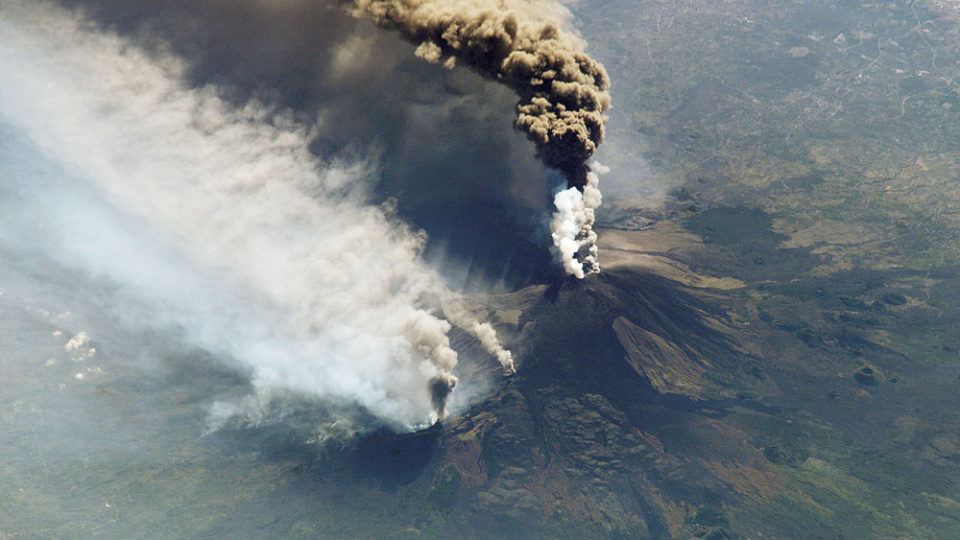
Proponents of the idea like to describe the technique as being like a human-made volcano.  Major volcanic eruptions spew ash particles into the atmosphere which can linger for as long as a few years.  The result is cooler temperatures, sometimes across much of the globe.  The Krakatoa eruption of 1883 lowered average Northern Hemisphere temperatures by more than 2 degrees and created chaotic weather patterns until about 1888.

Researchers at the Carnegie Institution and two Chinese research institutions used sophisticated modeling techniques to compare the effects on the climate of a volcanic eruption with long-term geoengineering deployment.

They found that the volcanic eruption created a greater temperature difference between the land and sea than the geoengineering and resulted in very different precipitation scenarios.  In both cases, there would be less available water for people on land.

Overall, the study demonstrated that volcanic eruptions are imperfect analogs for geoengineering and that scientists should be very cautious about extrapolating too much from them.  It is important to evaluate geoengineering from an informed position, but the truth is that it represents a great and perilous unknown.

**********

Web Links

Geoengineering Versus A Volcano

Photo, posted November 1, 2002, courtesy of the NASA Goddard Space Flight Center via Flickr.

Earth Wise is a production of WAMC Northeast Public Radio.

Air Pollution Reducing Global Warming

April 12, 2018 By EarthWise Leave a Comment

https://earthwiseradio.org/wp-content/uploads/2018/04/EW-04-12-18-Air-Pollution-Reducing-Global-Warming.mp3

Pollution particles emitted by diesel cars and trucks, coal-fired power plants, factories, primitive cook stoves, and the burning of forests are major contributors to the pervasive air pollution that plagues many cities and regions of the world.  In India and China, such pollution leads to hundreds of thousands of deaths each year.   And countries around the world are working hard to reduce pollution.

[Read more…] about Air Pollution Reducing Global Warming

Primary Sidebar

Recent Episodes

  • An uninsurable future
  • Clean energy and jobs
  • Insect declines in remote regions
  • Fossil fuel producing nations ignoring climate goals
  • Trouble for clownfishes

WAMC Northeast Public Radio

WAMC/Northeast Public Radio is a regional public radio network serving parts of seven northeastern states (more...)

Copyright © 2026 ·