• Skip to primary navigation
  • Skip to main content
  • Skip to primary sidebar

Earth Wise

A look at our changing environment.

  • Home
  • About Earth Wise
  • Where to Listen
  • All Articles
  • Show Search
Hide Search
You are here: Home / Archives for lawrence berkeley national laboratory

lawrence berkeley national laboratory

Ending plastic separation anxiety

December 27, 2023 By EarthWise Leave a Comment

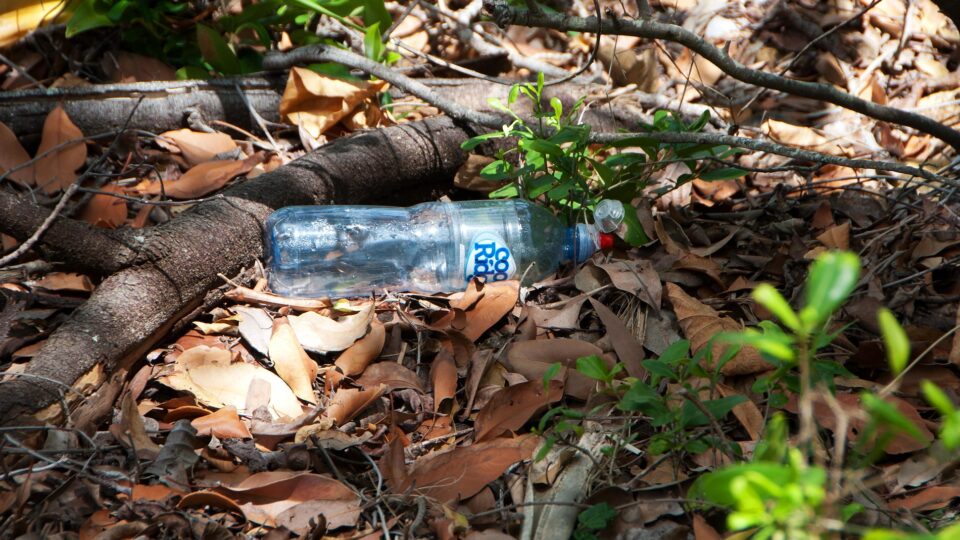
Petroleum-based plastics are one of the biggest environmental problems we face.  They mostly end up in landfills – or worse, in the oceans and elsewhere in the environment – and they basically don’t decompose over time.  Bio-based plastics were invented to help solve the plastic waste crisis.  These materials do break down in the environment providing a potential solution to the problem.  But it turns out that they can actually make plastic waste management even more challenging.

The problem is that bioplastics look and feel so similar to conventional plastics that they get mixed in with the petroleum-based plastics rather than ending up in composters, where they can break down as designed.

Mixtures of conventional and bioplastics end up in recycling streams where they get shredded and melted down, resulting in materials that are of very poor quality for making functional products.  The only solution is to try to separate the different plastics at recycling facilities, which is difficult and expensive to do.

Scientists at Lawrence Berkeley National Laboratory, the Joint BioEnergy Institute, and the incubator company X have invented a simple “one pot” process to break down mixtures of different types of plastic using naturally derived salt solutions and specialized microbes and then produce a new type of biodegradable polymer that can be made into fresh commodity products.

The team is experimenting with various catalysts to find the optimum way to break down polymers at the lowest cost and are modeling how their processes can work at the large scales of real-world recycling facilities. Chemical recycling of plastics is a hot topic but has been difficult to make happen economically at the commercial scale.

**********

Web Links

Putting an End to Plastic Separation Anxiety

Photo, posted November 28, 2016, courtesy of Leonard J Matthews via Flickr.

Earth Wise is a production of WAMC Northeast Public Radio

Актуальная ссылка на Мега сайт обеспечивает удобный и быстрый доступ к площадке.

A New Method of Refrigeration | Earth Wise

February 10, 2023 By EarthWise Leave a Comment

A new method of refrigeration

Salting roads before winter storms is a familiar sight in the Northeast.  The purpose is to change the temperature at which ice can form on the road.  The underlying concept has formed the basis of a new method of refrigeration that has been dubbed “ionocaloric cooling.”

It is described in a paper published in the journal Science by researchers at the Lawrence Berkeley National Laboratory.  The method takes advantage of how energy in the form of heat is either stored or released when a material changes phase – such as water changing from ice to liquid and vice versa.  Melting absorbs heat from the surroundings while freezing releases heat.  An ionocaloric refrigerator makes use of this phase and temperature change using an electrical current to add or remove ions provided from a chemical salt.

The potential is to make use of this refrigeration cycle instead of the vapor compression systems in present-day refrigerators, which make use of refrigerant gases that are greenhouse gases, many of which very powerful ones.  The goal is to come up with a system that makes things cold, works efficiently, is safe, and doesn’t harm the environment. 

There are a number of alternative refrigeration systems under development that make use of a variety of mechanisms including magnetism, pressure, physical stretching, and electric fields.  Ionocaloric cooling uses ions to drive solid-to-liquid phase changes.

Apart from some very promising theoretical calculations of the system’s potential, the researchers have also demonstrated the technique experimentally.  They have received a provisional patent for the technology and are continuing to work on prototypes to demonstrate its capabilities and amenability to scaling up.

**********

Web Links

Berkeley Lab Scientists Develop a Cool New Method of Refrigeration

Photo, posted October 29, 2021, courtesy of Branden Frederick via Flickr.

Earth Wise is a production of WAMC Northeast Public Radio

A New Carbon Capture Technique | Earth Wise

August 25, 2020 By EarthWise Leave a Comment

Reducing carbon dioxide emissions using carbon capture

Carbon dioxide emissions by electricity generating plants, fossil-fuel burning vehicles, and industry produce about 2/3 of the greenhouse gases driving climate change.  Without decreasing these emissions, the earth will continue to get warmer, sea levels will continue to rise, and the world will face more droughts, floods, wildfires, famine and conflict.

Electrification of vehicles and reliance upon renewable energy sources will ultimately drastically reduce the use of fossil fuels and the resultant emissions, but that transition may take too long to reverse the direction of climate change.  In the meantime, there is a great need to find effective and efficient ways to capture emissions from fossil fuel plants. 

Recent research at the University of California, Berkeley, Lawrence Berkeley National Laboratory, and ExxonMobil has developed a new technique for carbon capture.  The technique makes use of metal-organic framework (or MOF) technology.  An MOF, modified with nitrogen-containing amine molecules, captures CO2 and then low-temperature steam is used to flush out the CO2 either to be used or sequestered underground.

Experiments demonstrated the technique to have a six-times greater capacity for removing CO2 from the flue gas of a refinery than current amine-based technology.  It selectively removed 90% of the emitted CO2. 

There is a relatively limited market for captured CO2, so power plants using the capture technology would likely pump the CO2 into the ground, or otherwise sequester it.  The cost of doing this sort of emission scrubbing would have to be facilitated by government policies, such as carbon trading or a carbon tax, which would provide the necessary economic incentive for doing carbon capture and sequestration.

**********

Web Links

New technique to capture CO2 could reduce power plant greenhouse gases

Photo courtesy of UC Berkeley.

Earth Wise is a production of WAMC Northeast Public Radio.

Primary Sidebar

Recent Episodes

  • An uninsurable future
  • Clean energy and jobs
  • Insect declines in remote regions
  • Fossil fuel producing nations ignoring climate goals
  • Trouble for clownfishes

WAMC Northeast Public Radio

WAMC/Northeast Public Radio is a regional public radio network serving parts of seven northeastern states (more...)

Copyright © 2026 ·