• Skip to primary navigation
  • Skip to main content
  • Skip to primary sidebar

Earth Wise

A look at our changing environment.

  • Home
  • About Earth Wise
  • Where to Listen
  • All Articles
  • Show Search
Hide Search
You are here: Home / Archives for labor

labor

Trends in rooftop solar

October 8, 2024 By EarthWise Leave a Comment

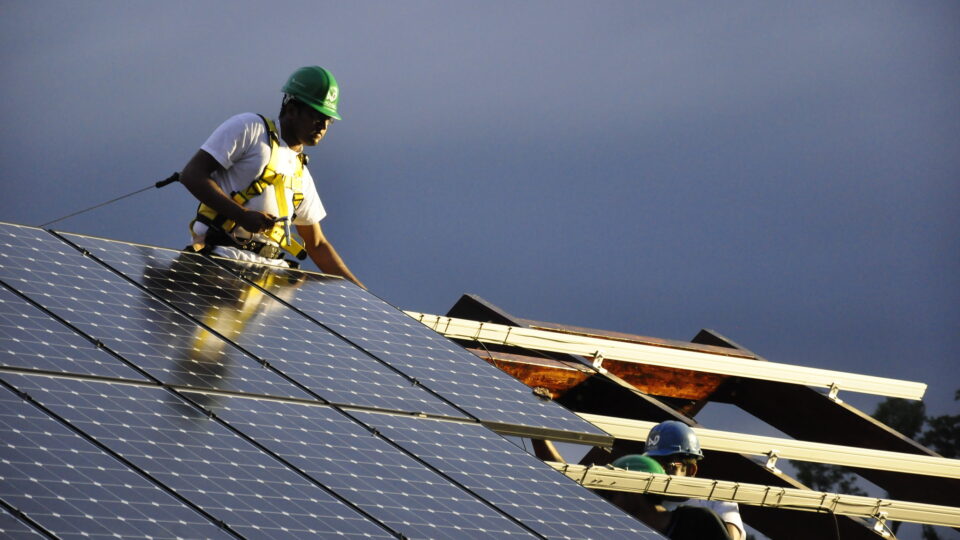
Rooftop solar power in the United States has increased by a factor of ten over the past decade and the majority of that growth has been in the past six or seven years.  At this point, about 7% of American homes have solar panels on their roofs – about 5 million in total. 

Rooftop solar really began experiencing widespread use about 20 years ago.  Over that time period, the amount of electricity that panels are able to produce has grown substantially and the cost of solar power systems has dropped dramatically.

Twenty years ago, the median sized residential solar system generated 2.4 kilowatts of power.  In 2023, the median size was 7.4 kilowatts.  Roofs haven’t gotten bigger; solar panels have gotten better.

More importantly, 20 years ago, the average cost of installing solar power was $12 a watt. In 2023, the cost was $4.20 a watt.

Americans in fact pay considerably more for solar power than citizens in many other countries.  The reason is not the price of the equipment; it is so-called soft costs.  These include labor, financing, and permitting. Driving down soft costs is complicated and difficult. For one thing, it is important for solar industry jobs to have high pay and good benefits.

The cost of solar also varies significantly by state.  California is the leading state for solar power and its median solar cost is the $4.20 a watt, the same as the national average.  Nevada has the lowest cost at $3.40 a watt and Utah has the highest at $5.20 a watt.

**********

Web Links

Bigger and Less Expensive: A Snapshot of U.S. Rooftop Solar Power and How It’s Changed

Photo, posted September 18, 2011, courtesy of Team Massachusetts 4D Home via Flickr.

Earth Wise is a production of WAMC Northeast Public Radio
Revolution Wind installs first turbine

September 27, 2024 By EarthWise Leave a Comment

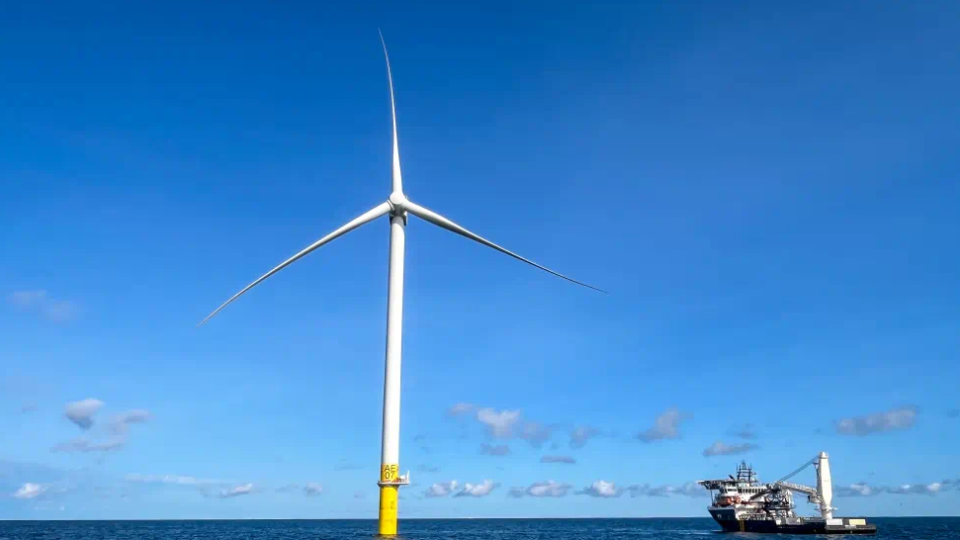
Revolution Wind installs its first wind turbine

Revolution Wind is an offshore wind farm being built by Rhode Island and Connecticut and is the first multi-state offshore wind farm in the United States.  Once completed, it will deliver 400 MW of power to Rhode Island and 304 MW of power to Connecticut.

Revolution Wind is a 50/50 partnership between Ørsted, the Danish multinational energy company, and Eversource, a major New England utility company.  The wind farm is located about 15 miles south of the Rhode Island coast and 32 miles southeast of Connecticut.  It is fairly close to the recently completed South Fork Wind, the first completed utility-scale offshore windfarm in the U.S. and was built by the same partnership.

The first Revolution Wind turbine was installed at the end of August and construction continues with the installation of foundations for the 65 turbines that will comprise the project.  More than three-quarters of the units were in place by the beginning of September.  Ships have also arrived on scene for cable-laying operations for the wind farm.  Onshore construction continues in North Kingstown, Rhode Island, on the project’s transmission system.  The turbines for the project are being assembled by local union labor in New London, Connecticut. 

Commercial operations at Revolution Wind will not begin until 2026.  Construction of the electrical substation necessary to connect the project to the regional electric grid is taking place on the site of a decommissioned naval air station and it is a time-consuming project because of the presence of buried waste and soil contamination.  The construction of the offshore wind farm itself will be completed in 2025.

**********

Web Links

Revolution Wind installs first offshore turbine

Photo courtesy of Kate Ciembronowicz / Orsted via Revolution Wind.

Earth Wise is a production of WAMC Northeast Public Radio
Sunrise Wind construction begins

August 9, 2024 By EarthWise Leave a Comment

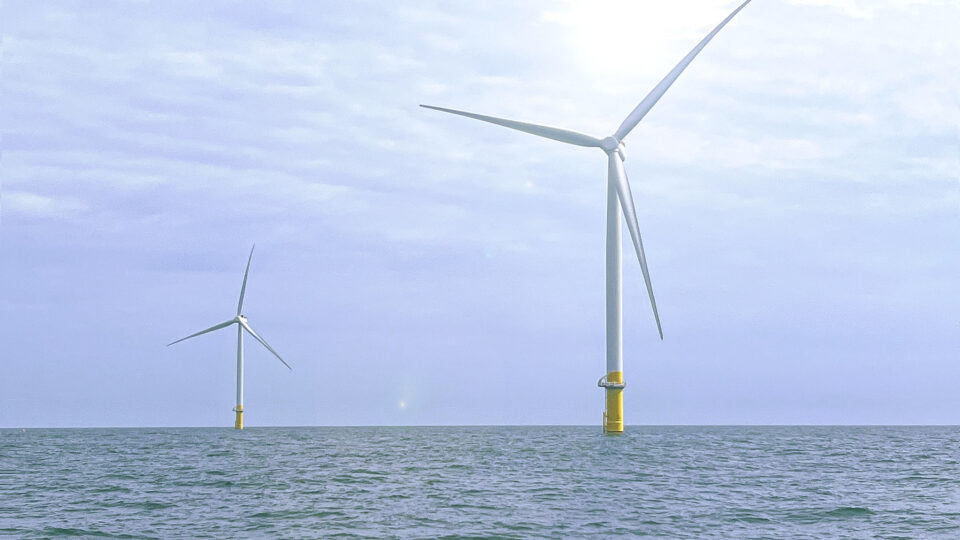
In mid-July, construction started on New York’s largest offshore wind project.  Sunrise Wind is a 924-megawatt offshore wind farm located about 30 miles off the coast of Montauk Point on Long Island.  Sunrise Wind is expected to be operating in 2026 and will provide enough clean energy to power nearly 600,000 homes, making it the largest offshore wind farm in the United States.

The ongoing construction project will support more than 800 direct jobs.  It will be built under project labor agreements ensuring local union labor’s participation in all phases of construction.

Power from the wind farm will flow through an undersea cable coming ashore deep under the beach at Smith Point County Park.  From there, the power will travel primarily under roadways via a transmission line terminating at a power converter station in Holbrook, Suffolk County.

Sunrise Wind is being developed by Oersted, the largest energy company in Denmark and the world’s largest developer of offshore wind power by number of built offshore wind farms.

The second large offshore wind farm in New York, Empire Wind I, is being developed by Equinor.  These large wind farms are the result of New York’s fourth offshore wind solicitation.  The two projects, totaling over 1,700 megawatts, will be the largest power generation projects in New York State in more than 35 years once they enter operation in 2026.

New York has also launched a fifth offshore wind solicitation for which final proposals will be due in September.  Offshore wind is a major component of New York’s effort to expand the use of clean energy, grow its green economy, and combat climate change.

**********

Web Links

Construction begins on Sunrise Wind, New York’s largest offshore wind project

Photo, posted June 14, 2022, courtesy of Stephen Boutwell/BOEM via Flickr.

Earth Wise is a production of WAMC Northeast Public Radio
Minerals from seawater

June 27, 2024 By EarthWise Leave a Comment

Using the minerals from desalination plants

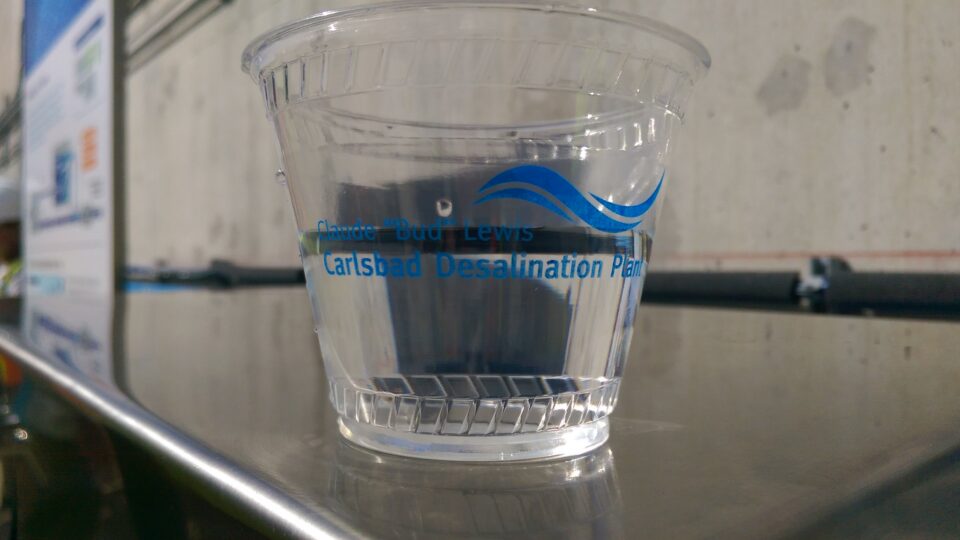
There are about 18,000 desalination plants around the world that take in 23 trillion gallons of water each year.  The plants produce more than 37 billion gallons of brine – enough to fill 50,000 Olympic-size swimming pools – every day.  Disposing of this brine is an ongoing challenge.  Dumping it into the ocean can damage marine ecosystems.  Inland desalination plants either bury this waste or inject it into wells, adding further cost and complexity to the already expensive process of desalination.

According to researchers at Oregon State University, this waste brine contains large amounts of copper, zinc, magnesium, lithium, and other valuable metals.  A company in Oakland, California called Magrathea Metals has started producing modest amounts of magnesium from waste brine in its pilot projects.  With support from the U.S. Defense Department, it is building a larger-scale facility to produce hundreds of tons of the metal over two to four years. 

Most of the world’s magnesium supply comes from China, where producing it requires burning lots of coal and utilizing lots of labor.  Magrathea’s brine mining makes use of off-peak wind and solar energy and is much less labor intensive.

No large-scale brine mining operations currently exist and when there are some, they might end up having negative environmental impacts.  But in principle, the process should produce valuable metals without the massive land disturbance, acid-mine drainage, and other pollution associated with traditional mining.  Brine mining could turn a growing waste problem into a valuable resource.

**********

Web Links

In Seawater, Researchers See an Untapped Bounty of Critical Metals

Photo, posted February 18, 2017, courtesy of Jacob Vanderheyden via Flickr.

Earth Wise is a production of WAMC Northeast Public Radio
Giant Farming Robots | Earth Wise

April 20, 2023 By EarthWise Leave a Comment

Farmers are perpetually engaged in a battle against weeds, which can strangle crops and destroy their yields.  There are basically two ways to fight weeds:  spraying herbicides that are bad for the environment and human health or using human labor to pull the weeds by hand. 

Both choices are increasingly undesirable.  Herbicide resistance is a growing problem facing farms around the world and widespread labor shortages in the agricultural sector are making it increasingly difficult to use human resources to combat weeds.

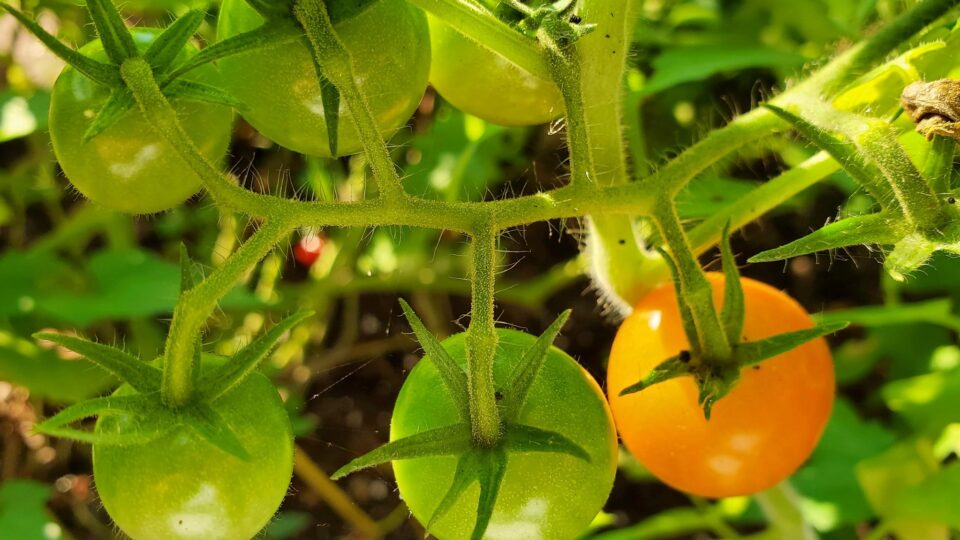
A startup company called FarmWise founded by an MIT engineering alumnus is providing a third option for farmers.  The company has developed giant autonomous weeding robots that use artificial intelligence to cut out weeds without damaging crops.

The company’s first product is called the Titan.  It looks like a large tractor without a driver’s seat.  It uses machine vision to distinguish weeds from crop plants like leafy greens, cauliflower, artichokes, and tomatoes.  It snips off the weeds with sub-inch precision.

Fifteen titan robots have been roaming the fields of 30 large farms in California and Arizona for several years.  A newer robot, called the Vulcan, is more lightweight and is pulled by a tractor.  FarmWise continues to add new crops to its database so that the robots can be used to fight weeds in more and more kinds of farms.

Weed problems are especially acute for farmers of specialty crops, which grow on smaller farms than corn and soybeans, and have unique growing practices, which limit the effectiveness of chemical and technical solutions. 

The overall goal of FarmWise is to turn artificial intelligence into a tool that is as reliable and dependable as GPS is now in the farming industry.

**********

Web Links

Titanic robots make farming more sustainable

Photo, posted August 23, 2021, courtesy of Carol VanHook via Flickr.

Earth Wise is a production of WAMC Northeast Public Radio
Perennial Rice | Earth Wise

December 9, 2022 By EarthWise Leave a Comment

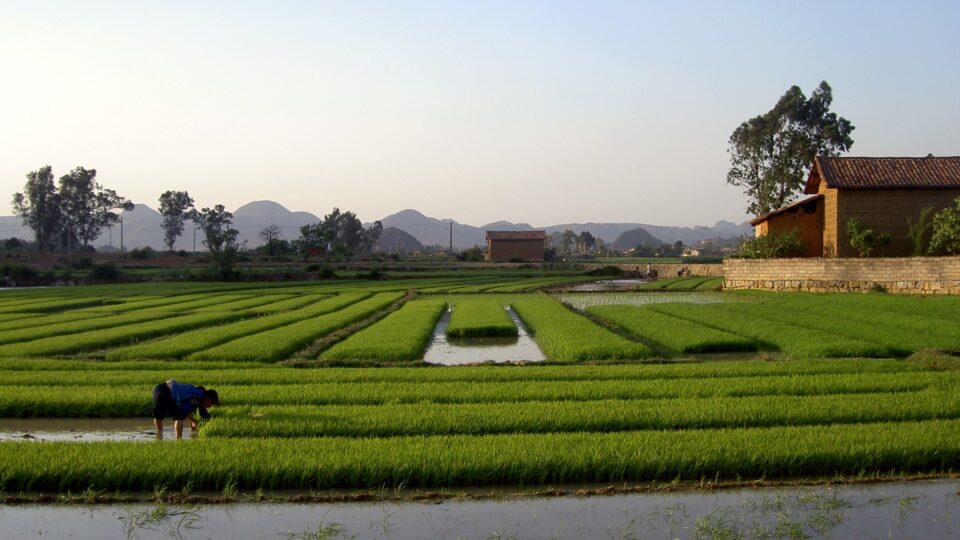
People have been cultivating rice for more than 9,000 years.  Cultivated rice is an annual crop which is often extended to two crops a year by a process called ratooning, which is cutting back annual rice to obtain a second, weaker harvest.

An extensive project involving multiple institutions in China, the U.S., and Australia has been developing perennial rice.  The researchers developed it through hybridization, crossing a type of Asian domesticated annual rice with a wild perennial rice from Africa.  Using modern genetic tools to identify candidate plants, the team identified a promising hybrid in 2007, planted large-scale field experiments in 2016, and released the first commercial perennial rice variety, called PR23, in 2018.

The researchers spent five years studying the performance of the perennial rice alongside annual rice on farms in China’s Yunnan Province.  For the most part, the yield of the perennial rice was equivalent to that of annual rice over a period of four years. 

Because farmers don’t have to plant rice each season, growing perennial rice requires almost 60% less labor and saves nearly half the costs of seed, fertilizer, and other inputs.

Perennial rice is already changing the lives of more than 55,000 smallholder farmers in southern China and Uganda.  The economic benefits vary by location, but overall profit increases ranged from 17% to 161% over annual rice.

There are already three perennial rice varieties available to farmers, but researchers aren’t done refining the crop.  They plan to use their methodology to enhance traits such as aroma, disease resistance, and drought tolerance to newer versions.

**********

Web Links

Farmers in China, Uganda move to high-yielding, cost-saving perennial rice

Photo, posted February 25, 2002, courtesy of Matthieu Lelievre via Flickr.

Earth Wise is a production of WAMC Northeast Public Radio

Breaking Down Polystyrene | Earth Wise

April 20, 2021 By EarthWise Leave a Comment

Scientists have developed a way to break down polystyrene

The proliferation of global plastic waste continues to be a growing problem for the world.  Hundreds of millions of tons of plastics are produced each year and most of it is used once and then discarded.  The properties that make plastics so attractive – durability and chemical stability – make it difficult to do anything with discarded plastics other than deposit them in landfills – where they don’t easily degrade over time – or burn them, which dumps carbon dioxide and various hazardous gases into the atmosphere.

Polystyrene is one of the most widely used plastics.  It is found in foam packaging materials, disposable food containers, plastic cutlery, storage containers, and many other places. 

Recycling plastics like polystyrene is generally not economically feasible.  Sorting plastics by type is time and labor intensive and the chemical processes required to break down plastics into usable precursor materials require significant energy input and the use of toxic solvents.

Recently, a team of scientists at Ames Laboratory in Iowa has developed a process based on ball-milling that deconstructs commercial polystyrene in a single step, at room temperature, in ambient atmosphere, and in the absence of harmful solvents.

Ball-milling is a technique that places materials in a milling vial with metal ball bearings which is then agitated to initiate a chemical reaction.  This approach is known as mechanochemistry.

The method represents an important breakthrough that enables dismantling of a polymer that includes its chemical breakdown without requiring solvents or the high temperatures generally needed to thermally decompose it.  This discovery opens up new avenues for low-temperature recovery of monomers from polymer-based systems that include composites and laminates.  It could be a very useful weapon in the battle against plastic waste.

**********

Web Links

Polystyrene waste is everywhere, and it’s not biodegradable. Scientists just found a way to break it down.

Photo, posted December 11, 2010, courtesy of Warrenski via Flickr.

Earth Wise is a production of WAMC Northeast Public Radio.

Fighting Mildew With Robots | Earth Wise

July 10, 2020 By EarthWise Leave a Comment

Using robots to fight mildew in agriculture

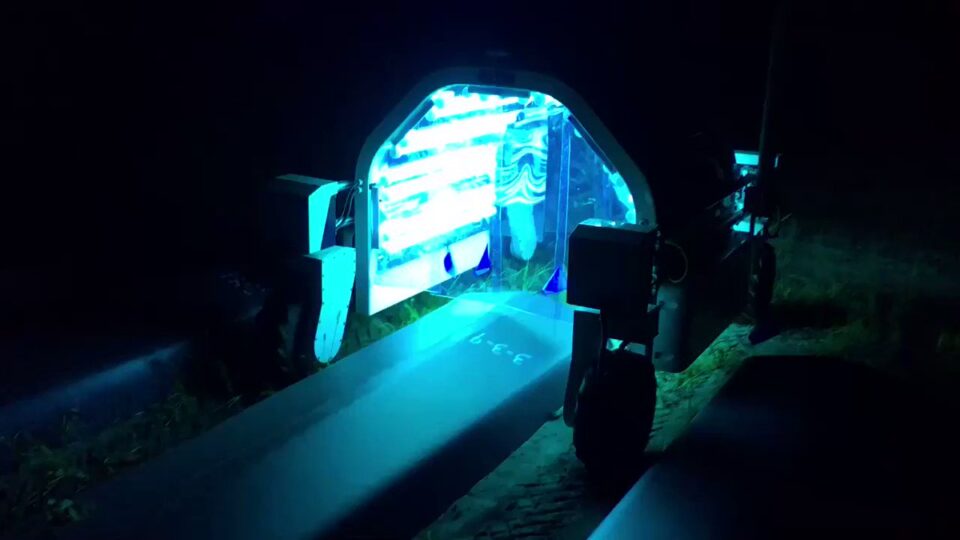
Cornell Researchers have partnered with Norwegian company SAGA Robotics to develop autonomous robots that can roam vineyards at night armed with ultraviolet lamps that can kill powdery mildew, which is a pathogen that devastates many crops, including grapes.

The robots are being field tested on Chardonnay grapes at two sites:  Cornell AgriTech’s research vineyards in Geneva, New York, and at Anthony Road Wine Co. in Penn Yan, New York.

Cornell has been researching the use of UV light to kill grapevine powdery mildew for nearly 30 years.  They have also worked with the University of Florida on using it to control powdery mildew in strawberries.

The UV treatment has been shown to suppress powdery mildew over a period of two years with the application of treatments once a week.  The technique represents a breakthrough because the mildew can adapt to chemical anti-fungal sprays in a single season, making them ineffective.  UV light damages DNA, but mildews have natural biochemical defenses that are triggered by the blue light present in sunlight.  By applying the UV at night, when there is no blue light from the sun, the defenses of the mildew are defeated.

In earlier trials, the researchers used UV lamps mounted on a tractor wagon, but this required all-night labor to treat an entire vineyard.  That has now been replaced with autonomous vehicles that can work seven nights a week, all night long.

The next development will be imaging technology that will detect and quantify mildew on grape leaves.  With this, the dose of UV light applied to a particular vine will depend on whether it is sick or healthy.

A high-tech solution to a problem that plagues vineyards.

**********

Web Links

Robots armed with UV light fight grape mildew

Photo courtesy of Rodrigo Onofre/Twitter.

Earth Wise is a production of WAMC Northeast Public Radio.

Extreme Heat And Humidity | Earth Wise

June 15, 2020 By EarthWise Leave a Comment

heat and humidity

On hot, sticky summer days, one often hears the expression “it’s not the heat, it’s the humidity.” That isn’t just an old saw; it is a recognition of what might be the most underestimated direct, local danger of climate change.   Extreme humid heat events represent a major health risk.

There is an index called “wet-bulb temperature” that is calculated from a combination of temperature and humidity data.  The reading, which is taken from a thermometer covered in a wet cloth, is related to how muggy it feels and indicates how effectively a person sheds heat by sweating.  When the wet-bulb temperature surpasses 95o Fahrenheit, evaporation of sweat is no longer enough for our bodies to regulate their internal temperature.  When people are exposed to these conditions for multiple hours, organ failure and death can result. 

Climate models project that combinations of heat and humidity could reach deadly thresholds for anyone spending several hours outdoors by the end of this century. 

Dangerous extremes only a few degrees below the human tolerance limits – including in parts of the southwestern and southeastern US – have more than doubled in frequency since 1979.  Since then, there have been more than 7,000 occurrences of wet-bulb temperatures above 88o, 250 above 91o, and multiple reading above 95o.  Even at lower wet-bulb temperatures around 80o, people with pre-existing health conditions, the elderly, as well as those performing strenuous outdoor labor and athletic activities, are at high risk.

More research is needed on the factors that generate extreme wet-bulb temperatures as well as the potential impacts on energy, food systems, and human security.

**********

Web Links

Dangerous Humid Heat Extremes Occurring Decades Before Expected

Photo, posted April 16, 2012, courtesy of Flickr.

Earth Wise is a production of WAMC Northeast Public Radio.

American Households and Food Waste | Earth Wise

February 12, 2020 By EarthWise Leave a Comment

US household food waste

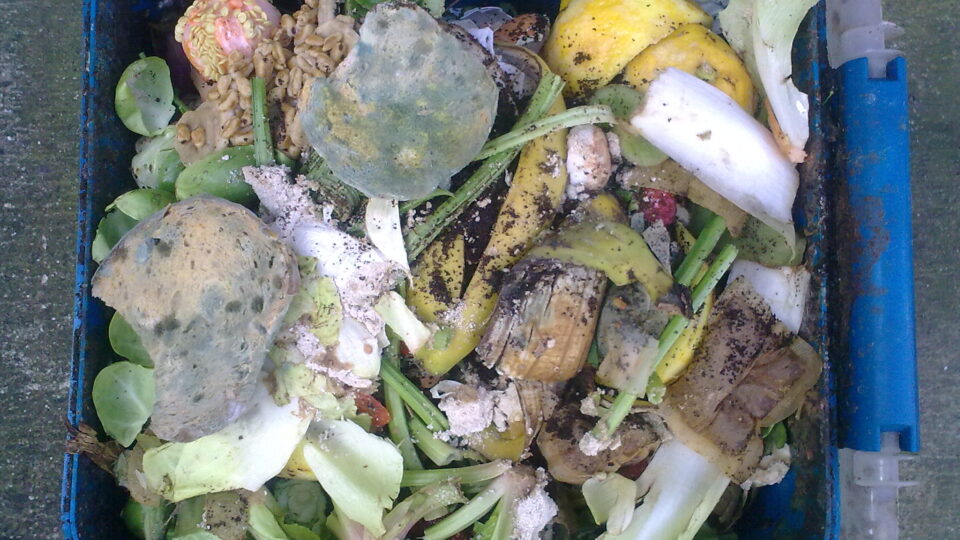
Food waste is a big problem.  According to the United Nations, approximately one-third of the food produced globally – more than 1.4 billion tons – goes to waste.  If food waste was a country adding carbon to the atmosphere, it would be the world’s third largest emitter of greenhouse gases – behind only the U.S. and China.  All of this food waste takes place in a world where 815 million people – more than 10% of the people on the planet – are chronically undernourished.

A new study recently published in the American Journal of Agricultural Economics has analyzed the level of food waste for individual American households. It found that American households waste, on average, nearly one-third of all the food they acquire.  This wasted food has an estimated aggregate value of $240 billion annually.  Divided by the number of U.S. households, this food waste could be costing the average household about $1,866 per year. 

According to researchers, the households with higher household incomes generate more food waste.  Those with healthier diets, which include more perishable fruits and vegetables, also waste more food.  

Meanwhile, households with greater food insecurity, especially those that participate in the federal SNAP food assistance program, as well as those households with a larger number of members, were associated with less food waste.  Households that use shopping lists and those that travel further to reach the grocery store were also associated with lower levels of food waste. 

When food is wasted, the resources used to produce food, including land, energy, water and labor, are wasted as well.  We have to do better. 

**********

Web Links

SAVE FOOD: Global Initiative on Food Loss and Waste Reduction

US households waste nearly a third of the food they acquire

Photo, posted March 22, 2009, courtesy of Nick Saltmarsh via Flickr.

Earth Wise is a production of WAMC Northeast Public Radio.

China And Plastic Waste

April 26, 2019 By EarthWise Leave a Comment

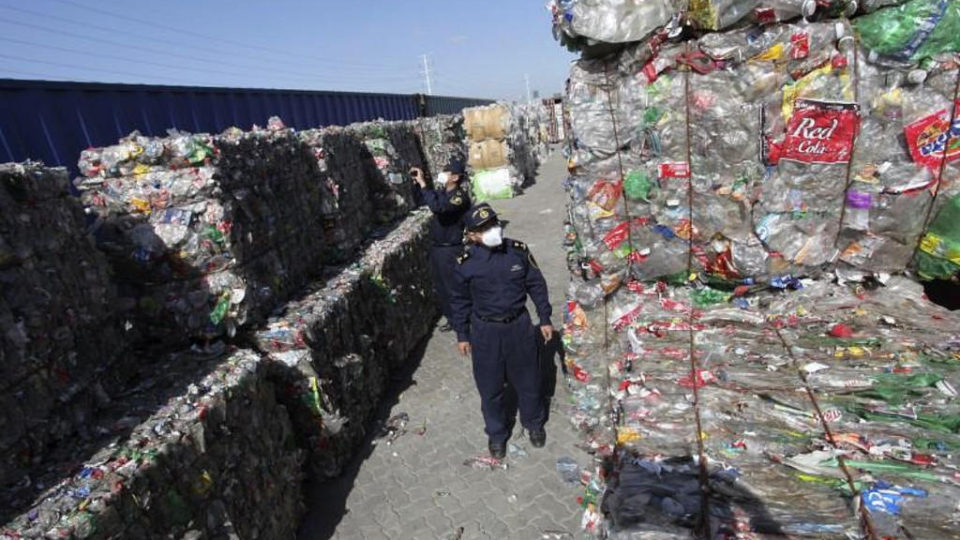
In January 2018, China enacted its “National Sword” policy which banned the import of most plastics and other materials headed for that country’s recycling processors.  Those processors had handled nearly half of the world’s recyclable waste for the past quarter century.  China took this step because the deluge of soiled and contaminated materials was overwhelming its processing facilities and creating yet another environmental problem for the country, this time not even of its own making.

Prior to China’s ban, 95% of the plastics collected for recycling in the European Union and 70% in the U.S. were sold and shipped to Chinese processors.  A combination of favorable rates for shipping in cargo vessels that carried Chinese goods abroad and low Chinese labor rates made it a very profitable enterprise.

Before China’s ban, only 9% of globally discarded plastics were being recycled and 12% were burned.  The rest ended up in landfills or simply dumped into the environment.  Over the coming decade, as many as 11 million tons of plastic will have to find a new place to be processed or otherwise disposed of.  There is already evidence that plastic waste is accumulating in countries that are dependent on exporting.  In many places, including a number of American cities, there are curtailed collections and new restrictions on what kinds of plastics are accepted.

Some experts are hopeful that China’s ban might actually have an upside if it leads to better solutions for managing the world’s waste.  North America and Europe need to expand processing capabilities and manufacturers need to make their products more easily recyclable.  Mostly, the Chinese ban should be a wake-up call to the world on the need to greatly reduce single-use plastics.

**********

Web Links

Piling Up: How China’s Ban on Importing Waste Has Stalled Global Recycling

Photo, posted August 8, 2017, courtesy of Sino-German Urbanisation Partnership via Flickr.

Earth Wise is a production of WAMC Northeast Public Radio.

Solar Power And African Food Security

January 2, 2017 By EarthWise

https://earthwiseradio.org/wp-content/uploads/2016/12/EW-01-02-17-Solar-Power-and-African-Food-Security.mp3

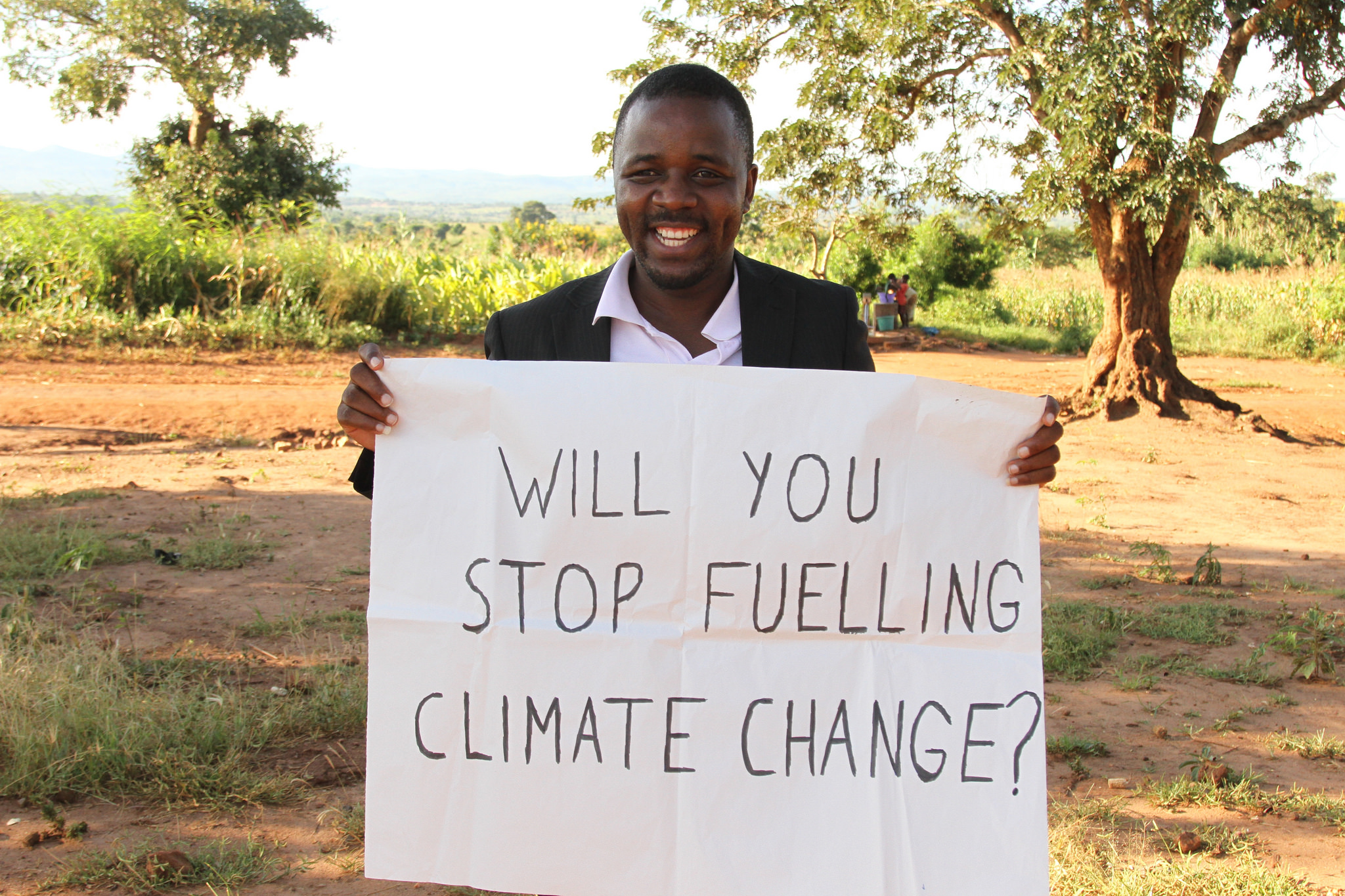
Some of the poorest countries in the world are unfortunately among the most vulnerable to the effects of climate change.   Malawi, for example, has 90% of its population in rural areas and 80% of its labor force is associated with agriculture.

[Read more…] about Solar Power And African Food Security

Primary Sidebar

Recent Episodes

  • An uninsurable future
  • Clean energy and jobs
  • Insect declines in remote regions
  • Fossil fuel producing nations ignoring climate goals
  • Trouble for clownfishes

WAMC Northeast Public Radio

WAMC/Northeast Public Radio is a regional public radio network serving parts of seven northeastern states (more...)

Copyright © 2026 ·