• Skip to primary navigation
  • Skip to main content
  • Skip to primary sidebar

Earth Wise

A look at our changing environment.

  • Home
  • About Earth Wise
  • Where to Listen
  • All Articles
  • Show Search
Hide Search
You are here: Home / Archives for internal combustion

internal combustion

The cost of electric vehicle batteries

April 4, 2025 By EarthWise Leave a Comment

The battery pack in an electric car is the most expensive part of the car. Currently, it accounts for as much as 30% of the price.  But EV batteries last a long time.  Most are guaranteed for 8-10 years and are likely to last as long as 20 years.  In practice, only 1.5% of electric cars need battery replacements for one reason or another.

The economics of EV batteries has changed dramatically over time and will continue to do so.  EV battery capacity is measured in kWh, the units you are charged for your home electricity.  An EV with a 300-mile driving range will have a battery pack that holds something like 75 kWh.

In 2008, when electric cars were just starting to enter the market again after earlier false starts, lithium-ion battery packs cost $1,355 per kWh.  When the Tesla Model S was introduced in 2012, packs were about $800. By 2019, packs broke the $200 per kWh barrier. Last year, lithium-ion battery packs reached $115 per kWh.

A combination of technology improvements and strong market competition with growing supplies is driving prices ever lower.  Industry analysts expect battery prices to drop well below $100 this year and reach about $80 next year.

The result of all of this cost reduction is that EVs will be cheaper than equivalent internal combustion vehicles, which in fact is already the case in China. Apart from cost, batteries for cars continue to improve so that the driving range of EVs will continue to increase making the cars more attractive and very practical for nearly all drivers.

**********

Web Links

How Much Do Electric Car Batteries Cost to Replace?

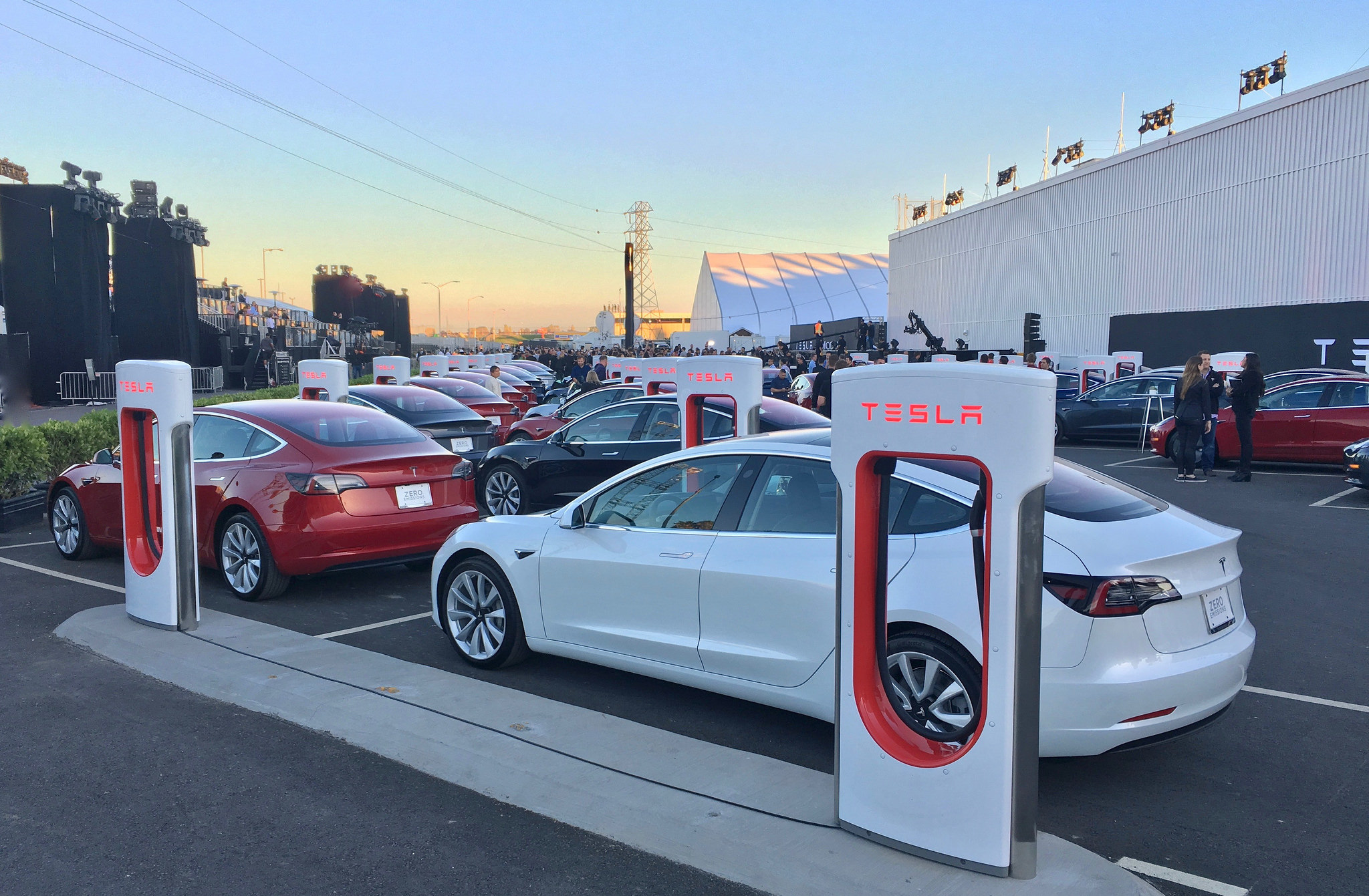
Photo, posted January 22, 2019, courtesy of Steve Rainwater via Flickr.

Earth Wise is a production of WAMC Northeast Public Radio
Electric vehicles and health

November 29, 2024 By EarthWise Leave a Comment

Studying the impact of electric vehicles on human health

Much of the discussion about the benefits of electric vehicles centers about the climate impact of not burning fossil fuels as well as about reduced operating costs.  A new study by the University of Toronto looked at the health benefits of large-scale adoption of electric vehicles.

The Toronto researchers used computer simulations to show that widespread electrification of the U.S. vehicle fleet when coupled with significant use of renewable energy to power the fleet could result in health benefits worth between $84 and $188 billion dollars by 2050.  Expressing these benefits in dollar terms is a way to quantify those benefits, but clearly what is most important is people’s health.

Carbon dioxide coming out of tailpipes is what is most harmful to the climate, but there is much more than CO2 vehicle exhaust.  There are many air pollutants that have a significant, quantifiable impact on human health.  These include nitrogen oxides, sulfur oxides, and small particles known as PM2.5. 

The study simulated levels of air pollution across the United States under various scenarios of adoption of EVs and the use of renewable energy.  The simulations clearly showed that the combination of widespread use of electric vehicles and the greening of the power grid would result in huge cumulative public health benefits.  But these benefits will take time to accrue.  The internal combustion vehicles being sold today will still be on the roads for many years and will continue to spread pollution everywhere there are roads.

**********

Web Links

New research reveals how large-scale adoption of electric vehicles can improve air quality and human health

Photo, posted May 7, 2020, courtesy of Mark Vletter via Flickr.

Earth Wise is a production of WAMC Northeast Public Radio
Solid-state batteries for cars

September 19, 2024 By EarthWise Leave a Comment

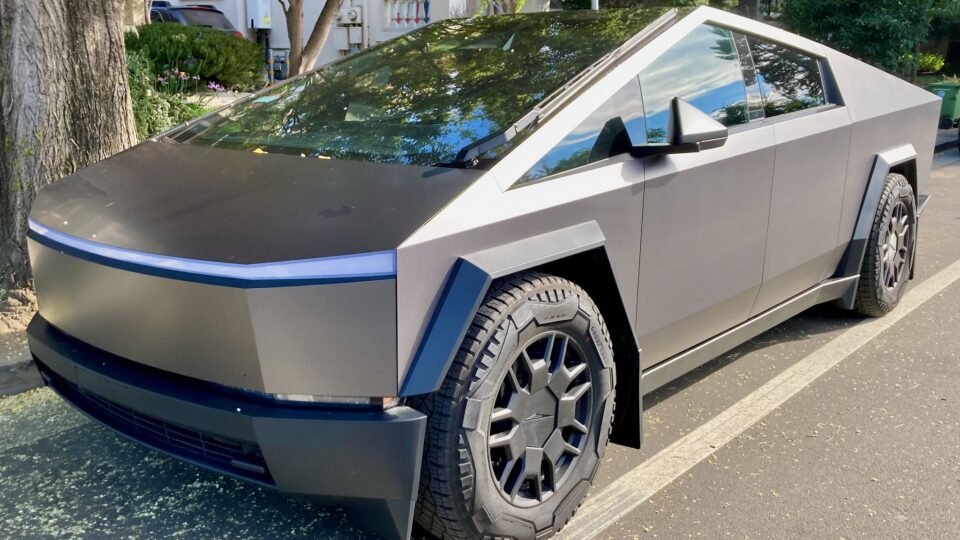
Battery-powered electric vehicles have historically faced the challenges of limited driving range and long charging time.  In recent years, both of these limitations have been largely overcome for many if not most drivers.  Popular EVs on the market can go 300 miles and more on a charge and today’s fastest charging networks can add 200 miles of range in 20 minutes.  But many people want even more range and even faster charging.  Both of these things will happen in the not-too-distant future.

Multiple companies are working on solid-state batteries, which hold more energy in a given volume than current batteries.  The lithium-ion batteries that power today’s EVs (as well as our phones and computers) have a liquid or gel electrolyte.  Solid-state batteries use a solid ceramic or polymer electrolyte that provides higher energy density, faster charging times, and reduced fire risk as well.

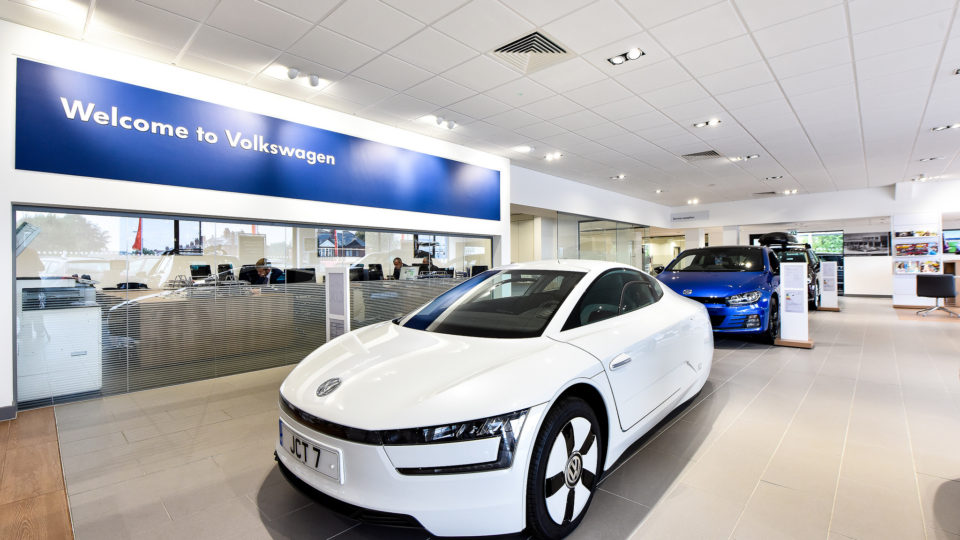
Samsung announced that it will produce solid-state batteries for vehicles by 2027.  Toyota says it is on track to develop a solid-state battery by 2027 or 2028.  California-based QuantumScape has an agreement to supply solid-state batteries to Volkswagen for mass production.  Tesla has not said what it is doing with regard to solid-state batteries, but it is likely that it’s also pursuing the technology.

The upshot of all of this is that EV ranges are likely to increase dramatically over the next several years leading to the availability of vehicles that can go 600 miles or more on a charge.  Given that the cost of EVs is already rapidly becoming at least competitive with if not lower than that of gasoline-powered cars, the days of internal combustion are becoming numbered.

**********

Web Links

Want an EV With 600 Miles of Range? It’s Coming

Photo, posted August 17, 2024, courtesy of Bill Abbott via Flickr.

Earth Wise is a production of WAMC Northeast Public Radio
Electric Cars Getting Cheaper | Earth Wise

April 12, 2023 By EarthWise Leave a Comment

Electric cars are getting cheaper

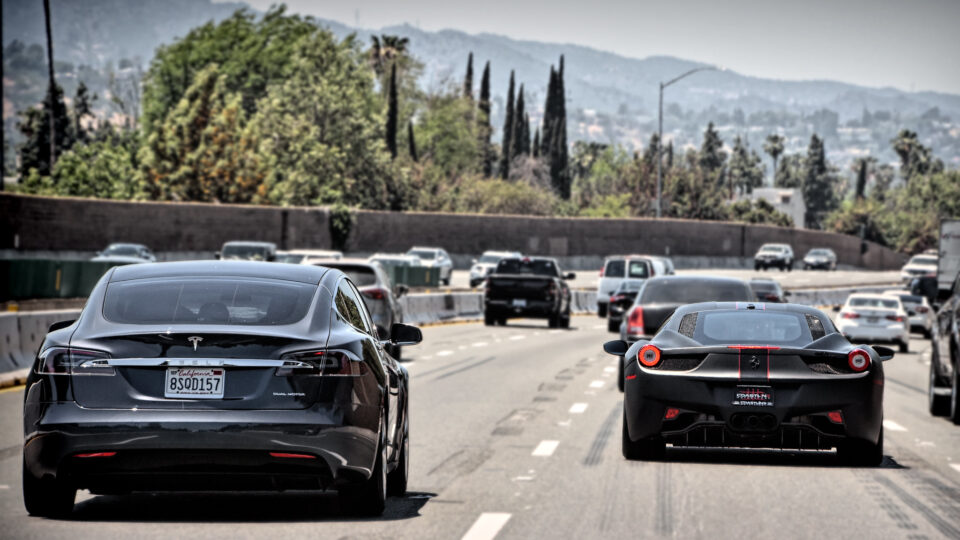
A sticking point for buying electric cars has always been that they are typically more expensive than equivalent gasoline-powered cars.  But increasing competition, government incentives, and falling prices for lithium and other battery materials is changing the equation.  In fact, the tipping point when electric cars are as cheap or even cheaper than internal combustion cars is likely to happen this year for many cars and, in fact, has already happened for some.

Battery production is ramping up for Tesla, General Motors, Ford, and others, creating cost savings from mass production. Companies manufacturing batteries in the United States are receiving government subsidies as part of a drive to establish a domestic supply chain and reduce dependence on China.  Before anyone cries foul, it should be noted that globally, oil companies received a trillion dollars in subsidies last year.  The Inflation Reduction Act is making it cheaper for automakers to build electric cars (provided they do it in the United States using US materials) and cheaper for consumers to buy them because of tax credits.

Multiple companies have lowered the price of their electric vehicles in recent months, including both the Tesla Model 3 and Model Y, which are the best-selling electric cars in the United States. GM’s electric Equinox crossover will start at about $30,000, which is still about $3,400 more than the gas-powered version.  But once the electric vehicle tax credit is figured in, it will actually be cheaper.

Electric cars are already cheaper to own and operate because of the much lower cost of powering with electricity instead of gas as well as the greatly reduced maintenance costs for the vehicles.  Once the purchase price of these cars is less than that of gas-powered cars, the economics becomes a no-brainer.

**********

Web Links

Electric Vehicles Could Match Gasoline Cars on Price This Year

Photo, posted May 11, 2021, courtesy of Chris Yarzab via Flickr.

Earth Wise is a production of WAMC Northeast Public Radio
The Carbon Footprint Of Electric Vehicles | Earth Wise

November 29, 2022 By EarthWise Leave a Comment

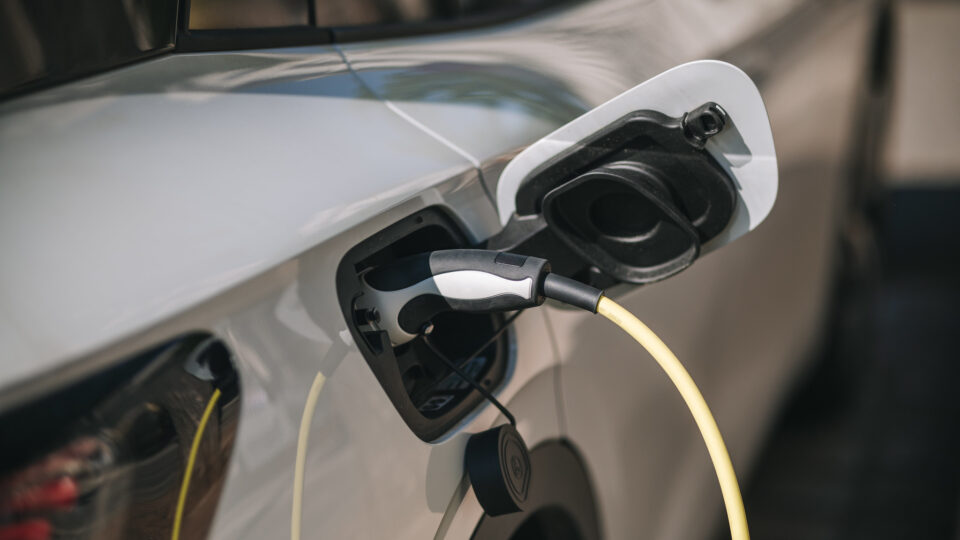
Electric vehicles are widely known to be the environmentally friendly alternative to internal combustion-based cars.   But there are skeptics who argue that EVs actually have a larger carbon footprint than nonelectric vehicles.  The argument is that the manufacturing and disposal of vehicle batteries is very carbon intensive.  They also point to the reliance on coal to produce the electricity that powers the cars.

These claims have led to multiple studies in the form of life-cycle analyses comparing the amount of greenhouse gases created by the production, use, and disposal of a battery electric vehicle to that associated with a gasoline-powered car of a similar size.

In short, the studies have found that while it is true that the production of a battery electric vehicle results in more emissions than a gasoline-powered one, this difference disappears as the vehicle is driven. 

According to a study conducted by the University of Michigan and financed by the Ford Motor Company, the emissions equation evens out in 1.4-1.5 years for sedans, 1.6-1.9 years for S.U.V.s, and about 1.6 years for pickup trucks.

Emissions from driving come from burning gas in the nonelectric vehicles and from the generation of electricity used by the battery-powered cars.  In the current average power mix across the U.S., driving an EV results in a 35% reduction in emissions.  However, it varies tremendously by location.  There are some places with very dirty power and some with very clean power.  But of the more than 3,000 counties in the U.S., only 78 end up with higher emissions from electric cars.  Of course, as the electric grid gets greener, the advantages of electric cars only become greater.

**********

Web Links

E.V.s Start With a Bigger Carbon Footprint. But That Doesn’t Last.

Photo, posted May 21, 2022, courtesy of Ivan Radic via Flickr.

Earth Wise is a production of WAMC Northeast Public Radio

Vehicle Electrification On The Rise | Earth Wise

August 21, 2020 By EarthWise Leave a Comment

increasing vehicle electrification

Nearly 70% of U.S. oil consumption is for transportation and transportation accounts for 28% of the country’s greenhouse gas emissions.  Therefore, technology improvements in transportation that can reduce emissions are a key element of combating climate change.  The highest impact strategy is the electrification of the transportation sector, and it is definitely accelerating.

Demand for electric vehicles is growing for multiple reasons.  These include long-term cost savings, tax incentives, declining battery costs, and greater environmental awareness.  This year, about 2.7 percent of global passenger vehicle sales will be for electric vehicles.  It is still a fairly small number, but that number is growing rapidly.  It is expected to be 10% in 2025, 28% in 2030, and more than half of all vehicle sales by 2040.  By that year, more than 30% of passenger vehicles on the road worldwide will be electric.  The numbers for electric buses, delivery vans and trucks, mopeds, scooters, and motorcycles are expected to be even higher.

The environmental impact of electrification will be significant in reducing carbon emissions and pollution in general.  Electric vehicles already reduce oil demand by a million barrels a day.  By the year 2040, they will displace nearly 18 million barrels of oil a day and reduce CO2 emissions by 2.5 billion tons per year.

Electric cars still face challenges.  They are still more expensive than gas-powered cars, but their cost-benefit analysis is changing rapidly as technology improvements and volume efficiencies drive down the cost of battery packs.  Analysts predict that electric vehicles will achieve price parity with internal combustion vehicles in as soon as two years but in any case within the next ten years.

**********

Web Links

Electrification of transportation sector nears tipping point

Photo, posted May 7, 2020, courtesy of Mark Vletter via Flickr.

Earth Wise is a production of WAMC Northeast Public Radio.

China And Electric Cars

December 19, 2017 By EarthWise Leave a Comment

https://earthwiseradio.org/wp-content/uploads/2017/12/EW-12-19-17-China-and-Electric-Cars.mp3

While American politicians were voting on eliminating tax credits for buyers of electric vehicles, auto executives from around the world were gathering to make ambitious plans to sell more electric cars in China.

[Read more…] about China And Electric Cars

Ditching Gas And Diesel Cars

September 14, 2017 By EarthWise

https://earthwiseradio.org/wp-content/uploads/2017/09/EW-09-14-17-Ditching-Gas-and-Diesel-Cars.mp3

Electric cars represent only a tiny fraction of the overall auto market.  The numbers are growing, most certainly, but they are still quite small in most places.   The recent start of production of the Tesla Model 3 has attracted quite a bit of attention to electric cars, but in many countries, there is much more to the story than just media buzz about a new car.

[Read more…] about Ditching Gas And Diesel Cars

Primary Sidebar

Recent Episodes

  • An uninsurable future
  • Clean energy and jobs
  • Insect declines in remote regions
  • Fossil fuel producing nations ignoring climate goals
  • Trouble for clownfishes

WAMC Northeast Public Radio

WAMC/Northeast Public Radio is a regional public radio network serving parts of seven northeastern states (more...)

Copyright © 2026 ·