• Skip to primary navigation
  • Skip to main content
  • Skip to primary sidebar

Earth Wise

A look at our changing environment.

  • Home
  • About Earth Wise
  • Where to Listen
  • All Articles
  • Show Search
Hide Search
You are here: Home / Archives for industrial scale

industrial scale

Soda can hydrogen

August 15, 2025 By EarthWise Leave a Comment

Produce green hydrogen from soda cans

Hydrogen is an ideal climate-friendly fuel because it doesn’t release carbon dioxide when it is used.  But most hydrogen is produced in ways that result in significant carbon emissions. Thus, the search for green hydrogen goes on. 

Last year, engineers at MIT developed a new process for making hydrogen that significantly reduces the carbon footprint of its production.  The recipe uses seawater and recycled soda cans. 

Pure aluminum reacts with water, breaking up the water molecules to produce aluminum oxide and pure hydrogen.  But when aluminum is exposed to oxygen, it forms a shield-like layer that prevents the reaction.

The MIT researchers found that the shield can be removed by treating aluminum with a small amount of gallium-indium alloy.  Mixing the pure aluminum with seawater not only produces hydrogen, but the salt in the seawater precipitates out the gallium-indium, making it available for reuse.

The research team carried out a “cradle-to-grave” life cycle assessment of the process, taking into account every step in using the hydrogen-production process at an industrial scale.  They found that using recycled aluminum – chopped-up soda cans – is environmentally and economically superior to using “primary” aluminum, mined from the earth. The cans would be shredded into pellet and treated with the gallium-indium alloy.  The pellets would be processed near a source of seawater where they would be combined to generate hydrogen on demand.

According to their analysis, the hydrogen produced would be at least competitive economically and environmentally with other potential methods of producing green hydrogen.

**********

Web Links

Study shows making hydrogen with soda cans and seawater is scalable and sustainable

Photo, posted July 29, 2020, courtesy of Bruce Dupree via Flickr.

Earth Wise is a production of WAMC Northeast Public Radio

A biostimulant for wheat

May 28, 2025 By EarthWise Leave a Comment

Developing a biostimulant for wheat to boost crop yields

Feeding a global population projected to reach nearly 10 billion by mid-century is a massive challenge.  Wheat provides a fifth of the calories in the global human diet and is a significant source of protein, minerals, vitamins, and fiber.  Finding ways to increase the yield of wheat crops has great value.  However, wheat has complex genetics, which makes it difficult to improve yields by traditional breeding methods or even by genetic engineering.

Researchers at Oxford University and the nearby Rosalind Franklin Institute have developed a biostimulant that can deliver increased wheat yields of up to 12%.  It is applied as a spray and a four-year study in Argentina and Mexico demonstrated that it delivers major yield improvements irrespective of weather conditions.

The biostimulant is based on trehalose 6-phosphate (T6P), which is a natural molecule that regulates the plant equivalent of blood sugar.  T6P prompts plants to produce more starch and increases the rate of photosynthesis.

Naturally occurring T6P cannot be applied topically because it cannot cross cell membranes.  The researchers developed a membrane-permeable precursor of T6P that releases T6P into a plant in the presence of sunlight.

The biostimulant can be manufactured on an industrial scale and would be inexpensive to use. 

The researchers have created SugaROx, a spinout company whose mission is “to increase the productivity, resilience, sustainability, and profitability of crop production” using active ingredients inspired by powerful natural plant molecules.

**********

Web Links

New biostimulant treatment significantly boosts wheat yields, field studies confirm

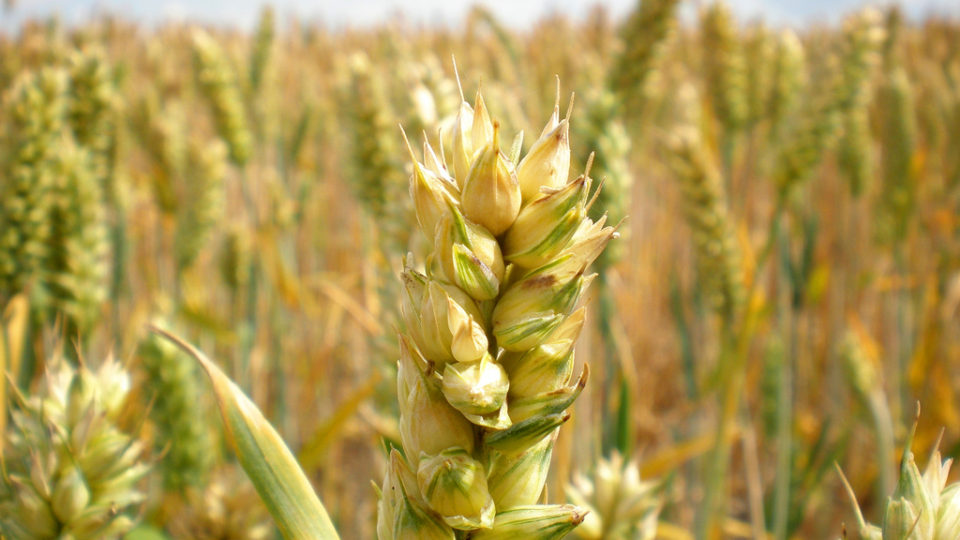
Photo, posted July 28, 2014, courtesy of Brad Higham via Flickr.

Earth Wise is a production of WAMC Northeast Public Radio

A New Way to Make Hydrogen

January 31, 2019 By EarthWise Leave a Comment

Many people consider hydrogen to be the fuel of the future, both for powering vehicles and for storing energy generated by renewable sources.   Hydrogen itself is a clean and green fuel.  Generating energy from it using fuel cells results in only water as a byproduct.

The biggest problem with hydrogen is that the most economical way to produce it and therefore the way most hydrogen is produced today, is by reforming natural gas, which is a process that generates carbon emissions.

The desirable way to make hydrogen is to produce it by breaking apart water into its hydrogen and oxygen components, a process known as electrolysis.   There are many ways to do it, but none of them to date measures up in terms of efficiency, cost, and longevity.

Researchers at the University of Toronto have recently developed a new catalyst that uses abundant, low-cost elements to split water molecules into hydrogen and oxygen.  The catalyst is made from copper, nickel, and chromium, all of which are more abundant and less costly than platinum, which is the usual electrolysis catalyst.

The new catalyst performs well under pH-neutral conditions, which means it could even work on seawater without incurring the expense of desalination.  The Toronto researchers also believe their catalyst could be used as part of a process to make hydrocarbon fuels from hydrogen and CO22.  Their group is among the five finalists in the Carbon XPrize competition, which has a grand prize of $7.5 million for finding a way to convert waste CO2 into fuel.

Finding a low-cost, energy-efficient, and reliable way to make hydrogen out of water will be a big deal if it can be done on an industrial scale.

**********

Web Links

U of T researchers discover low-cost way to produce hydrogen from water

Photo, posted July 23, 2015, courtesy of Magnus Johansson via Flickr.

Earth Wise is a production of WAMC Northeast Public Radio.

Saving Wheat

July 3, 2018 By EarthWise Leave a Comment

https://earthwiseradio.org/wp-content/uploads/2018/07/EW-07-03-18-Saving-Wheat.mp3

Rising temperatures, drought, pests and diseases are moving north into the U.S. heartland and are increasingly posing a threat to the wheat crop.  An insect called the Hessian fly is reducing crop yields by 10% a year in the Midwest.  Average temperatures in the Midwest have risen by 2 degrees since 2000, and periods of time between rainfalls is lengthening.  Conditions in some areas of the Midwest are getting to be more like those in the Middle East.

[Read more…] about Saving Wheat

Primary Sidebar

Recent Episodes

  • An uninsurable future
  • Clean energy and jobs
  • Insect declines in remote regions
  • Fossil fuel producing nations ignoring climate goals
  • Trouble for clownfishes

WAMC Northeast Public Radio

WAMC/Northeast Public Radio is a regional public radio network serving parts of seven northeastern states (more...)

Copyright © 2026 ·