• Skip to primary navigation
  • Skip to main content
  • Skip to primary sidebar

Earth Wise

A look at our changing environment.

  • Home
  • About Earth Wise
  • Where to Listen
  • All Articles
  • Show Search
Hide Search
You are here: Home / Archives for indoor

indoor

Indoor air and outdoor pollution

July 11, 2025 By EarthWise Leave a Comment

How outdoor pollution can impact indoor air quality

The majority of us spend about 80% of our time indoors.   The quality of the air that we breathe depends on the age and type of building we occupy along with any sources of indoor pollution that may exist and, ultimately, the quality of the air outdoors.  The HVAC used to heat, ventilate, and cool the building plays an important role.

The College of Engineering at the University of Utah used its Salt Lake City campus as a living laboratory to explore how outdoor air pollution affects indoor air quality.  Specifically, the nature of outdoor pollution sources strongly affected how effectively HVAC systems prevented external sources from getting into buildings.

Of particular concern is fine particulate matter with a diameter of less than 2.5 microns.  These PM 2.5 particles can penetrate deeply into lungs, potentially causing health problems like respiratory irritation and heart disease.

There are multiple sources of PM 2.5.  The Utah study found that wildfire smoke had four to five times more PM 2.5 infiltration into buildings than pollution from inversions and wind-driven dust events.

An additional finding was that commercial HVAC systems that use air-side economizers are much less effective at keeping out particulate matter.  These systems use special duct and damper systems that reduce energy use by drawing air from outdoors when temperature and humidity levels are optimum.

**********

Web Links

Does outdoor air pollution affect indoor air quality?

Photo, posted June 15, 2024, courtesy of Peter Burka via Flickr.

Earth Wise is a production of WAMC Northeast Public Radio
Artificial plants to clean indoor air

December 12, 2024 By EarthWise Leave a Comment

The average American spends about 90% of their time indoors breathing the air in our workplaces, homes, or schools.  The quality of this air affects our overall health and well- being.  Indoor air quality is an issue because many sources can generate toxic materials, including building materials, carpets, and more.  But high levels of carbon dioxide are a health hazard themselves. Indoor CO2 levels can often be 5 to 10 times higher than the already heightened levels in the atmosphere. 

Many of us make use of air purification systems, which can be expensive, cumbersome, and require frequent cleaning and filter replacements.

Researchers at Binghamton University in New York are working to develop artificial plants that consume carbon dioxide, give off oxygen, and, as a bonus, generate a little electricity. These artificial plants make use of the artificial light in the indoor environment to drive photosynthesis.  They achieve a 90% reduction in carbon dioxide levels, which is far more than natural plants can achieve.

The Binghamton researchers had been working on bacteria-powered biobatteries for various applications, but they repurposed the work into a new idea for artificial plants.  The artificial plants have “leaves” containing a biological solar cell and photosynthetic bacteria.  Their first plant had five leaves and demonstrated promising carbon dioxide capture rates and oxygen generation.  It also produced a little electricity.  If its generating capacity can be improved, it might also be useful for charging cell phones or other practical applications.

**********

Web Links

Binghamton researchers develop artificial plants that purify indoor air, generate electricity

Photo, posted October 13, 2012, courtesy of F. D. Richards via Flickr.

Earth Wise is a production of WAMC Northeast Public Radio
Controlled Environment Agriculture | Earth Wise

October 24, 2023 By EarthWise Leave a Comment

The term “controlled environment agriculture” (or CEA) refers to any number of systems embodying a technology-based approach to farming.  CEA can range from simple shade structures to greenhouses to full indoor or vertical farms.  At the most advanced level, CEA systems are fully automated, closed loop systems with controlled lighting, water, and ventilation.   Many systems make use of hydroponics rather than traditional soil.

The goal of CEA systems is to provide optimum growing conditions for crops and prevent disease and pest damage. 

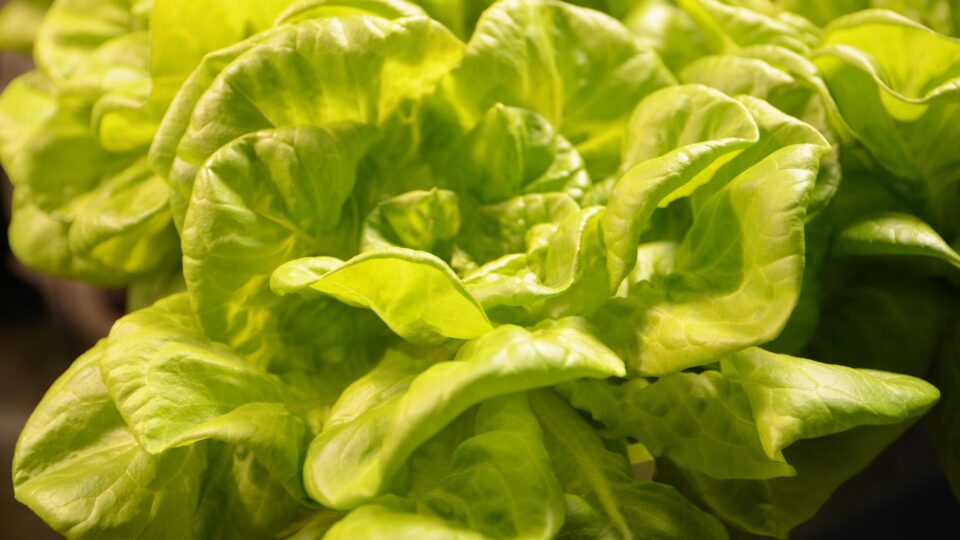
A recent study by the University of Surrey in the UK sought to understand the impact of using CEA systems to grow lettuce, which is a high-value crop that is often grown in such systems.

The study found that, on average, CEA methods produce double the crop yields compared to field-based agriculture.  They also found that the cultivation time of CEA yields was, on average, 40 days.  This compares with an average cultivation time of 60-120 days for field-based agriculture.  More specifically, production of lettuce using CEA was 50% faster in the summer and up to 300% faster in the winter.

Climate change presents many difficult challenges to society, not the least of which is its threat to food security.  Controlled environment agriculture could allow cultivation of crops in harsh environments and in the face of changing climates.  Quantifying the benefits CEA can have on yield and growth provides important information for advancing our understanding of where and when this technology can bring the most value to society. 

**********

Web Links

Using artificial methods for growing crops could help solve global food security

Photo, posted February 24, 2013, courtesy of Cindy Kurman / Kurman Photography via Flickr.

Earth Wise is a production of WAMC Northeast Public Radio

Houseplants And Indoor Air Quality | Earth Wise

April 11, 2022 By EarthWise Leave a Comment

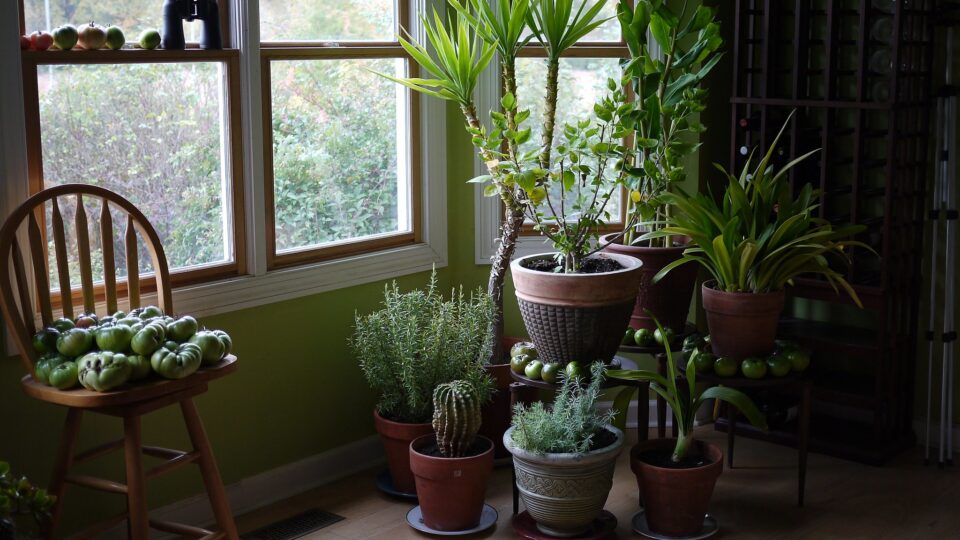
Many of us have houseplants in our homes and offices.  The foliage and flowers add beauty and comfort to our indoor spaces.  But it turns out that there are health advantages as well.

Many studies have demonstrated that indoor houseplants can help keep you happier and healthier by improving your mood, reducing fatigue, lowering stress and anxiety, and improving focus.  Houseplants can also improve indoor air quality.

According to a new study by researchers from the University of Birmingham in the U.K. in partnership with the Royal Horticultural Society, ordinary houseplants can potentially make a significant contribution to reducing indoor air pollution.

The researchers tested three types of houseplants commonly found in homes in the U.K: Peace lily, corn plant, and fern arum.  These plants are easy to maintain and not overly expensive. 

In the study, the research team exposed these houseplants to nitrogen dioxide, which is a common indoor pollutant.  The plants were isolated in a test chamber containing levels of nitrogen dioxide comparable to what might be in an office situated next to a busy road.  The researchers found that all the plants were able to remove about half of the nitrogen dioxide in the chamber in just one hour.    

In a poorly ventilated small office with high levels of air pollution, the researchers calculated that five houseplants would remove up to 20% of the nitrogen dioxide.  In a larger space, the effect would be smaller – around 3.5% – although this figure could be increased by adding more plants.

Bringing nature indoors is one way to breathe cleaner air.

**********

Web Links

Common houseplants can improve air quality indoors

Reducing air pollution with plants

Photo, posted September 21, 2014, courtesy of Olin Gilbert via Flickr.

Earth Wise is a production of WAMC Northeast Public Radio.

An Indoor Farm In Upstate New York | Earth Wise        

March 11, 2022 By EarthWise Leave a Comment

Indoor farms to help feed the world

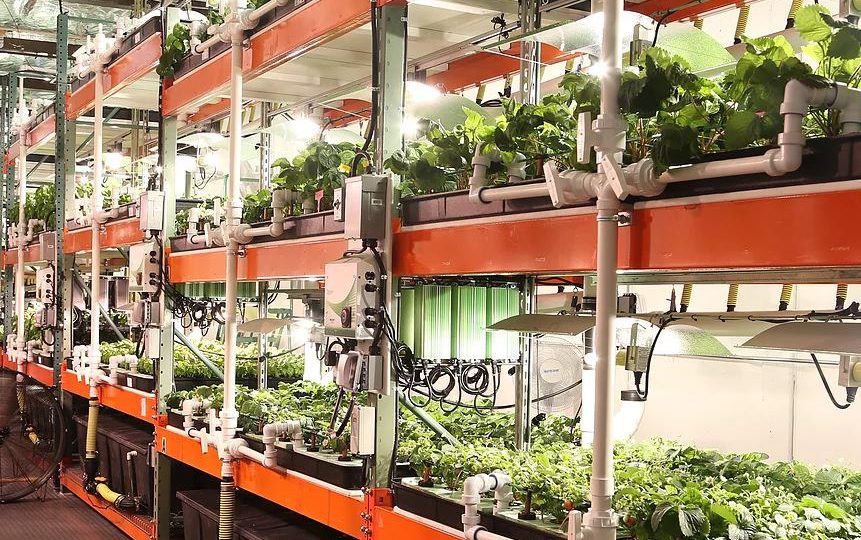
Vertical farming is the practice of growing crops in vertically stacked layers, generally under controlled environments and using soilless farming techniques like hydroponics, aquaponics, and aeroponics.   Vertical farms are housed in structures such as buildings, shipping containers, tunnels, and abandoned mineshafts.

The potential advantages of vertical farms are that they are very efficient in terms of the amount of land required to produce a given amount of crop, they are resistant to weather, and they allow crops to be produced in close proximity to where they will be used.

The vacant third floor of a building in downtown Glens Falls, New York is about to become the home of a small vertical farm.  The facility will be used to hydroponically grow things like fresh basil, lettuce, and fruits to be used by nearby restaurants.  In fact, the first floor of the building is a restaurant that will be a customer for the crops growing upstairs.  Other local restaurants are likely to benefit as well.

Th pilot program is being funded by a grant from the Smart Cities Innovation Partnership that the city applied for in 2020.  Glens Falls is partnering with Re-Nuble, a New York City-based renewability and sustainability firm.  Apart from the vertical farm project, Re-Nuble also advises on reduction of food waste by composting and on the selection of energy-efficient equipment.

The pilot program will run for a year and the results will be used for scaling it up to a larger vertical farm.  Vertical farms like these are not intended to replace conventional farms but can supplement the existing food stream and provide items that are hard to obtain during the year.

**********

Web Links

Glens Falls is fitting a farm inside a downtown building

Photo, posted July 15, 2007, courtesy of Toshiyuki Imai via Flickr.

Earth Wise is a production of WAMC Northeast Public Radio.

A Solar-Powered Vertical Farm

November 21, 2017 By EarthWise 1 Comment

https://earthwiseradio.org/wp-content/uploads/2017/11/EW-11-21-17-A-Solar-Powered-Vertical-Farm.mp3

Vertical farming is a method for producing crops in vertically stacked layers or surfaces typically in a skyscraper, used warehouse, or shipping container.  Modern vertical farming uses indoor farming techniques and controlled-environment agriculture technology.

[Read more…] about A Solar-Powered Vertical Farm

Houseplants And Clean Air

October 6, 2016 By WAMC WEB

https://earthwiseradio.org/wp-content/uploads/2016/10/EW-10-06-16-Houseplants-and-Clean-Air.mp3

Many of us like to have houseplants.  They add a bit of nature to our homes and they look nice.   It turns out that they have health advantages as well.

[Read more…] about Houseplants And Clean Air

Primary Sidebar

Recent Episodes

  • An uninsurable future
  • Clean energy and jobs
  • Insect declines in remote regions
  • Fossil fuel producing nations ignoring climate goals
  • Trouble for clownfishes

WAMC Northeast Public Radio

WAMC/Northeast Public Radio is a regional public radio network serving parts of seven northeastern states (more...)

Copyright © 2026 ·