• Skip to primary navigation
  • Skip to main content
  • Skip to primary sidebar

Earth Wise

A look at our changing environment.

  • Home
  • About Earth Wise
  • Where to Listen
  • All Articles
  • Show Search
Hide Search
You are here: Home / Archives for hydrology

hydrology

Glacier Loss Day | Earth Wise

October 9, 2023 By EarthWise Leave a Comment

Glaciers are sensitive indicators of climate change

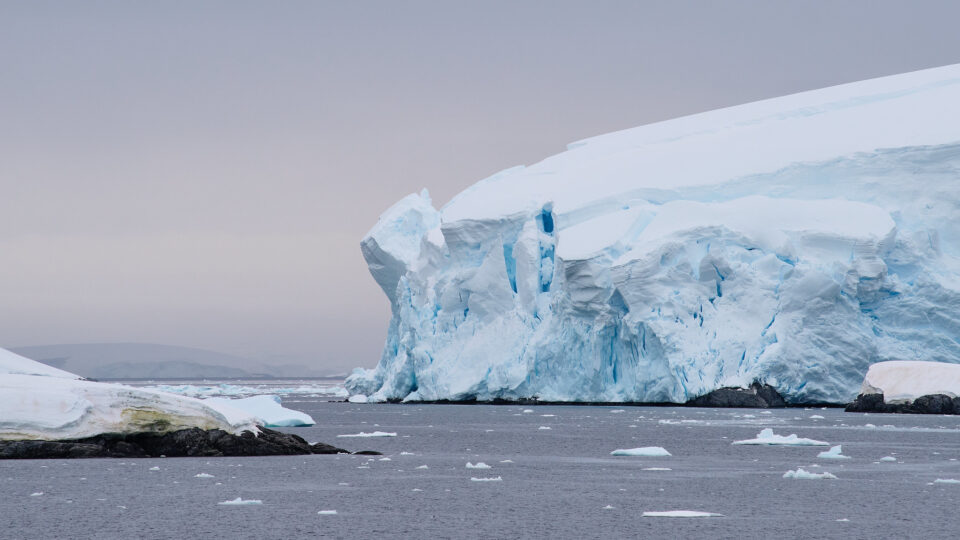
Glaciers are sensitive indicators of climate change that respond to changes in both temperature and precipitation.  But they are not only affected by climate change, they also affect climate change.  As glaciers melt, they contribute to sea level rise, alter regional hydrology, and influence the global energy balance.

A group of glacier experts from the University of Innsbruck in Austria introduced a concept called “Glacier Loss Day” or GLD as a way to measure the annual mass balance of glaciers.  Mass balance is the difference between the amount of snow and ice that accumulates on a glacier and the amount that melts or sublimates.  If the mass balance is positive, the glacier is growing.  If the mass balance is negative, the glacier is shrinking.

GLD is the day during the year when the glacier has lost all the mass it gained during previous winter.  This is a similar concept to Earth Overshoot Day, which marks the date when humankind’s demand for ecological resources exceeds the amount the planet can regenerate during the year.

The Hintereisferner, a glacier in the Tyrolean Alps, has been monitored for more than 100 years and there are continuous records of its mass balance since 1952.  In 2022, the GLD on the Hintereisferner was measured on the 23rd of June.  In the two previous years, it was reached in the middle of August.  Even in years with large negative balances, such as 2003 and 2018, GLD did not occur until the end of July.

Every summer in the future may not be like 2022, but the trend is clear.  Climate change is taking its toll on glaciers.  Experts project that the Hintereisferner will lose half of its volume in the next 10 to 20 years.

**********

Web Links

Glacier Loss Day indi­cates record break­ing glacier melt

Photo, posted July 20, 2023, courtesy of Pedro Szekely via Flickr.

Earth Wise is a production of WAMC Northeast Public Radio
Pumped Hydro Storage In Switzerland | Earth Wise

September 15, 2022 By EarthWise Leave a Comment

Pumped hydro energy storage is still by far the largest form of energy storage in the world, representing more than 90% of storage capacity worldwide.  The theory behind it is simple.  Water is pumped into an upper reservoir (that is, one at a higher elevation), and when electricity is needed, the water is allowed to flow downhill to power turbines and then is collected in a lower reservoir.   When there is excess electricity, it is used to pump water back uphill for use later.

Pumped hydro installations can’t be built just anywhere.  Geography and hydrology have to be suitable, which means high voltage transmission lines need to be constructed to link electricity sources like wind and solar farms with the storage location.  But in those situations where pumped hydro makes sense, it is a great solution to the energy storage problem.

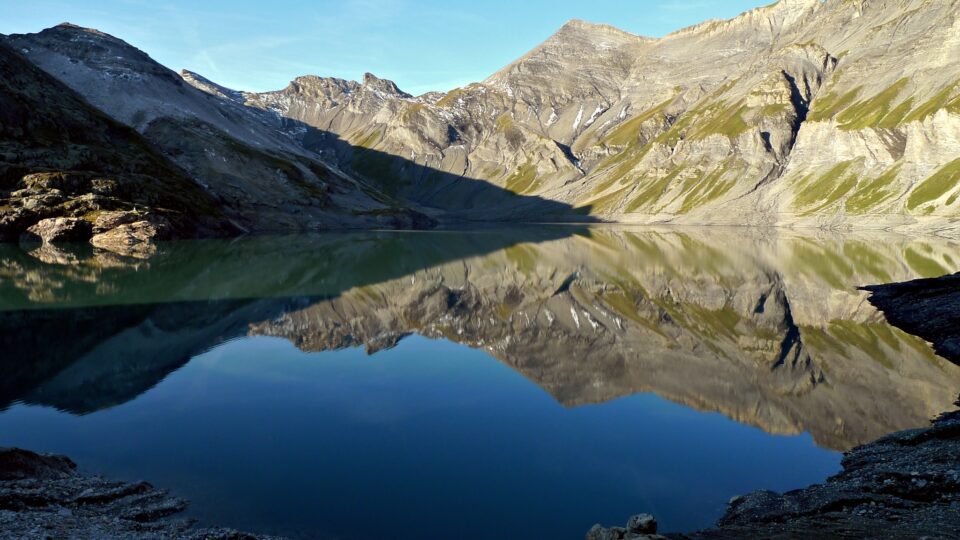
Switzerland has just completed one of the largest pumped hydro facilities in the world.  The Nant de Drance installation makes use of the Emosson reservoir, which is an artificial lake built high in the Alps near the French border.  Over the past 14 years, 10 miles of tunnels have been dug into the mountains to connect the Emosson reservoir to the Vieux Emosson reservoir to the south.

In between the two reservoirs is a giant underground cavern where six of the largest water-driven turbines in the world are spun from the water rushing down from above.  The turbines have a capacity of 900 megawatts, making Nant de Drance one of the most powerful generating plants in Europe.  In terms of storage capacity, the installation has a maximum capacity of 20 gigawatt-hours, and can store that energy indefinitely, which is challenging for other storage technologies.

**********

Web Links

14 Years In The Making, 20 GWh Pumped Hydro Storage Facility Comes To Switzerland (With Video)

Photo, posted September 7, 2009, courtesy of Flickr.

Earth Wise is a production of WAMC Northeast Public Radio.

Beavers Are Flooding The Warming Arctic | Earth Wise

March 14, 2022 By EarthWise Leave a Comment

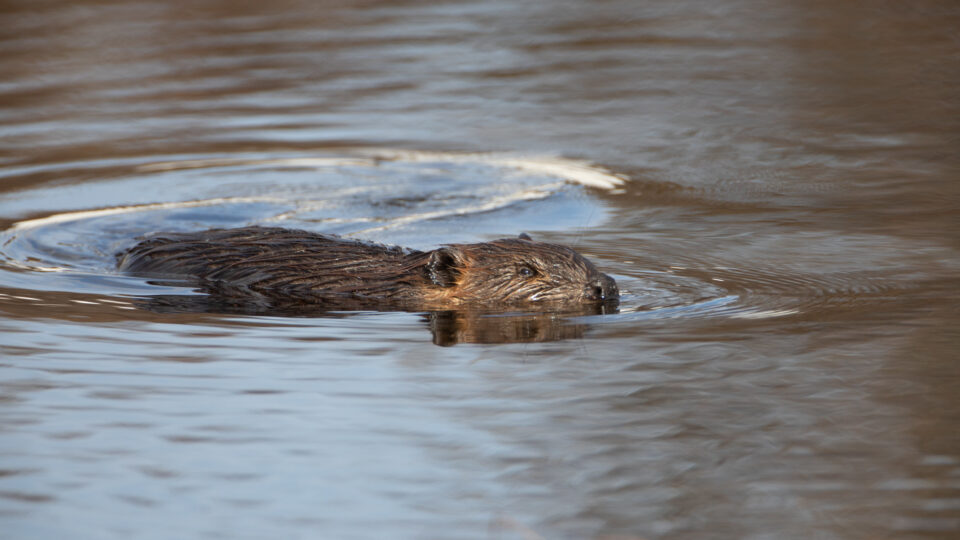
Beavers are flooding the warming Arctic

The accelerating warming in the Arctic has transformed the region into a warmer, wetter, and more diverse environment.  Warming temperatures have encouraged the increasing growth of vegetation, particularly shrubs that provide beavers with bark to eat and branches to build with.  Warming temperatures also mean that lakes and streams freeze solid for shorter periods of time or not at all, allowing beavers to pursue their construction projects for longer periods during the year.

Prior to the mid-1970s, residents of the Alaskan Arctic encountered few beaver ponds.  In 2018, researchers using satellite imagery mapped 12,000 beaver ponds in Alaskan tundra.

Beavers are causing major changes in the streams and floodplains that many small Alaskan villages depend upon for food, water, and navigation.  As the rodents transform lowland tundra ecosystems, they are eliminating food sources, deteriorating water quality, and making it difficult to navigate waterways.

The migration of beavers across the Arctic landscape is largely a result of climate change.  But it is also becoming one of the factors amplifying climate change.  Scientists are trying to figure out the degree of permafrost thawing that beaver dam-and-den building is causing and how fast these defrosted organic soils will degrade and release trapped carbon and methane.

Beaver dams alter the hydrology of streams by slowing the flow, storing and spreading water to create wetlands, raising the water table, and lowering the oxygen content of the water. 

Climate-driven changes in species distributions affect human well-being as entire ecosystems continue to change.  Shifts in animal habitat stimulated by climate change could have profound consequences across the globe.

**********

Web Links

Beavers Are Flooding the Warming Alaskan Arctic, Threatening Fish, Water and Indigenous Traditions

Photo, posted June 12, 2018, courtesy of Peter Pearsall/USFWS via Flickr.

Earth Wise is a production of WAMC Northeast Public Radio.

Pine Barrens Threatened

September 29, 2017 By EarthWise Leave a Comment

https://earthwiseradio.org/wp-content/uploads/2017/08/EW-09-29-17-Pine-Barrens-Threatened.mp3

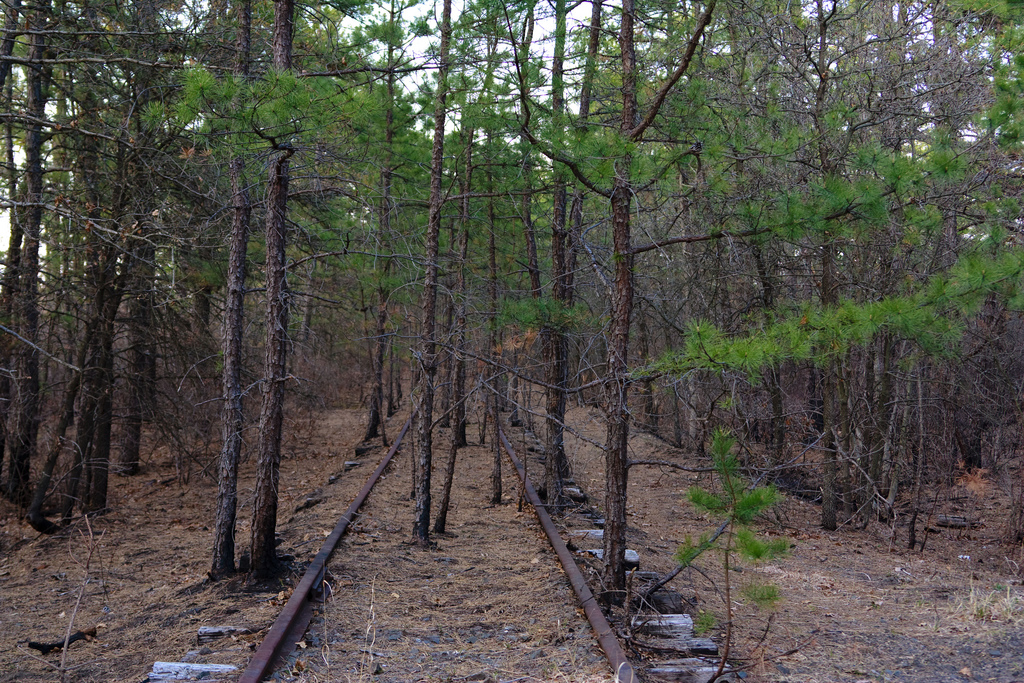
Pine barrens occur throughout the northeastern U.S. from New Jersey to Maine.  They are plant communities that occur on dry, acidic, infertile soils dominated by grasses, forbs, low shrubs, and small to medium-sized pines.  The Pine Bush Preserve in Albany, New York is one of the larger inland pine barrens in the country.

[Read more…] about Pine Barrens Threatened

Primary Sidebar

Recent Episodes

  • An uninsurable future
  • Clean energy and jobs
  • Insect declines in remote regions
  • Fossil fuel producing nations ignoring climate goals
  • Trouble for clownfishes

WAMC Northeast Public Radio

WAMC/Northeast Public Radio is a regional public radio network serving parts of seven northeastern states (more...)

Copyright © 2025 ·