• Skip to primary navigation
  • Skip to main content
  • Skip to primary sidebar

Earth Wise

A look at our changing environment.

  • Home
  • About Earth Wise
  • Where to Listen
  • All Articles
  • Show Search
Hide Search
You are here: Home / Archives for historical

historical

Moving Endangered Species | Earth Wise

December 5, 2022 By EarthWise Leave a Comment

The risks and rewards of relocating endangered species

People have intentionally or accidentally introduced numerous invasive species to habitats around the world.  At the same time, the planet’s wildlife is in a steep decline.  A recent study estimated that the populations of over 5,000 vertebrate species have declined by an average of nearly 70% since 1970.  A United Nations report warns that human activity has threatened as many as a million species with extinction.

With all of this as a background, there is climate change that is altering the habitats of the world’s species – warming lakes and oceans, turning forests into grasslands, tundra into woodland, and melting glaciers.  In response to these changes, living things are rearranging themselves, migrating to more hospitable locations.  But many species are just not capable of finding more suitable habitats on their own.

Conservationists are now increasingly considering the use of assisted migration. In some cases, when a species’ critical habitat has been irreversibly altered or destroyed, agencies are establishing experimental populations outside of the species’ historical range.  Such actions are often deemed extreme but may be increasingly necessary.

However, clear-cut cases are relatively rare.  More likely, it is a more difficult judgement call as to whether assisted migration is a good idea or is possibly a threat to the ecosystem of the species’ new location.  The relative dearth of assisted migration experiments is less likely a result of legal barriers than it is a lack of scientific and societal consensus on the practice. Scientists are now trying to develop risk-analysis frameworks that various agencies can use in considering potential assisted migration experiments. 

**********

Web Links

Last Resort: Moving Endangered Species in Order to Save Them

Photo, posted March 18, 2010, courtesy of Jean via Flickr.

Earth Wise is a production of WAMC Northeast Public Radio
The New Normal Weather

March 13, 2019 By EarthWise Leave a Comment

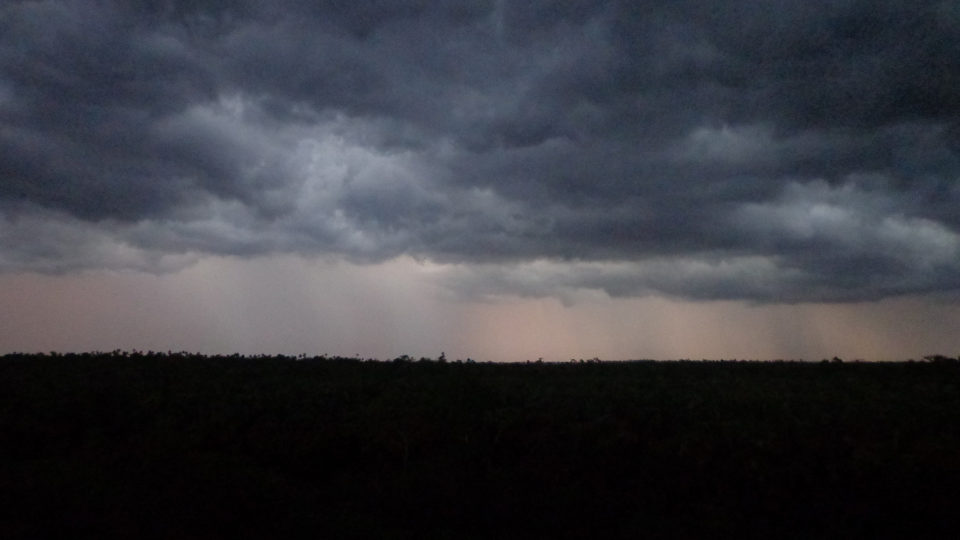
We often hear about how the weather is getting stranger all the time, but do most of us really think so?  What kinds of weather do we really find remarkable and has that been changing?

A study led by the University of California, Davis used some very modern tools to examine the question of what people might consider to be “normal” weather.  To reach their conclusions, they quantified the timeless pastime of talking about the weather by analyzing Twitter posts.  They sampled over 2 billion geolocated tweets to determine what kind of events generated the most posts about the weather.

Unsurprisingly, they found that people most often tweet when temperatures are unusual for a particular place and time of year.  However, if the same weather persisted year after year, it generated less comment on Twitter, indicating that people began to view it as normal in a relatively short amount of time.

The study indicates that people have short memories when it comes to what they consider normal weather.  On average, most people base their idea of normal weather on what has happened in just the past two up to maybe eight years.  This disconnect with the historical climate record may obscure the public’s perception of climate change.

After repeat exposures to historically-extreme temperatures, people talk less about the weather, even though particularly hot or cold weather conditions make them unhappy and grumpy.  Even though we are experiencing conditions that are historically extreme, we might not consider them to be particularly unusual if we tend to forget what happened more than a few years ago.  Things may be getting worse, but they apparently are just the new normal.

**********

Web Links

Tweets tell scientists how quickly we normalize unusual weather

Photo, posted March 11, 2013, courtesy of Adedotun Ajibade via Flickr.

Earth Wise is a production of WAMC Northeast Public Radio.

Melting Ice In Greenland

January 18, 2019 By EarthWise Leave a Comment

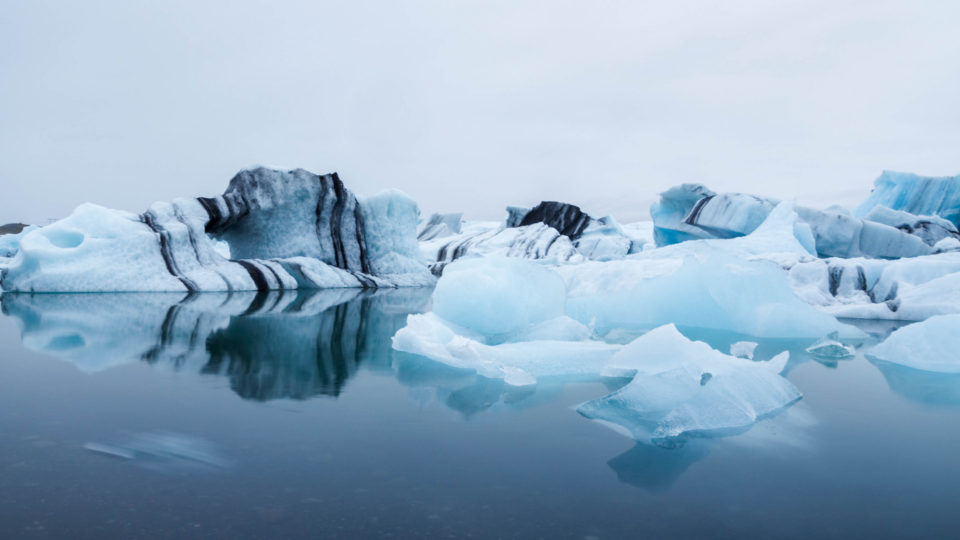
The Greenland ice sheet is the second largest ice body in the world after the Antarctic ice sheet.  It covers over 660,000 square miles, more than twice the size of the state of Texas.  But it is melting.

According to a new study published in the journal Nature, the Greenland ice sheet is melting faster today than at any point in the last 350 years.  A team of U.S. and European researchers analyzed more than three centuries of melt patterns in ice cores from western Greenland. They then linked this historical data to modern observations of melting and runoff across the entire ice sheet.

According to the researchers, from an historical perspective, today’smelt rates are off the charts.  There is a 50% increase in total ice sheet melt water runoff since the start of the industrial era and a 30% increase since the 20th century alone.

Over the last 20 years, melt intensity has increased 250 to 575 percent compared to pre-industrial melt rates. The period from 2004-2013, the most recent decade analyzed, experienced a more sustained and greater magnitude of melt than in any previous 10-year period in the 350-year record.

The Greenland ice sheet is the largest single contributor to global sea level rise.  It is adding 72 cubic miles of meltwater to the world’s oceans every year.

The melting of the Greenland ice sheet is accelerating which is a frightening prospect.  If the sheet were to melt in its entirety, global sea levels would rise by 23 feet.  The world needs to do whatever it can to keep that doomsday scenario from happening.

**********

Web Links

Greenland Ice Sheet Melting At Fastest Rate in 350 Years

Photo, posted September 8, 2014, courtesy of Marco Verch via Flickr.  

Earth Wise is a production of WAMC Northeast Public Radio.

Primary Sidebar

Recent Episodes

  • An uninsurable future
  • Clean energy and jobs
  • Insect declines in remote regions
  • Fossil fuel producing nations ignoring climate goals
  • Trouble for clownfishes

WAMC Northeast Public Radio

WAMC/Northeast Public Radio is a regional public radio network serving parts of seven northeastern states (more...)

Copyright © 2026 ·