• Skip to primary navigation
  • Skip to main content
  • Skip to primary sidebar

Earth Wise

A look at our changing environment.

  • Home
  • About Earth Wise
  • Where to Listen
  • All Articles
  • Show Search
Hide Search
You are here: Home / Archives for help

help

Relocating native plants

May 2, 2025 By EarthWise Leave a Comment

Relocating endangered native plants

Climate change is endangering many native plant species.  As the climate warms, many species will need to establish themselves in new places that are more hospitable than their historic ranges.  But many native plants in the U.S. cannot move themselves by natural forces quickly enough to avoid climate-change driven extinction.  For such plants to survive into the future, they will need human help to move into adjacent areas, a process called “managed relocation.”

Such a process has its problems.  There is no guarantee that a plant will thrive in a new area.  On the other hand, relocating plant species historically has often had disastrous consequences.  Consider, for example, the story of kudzu in the American south.

Researchers at the University of Massachusetts Amherst have studied this problem in detail and reported the results in the journal Global Change Biology.

The issue is how to help plants move successfully without their causing harm in their new locations.  The study found that some plant traits can lead to success and some to ecological disaster.  In some cases, the same traits that help plants to establish themselves in a new location make them powerful invasive species.  Traits like having a large size predispose a plant to not only establish itself but spread wildly. 

The study recommends that people managing relocation need to focus on plants whose traits they have determined to be conducive to successful relocation but more unlikely to cause harm in their new environment. 

**********

Web Links

If Native Plants Are Going to Survive Climate Change, They Need Our Help to Move—Here’s How to Do It Safely

Photo, posted August 17, 2012, courtesy of Joshua Mayer via Flickr.

Earth Wise is a production of WAMC Northeast Public Radio
Fighting fires with man-made wind

March 12, 2025 By EarthWise Leave a Comment

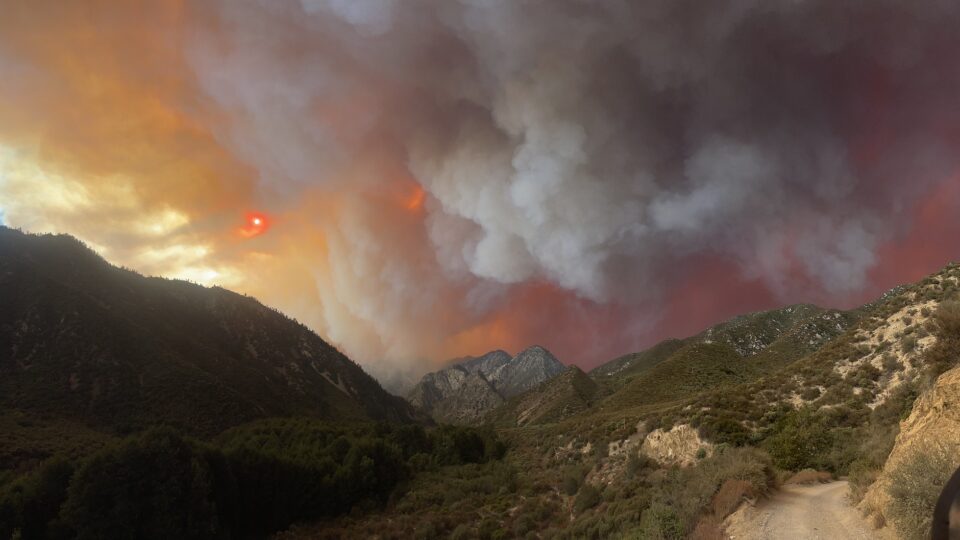
Fighting fires with artificial wind

Researchers at Ohio State University have developed a new portable tool that may help firefighters battle blazes more efficiently and with less risk.

Traditional firefighting methods include chemical foams – which are toxic – and the use of hydrants, which can strain water resources.  The recent fires in Southern California demonstrated the need for efficient fire suppression methods.  The new device works to suppress flames using conductive aerosols, which are small particles that can direct electricity.

The device uses vortex rings – small donut-shaped bands of air – that transform the aerosol particles into short pulses of wind that convert nearby oxygen into ozone.  This accelerated airflow generates rapid turbulence, which disrupts the natural combustion process and quickly extinguishes the target fire.

The device resembles a small bucket, attached to an arm brace.  Firefighters would aim the bucket toward the fire, and it would use bursts of compressed air to deliver aerosols in an electric arc to fight the fire.

Testing identified a coarse copper solution for the vortex ring material and simulations showed that the device would succeed in suppressing fires.  They then worked on optimizing the power and range of the device.

Depending on the size of the fire and number of firefighters, it is likely that several of the devices would be required in a real emergency.  According to the developers, the design of the vortex launcher is actually very simple and is very scalable.  The device is maneuverable in tight spaces and could be taken through doors and indoor environments.  Vortex rings can carry chemical payloads over longer distances than other methods, making firefighters safe by staying further from flames. 

**********

Web Links

New device uses electrically assisted wind to fight fires

Photo, posted November 12, 2024, courtesy of the USDA Forest Service via Flickr.

Earth Wise is a production of WAMC Northeast Public Radio
Species range and climate change

July 23, 2024 By EarthWise Leave a Comment

Climate change threatens native plants and animals

The geographic range of a particular plant or animal species is the area in which it can be found during its lifetime.  The range of most species is limited by climatic factors, including temperature, precipitation, soil moisture, humidity, and wind.  Any changes in the magnitude or variability of these factors will impact the species living there. 

For example, a species sensitive to temperature may respond to a warmer climate by moving to cooler locations at higher latitudes or elevations. 

But not all species are able to move at the same speed.  According to an international research team led by scientists from the University of Massachusetts Amherst, non-native species are expanding their ranges many times faster than native species.

The researchers found that land-based plant and animal species need to be shifting their ranges by about two miles per year just to keep up with the rapid pace of the changing climate.  Marine species need to be moving about 1.7 miles per year.  However, native species are only managing to move about one mile per year on average.  

Non-native species, on the other hand, are spreading nearly 22 miles each year on their own.  Additionally, when the role humans play in assisting the spread of non-native species is factored in, the rate jumps to a whopping 1,170 miles per year.  This is more than 1,000 times faster than the rate at which native species are spreading.   

The researchers conclude that there is no chance for native species to keep up with climate change without human help.  Assisted migration needs to be on the table if native plants and animals are to survive.   

**********

Web Links

Non-Native Plants and Animals Expanding Ranges 100 Times Faster than Native Species

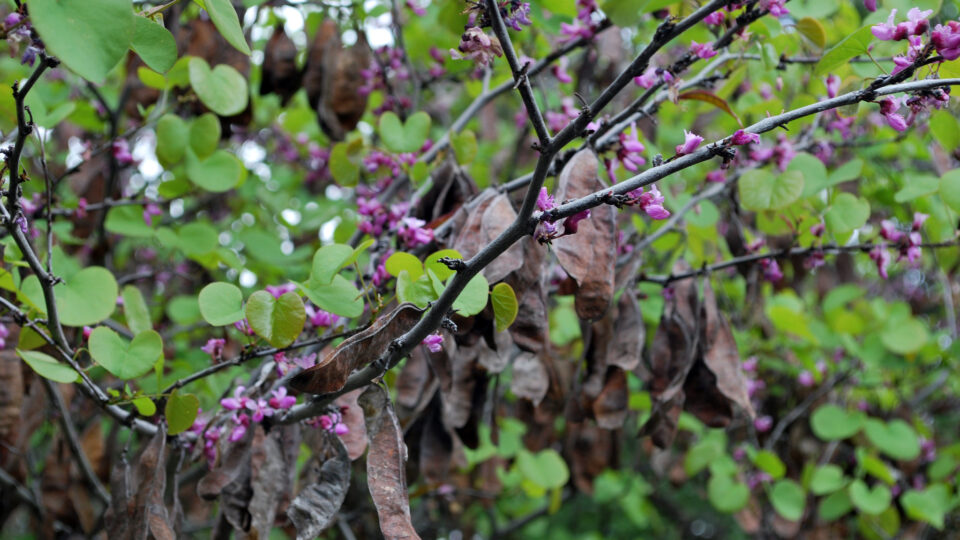
Photo, posted April 10, 2011, courtesy of Bri Weldon via Flickr.

Earth Wise is a production of WAMC Northeast Public Radio

Help For Kelp | Earth Wise

April 10, 2023 By EarthWise Leave a Comment

Sea urchins and climate change is devastating ocean kelp

The warming of the oceans has been causing the decimation of kelp forests.  The thick canopies covering coastal ocean regions have been wilting in warmer and nutrient-poor water.  Making matters much worse has been the explosion in population of sea urchins that thrive in warmer water.  The urchins gobble up the kelp, often resulting in so-called urchin barrens, largely devoid of life.

Kelp are considered a foundation species that occupy nearly half of the world’s marine ecoregions.  They thrive in cold water, where they form large underwater forests that provide essential habitat, food, and refuge for many species.  Kelp are often harvested for use in products ranging from toothpaste and shampoo to puddings and cakes.  Including the other services kelp provide, they are associated with billions of dollars in value annually.

On the North American Pacific Coast, a species of sea star consumes sea urchins.  However, these creatures are critically endangered. A marine wildlife epidemic known as sea star wasting syndrome, which began 10 years ago, has killed off more than 90% of the sunflower sea star population.   A new study by researchers at Oregon State University looked at the ability of sea stars to control sea urchin populations.

Lab experiments showed that sea stars consume urchins at a rate sufficient to maintain and possibly even restore the health of kelp forests.  The study shows that there is a clear link between the population crash of sea stars, the explosion in sea urchin populations, and the decline in kelp.

The study’s authors are calling for active management and a coordinated sea star recovery program to try to deal with the effects of a disease whose cause has not been determined.

**********

Web Links

Sea stars able to consume kelp-eating urchins fast enough to protect kelp forests, research shows

Photo, posted December 14, 2015, courtesy of Ed Dunens via Flickr.

Earth Wise is a production of WAMC Northeast Public Radio
Help For Pangolins

November 3, 2016 By WAMC WEB

https://earthwiseradio.org/wp-content/uploads/2016/10/EW-11-03-16-Help-for-Pangolins.mp3

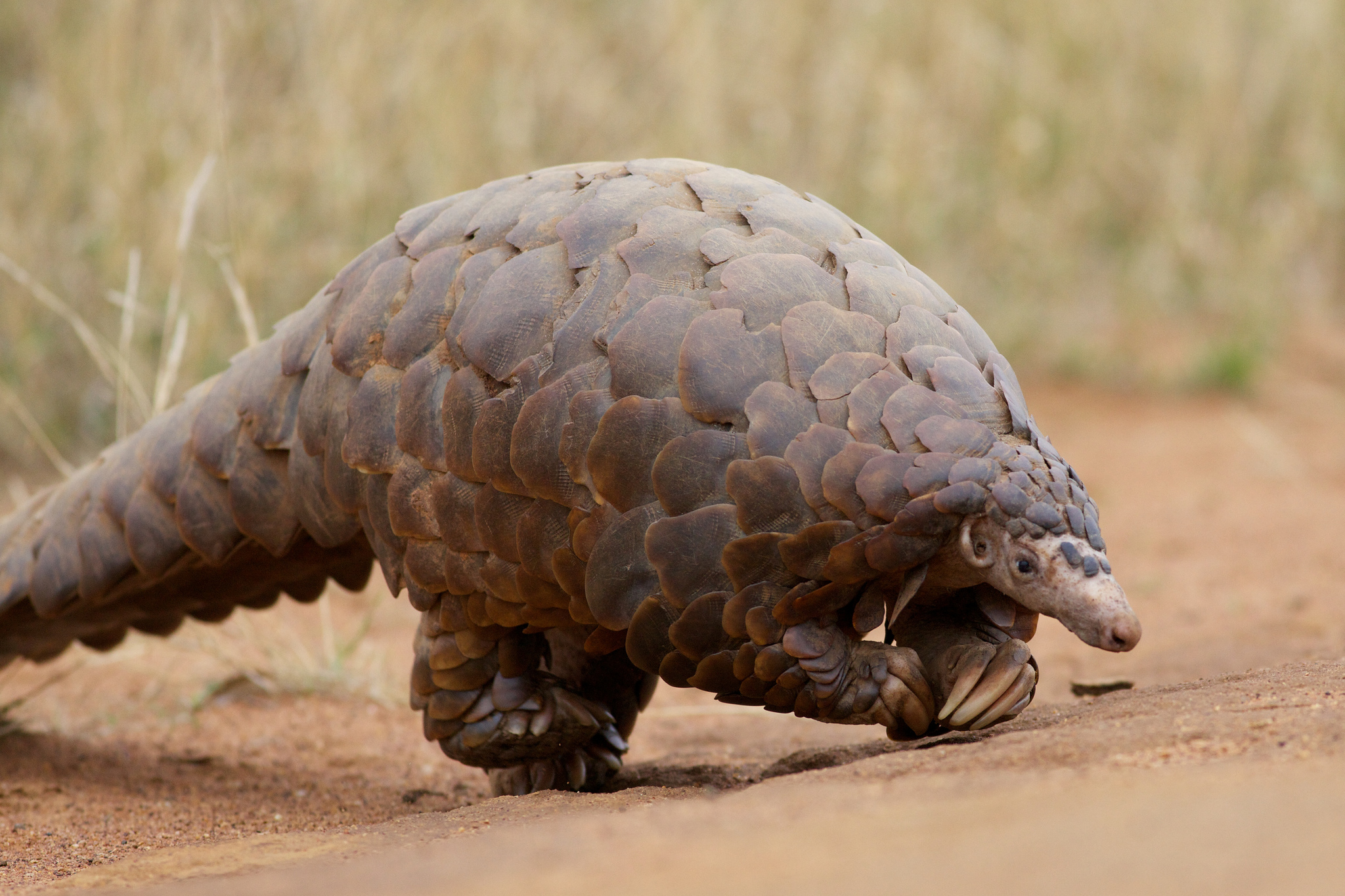
Poaching and illegal trafficking in exotic animals is a world-wide problem that most of us are aware of.  What most of us are less aware of is that the most trafficked mammal in the world is the pangolin, which you may well have never even heard of.

[Read more…] about Help For Pangolins

Primary Sidebar

Recent Episodes

  • An uninsurable future
  • Clean energy and jobs
  • Insect declines in remote regions
  • Fossil fuel producing nations ignoring climate goals
  • Trouble for clownfishes

WAMC Northeast Public Radio

WAMC/Northeast Public Radio is a regional public radio network serving parts of seven northeastern states (more...)

Copyright © 2025 ·