• Skip to primary navigation
  • Skip to main content
  • Skip to primary sidebar

Earth Wise

A look at our changing environment.

  • Home
  • About Earth Wise
  • Where to Listen
  • All Articles
  • Show Search
Hide Search
You are here: Home / Archives for headwinds

headwinds

Renewables dominate new global power

April 24, 2025 By EarthWise Leave a Comment

Renewable power continues to dominate domestically and globally

The current administration in the United States is adversarial towards renewable energy and highly supportive of the use of fossil fuels.  Unquestionably, this will create rough waters for the clean energy industry and, unfortunately, will throw a monkey wrench into the world’s efforts to mitigate climate change.  But it cannot stop what has become a powerful global trend.

In the words of U.N. Secretary-General António Guterres: “Renewable energy is powering down the fossil fuel age.”

According to a new report from the International Renewable Energy Agency, renewables accounted for 92% of new power capacity worldwide last year.  Solar is by far the fastest-growing form of renewable power, accounting for 77% of new capacity.

In the U.S., renewables accounted for about 90% of new installed capacity in 2024.  The country added nearly 40 GW of solar power capacity as well as 5 GW of wind power.  Renewables now make up about 30% of the country’s large-scale power generating capacity.  Adding in all carbon-free electricity sources (which include nuclear power), nearly 44% of the country’s electricity was carbon-free.

Headwinds against the growth of renewable energy are getting stronger in the US, but the global trend driven by both economics and environmental concerns is powerful and will continue.  For one thing, in much of the world, solar power is simply the cheapest way to produce electricity and that is pretty difficult to ignore. Global trade wars and economic turmoil will impact renewable energy much as they will other industries, but the long-term trend is clear.

**********

Web Links

Renewables Made Up More Than 90 Percent of New Power Installed Globally Last Year

Photo, posted November 23, 2022, courtesy of John Morton via Flickr.

Earth Wise is a production of WAMC Northeast Public Radio

Electric cars: Boom or bust?

September 25, 2024 By EarthWise Leave a Comment

Electric cars are booming

Media coverage of electric cars in this country is pretty confusing.  Are electric cars taking over or has the EV bubble burst?

EVs currently represent about 8% of the US new car market.  But they continue to face some relatively unique headwinds in this country.  A very powerful and influential oil industry makes sure that anti-EV stories occupy center stage in the media.  Traditional car dealers don’t want to sell EVs because they don’t make much money from parts and service.  And EVs often find themselves tangled up in American politics.

Meanwhile, the rest of the world tells a very different story.  Globally, EVs constitute 20% of new car sales, but in some places, they are doing much better than that.

So far this year, almost 87% of new car sales in Norway are electric and in August, the figure was 94%.  Norway has some incentives in place for EV owners, but the fact that nearly all new cars on the road are electric is far more than the result of incentives.

One might argue that Norway, a country with only 5 million people, faces a much easier task of transitioning to EVs.   But how about China with its 1.4 billion people?  In July, plug-in vehicles in China were 51% of new auto sales.  And the numbers continue to rise.

There are plenty of articles out there explaining why electric cars just can’t meet people’s needs, have insurmountable problems, and how having too many of them would collapse electric grids and otherwise wreak havoc with society.  Apparently, the Norwegians and Chinese, among a growing number of other countries, haven’t gotten the memo.

**********

Web Links

Elbil Thinks Electric Car Sales In Norway Could Hit 100% By Next Year

Photo, posted July 27, 2024, courtesy of Amaury Laporte via Flickr.

Earth Wise is a production of WAMC Northeast Public Radio
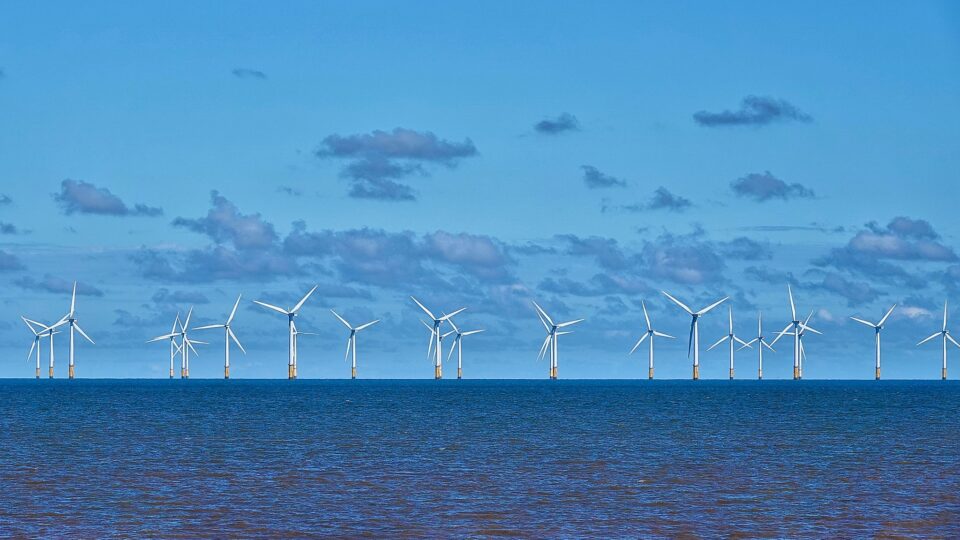
Offshore wind in Massachusetts

February 1, 2024 By EarthWise Leave a Comment

Offshore wind power in the United States at last

On January 2nd, the first large offshore wind farm in New England started producing electricity when its first turbine came online.  The Vineyard Wind project, located off the coast of Martha’s Vineyard, will by the end of the year have a total of 62 turbines with a capacity of 800 megawatts, enough electricity to power 400,000 homes.

Power finally flowing from Vineyard Wind is an important milestone for an industry that has struggled to get going.  It is the second utility-scale offshore wind farm in the U.S. to begin generating electricity.  The South Fork Wind project off the coast of New York began producing power in December.  That project will eventually produce 132 megawatts of electric power.

The offshore wind industry in the U.S. has faced some difficulties in recent times.  A combination of rising costs, high interest rates, supply chain delays, and incidents of local opposition have created headwinds.  Developers for several large planned windfarms in the northeast have terminated contracts because of inflation and high interest rates.  The second phase of Empire Wind, located southeast of Long Island, has been at least temporarily shelved awaiting more favorable contract terms.

To fight climate change, many Eastern states are hoping to install dozens of large wind farms in the Atlantic that can generate electricity without emitting greenhouse gases.  But as a result of the recent project cancellations, analysts are now projecting that U.S. offshore wind capacity in 2030 will likely be about a third less than previously predicted.

So far, the United States remains far behind Europe, which has already installed more than 32,000 megawatts of wind capacity in its waters.

**********

Web Links

Massachusetts Switches On Its First Large Offshore Wind Farm

Photo, posted August 31, 2022, courtesy of Nina Ali via Flickr.

Earth Wise is a production of WAMC Northeast Public Radio

Aircraft Emissions And Climate Change | Earth Wise

March 1, 2021 By EarthWise Leave a Comment

Using winds at altitude to reduce aircraft emissions

The aviation industry accounts for about 2.4% of global carbon dioxide emissions.  If the aviation industry was a country, it would place sixth in emissions, between Japan and Germany.

According to scientists at the University of Reading in the United Kingdom, aviation industry emissions could be reduced by simply better surfing the wind.  The researchers found that commercial flights between New York and London could have used up to 16% less fuel if they had made better use of the fast-moving winds at altitude.

The study, which was recently published in the journal Environmental Research Letters, analyzed approximately 35,000 flights in both directions between New York and London last winter.  The researchers compared how much fuel was burned during these flights to how much less fuel would have been burned by flying into or around the eastward jet stream air currents. 

They found that taking better advantage of the winds would have saved about 125 miles worth of fuel per flight on average.  The fuel saving per flight was 1.7% when flying west to New York, and 2.5% when flying east to London. 

New satellites will soon allow transatlantic flights to be tracked more accurately.  This should afford aircraft more flexibility in their flight paths, allowing them to better follow tailwinds and avoid headwinds. 

Upgrading aircraft or switching to greener fuels are two other ways that the aviation industry can reduce emissions, but those things are costly and take time to implement.  Optimizing flight paths is cheaper and offers immediate benefits.  

**********

Web Links

Aircraft could cut emissions by better surfing the wind

Photo, posted May 16, 2011, courtesy of Cory W. Watts via Flickr.

Earth Wise is a production of WAMC Northeast Public Radio.

Primary Sidebar

Recent Episodes

  • An uninsurable future
  • Clean energy and jobs
  • Insect declines in remote regions
  • Fossil fuel producing nations ignoring climate goals
  • Trouble for clownfishes

WAMC Northeast Public Radio

WAMC/Northeast Public Radio is a regional public radio network serving parts of seven northeastern states (more...)

Copyright © 2026 ·