• Skip to primary navigation
  • Skip to main content
  • Skip to primary sidebar

Earth Wise

A look at our changing environment.

  • Home
  • About Earth Wise
  • Where to Listen
  • All Articles
  • Show Search
Hide Search
You are here: Home / Archives for habitat restoration

habitat restoration

The importance of shallow water

March 26, 2025 By EarthWise Leave a Comment

Shallow water habitats are disappearing around the world

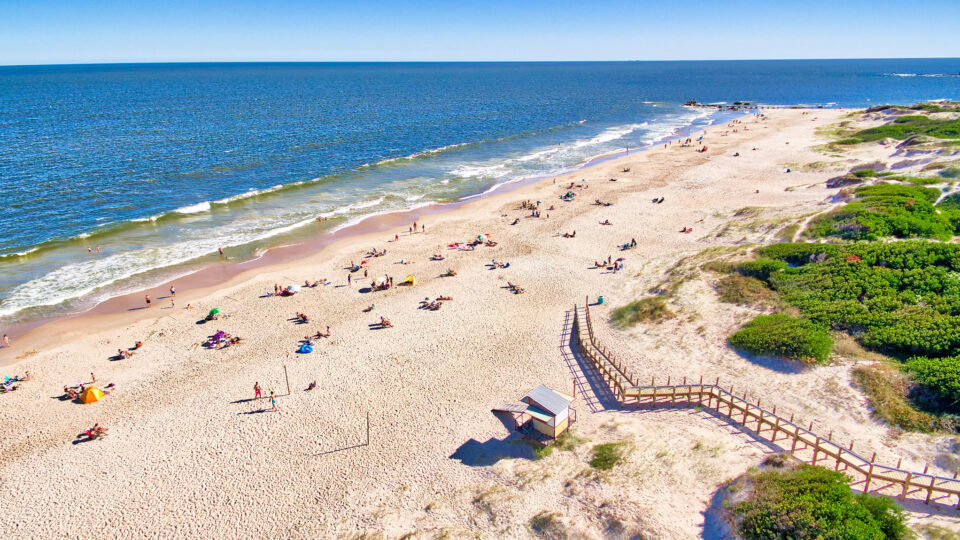
Vacationers love beaches with shallow water.  They are great for families with small kids and for less confident swimmers.  Such beaches often attract intense coastal development.  However, they are also fragile habitats that are disappearing around the world.

A new study led by the University of South Florida highlights the need to protect these marine ecosystems.  Shallow coastal waters are known as tidal flats, and they are critical to global seafood supplies, local economies, and overall marine health.  Shallow water ecosystems are interlinked with other marine habitats and are vital for the lifecycle of marine species far from shore.

Shallow water ecosystems are at risk not only from coastal development, but from harmful algal blooms triggered by human activity, from marine heatwaves, and from boats operating in sensitive habitats such as seagrass meadows. These habitats contribute millions of dollars to local economies such as those in Florida but there is not much direct habitat managements in place to protect these ecosystems.

The University of South Florida study, published in the journal Fisheries, enumerated ten core strategies that boaters, anglers, wildlife managers, and policymakers can adopt to prioritize and preserve shallow marine ecosystems from humans and from increasingly powerful weather events.  Foremost among these efforts are the protection of key fish species, such as tarpon, whose protection would benefit additional species that use the same habitats.

Habitat management and restoration should be essential concerns for coastal communities to provide long-term benefits for both themselves and for the marine life that depends on shallow-water habitats.

**********

Web Links

Why shallow water at the beach is more important than you might realize

Photo, posted February 14, 2018, courtesy of Marcelo Campi via Flickr.

Earth Wise is a production of WAMC Northeast Public Radio
Pollinator-friendly solar power

February 16, 2024 By EarthWise Leave a Comment

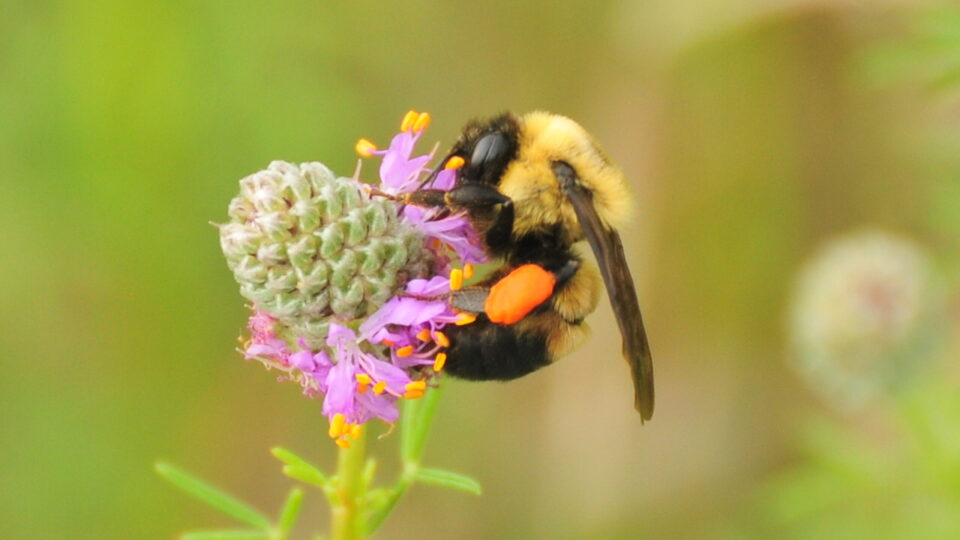
Global insect biodiversity has been in decline as a result of habitat loss, pesticide use, and climate change.  Restoring insect habitat is a way to reverse that trend.  Expanded use of solar energy is a critical part of mitigating climate change.  In order to meet the grid decarbonization goals the U.S. has set, approximately 10 million acres of land will be needed for large-scale solar development.  According to a new study by Argonne National Laboratory and the National Renewable Energy Laboratory, these two efforts are complementary.

Disturbed lands such as former agricultural fields are ideal locations to install solar panels.  These lands can also be established as excellent habitats for insect pollinators and other wildlife that provide important ecosystem services.

A five-year study looked at two solar sites in southern Minnesota that were built on retired agricultural land.  The sites were planted with native grasses and flowering plants in early 2018.  Over a five-year period, the researchers conducted hundreds of observational surveys for flowering vegetation and insect communities, evaluating changes in plant and insect abundance and diversity.

The team observed increases for all habitat and biodiversity metrics.  The total insect abundance tripled, while native bees showed a 20-fold increase in numbers. 

The research highlights the relatively rapid insect community responses to habitat restoration at solar energy sites.  If properly sited, the solar sites can offset the losses of natural areas created by solar farms and actually make prime farmland more productive through the pollination services provided by habitat-friendly solar energy.

**********

Web Links

Insect populations flourish in the restored habitats of solar energy facilities

Photo, posted February 28, 2014, courtesy of Tom Koerner/USFWS via Flickr.

Earth Wise is a production of WAMC Northeast Public Radio

Ecotourism And Endangered Species

March 24, 2016 By WAMC WEB

https://earthwiseradio.org/wp-content/uploads/2016/03/EW-03-24-16-Ecotourism-and-Endangered-Species.mp3

Ecotourism is increasing on a global scale.   Ecotourism is generally defined as responsible travel to natural areas that conserves the environment, sustains the well-being of the local people, and involves interpretation and education.  Visitor numbers to many protected areas around the world are expanding every year.  Ecotourism provides rich experiences for the traveler and often has great benefits to local communities fighting poverty and seeking sustainable development.

[Read more…] about Ecotourism And Endangered Species

Primary Sidebar

Recent Episodes

  • An uninsurable future
  • Clean energy and jobs
  • Insect declines in remote regions
  • Fossil fuel producing nations ignoring climate goals
  • Trouble for clownfishes

WAMC Northeast Public Radio

WAMC/Northeast Public Radio is a regional public radio network serving parts of seven northeastern states (more...)

Copyright © 2025 ·