• Skip to primary navigation
  • Skip to main content
  • Skip to primary sidebar

Earth Wise

A look at our changing environment.

  • Home
  • About Earth Wise
  • Where to Listen
  • All Articles
  • Show Search
Hide Search
You are here: Home / Archives for guidance

guidance

A Geoengineering Research Plan | Earth Wise

July 22, 2022 By EarthWise Leave a Comment

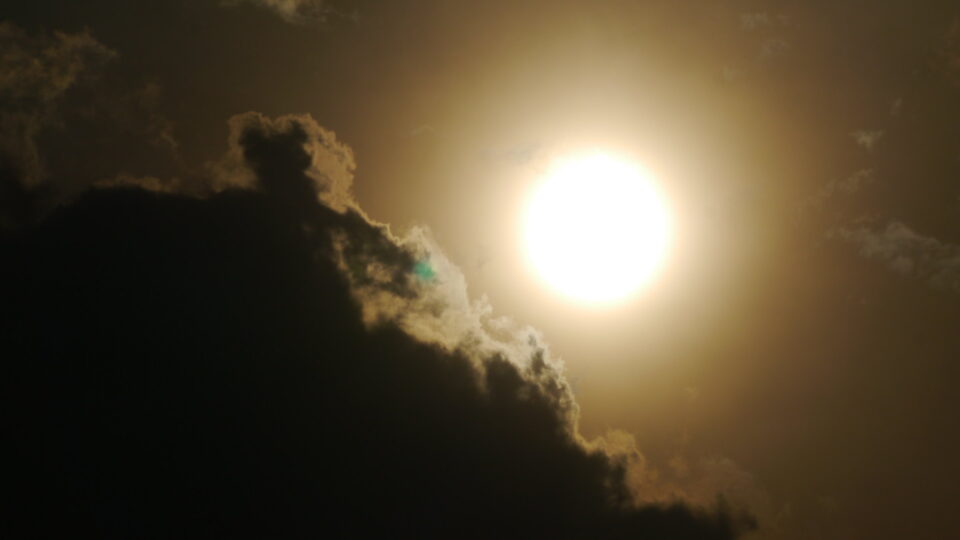
The 2022 federal appropriations act, signed into law in March, directed the Office of Science and Technology Policy to develop a cross-agency group to coordinate research on climate interventions, in partnership with NASA, the National Oceanic and Atmospheric Administration, and the Department of Energy.

The group is tasked with creating a research framework to “provide guidance on transparency, engagement, and risk management for publicly funded work on solar geoengineering research.”  The group is supposed to develop a five-year plan that will define research goals for the field, assess the potential hazards of climate interventions, and evaluate the level of federal funding required to carry out the work.

This marks the first federally coordinated effort of this kind and is especially significant because it contributes to the perception that geoengineering is an appropriate and important area of research as the climate continues to warm.

It is an understatement to say that such research is controversial.  Geoengineering has often been a taboo topic among scientists. There are significant questions about potential environmental side effects and concerns that the impact of any such efforts would be felt unevenly in different parts of the world.  There are challenging questions about global governance , including who should be able to make decisions about any potential deployment of climate interventions and what the goals of such interventions should be.

These are momentous issues to grapple with, but as the threat of climate change grows and nations continue to fail to make rapid progress on emissions, researchers, universities, and nations are increasingly motivated to seriously explore the potential effects of geoengineering approaches.  We can’t hide from the fact that these issues are going to be explored.

**********

Web Links

The US government is developing a solar geoengineering research plan

Photo, posted June 28, 2013, courtesy of Fernando Aramburu via Flickr.

Earth Wise is a production of WAMC Northeast Public Radio.

Insanely Cheap Energy | Earth Wise

June 11, 2021 By EarthWise Leave a Comment

Solar power is cheapest energy option in most places

The International Energy Agency, founded in 1974, keeps track of the world’s energy systems and anticipates how they are likely to change over time.  Policymakers around the world look to the agency’s annual World Energy Outlook publication for guidance.

In 2000, the agency made the prediction that by the year 2020, there would be a total of 18 gigawatts of photovoltaic solar power installed.  Within seven years, that number was already too small.

The IEA was not the only source to miss the mark on solar power.  The head of solar analysis at BloombergNEF in 2005 expected solar to eventually supply 1% of the world’s electricity.  It is already 3% and Bloomberg now predicts that it will be 23% by 2050 and expects that to be an underestimate. 

What has happened is that the world has unexpectedly gotten to the point where solar is the cheapest source of energy in most places.  Over the past decade, every time solar production capacity has doubled, its cost has dropped by 28%.

Historically, a combination of groundbreaking research in Australia and intense Chinese industrial development led to the creation of a massive new industry.  When Germany passed laws encouraging the use of solar power, suddenly there was massive global demand and a struggle to keep up with supply.

The industry had its fits and starts, and many players fell by the wayside.    But at this point, solar technology continues to get better and cheaper.  Market forces are pretty hard to beat and when solar technology can supply insanely cheap energy, it is going to be used in more and more places.

**********

Web Links

‘Insanely cheap energy’: how solar power continues to shock the world

Photo, posted January 10, 2020, courtesy of Tony Webster via Flickr.

Earth Wise is a production of WAMC Northeast Public Radio.
Saving The Queen Conch | Earth Wise

February 3, 2021 By EarthWise Leave a Comment

A new manual to help save Queen Conch

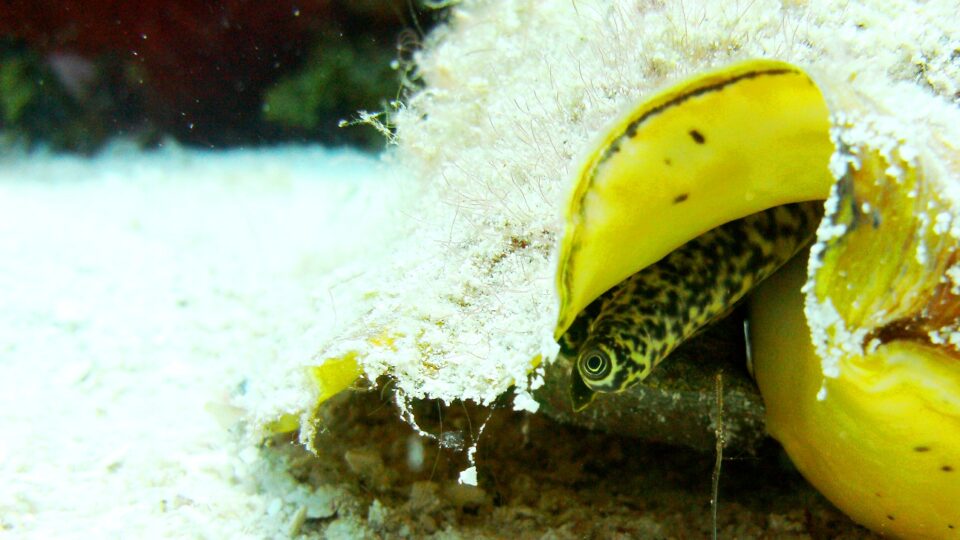
Queen conchs are large sea snails belonging to the same taxonomic group as clams, oysters, and squid.  They live on coral reefs or seagrass meadows in warm, shallow waters.  Queen conchs are found throughout the Caribbean Sea and Gulf of Mexico, ranging as far north as Bermuda and as far south as Brazil.

Reaching up to 12” long and living up to 40 years, the queen conch is prized as a delicacy and revered for its shell.  It’s the second most important sea-bottom fishery in the Caribbean region, trailing only the spiny lobster. 

But queen conchs face a challenge.  Their populations are in a steady rate of decline as a result of overfishing, habitat degradation, and hurricane damage.  In some places, the numbers are so low that remaining conchs cannot find breeding partners.  The situation is urgent from both an ecological and economical perspective. 

As a result, Megan Davis, a scientist from Florida Atlantic University who spent more than four decades researching queen conch, has released an 80-page, step-by-step user manual about how to care for the species. Her work was recently published in the National Shellfisheries Association’s Journal of Shellfish Research.

According to Davis, aquaculture, along with conservation of breeding populations and fishery management, are ways to help ensure longevity of the queen conch.  With requests for mariculture guidance pouring in from communities throughout the Caribbean, Davis and her collaborators are expanding their queen conch conservation, education, and restorative mariculture program.

Their desired outcomes include creating protected breeding areas, establishing sustainable hatcheries, and repopulating protected habitats.

**********

Web Links

‘Hail to the queen’: Saving the Caribbean queen conch

Photo, posted June 3, 2012, courtesy of Christopher Gonzalez via Flickr.

Earth Wise is a production of WAMC Northeast Public Radio.
Protecting Vulnerable Shorelines

May 21, 2019 By EarthWise Leave a Comment

Global climate change is having noticeable effects on the environment. For example, glaciers are shrinking.  Plant and animal ranges are shifting and populations decreasing.  And droughts, floods, and wildfires are becoming more frequent and more intense.  According to the Intergovernmental Panel on Climate Change, the evidence indicates that the net damage costs of climate change are likely to be significant and to increase over time. 

Our coastal shorelines, which are already stressed by human activity, pollution, storms, and invasive species, are one of many areas expected to be further threatened by climate change.  Sea level rise and more intense and frequent storms are expected to erode and inundate coastal ecosystems and eliminate wetlands.  Ocean acidification is also projected to disrupt marine environments. 

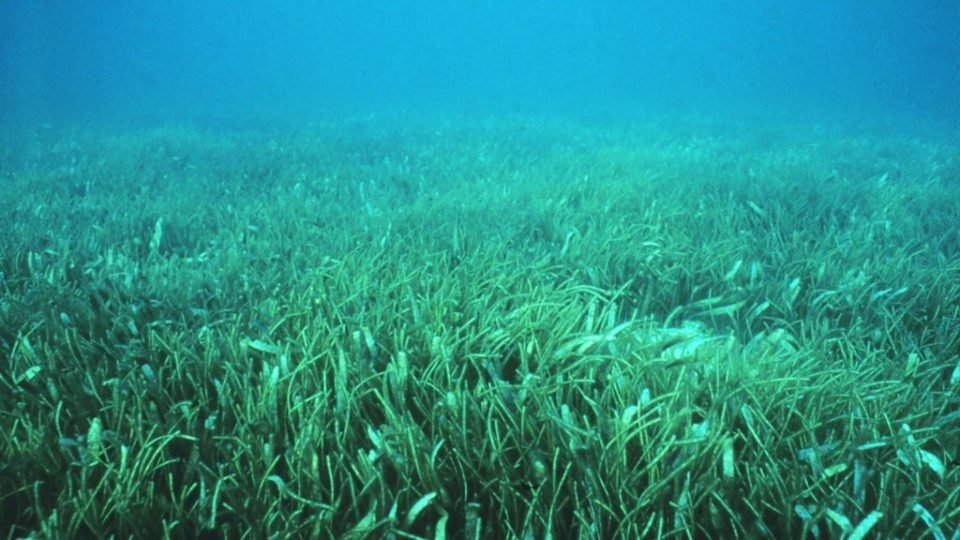
But according to scientists at the Massachusetts Institute of Technology, seagrasses could play a key role in protecting these vulnerable shorelines from this onslaught.  The MIT research team demonstrated how the ubiquitous marine plants dissipate wave energy and help protect against erosion, which could help mitigate damage from rising seas. 

Using mathematical modelling and experiments, the MIT researchers were able to quantify for the first time how large and dense a continuous meadow of seagrass must be in order to provide adequate damping of waves in a given setting.  They also found that seagrasses offer significant environmental benefits, including preventing beach erosion, protecting seawalls and coastal structures, improving water quality, and sequestering carbon. 

Submerged aquatic vegetation, including seagrasses, provides an ecosystem service exceeding $4 trillion annually.  Hopefully these findings can help provide useful guidance for seagrass restoration efforts.

**********

Web Links

Seagrass’ strong potential for curbing erosion

The Effects of Climate Change

Photo, posted October 13, 2010, courtesy of the NOAA Photo Library via Flickr.

Earth Wise is a production of WAMC Northeast Public Radio.

Primary Sidebar

Recent Episodes

  • An uninsurable future
  • Clean energy and jobs
  • Insect declines in remote regions
  • Fossil fuel producing nations ignoring climate goals
  • Trouble for clownfishes

WAMC Northeast Public Radio

WAMC/Northeast Public Radio is a regional public radio network serving parts of seven northeastern states (more...)

Copyright © 2026 ·