• Skip to primary navigation
  • Skip to main content
  • Skip to primary sidebar

Earth Wise

A look at our changing environment.

  • Home
  • About Earth Wise
  • Where to Listen
  • All Articles
  • Show Search
Hide Search
You are here: Home / Archives for grown

grown

Fuel from Corn Waste

June 27, 2025 By EarthWise Leave a Comment

Making fuel from corn waste

A substantial amount of corn is grown in this country for the purpose of producing ethanol.  The value of doing so is debatable for many reasons.  Nevertheless, the majority of the corn crop is grown for food.  But along with all that corn, there is corn stover.  Stover is the dried stalks, leaves, and other plant parts that remain in the field after the corn itself has been harvested.  Corn stover is the largest quantity of biomass residue in the United States.  Around 250 million tons of it is produced annually and the majority of it is left unused.  Some is used for animal feed and other purposes and has monetary value, but much of it goes to waste.

Scientists at Washington State University have developed a way to produce low-cost sugar from stover that can be used to make biofuels and other bioproducts.

Corn stover is an abundant and cheap source of biomass, which holds great potential as a source of energy and valuable chemicals.  The challenge is to overcome the high cost of processing stover whose complex structural molecules like cellulose and lignin need to be broken down.

The new process uses potassium hydroxide and ammonium sulfite to convert stover into a sugar.  It is a mild-temperature process that allows enzymes to break down the cellulosic polymers in stover into sugar, which can then be fermented into biofuels.  The resulting sugar from the process would be cost-competitive with low-cost imported sugars. The researchers estimate that their patent-pending process could produce sugar that could be sold for as low as 28 cents per pound.

**********

Web Links

Scientists discover a new way to convert corn waste into low-cost sugar for biofuel

Photo, posted August 30, 2012, courtesy of Idaho National Laboratory Bioenergy Program via Flickr.

Earth Wise is a production of WAMC Northeast Public Radio
Soaring coffee prices

February 20, 2025 By EarthWise Leave a Comment

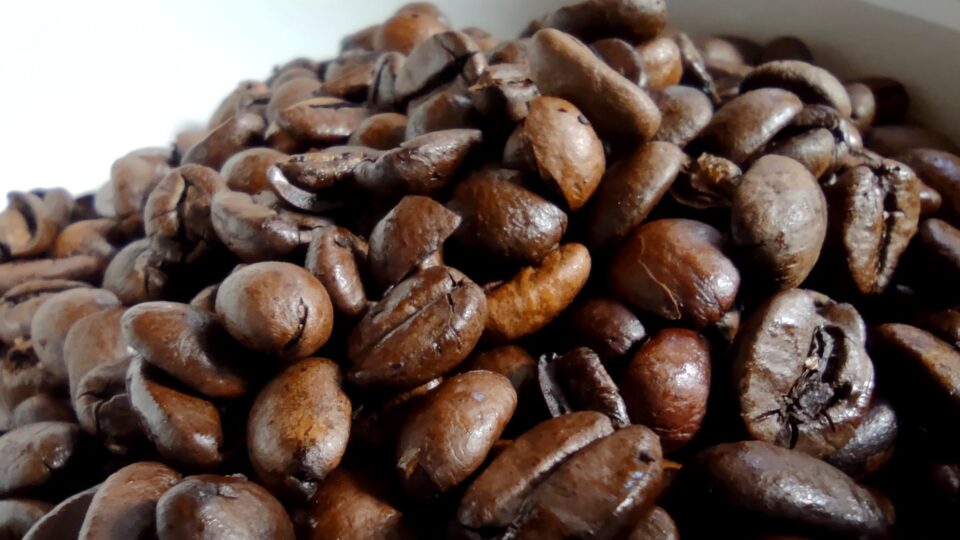
Coffee prices are soaring again

Wholesale coffee prices hit record highs in the midst of the Trump administration’s deportation and tariff dispute with Colombia.  But coffee prices have already been trading near 50-year highs for a while as a result of shortages related to extreme weather and increased global demand.

In recent years, repeated droughts and flooding have put pressure on the global supply of coffee.  These climate swings have caused prices to soar, much as they have for other staples like cocoa, olive oil, and orange juice.  All the while, the global demand for coffee has kept rising.

Coffee is one of the world’s most consumed beverages, but it can be grown only under very specific conditions, namely in misty, humid, and tropical climates, and in rich soil free of disease.   The United States imports nearly all of its coffee – there is only a small amount grown in Hawaii.  Otherwise, the US is the world’s largest coffee importer.  With a limited number of sources for the beans, global coffee prices are very susceptible to the effects of extreme weather.

More than half of the world’s coffee production comes from arabica beans, and Brazil is the largest exporter.  A severe drought there this summer devastated the harvest that typically runs from May to September.   In Vietnam, a severe drought followed by heavy rains harmed the world’s largest source of robusta, the second most popular coffee variety.

People tend to think of coffee as a commodity and not so much as an agricultural product, subject to the vagaries of weather and having prices that fluctuate accordingly.  The bottom line is that drinking coffee is likely to become a bigger strain on one’s own bottom line.

**********

Web Links

Why Coffee Prices Are Soaring (Again)

Photo, posted October 13, 2023, courtesy of Pete via Flickr.

Earth Wise is a production of WAMC Northeast Public Radio

A billion pound problem

November 1, 2023 By EarthWise 1 Comment

Nearly two billion pounds of pumpkins are grown each year in the U.S.  But we actually don’t eat the vast majority of them.  Instead, most pumpkins are carved or otherwise decorated, and placed on porches across the country during Halloween.  But now that the holiday has come and gone, what happens to all those sagging masterpieces?

Simply put, we usually just throw them out.  In the days after Halloween, as much as 1.3 billion pounds of pumpkin winds up in landfills.  When left there to decompose, the pumpkins produce methane, a potent greenhouse gas that affects climate change by contributing to increased warming. 

Here are some ways to keep pumpkins out of the landfills this year and make Halloween festivities more sustainable. 

If the pumpkin is still in good shape, use the outer, meaty part of the pumpkin to make a fresh version of pumpkin puree.  Pumpkin puree is a common ingredient in baked goods like muffins, breads, and pies, especially during this time of the year.  The pumpkin seeds can also be scooped out, rinsed, and salted or spiced, and then baked in the oven, resulting in a delicious snack.

Pumpkins also have the potential to turn into great soil through composting. Pumpkins are just over 90% water, which help naturally add moisture to compost piles that need to be damp to effectively decompose food waste.

If eating or composting the pumpkins isn’t an option, consider donating them to a local farm.  Farmers will often collect pumpkins as treats for their pigs, goats, and other animals. 

The scariest part of Halloween shouldn’t be the waste. 

**********

Web Links

Halloween is over. Here’s the most sustainable way to get rid of your jack-o’-lanterns, pumpkins, and gourds

Say Boo to Landfills – Compost Your Pumpkin After Halloween!

Photo, posted November 4, 2010, courtesy of William Warby via Flickr.

Earth Wise is a production of WAMC Northeast Public Radio
Lab-Grown Meat Is Legal | Earth Wise

December 19, 2022 By EarthWise Leave a Comment

Meat produced in a laboratory and without harming animals is now legal in the United States

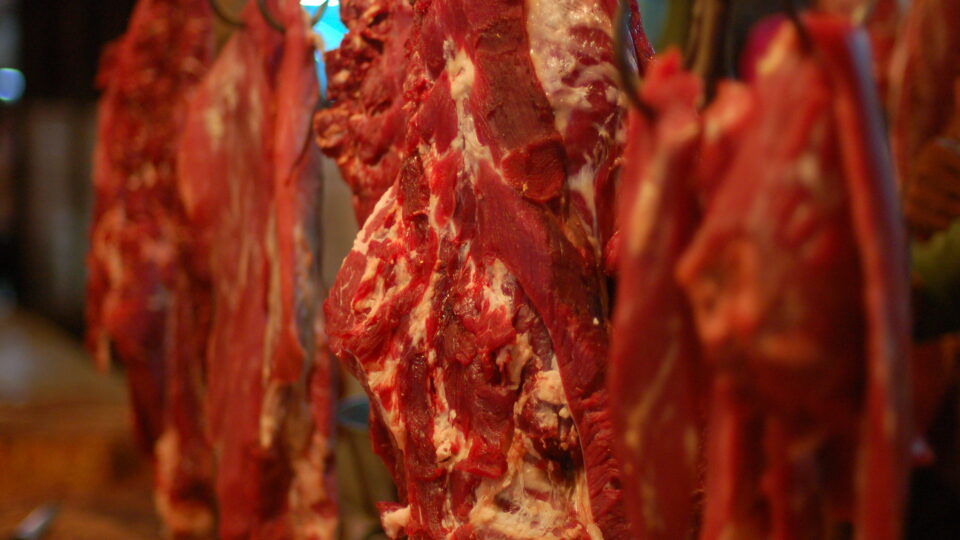
We’ve heard more and more about laboratory meat.  Other names for it are cultured meat, cultivated meat, or test tube meat.  Whatever name ends up sticking, the idea is to take living cells from animals and grow them in a controlled laboratory environment to produce a meat product that doesn’t involve the slaughter of any animals.  Supporters say cultured meat is more efficient and environmentally friendly than traditional livestock.  Livestock agriculture is one of the largest emitters of greenhouse gases, uses vast amounts of land, and consumes much of the world’s fresh water.

Years ago, we reported on a company called Memphis Meats, which was one of a number of companies developing techniques for harvesting cells from animal tissues and using them to grow edible flesh in bioreactors.

Recently, that company – now called Upside Foods – has become the first company to receive FDA approval declaring their meat product to be safe for human consumption.  The USDA still needs to give its approval and it may be a little while longer before Upside’s first chicken products will end up in supermarkets.  There are more than 150 cultivated meat companies around the world backed by billions of dollars in investments.  The FDA is in ongoing discussions with multiple firms in the business.

Upside Foods, based in the San Francisco Bay area, is planning to market chicken, beef meatballs, and duck in the near future.  Other companies are working on seafood products.  Up until now, Singapore has been the only country in which lab-grown meat products are legally sold to consumers.  With this landmark FDA ruling, that is all about to change.

**********

Web Links

US declares lab-grown meat safe to eat in ‘groundbreaking’ move

Photo, posted April 15, 2008, courtesy of Andrew Otto via Flickr.

Earth Wise is a production of WAMC Northeast Public Radio

Eco-Friendly Agriculture

October 21, 2019 By EarthWise Leave a Comment

Modern agriculture has steadily destroyed native grasslands, among other ecosystems.  In fact, farming is one of the most ecologically destructive things that humans do.  But we do have to eat.  In response, there is a growing movement for agrarian reform, from grain farming on the prairie, to agroforestry, to raising livestock more sustainably.  Efforts are accelerating to develop a kinder, gentler agriculture adapted to a changing world.

One such effort has come from the Land Institute, an organization in Kansas that works on natural systems agriculture, which seeks to retain the ecological stability of the prairie with its perennial seed plants along with a grain and seed yield comparable to that from annual crops.

After four decades of effort, the institute has introduced its first commercial grain, a trademarked variety called Kernza.  Kernza is a domesticated perennial wild grass – a so-called intermediate wheatgrass – that has a long, slender head that resembles wheat seeds.  People describe its taste as sweet and nutty.   Kernza is already being made into a cereal called Honey Toasted Kernza by Cascadian Farms.  Patagonia Provisions – a spin-off from the clothing company – is making beer from the new grain.

Although Kernza is already being grown and sold commercially, it is not yet ready for prime time.  Last year, there were only about 1,000 acres in cultivation and the yield is only a third to a tenth of the yield of wheat. 

Developing a sustainable perennial polyculture of edible plants would have major benefits such as not having to plow every year, plants developing large root systems that can reach water far beneath the surface and, without annual plowing, having soil carbon remain in the ground.

**********

Web Links

With New Perennial Grain, a Step Forward for Eco-Friendly Agriculture

Photo courtesy of Cascadian Farms/General Mills.

Earth Wise is a production of WAMC Northeast Public Radio.

Powering Cars With Cactus Juice

June 24, 2019 By EarthWise Leave a Comment

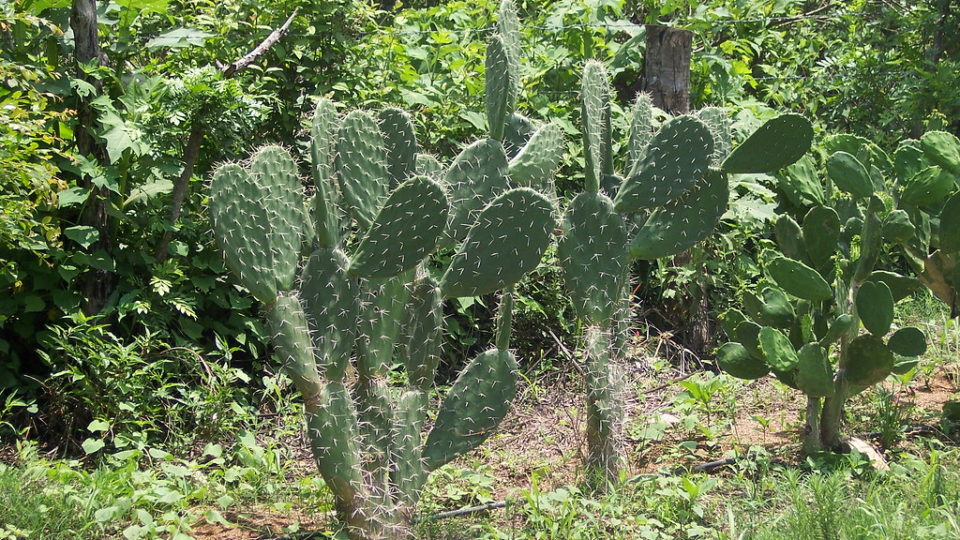
Back in 2016, a company called Nopalimex, located in Micoacan, central Mexico, built the world’s first cactus-powered energy plant.  The facility utilizes a biodigester to make biogas from nopal, also known as prickly pear cactus.  The nopal plant has been called the ‘Green Gold of Mexico’ and is a staple in Mexican diets, medicine and cosmetics.

Nopalimex is now using the cactus to make biofuel for vehicles.

The fruit of the cactus is pureed, mixed with manure, and then left to decompose, producing methane.  The methane produced – about eight tons a day – fuels the biodigester which powers the company’s corn chip and cactus chip production and is being tested in a fleet of government vehicles.

The biogas will cost just 65 cents per liter, which is about a third cheaper than the cost of regular gasoline.  Using prickly pear as a feedstock for biofuel is attractive because it can be grown in places where traditional energy crops cannot.  One can imagine vast fields of cacti in remote, arid areas of the country where normal crops cannot grow.  It would not suck up the resources or space needed to feed people, which is an ongoing criticism of current bioenergy crops.

As long as the nopals are regularly replanted, the process is almost entirely sustainable, producing only water and nopal waste, which can be used to fertilize other crops.

Finding sustainable ways to produce fuel while doing minimal damage to the environment is an important challenge for countries around the world.  In Mexico, harnessing the power of the prickly pear cactus is a unique and clever solution.

**********

Web Links

Mexico’s ‘green gold’: The company powering cars with cactus juice

Photo, posted July 8, 2006, courtesy of Christian Frausto Bernal via Flickr.

Earth Wise is a production of WAMC Northeast Public Radio.

Primary Sidebar

Recent Episodes

  • An uninsurable future
  • Clean energy and jobs
  • Insect declines in remote regions
  • Fossil fuel producing nations ignoring climate goals
  • Trouble for clownfishes

WAMC Northeast Public Radio

WAMC/Northeast Public Radio is a regional public radio network serving parts of seven northeastern states (more...)

Copyright © 2025 ·