• Skip to primary navigation
  • Skip to main content
  • Skip to primary sidebar

Earth Wise

A look at our changing environment.

  • Home
  • About Earth Wise
  • Where to Listen
  • All Articles
  • Show Search
Hide Search
You are here: Home / Archives for grey wolves

grey wolves

Almost a dire wolf

April 22, 2025 By EarthWise Leave a Comment

Researchers around the world are working on what some call the ‘de-extinction’ of iconic animals of the past such as the wooly mammoth, the dodo, and the Tasmanian tiger.  The idea is to decipher the genome from DNA of preserved specimens and, using the tools of modern genetic engineering and cloning technology, alter the DNA of closely related modern species to recreate the extinct species.

A company called Colossal Biosciences recently announced that it has brought back the dire wolf, a species that has been extinct for 10,000 years.  Dire wolves have white coats and are larger than modern wolves, have more powerful shoulders, a wider head, and larger teeth and jaws.  Colossal is now raising three wolves they have engineered at a 2,000-acre site at an undisclosed location.

 The wolves were created by taking the DNA of modern grey wolves and editing 14 genes substituting ones from ancient dire wolf specimens.  Wolves have about 19,000 genes, so the changes from the grey wolf genome are very minor but enough to produce an animal that looks just like a dire wolf.  But is it a dire wolf?

It really isn’t.  Ancient DNA is always greatly damaged.  Only parts of it survive.  We don’t actually have the complete genome of the dire wolf.  What we have is bits and pieces that, thanks to modern technology, allow us to produce a phenotype of a dire wolf; that is, an animal with the same observable features. 

Whether this accomplishment is a worthwhile and appropriate thing to do is a question that continues to be debated.

**********

Web Links

The Return of the Dire Wolf

Photo courtesy of Colossal Laboratories & Biosciences.

Earth Wise is a production of WAMC Northeast Public Radio
How To Save Big Cats | Earth Wise

March 1, 2023 By EarthWise 1 Comment

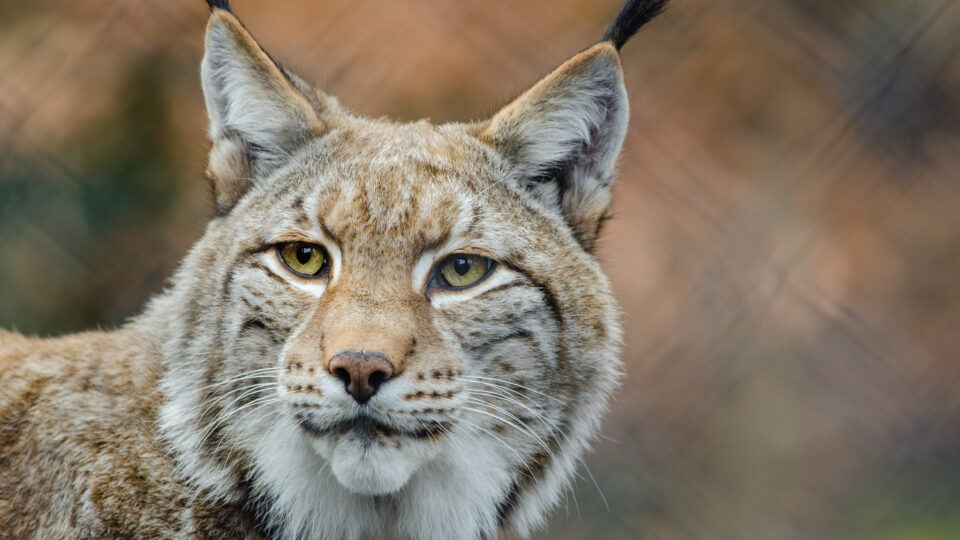
Researchers suggest the best way to save large and often endangered carnivores

Big cats are among the most widely recognized and admired animals in the world. But these charismatic predators face many and varied threats, including the loss of habitat and prey, conflicts with humans, poaching, and the illegal wildlife trade.

Researchers from the University of Reading in the U.K. have studied the fortunes of 50 species of large carnivores worldwide over the past 50 years.  They found that social and economic factors, such as quality of life, were more closely associated with declines of large carnivore species than purely environmental factors, like habitat loss.   

The study, which was recently published in the journal Nature Communications, suggests that the best way to save large carnivores, including lynx, bears, and lions, is to encourage a sustainable model of social and economic development instead of focusing exclusively on issues like climate change.  

While rapid economic development pushes species to the brink of extinction, it’s also delivered enormous improvements in the quality of human life. But the analysis suggests that once people achieve a high quality of life and economic development slows, a turning point is reached and persecuted species have a chance to recover.

According to the research team, the recovery is a result of both improved habitat protections in advanced economies and a more harmonious relationship between people and predators.  What would have once been considered a dangerous pest is now recognized as being an important part of both the ecosystem and culture.  

In Western Europe, slower economic development and an improved quality of life have allowed populations of grey wolves to increase 1,800% since the 1960s.

**********

Web Links

Economics trump environment to save big cats, say ecologists

Photo, posted February 8, 2015, courtesy of Mathias Appel via Flickr.

Earth Wise is a production of WAMC Northeast Public Radio
Too Many Bison | Earth Wise

May 8, 2020 By EarthWise Leave a Comment

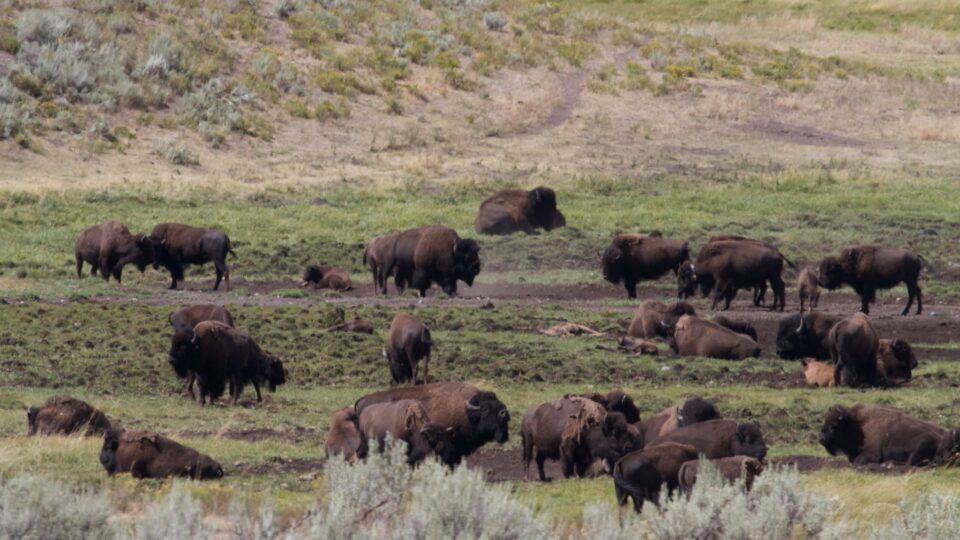
Bison in Yellowstone

The population of large herbivores in Yellowstone National Park has undergone many dramatic changes over the course of time.  The numbers of both the iconic Rocky Mountain elk and bison have gone up and down as a result of human interactions.

Bison, of course, once were a dominant species from east of the Appalachians to west of the Rocky Mountains, with most of an estimated 30 million living on the Great Plains.  As the west was settled, bison populations plummeted and by the late 1800s, they were nearly extinct.

When Yellowstone was established, there were exactly 22 bison in the park.  By 1925, there were more than 750 in the park and culling of the herd in the park’s Lamar Valley was practiced for the next four decades.

The elimination of predators like grey wolves and cougars in the early 1900s caused both elk and bison populations to mushroom and both underwent culling.  When culling was ended in 1968, there were 4,000 elk and 100 bison.  Within 20 years, those numbers were 20,000 and 1,000.   Reintroducing wolves and cougars reduced the elk population to about 5,000, but bison numbers have continued to grow, now reaching about 4,000.

While the long-term recovery of the Yellowstone bison herd is a major conservation success story, the fact is that bison are powerful ecosystem engineers.  Large numbers of them disrupt species distribution across scrub steppe and grasslands because of what they eat, trample, and rub their horns and bodies on.  They have a tremendous capacity to limit the structure and composition of ecosystems.

Park administrators have complicated management decisions to make to take into account the often wide range of ecological effects that abundant large herbivores can have on ecosystems.

**********

Web Links

Bison in northern Yellowstone proving to be too much of a good thing

Photo, posted August 10, 2016, courtesy of Brian Gratwicke via Flickr.

Earth Wise is a production of WAMC Northeast Public Radio.

Primary Sidebar

Recent Episodes

  • An uninsurable future
  • Clean energy and jobs
  • Insect declines in remote regions
  • Fossil fuel producing nations ignoring climate goals
  • Trouble for clownfishes

WAMC Northeast Public Radio

WAMC/Northeast Public Radio is a regional public radio network serving parts of seven northeastern states (more...)

Copyright © 2026 ·