• Skip to primary navigation
  • Skip to main content
  • Skip to primary sidebar

Earth Wise

A look at our changing environment.

  • Home
  • About Earth Wise
  • Where to Listen
  • All Articles
  • Show Search
Hide Search
You are here: Home / Archives for frost

frost

Climate risks for apple-growing areas

January 31, 2025 By EarthWise 2 Comments

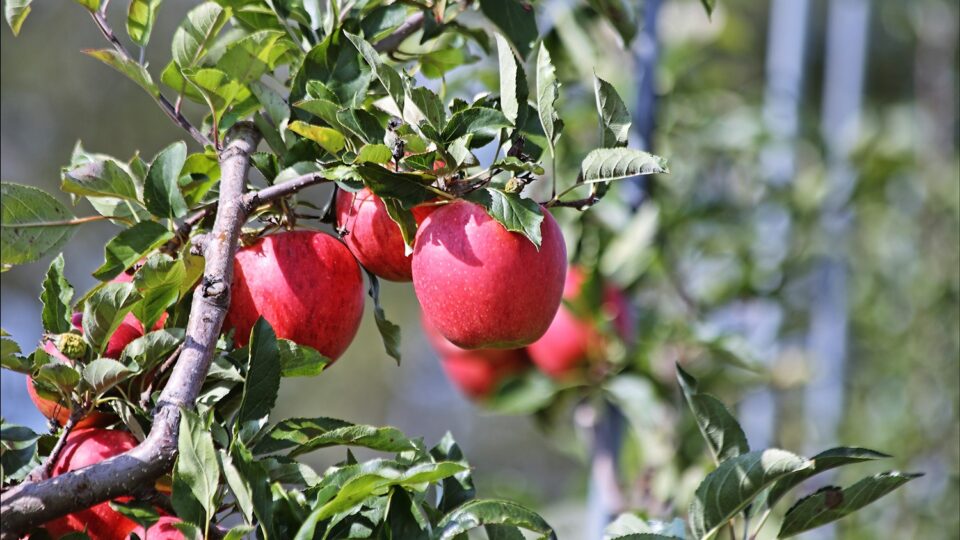
The changing climate is creating challenges for some of the most productive apple growing regions in America.  A study by Washington State University analyzed over 40 years of climate conditions that impact the growth cycle of apple trees.

Many growing areas face increased climate risk, but the top three apple-producing counties are among the most impacted.  Yakima County in Washington is the country’s largest apple producer with more than 48,000 acres of apple orchards.  Kent County in Michigan and Wayne County in New York (located east of Rochester) are the next two largest.

The study looked at six metrics that affect apple production.  Two of these metrics relate to extremes:  extreme heat days (with temperatures above 93 degrees) that can cause multiple problems and warm nights (with minimum temperatures above 59 degrees) that adversely affect coloration.

Other metrics included the number of cold days, the last day of spring frost, and the number of growing degree days, which are the number of days above a certain temperature that are conducive for apples to grow.

Changes to these metrics can impact apple production, change the time when apple flowers bloom, increase risk of sunburn on apples, and affect apple appearance and quality.  In many places, nearly all of these metrics are changing in an undesirable direction.

Apples are the most consumed fruit in the United States.  27,000 American producers supply an industry with a downstream value of $23 billion.  Apples are a big deal.

**********

Web Links

Prime apple-growing areas in US face increasing climate risks

Photo, posted August 8, 2020, courtesy of Sue Thompson via Flickr.

Earth Wise is a production of WAMC Northeast Public Radio
Cyber protection for apple orchards

April 2, 2024 By EarthWise Leave a Comment

How best to protect apple orchards as weather changes

Spring frosts represent a real danger for apple orchards.  The changing climate has brought about periods of unusually warm weather at times early in the year that have caused trees and other flowering plants to bloom early.  For apple growers, this has made their orchards more susceptible to the damaging effects of extreme cold events.

Apple growers attempt to prevent this damage by heating the canopies of their orchards, but these efforts tend to be inefficient.  Applying heat is one of the most effective methods to prevent apple flower bud damage, but it is difficult to determine when and where to apply heat in orchards.

Researchers at Penn State University have developed a frost-protection cyber-physical system that autonomously makes heating decisions based on real-time temperature and wind-direction data.  Their system includes a temperature-sensing device, a propane-fueled heater that adjusts the direction where it provides heat, and an unmanned ground vehicle that moves the system through an apple orchard.

The results of tests of the system were published in the journal Computers and Electronics in Agriculture, and the findings show that it greatly reduced damage to apple tree buds in tests conducted at low temperatures, doubling or tripling the amount of time that trees were protected.

The equipment used for the study mostly consisted of off-the-shelf parts and cost about $5,000, most of which was for the vehicle.   The researchers envision that even a very large orchard could be protected by multiple units guided by an aerial drone monitoring canopy temperatures. Further research will aim to bring the technology to point where it can enter the marketplace and be available to apple growers.

**********

Web Links

Cyber-physical heating system may protect apple blossoms in orchards

Photo, posted September 6, 2017, courtesy of Sue Thompson via Flickr.

Earth Wise is a production of WAMC Northeast Public Radio
Spring Is Coming Earlier In Britain | Earth Wise

March 1, 2022 By EarthWise Leave a Comment

Climate change is causing spring to arrive earlier

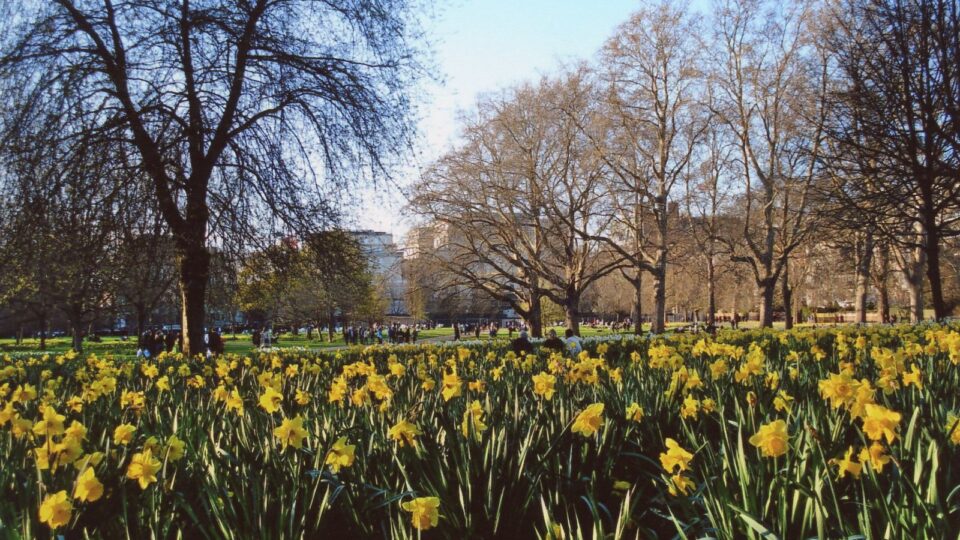
The United Kingdom has some of the most detailed records of seasonal changes anywhere in the world.  Since the 18th century, observations of seasonal changes have been recorded by scientists, naturalists, amateur and professional gardeners, and organizations such as the Royal Meteorological Society.  Researchers at two British institutions have collected and collated these records into a database they call Nature’s Calendar, which currently has about 3.5 million records going back to 1736.

By analyzing more than 400,000 observations of 406 plant species in Nature’s Calendar, they found that the average first flowering date from 1987 to 2019 is a full month earlier than the average from 1753 to 1986.  The change correlates very well with rising global temperatures.

The ecological risks associated with earlier flowering times are high.  When plants flower too early, a late frost can kill them – a phenomenon most gardeners have experienced at some point or another.  Beyond that, plants, insects, birds, and other wildlife have co-evolved to be synchronized with plants in their development stages.  A certain plant flowers and attracts a certain kind of insect, which then attracts a particular kind of bird, and so on.  If plants get out of sync with the animals in the ecosystem and the animals can’t change their behavior quickly enough, it can lead to species collapse.

If global temperatures continue to increase at their current rate, spring in the UK could eventually start in February, creating serious problems for many of the species that inhabit forests, gardens, and farms.  The dangers of climate change are not just about extreme weather.

**********

Web Links

UK plants flowering a month earlier due to climate change

Photo, posted February 1, 2012, courtesy of Mandy via Flickr.

Earth Wise is a production of WAMC Northeast Public Radio.

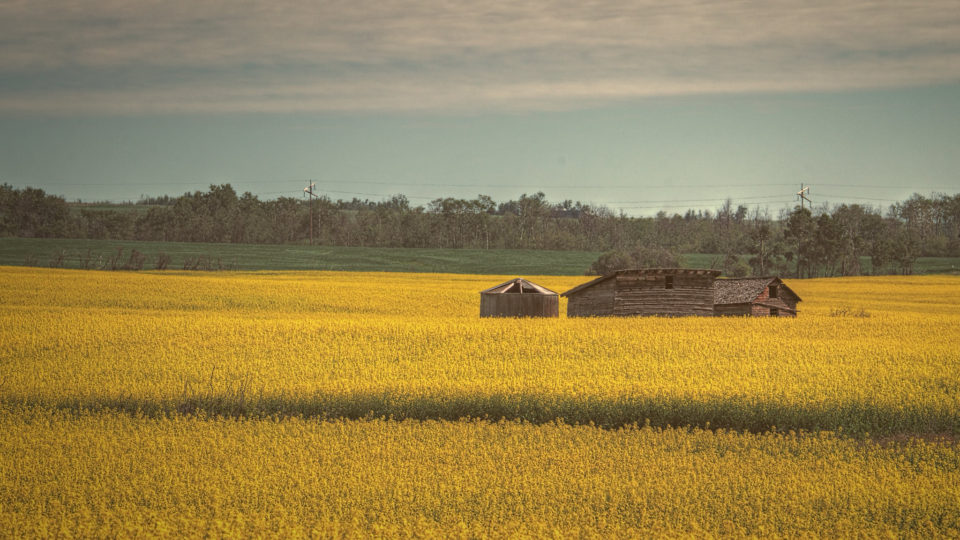
Protecting Canola Crops From Frost

November 20, 2019 By EarthWise Leave a Comment

Canola is one of Canada’s most valuable crops.  In fact, Canada is the world’s largest exporter of canola oil.  The international market for canola oil is $27 billion a year.  The oil is very popular because it has a relatively low amount of saturated fat, a substantial amount of monosaturated fat, and is very neutral tasting.

Canadian canola farmers worry a great deal about late season, non-lethal frosts because the frosts prevent chlorophyll – a photosynthetic pigment in the seeds – from breaking down, a process they call “degreening”.  The farmers seek to have high-quality yellow embryos at seed maturity.  When the harvest contains more than 2% of green seeds, it can no longer produce Grade No. 1 quality oil.  When green seeds are processed to extract canola oil, the chlorophyll in the seeds reduces the oil’s storability and quality.  As a result, farmers receive a lower price for frost-damaged green seed canola.  This costs Canadian farmers and estimated $150 million annually.

Researchers at the University of Calgary have developed gene-based technology to produce canola plants that can withstand late-season frost and still produce high-quality seed.  They identified a specific protein that controls chlorophyll breakdown and seed maturity.  Genetic manipulation is able to enhance the seed degreening system.  They were able to reduce the amount of chlorophyll in the genetically modified canola lines by 60% after the plants were exposed to non-lethal frost. 

Ultimately, the researchers plan to develop a method to incorporate the modification into canola hybrid lines in such a way that it will be readily accepted by consumers concerned about genetically modified organisms.

**********

Web Links

New technology helps protect valuable canola crops from frost

Photo, posted August 29, 2018, courtesy of Tinker and Rove via Flickr.

Earth Wise is a production of WAMC Northeast Public Radio.

Declining Sugar Maples

December 23, 2015 By WAMC WEB

https://earthwiseradio.org/wp-content/uploads/2015/12/EW-12-23-15-Sugar-Maples.mp3

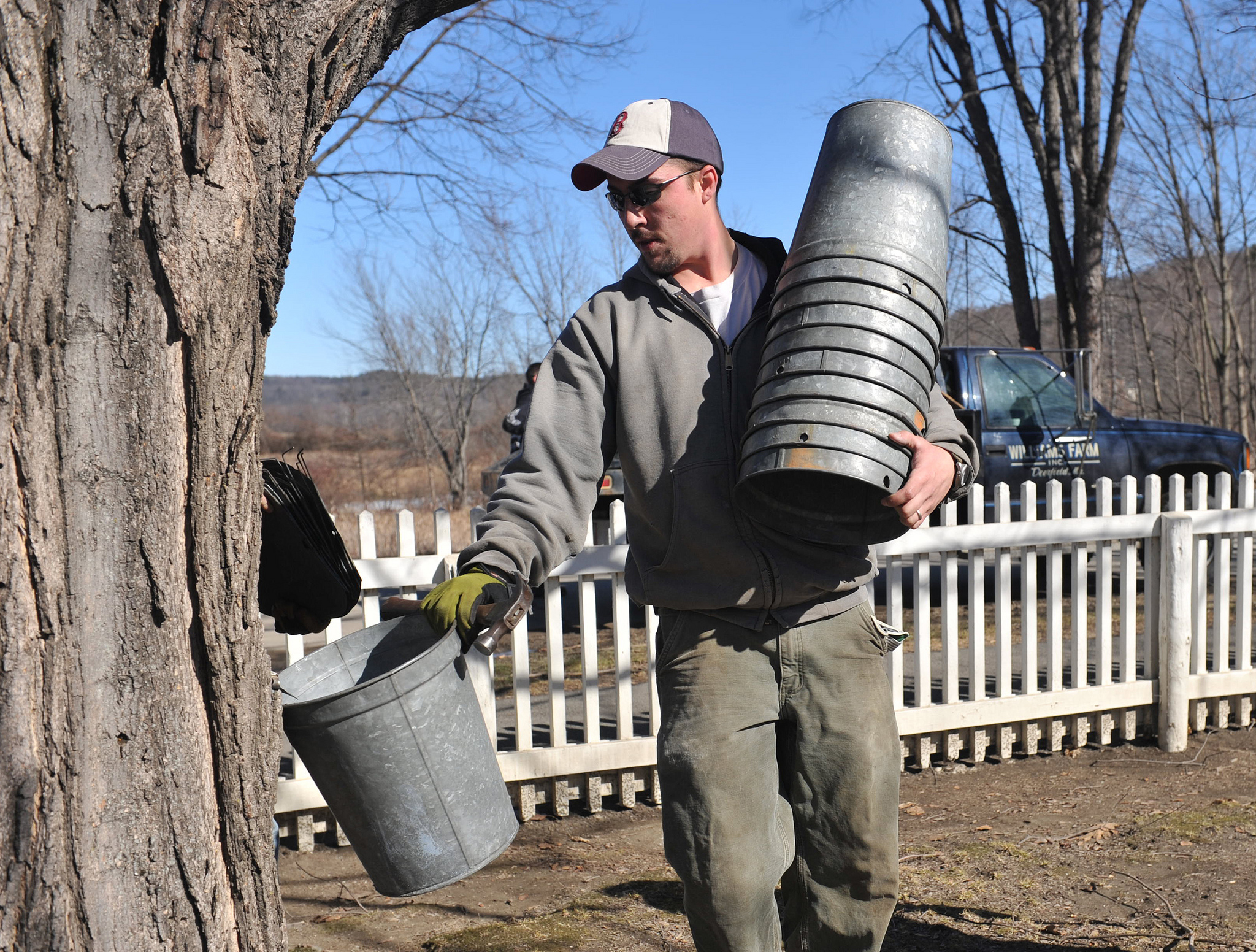
The sugar maple, one of the most economically and ecologically important trees in the eastern United States and Canada, is showing signs of being in decline, according to scientists at SUNY’s College of Environmental Science and Forestry and Harvard Forest.

[Read more…] about Declining Sugar Maples

Primary Sidebar

Recent Episodes

  • An uninsurable future
  • Clean energy and jobs
  • Insect declines in remote regions
  • Fossil fuel producing nations ignoring climate goals
  • Trouble for clownfishes

WAMC Northeast Public Radio

WAMC/Northeast Public Radio is a regional public radio network serving parts of seven northeastern states (more...)

Copyright © 2026 ·