• Skip to primary navigation
  • Skip to main content
  • Skip to primary sidebar

Earth Wise

A look at our changing environment.

  • Home
  • About Earth Wise
  • Where to Listen
  • All Articles
  • Show Search
Hide Search
You are here: Home / Archives for fleet

fleet

Progress towards electric school buses

November 8, 2024 By EarthWise Leave a Comment

Making progress on electrifying school buses

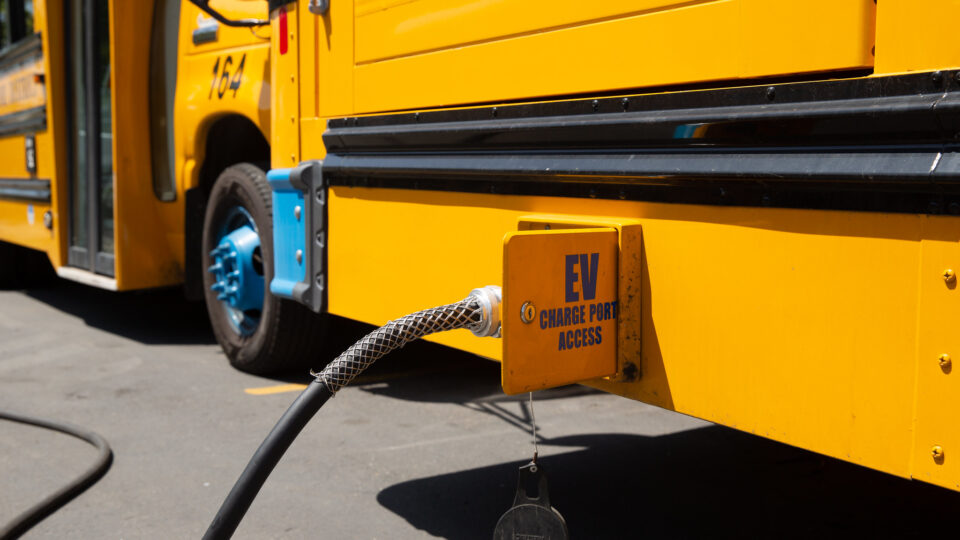
The U.S. has nearly half a million school buses providing daily transportation for about 20 million students.  Most of these buses are powered by diesel engines which not only dump greenhouse gases into the atmosphere but also fill kids’ lungs with harmful fumes.

Thanks to various federal and state incentive programs, this situation is starting to change.  School districts all over the country are beginning to swap out old diesel buses for emissions-free electric-powered school buses.

Electric school buses are finding their way into school districts of all sizes and demographics.  The first district in the country to go fully electric was in Martinsville, Texas, which last year converted its 4-bus fleet.  The first large urban district to go all-electric was the 74-bus fleet in Oakland, California this summer.

The EPA’s $5 billion Clean School Bus program and many state initiatives are providing incentives for the transition.  Five years ago, there were less than 1,000 electric school buses in the U.S.  Now there are about 5,000 and more than 7,000 additional buses are in the pipeline.

Apart from the climate implications, there is urgency to replacing diesel school buses from a health perspective.  Diesel exhaust is classified as a carcinogen by the World Health Organization, and it contains fine particles and nitrogen oxides, both of which are well-documented asthma triggers.

Electric buses are more expensive than diesel buses, but they are much cheaper to operate. School districts need to put in place charging infrastructure.  The transition is not so easy to accomplish, but it is an important step, and more and more school districts are taking it.

**********

Web Links

Slowly but Surely, U.S. School Buses Are Starting to Electrify

Photo, posted May 5, 2021, courtesy of California Energy Commission via Flickr.

Earth Wise is a production of WAMC Northeast Public Radio

An Electric Cruise Ship | Earth Wise

July 31, 2023 By EarthWise Leave a Comment

Electrifying cruise ships

The shipping industry accounts for about 3% of global manmade greenhouse gas emissions.  In 2018, the International Maritime Organization, the UN body that regulates global shipping, set a target to cut the industry’s greenhouse gas emissions by at least half by 2050.

This goal has led to a variety of designs for eco-friendly ships, including car carriers, superyachts, and cargo ships with retractable sails.  But most of the designs still rely to at least some extent on engines that run on fossil fuels.

The Norwegian cruise ship company Hurtigruten has announced that it will build a zero-emissions electric cruise ship with retractable sails covered in solar panels.  The ship is expected to set sail in 2030.  Hurtigruten is a relatively small company, with a fleet of eight ships, each with a capacity of 500 passengers.  But the company hopes that its innovative plan will inspire the entire maritime industry.

The ship will predominantly run off of electric motors powered by 60 megawatt batteries that can be charged in port with renewable energy.  To reduce reliance on the battery, when it is windy, three retractable sails will rise out of the deck, reaching a maximum height of 164 feet.  The sails will be covered in solar panels that will generate energy to top off the batteries while sailing.

The ship will have 270 cabins to hold 500 passengers and 99 crew members.  The streamlined shape of the ship will result in less air resistance to further reduce energy use.

Hurtigruten already has a hybrid, battery-supported cruise ship and is currently in the process of converting its entire fleet to hybrid battery power.

**********

Web Links

An electric cruise ship with gigantic solar sails is set to launch in 2030

Photo, posted January 15, 2023, courtesy of Bernard Spragg via Flickr.

Earth Wise is a production of WAMC Northeast Public Radio
Batteries On Wheels | Earth Wise

December 24, 2021 By EarthWise Leave a Comment

electric vehicles as a battery resource

Transportation accounts for nearly a quarter of the direct carbon dioxide emissions coming from burning fuel.  As a result, electrification of transport is one of the major ways we can reduce emissions.  Increasing the number of electric vehicles over time is essential for meeting emissions targets.

But electric vehicles have the potential to do more than deliver emissions reduction; they can also provide other energy services.

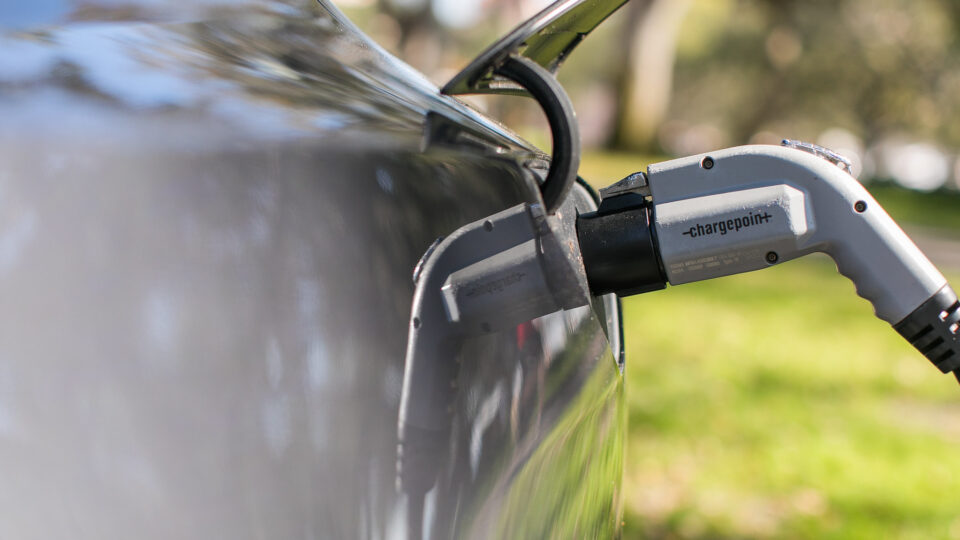
More and more electric cars provide over 200 miles of driving range, but most cars are actually driven no more than 30 miles a day.  As a result, the fleet of electric cars represents a huge bank of energy stored in battery packs and mostly sitting around unused.  This presents an opportunity to leverage this resource.

Car battery packs could be used to absorb excess renewable energy generated in the middle of the day (for example from solar installations) or at night (from wind farms) and potentially then to export stored energy to power homes and support the grid.  This energy system is known as V2G, or vehicle-to-grid technology.

The University of Queensland in Australia has launched a unique international trial to see if the spare battery capacity in vehicles could be used for these purposes.  The university has partnered with Teslascope, which is an online analytics platform used by Tesla owners to track the performance of their cars.  Tesla owners wishing to be part of the study authorize the collection of their data and, in turn, receive a free 12-month subscription to the Teslascope service.  The study will collect data from Tesla owners in Australia, the US, Canada, Norway, Sweden, Germany, and the UK.

**********

Web Links

Can EV spare battery capacity support the grid?

Photo, posted February 8, 2009, courtesy of City of St Pete via Flickr.

Earth Wise is a production of WAMC Northeast Public Radio.

Electrifying The Federal Fleet | Earth Wise

October 7, 2021 By EarthWise Leave a Comment

Accelerating the electrification of the federal fleet could save billions of dollars

The federal government owns and operates about 645,000 vehicles.  Among them are about 200,000 passenger vehicles, 78,000 heavy-duty trucks, 47,000 vans, 847 ambulances, and three limousines.   About 225,000 vehicles are operated by the Postal Service.  

Each year, these vehicles are driven about 4.5 billion miles and use about 400 million gallons of gasoline, producing 3.5 million tons of greenhouse gases.

President Biden signed an executive order in January directing federal officials to devise a plan for converting the entire fleet to clean and zero-emission vehicles.  So far, the work has been slow. 

According to a new report from Atlas Public Policy, accelerating the push for electric vehicles in the federal fleet could save taxpayers billions of dollars.

Electric vehicles have lower fueling and maintenance costs as well as a smaller environmental impact.  According to the report, the government could replace 40% of its light-duty vehicles and buses not owned by the Postal Service with cheaper plug-in alternatives by 2025.  By 2030, it could replace 97% of such vehicles with EVs for a lifetime savings of more than $1 billion.  Furthermore, by 2025, it would be possible to replace nearly all mail trucks with EVs for a savings of $2.9 billion.

The federal fleet represents an opportunity to encourage transportation electrification to happen much more quickly.  Apart from the economic and environmental benefits, having an electrified federal fleet would increase public awareness of the practicality and benefits of electric vehicles.

**********

Web Links

Push to Electrify Federal Fleet Could Yield Billions in Savings by 2030

Photo, posted May 14, 2015, courtesy of Tony Webster via Flickr.

Earth Wise is a production of WAMC Northeast Public Radio.

Have We Reached Peak Internal Combustion Engine? | Earth Wise

August 3, 2021 By EarthWise 1 Comment

Global sales of gas-powered cars may have peaked in 2017

According to new analysis from Bloomberg New Energy Finance, global sales of gas-powered cars may well have peaked in 2017, representing a significant milestone in the transition to electric vehicles.

Demand for gas cars dropped in 2018 and 2019, and then plummeted in 2020 as a result of the coronavirus pandemic.  While sales are surely picking up as the pandemic ebbs, the increasing demand (and supply as well) for plug-in vehicles is likely to put gas-powered cars in a state of permanent decline.

Global EV sales are projected to go from 3.1 million last year to 14 million in 2025.  The growth is being driven by falling battery prices, government policies, and increasing choices of vehicles.  Virtually all automobile manufacturers are introducing electric vehicles over the next couple of years and increasing numbers of them are planning a complete transition to EVs in the near future.  Projections are that EVs will account for the majority of new car sales by 2035.

While all this progress is encouraging, there are still over a billion gas- and diesel-powered cars on the road and the fleet turns over slowly.  The current average operating life of cars here in the US is 12 years.

To reach the net-zero carbon emission goals by 2050 as many governments have mandated, additional policies and regulations will be needed.  For example, electric cars will need to account for essentially all new sales by 2035, not just the majority.  Reaching net-zero by mid-century will require all hands on deck, including trucks and heavy commercial vehicles that have barely started to become electrified.

**********

Web Links

New Analysis Suggests We Have Already Hit Peak Internal Combustion Engine

Photo, posted December 23, 2017, courtesy of Davide Gambino via Flickr.

Earth Wise is a production of WAMC Northeast Public Radio.

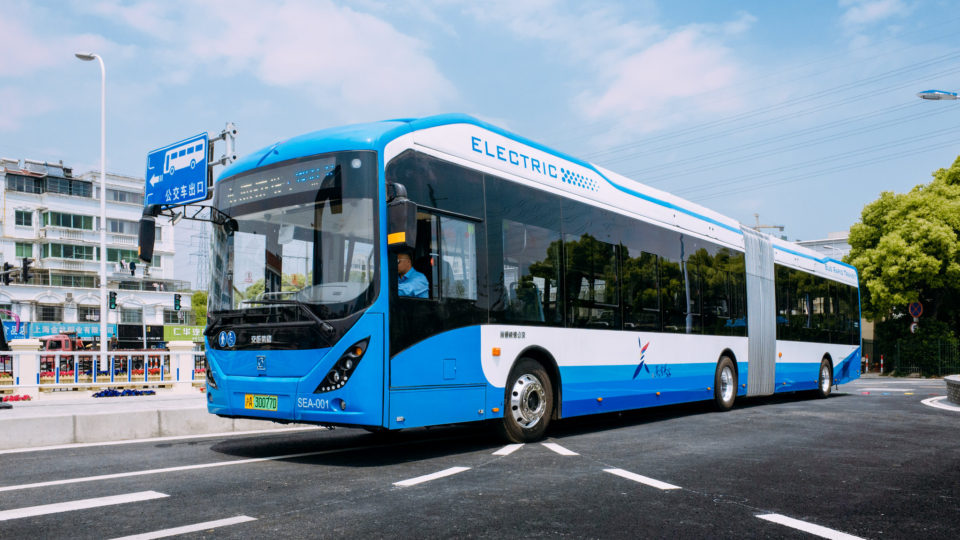
Electric Buses In Latin America

October 31, 2019 By EarthWise Leave a Comment

Latin America has become increasingly urbanized.  In fact, about 80% of the region’s population lives in cities today and by 2050, that figure could climb to 90%.  Transportation is the largest and fastest-growing source of energy-related emissions in Latin America and accounts for about a third of all of the region’s carbon dioxide emissions. 

Private vehicle ownership is rising in Latin America but at the same time, the region’s rapidly growing cities have increased demand for buses, taxis, and motorcycles.  Currently, an estimated 64,000 people die prematurely every year in Latin America and the Caribbean as a result of air pollution, which is mostly caused by transportation emissions.

Given this situation, major cities across Latin America – from Colombia to Argentina – are starting to adopt electric bus fleets.   Latin America actually has the highest use of buses per person globally.  So, the transition to electric buses is an important step toward meeting climate targets, cutting fuel costs, and improving air quality.

Medellin, Colombia – whose metropolitan area has 3.7 million people – has started to add electric buses to its fleet, the rest of which runs on natural gas.  When new units arrive from China later this year, Medellin will have the second largest electric bus fleet in Latin America, after Santiago, Chile. 

Worldwide, 425,000 electric buses are in operation, 99% in China.  Europe has a couple of thousand while the United States has only 300.  But going forward, and especially in Latin America, electric buses are the wave of the future.  Estimates are that there will be 1.3 million on the roads by 2040.

**********

Web Links

An Increasingly Urbanized Latin America Turns to Electric Buses

Photo, posted April 22, 2018, courtesy of Hans Johnson via Flickr.

Earth Wise is a production of WAMC Northeast Public Radio.

Primary Sidebar

Recent Episodes

  • An uninsurable future
  • Clean energy and jobs
  • Insect declines in remote regions
  • Fossil fuel producing nations ignoring climate goals
  • Trouble for clownfishes

WAMC Northeast Public Radio

WAMC/Northeast Public Radio is a regional public radio network serving parts of seven northeastern states (more...)

Copyright © 2025 ·