• Skip to primary navigation
  • Skip to main content
  • Skip to primary sidebar

Earth Wise

A look at our changing environment.

  • Home
  • About Earth Wise
  • Where to Listen
  • All Articles
  • Show Search
Hide Search
You are here: Home / Archives for feasible

feasible

Scrubbers to clean up shipping

May 1, 2025 By EarthWise Leave a Comment

Cargo ships are significant sources of global air pollution because of their fuel oil.  Most ships burn heavy fuel oil that is loaded with sulfur, so when it is burned it produces noxious gases and fine particles that can harm human health and the environment.  The International Maritime Organization enacted a mandatory cap of 0.5% for the sulfur content of marine fuels in 2020.  Heavy fuel oil has a sulfur content of 2 to 3 percent.

Shipping companies can comply by burning low-sulfur fossil fuels or biofuels, but these are much more expensive.  The most feasible and cost-effective option is to install exhaust gas cleaning systems, known as scrubbers. 

A scrubber is a huge metal tank installed in a ship’s exhaust stack.  Seawater is sprayed from nozzles to wash the hot exhaust.  The seawater reacts with sulfur dioxide and converts it to sulfates, which are environmentally benign natural components in seawater.

A study by the National Technical University of Athens in Greece has performed a lifecycle assessment of the use of scrubbers and has found that burning heavy fuel oil with the use of scrubbers can match or even surpass the benefits of using low-sulfur fuels.

Producing low-sulfur fuel causes additional greenhouse gas and particulate matter emissions in refineries. On the other hand, scrubbers reduce sulfur dioxide emissions by 97% and dramatically reduce other pollutants as well.

The study shows the importance of incorporating lifecycle assessments into evaluation of environmental impact reduction policies.

**********

Web Links

Study: Burning heavy fuel oil with scrubbers is the best available option for bulk maritime shipping

Photo, posted August 3, 2015, courtesy of Lotsemann via Flickr.

Earth Wise is a production of WAMC Northeast Public Radio
Direct Air Capture | Earth Wise

October 15, 2021 By EarthWise Leave a Comment

How to make direct air capture feasible

There is a lot of interest in carbon capture and sequestration (or CCS) in the context of trapping the carbon dioxide emissions from power plants and industrial facilities.  The fossil fuel industry is especially enthusiastic about the potential for continuing to burn fuels without harming the environment.  Apart from the technical challenges, there is the looming problem of CCS adding significant costs to power generation that is already losing the economic battle to renewable sources.

Direct air capture is a different matter.   This is the idea of actively taking CO2 out of the atmosphere.  This already happens by natural means such as sequestering it in soil or forests.  But there is considerable work going on aimed at developing technology to capture atmospheric carbon dioxide in massive quantities.

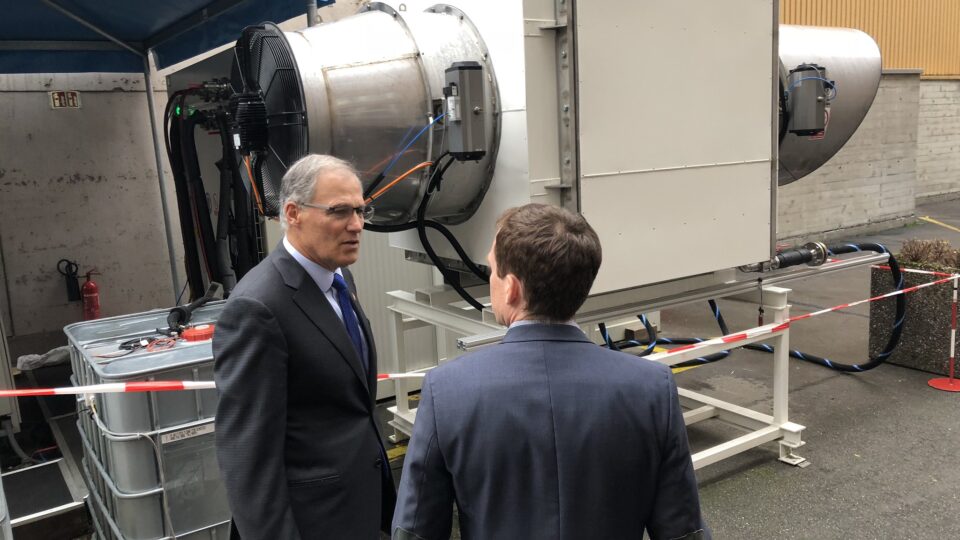
This September marks the opening of a new project called “Orca” in Iceland, which will, for the time being, be the largest direct air capture system in the world.  Once it is running around the clock, Orca will remove up to 4,000 metric tons of CO2 from the atmosphere each year.

Even larger DAC plants – one in the southwestern U.S and another in Scotland – are planned to come online in the next few years.

Ultimately, the question is whether direct air capture is feasible at large enough scale and affordable cost.  The numbers are daunting.  Society releases over 30 billion metric tons of carbon dioxide into the atmosphere each year.  Removing significant amounts of that with DAC technology is an enormous challenge.  Eliminating emissions remains the most practical way to mitigate the effects of climate change.

**********

Web Links

The Dream of Carbon Air Capture Edges Toward Reality

Photo, posted November 10, 2017, courtesy of Governor Jay and First Lady Trudi Inslee via Flickr.

Earth Wise is a production of WAMC Northeast Public Radio.

The Path To Net Zero | Earth Wise

March 8, 2021 By EarthWise Leave a Comment

The path to reaching net zero emissions

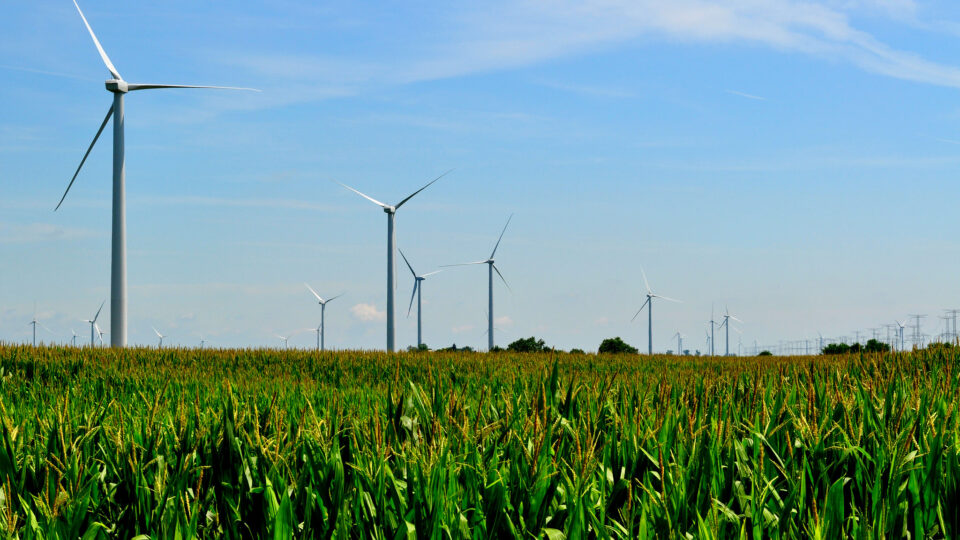
Reaching net zero emissions is both feasible and affordable, according to researchers at the Department of Energy’s Lawrence Berkeley National Laboratory, the University of San Francisco, and consulting firm Evolved Energy Research.   The researchers created a detailed model of the entire U.S. energy and industrial system to produce the first detailed, peer-reviewed study of how to achieve carbon neutrality by 2050.

The study analyzed multiple feasible technology pathways based on very different assumptions of remaining fossil fuel use, land use, consumer adoption, nuclear energy, and biofuel use.  What they had in common was increasing energy efficiency, transitioning to electric technologies, utilizing clean electricity (especially wind and solar power), and deploying small amounts of carbon capture technology.

The decarbonization of the U.S. energy system is an infrastructure transformation.  Getting to net zero by 2050 means adding many gigawatts of wind and solar power plants, new transmission lines, a fleet of electric cars and light trucks, millions of heat pumps to replace conventional furnaces and water heaters, and more energy-efficient buildings.

The various pathways studied have net costs between 0.2% and 1.2% of GDP, which is as little as $1 per person per day.  The cost variations come from various tradeoffs such as the amount of land given to solar and wind farms as well as the amount of new transmission infrastructure required. 

A key result of the study is that the actions required over the next 10 years are similar among all the pathways.   We need to increase the use of renewable energy and make sure that all new infrastructure, such as cars and buildings are low carbon.

**********

Web Links

Getting to Net Zero – and Even Net Negative – is Surprisingly Feasible, and Affordable

Photo, posted July 12, 2010, courtesy of Tom Shockey via Flickr.

Earth Wise is a production of WAMC Northeast Public Radio.

Primary Sidebar

Recent Episodes

  • An uninsurable future
  • Clean energy and jobs
  • Insect declines in remote regions
  • Fossil fuel producing nations ignoring climate goals
  • Trouble for clownfishes

WAMC Northeast Public Radio

WAMC/Northeast Public Radio is a regional public radio network serving parts of seven northeastern states (more...)

Copyright © 2026 ·