• Skip to primary navigation
  • Skip to main content
  • Skip to primary sidebar

Earth Wise

A look at our changing environment.

  • Home
  • About Earth Wise
  • Where to Listen
  • All Articles
  • Show Search
Hide Search
You are here: Home / Archives for exotic

exotic

Making hydrogen using bioengineering

February 28, 2025 By EarthWise Leave a Comment

Hydrogen has great potential for helping society to reach net-zero emissions.  The problem is that the most economical and established production methods for hydrogen depend heavily on fossil fuels and result in roughly a dozen kilograms of carbon dioxide emissions for every kilogram of hydrogen produced.

The carbon-free way to produce hydrogen is by splitting water into its component elements.  This process generally requires the use of catalysts and lots of energy.

Researchers at the University of Oxford are developing a synthetic biology approach to the production of so-called green hydrogen.  The idea is to replace expensive, exotic metal-based catalysts with a highly-efficient, stable, and cost-effective catalyst based on genetically-engineered bacteria.

There are specific microorganisms that can naturally induce the chemical reaction that reduces protons to hydrogen by the use of hydrogenase enzymes.  While these reactions do occur naturally, they are limited to low hydrogen yields.

The Oxford researchers genetically engineered the bacterium Shewanella oneidensis by inserting a light activated electron pump called Gloeobacter rhodopsin as well as adding nanoparticles of graphene oxide and ferric sulfate.  All of this tinkering with the bacterium resulted in a ten-fold increase in hydrogen yield.

The researchers believe that their system, based entirely on biological methods rather than traditional chemical approaches, could be scaled up to produce ‘artificial leaves’ that, when exposed to sunlight, would immediately begin producing hydrogen.  The Oxford work was published last summer in the Proceedings of the National Academy of Science.

**********

Web Links

A green fuels breakthrough: bio-engineering bacteria to become ‘hydrogen nanoreactors’

Photo, posted July 27, 2016, courtesy of Blondinrikard Froberg via Flickr.

Earth Wise is a production of WAMC Northeast Public Radio
Floating cities

June 6, 2024 By EarthWise Leave a Comment

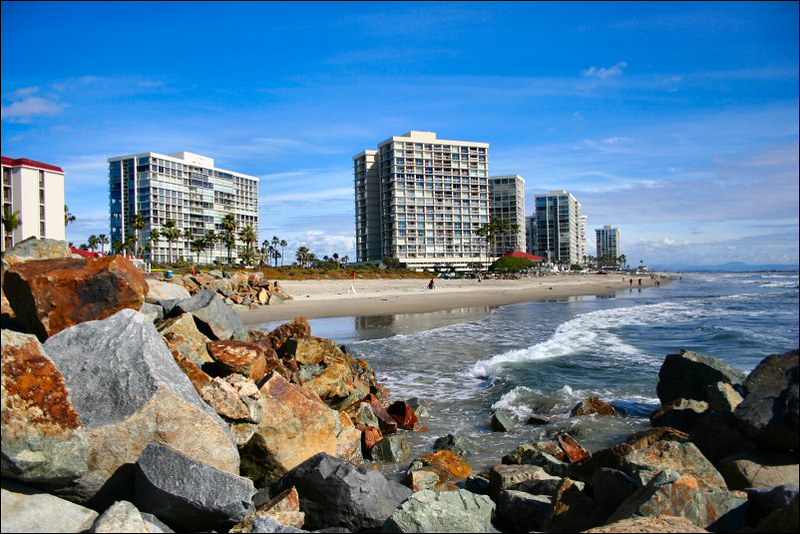
About 40% of the world‘s population lives in coastal regions.  People really like ocean-front property.  But worldwide, rising sea levels mean that more and more people want to live on land that may someday be swallowed up by the sea.

One possible solution to the problem is to build cities on top of the water.  It sounds pretty futuristic and impractical, but it is starting to happen.  There have long been floating communities in places like the Netherlands, but these are for the most part clusters of houseboats moored close together.

But there are far more ambitious projects underway.  The Maldives Floating City, already under construction, will eventually have 5,000 houses located in a lagoon that is a 15-minute boat ride from the capital city of Male.  The housing units will be tethered to the lagoon floor and linked together. 

A new project, located off Busan, South Korea, will combine high and low technology to create a large-scale, on-water town, that can house more than 10,000 people.

The town will be built on enormous concrete platforms suspended on the water.  The platforms float because they are rounded hexagonal boxes that are buoyed up by Archimedes’’ principle.  They can’t sink.  Such structures will attract marine life, providing places for oysters and mussels, for example, to grow. 

The initial development will cover 15 acres and the infrastructure will handle power, water, waste, and even some food.  The goal is even to produce enough energy to provide some to the nearby community.  A bridge will link the community to the land.

The project is scheduled to be completed in 2028.  Future expansion could end up housing 150,000 people.

Floating cities could soon no longer be exotic or futuristic.

**********

Web Links

Are Floating Cities the Solution to Rising Seas?

Photo, posted June 5, 2012, courtesy of Raymond Bucko via Flickr.

Earth Wise is a production of WAMC Northeast Public Radio
Exotic Pets Can Become Problems

August 26, 2019 By EarthWise Leave a Comment

Each year, millions of exotic animals are sold as pets around the world.  The term “exotic” lacks a set definition but is generally used to refer to an animal that’s wild or more unusual than standard pets, like cats and dogs. 

The exotic pet trade is a multi-billion dollar industry,  involving tens of millions of individual animals from thousands of species, including reptiles, amphibians, fish, birds, and mammals.

Some of the exotic pet trade is legal, but a lot of it isn’t.  Many animals are illegally captured from the wild to meet the global demand for exotic pets. 

People often purchase exotic animals without completely understanding the consequences.  Some exotic pets, for example, can live nearly twice as long as the average dog.  Caring for exotic pets can be both expensive and risky, since they are largely undomesticated (and therefore can have unpredictable behavior).

As a result, it’s not uncommon for owners to release exotic pets intentionally.  When this happens, the consequences can be catastrophic.  Sometimes the animal dies from starvation or predation, but in other instances, the animal proliferates and becomes an invasive species.

Invasive species are the second largest driver of biodiversity loss worldwide, and they cost the U.S. $120 billion a year. 

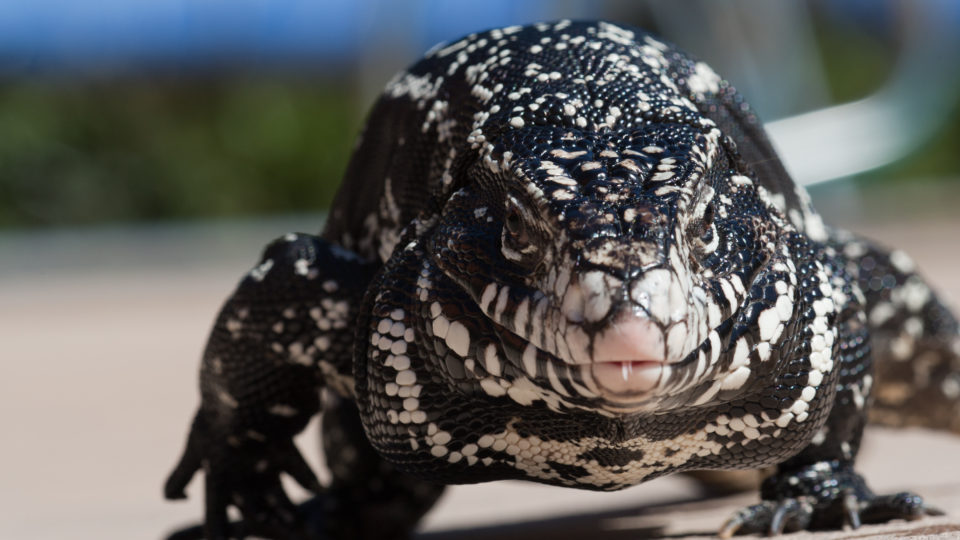
According to an academic review recently published in the journal Frontiers in Ecology and the Environment, the exotic pet trade is one of the primary causes of the spread of invasive species and has fueled the establishment of hundreds of them.  Tegus, Burmese pythons, and red lionfish are examples of pets-turned-pests. 

The best way to combat this trend is through education, detection, and rapid response. 

**********

Web Links

Why you should never release exotic pets into the wild

Photo, posted September 19, 2010, courtesy of Mike Baird via Flickr.

Earth Wise is a production of WAMC Northeast Public Radio.

Endangered Language Species

January 14, 2019 By EarthWise Leave a Comment

There are approximately 7,000 languages spoken in the world today but only about half of them are expected to survive this century.  There are many factors contributing to the decline in languages.  Perhaps the most significant is globalization, which pushes countries and individuals to shift to national or international languages for economic reasons.   Other factors include the lack of support for regional languages in educational systems and mass media, persecution of minority linguistic groups by governments, and disruption of communities during war and emigration.

Predicting which languages will survive and which won’t is difficult.  A potential tipping point for languages is the same one affecting the survival of species:  climate change.  Many small linguistic communities are located on islands and coastlines that are vulnerable to hurricanes and rising sea levels.  Other communities live in places where increases in temperatures and erratic rainfall threaten traditional farming and fishing economies.

These climate-related changes will force communities to relocate,creating climate change refugees. Dispersing these people will lead to the splintering of linguistic communities and the need for the use of other languages.  Such changes will place additional pressures on languages that are already struggling to survive.

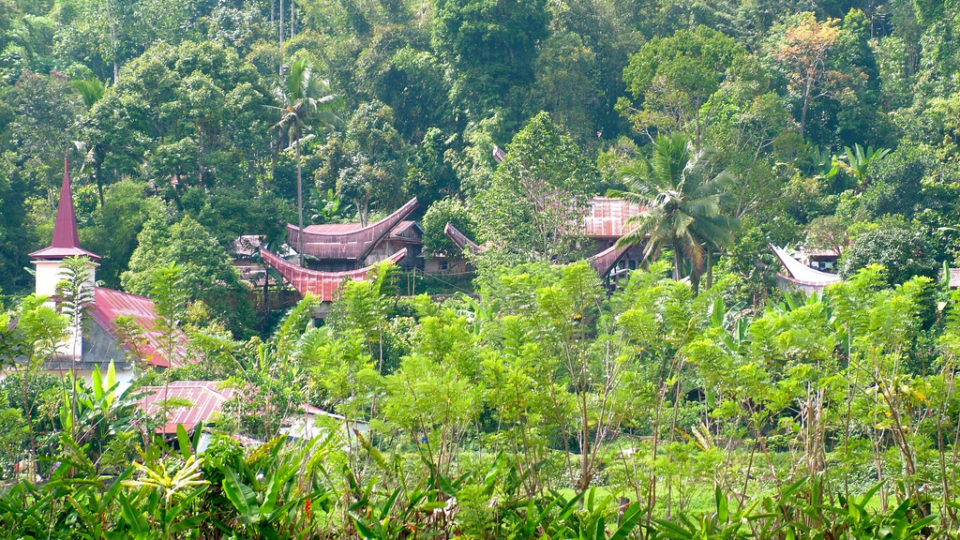
There are endangered languages in many places around the world.  Some are exotic such as the island of Sulawesi in Indonesia, which is home to dozens of distinct languages spoken by no more than a few thousand people. Others are much closer to home, such as in indigenous communities in Canada.

The rich tapestry of human language is just another of many things threatened by the changing climate.

**********

Web Links

The Conversation: The impact of climate change on language loss

Photo, posted May 19, 2009, courtesy of Flickr. 

Earth Wise is a production of WAMC Northeast Public Radio.

Cleaning And Splitting Water

December 18, 2018 By EarthWise Leave a Comment

https://earthwiseradio.org/wp-content/uploads/2018/12/EW-12-18-18-Cleaning-and-Splitting-Water.mp3

Researchers at EPFL in Lausanne, Switzerland, have developed a photocatalytic system that can be used to degrade pollutants present in water while simultaneously producing hydrogen that can be captured and put to use.

[Read more…] about Cleaning And Splitting Water

Cities Can Help Bees

December 14, 2017 By EarthWise Leave a Comment

https://earthwiseradio.org/wp-content/uploads/2017/12/EW-12-14-17-Cities-Can-Help-Bees.mp3

Global bee populations have been drastically declining as a result of habitat loss, pesticides and climate change.  But studies are showing that planting flower patches in urban gardens and green spaces can make a real difference in restoring natural pollinators.   There are already positive results in cities from Chicago to London to Melbourne.

[Read more…] about Cities Can Help Bees

Primary Sidebar

Recent Episodes

  • An uninsurable future
  • Clean energy and jobs
  • Insect declines in remote regions
  • Fossil fuel producing nations ignoring climate goals
  • Trouble for clownfishes

WAMC Northeast Public Radio

WAMC/Northeast Public Radio is a regional public radio network serving parts of seven northeastern states (more...)

Copyright © 2026 ·