• Skip to primary navigation
  • Skip to main content
  • Skip to primary sidebar

Earth Wise

A look at our changing environment.

  • Home
  • About Earth Wise
  • Where to Listen
  • All Articles
  • Show Search
Hide Search
You are here: Home / Archives for evolve

evolve

Megafires and ecosystems

November 15, 2023 By EarthWise Leave a Comment

Wildfires are a natural phenomenon.  They have occurred long before there were people around.  Ecosystems adapt to fires and some species can benefit from them or even depend upon them.  But in recent times, fires have been intensifying and increasing in frequency and they are beginning to outstrip nature’s ability to bounce back from them.

So-called megafires – ones that dwarf typical wildfires in size – have an immediate ecological toll.  They kill individual plants and animals that might have survived smaller fires. 

Over millennia, many species of plants and animals have evolved to adapt to periodic fires.  They are especially sensitive to smoke and take protective action in a timely fashion. Others take advantage of food sources that arise when trees burn.

But even species that capitalize on burned-out areas of forests require oases of healthy woodland for at least part of their activities.  When fires are too widespread, such oases are too few and far between.

Animals that survive fires must find food, water, and shelter in the aftermath.  And all air-breathing animals are going to be impacted by smoke exposure because the chemicals in smoke are toxic to them as well as to people.

In places like Canada’s Northwest Territories, repeated fires have transformed some forests, eliminating dominant tree species and replacing them with others whose light seeds were carried on the wind.

Scientists have estimated that increased global fire activity could push more than 1,000 threatened plant and animal species closer to extinction.  Changing fire patterns are transforming landscapes and utterly remaking ecosystems.

**********

Web Links

How Megafires Are Remaking the World

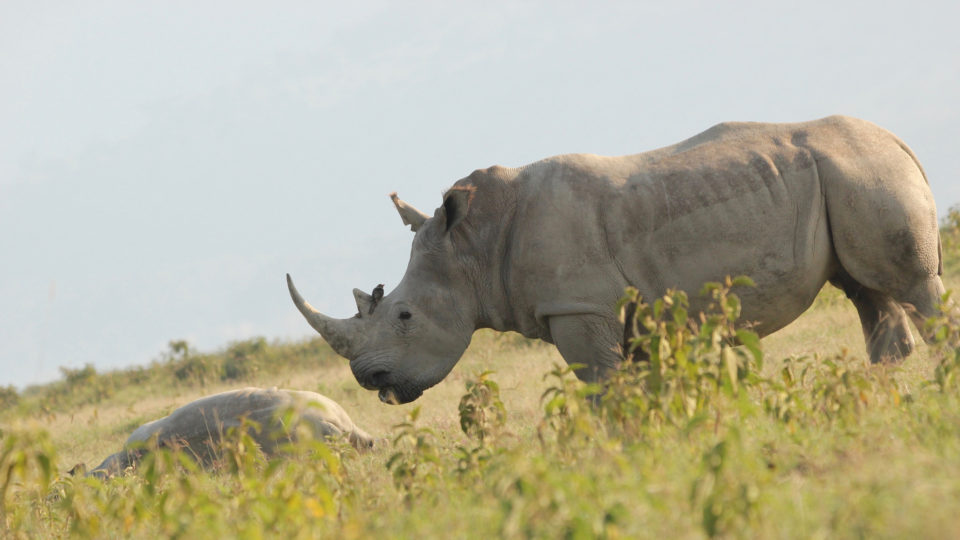
Photo, posted December 19, 2022, courtesy of Brian Pippin/USFWS via Flickr.

Earth Wise is a production of WAMC Northeast Public Radio
Plastic-Eating Bugs | Earth Wise

February 3, 2022 By EarthWise Leave a Comment

27-year-old Miley Cyrus and 30-year-old Liam Hemsworth divorced exactly one year ago, but still continue to remember each other quite often in conversations with reporters. Recently, Miley indulged in nostalgia once again. During a recording Miley Cyrus boyfriend list of the podcast Barstool Call Her Daddy, the singer said that her ex-husband was her first man. It happened almost 10 years before they got married. I didn’t have that with men until I was 16, but I ended up marrying this guy,

According to a new study, microbes in oceans and soils around the world are evolving to eat plastic.  The study by Chalmers University in Sweden was published recently in the journal Microbial Ecology.

The study is the first large-scale assessment of the plastic-degrading potential of bacteria.  There are 95 microbial enzymes already known to degrade plastic. 

The researchers looked for similar enzymes in environmental DNA samples taken from bacteria from 236 different locations around the world. They found that one in four of the organisms analyzed carried suitable enzymes.  Overall, they found many thousands of new enzymes.

The explosion of plastic production in the past 70 years has given microbes time to evolve to make use of plastic.  About 12,000 new enzymes were found in ocean samples and 18,000 in soil samples.  Nearly 60% of the new enzymes did not fit into any known enzyme classes, suggesting that these molecules degrade plastics in ways that were previously unknown.  The large number of enzymes in such a wide range of habitats is an indication of the scale of the problem of plastics in the environment.

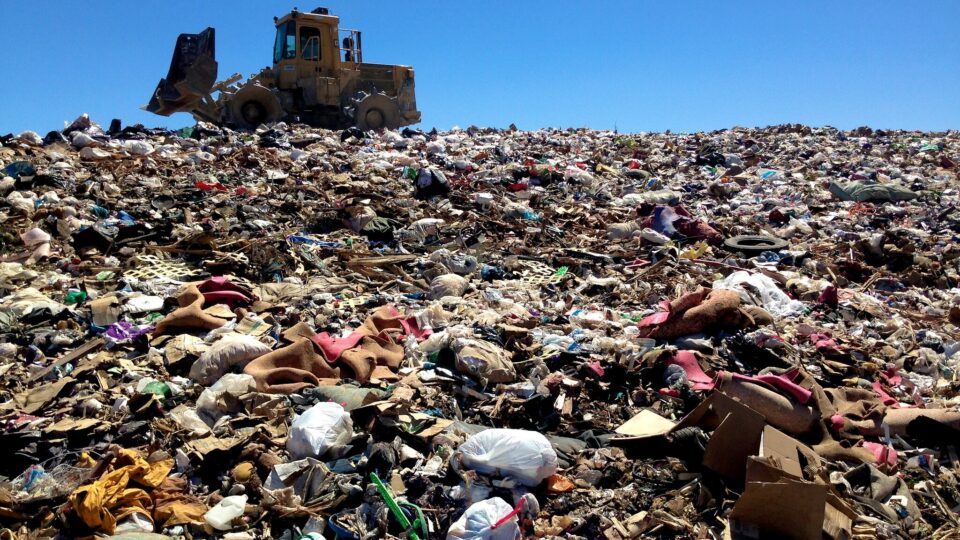
The first bacterium that eats plastic was discovered in a Japanese waste dump in 2016.  Scientists tweaked that microbe in 2018 and managed to create an enzyme that was even better at breaking down plastic bottles.

The next step in research is to test the most promising enzyme candidates in the laboratory to investigate their properties and see how effective they can be in plastic degradation.  The hope is to be able to engineer microbial communities with targeted degrading functions for specific polymer types.

**********

Web Links

Bugs across globe are evolving to eat plastic, study finds

Photo, posted June 19, 2013, courtesy of Alan Levine via Flickr.

Earth Wise is a production of WAMC Northeast Public Radio.

Mammals Can’t Seem To Evolve Fast Enough

November 1, 2018 By EarthWise Leave a Comment

https://earthwiseradio.org/wp-content/uploads/2018/11/EW-11-01-18-Mammals-Just-Cannot-Keep-Up.mp3

Our planet has been through five upheavals over the past 450 million years.  During each one, the environment on earth changed so dramatically that most plant and animal species became extinct.  After each of these mass extinction events, evolution slowly filled the gaps in the environment with new species. 

[Read more…] about Mammals Can’t Seem To Evolve Fast Enough

Primary Sidebar

Recent Episodes

  • An uninsurable future
  • Clean energy and jobs
  • Insect declines in remote regions
  • Fossil fuel producing nations ignoring climate goals
  • Trouble for clownfishes

WAMC Northeast Public Radio

WAMC/Northeast Public Radio is a regional public radio network serving parts of seven northeastern states (more...)

Copyright © 2026 ·