• Skip to primary navigation
  • Skip to main content
  • Skip to primary sidebar

Earth Wise

A look at our changing environment.

  • Home
  • About Earth Wise
  • Where to Listen
  • All Articles
  • Show Search
Hide Search
You are here: Home / Archives for environmental research

environmental research

Insect declines in remote regions

October 29, 2025 By EarthWise Leave a Comment

Insects are declining even in remote regions

Insects play a crucial role in sustaining life on Earth.  They pollinate plants, recycle nutrients, and form the foundation of food webs in both terrestrial and freshwater ecosystems. Without insects, the rich biodiversity that supports our planet would not exist.

However, global studies show a widespread decline in both insect abundance and diversity. According to a new study by researchers from the University of North Carolina at Chapel Hill, insect populations are also shrinking in relatively undisturbed landscapes. 

The research team quantified the abundance of flying insects during 15 seasons between 2004 and 2024 in a subalpine meadow in Colorado, an area with decades of weather data and very little direct human activity. The results revealed an average annual decline of 6.6% in insect abundance, amounting to a 72% drop over the 20-year period. The study also linked these losses to rising summer temperatures.

Most previous studies of insect loss have focused on areas heavily influenced by agriculture or urbanization. This new research fills an important gap by showing that steep declines can occur even in pristine areas where human disturbance is minimal, suggesting that the changing climate may be a key driver. 

Mountain regions, which are home to many unique and locally-adapted species, are especially vulnerable. If these declines continue, the rich biodiversity found in high-altitude habitats could be in jeopardy.

The findings highlight the urgent need for broader and longer-term monitoring of insect populations and reinforce the importance of addressing climate change.  Even remote regions are not out of its reach.   

**********

Web Links

Long-term decline in montane insects under warming summers

Insects are disappearing from the last places we thought were safe

Photo, posted July 16, 2019, courtesy of Tom Koerner / USFWS via Flickr.

Earth Wise is a production of WAMC Northeast Public Radio

Heatwaves and major carbon emitters

October 24, 2025 By EarthWise Leave a Comment

Human-induced climate change is increasing the frequency and intensity of heatwaves

A new study by ETH Zurich, one of the world’s leading universities in science and engineering, demonstrates that human-induced climate change greatly increased the likelihood and intensity of over 200 global heatwaves between 2000 and 2023.  Emissions associated with each of the 180 largest producers of fossil fuels and cement contributed substantially to these events.  Emissions from these so-called carbon majors accounted for 60% of humanity’s total cumulative CO2 emissions from 1850 to 2023.

The research looked at 213 heatwaves that occurred on all seven of Earth’s continents between 2000 and 2023.  The study calculated how climate change affected the intensity and likelihood of each heatwave.

According to the study, global warming made heatwaves 20 times more likely between 2000 and 2009, and as much as 200 times more likely between 2010 and 2019, compared with the period between 1850 and 1900.

Estimates are that the 180 carbon majors are responsible for about half of the change in global mean surface temperature over time.  Furthermore, 14 of these 180 entities made the same contribution to climate change as the remaining 166 organizations combined.

While every one of us – individuals, countries, or companies – contributes to climate change, the carbon majors have especially significant responsibility.

**********

Web Links

Rising heat waves tied to fossil fuel and cement production

Photo, posted May 1, 2019, courtesy of Martin Snicer via Flickr.

Earth Wise is a production of WAMC Northeast Public Radio

Tree plantings and climate impact

October 1, 2025 By EarthWise Leave a Comment

Assessing the climate impact of tree plantings

Planting trees is a key strategy in the fight against climate change.  Trees absorb carbon dioxide, regulate temperature, support biodiversity, and improve air and water quality, offering benefits that extend well beyond their boundaries.

But according to a new study by researchers from University of California – Riverside, where those trees are planted makes a big difference.  The study, which was recently published in the journal Climate and Atmospheric Science, found that tree plantings are almost always a net positive for the climate because trees pull CO2 out of the atmosphere. But the impact of trees on temperature varies a lot by region.

In tropical regions, trees deliver the biggest cooling benefits.  They not only absorb carbon but also cool the air through a process called evapotranspiration.  Roots draw water from the soil, and when it evaporates from the leaves, it cools both the tree and the air around it.  This also raises humidity, which can lead to more clouds.  Both effects block some sunlight from reaching the ground, which adds to the cooling.

The researchers estimated that tropical tree plantings could cool regions like central Africa by as much as eight-tenths of a degree Fahrenheit. 

In contrast, planting trees at higher latitudes may have a slight warming effect.  Darker tree canopies absorb more sunlight, which can offset some of the cooling.  In some places, such as Canada and the northeastern U.S., trees may even increase fire risk.  But this does not mean trees in those regions are unhelpful.  They provide many other benefits for biodiversity, ecosystems, and the environment. 

But one thing is clear: planting trees in the tropics offers the strongest returns for the climate.

**********

Web Links

Trees in the tropics cool more, burn less

Photo, posted September 15, 2024, courtesy of Jan Helebrant via Flickr.

Earth Wise is a production of WAMC Northeast Public Radio
Why are bees making less honey?

February 8, 2024 By EarthWise Leave a Comment

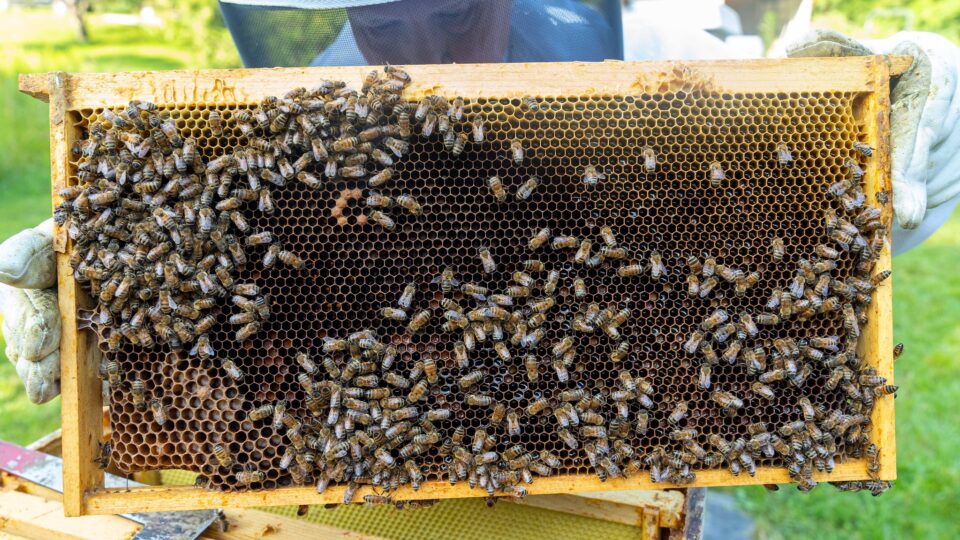
Honey bees are making less honey in the United States

Scientists have been sounding the alarm on the global struggle of pollinators for a long time.  According to the United Nations, nearly 35% of the invertebrate pollinator species, such as bees and butterflies, are facing extinction. And since 75% of the world’s food crops depend on pollination to some extent, the decline of pollinators poses a major threat to global food security.

Honey bees are among the struggling pollinators.  Honey bee colonies in the United States have experienced annual population declines since 2006.  But in addition to there being fewer bees, the bees that remain are also making less honey.  In fact, honey yields in the United States have been declining since the 1990s. 

A new study by researchers from Penn State University has solved some of the mystery.  Using five decades of data across the United States, the research team analyzed the factors that could be affecting the number of flowers growing in different regions, which, in turn, affects the amount of honey produced by bees. 

In the study, which was recently published in the journal Environmental Research, the scientists found that climate conditions and soil productivity were two of the biggest factors in estimating honey yields.  States in both warm and cool regions produced higher honey yields when they had productive soils.  These two factors set a baseline production level of honey, while herbicide use, weather, and land use changes influenced how much honey was produced in a given year. 

The study’s findings  provide valuable insights that should help beekeepers, growers, and land managers better support honey bees.

**********

Web Links

Why are bees making less honey? Study reveals clues in five decades of data

Photo, posted August 30, 2021, courtesy of Brandon O’Connor / NRCS via Flickr.

Earth Wise is a production of WAMC Northeast Public Radio

Keeping A Pulse On Our Planet

April 6, 2016 By WAMC WEB

https://earthwiseradio.org/wp-content/uploads/2016/03/EW-04-06-16-Keeping-a-Pulse-on-Our-Planet.mp3

The discovery of acid rain in North America was made possible by environmental data collected at a biological field station nestled in the White Mountains of New Hampshire. Hubbard Brook Experimental Forest is just one of the many biological field stations located around the globe that are keeping a pulse on the health of our planet.

[Read more…] about Keeping A Pulse On Our Planet

Primary Sidebar

Recent Episodes

  • An uninsurable future
  • Clean energy and jobs
  • Insect declines in remote regions
  • Fossil fuel producing nations ignoring climate goals
  • Trouble for clownfishes

WAMC Northeast Public Radio

WAMC/Northeast Public Radio is a regional public radio network serving parts of seven northeastern states (more...)

Copyright © 2026 ·