• Skip to primary navigation
  • Skip to main content
  • Skip to primary sidebar

Earth Wise

A look at our changing environment.

  • Home
  • About Earth Wise
  • Where to Listen
  • All Articles
  • Show Search
Hide Search
You are here: Home / Archives for environment

environment

The last coal plant in Britain

October 31, 2024 By EarthWise Leave a Comment

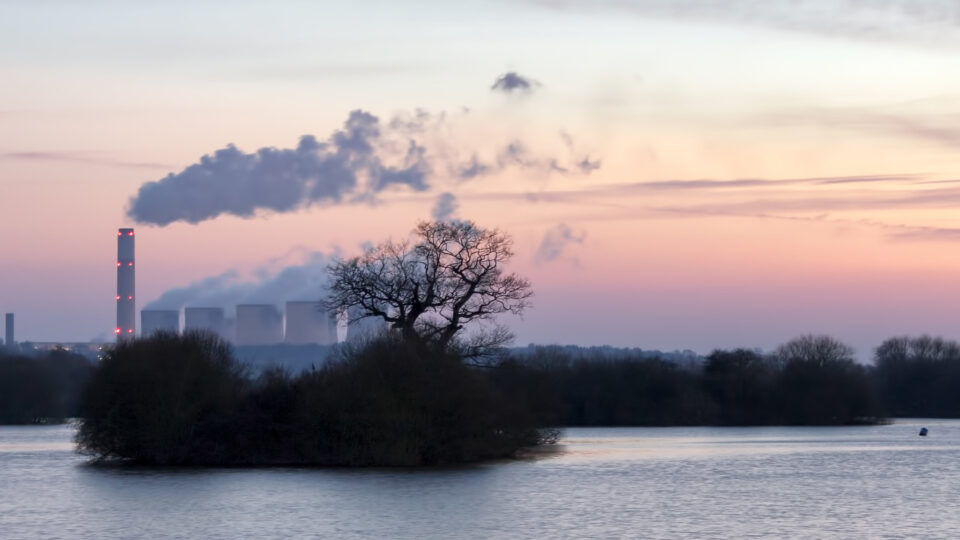
The last coal plant in Britain has closed

The Industrial Revolution, which basically got underway in the mid-19th century, was largely enabled by coal, which fueled iron manufacturing, railroads, steam engines, and more.  Most of these things got their start in Britain, which inspired the rest of the world to follow suit.

The world’s first coal-burning power plant began producing electricity at the Holborn Viaduct in London in 1882.  This September, Britain – the birthplace of coal power – shut down its last coal-burning power station when the 2,000-megawatt Ratcliffe-on-Soar facility ceased operations.  Uniper, the company that operated the plant, will be converting the 750-acre site to a low-carbon energy hub.

Shutting down coal plants is not a simple matter, as they are the lifeblood of entire towns and regions where they are located.  Finding fair transitions for workers is an uphill battle that has to take place in many locations.

Coal is the dirtiest fossil fuel, producing more greenhouse gas than others, but historically was the cheapest and most abundant source of power in many countries.  In recent decades, it has been replaced by gas, nuclear power, and most recently, renewables like wind and solar.

The coal era has ended in much of the world. The United States still gets 16% of its electricity from coal, but that number keeps getting smaller.  Unfortunately, the great majority of coal use is in the world’s two most populous countries:  India and China.  Both are adding renewable energy sources, but both have rapidly climbing energy demand.  China’s coal consumption is expected to peak this year and flatten out.  But there is still work to be done to bring an end to coal power.

**********

Web Links

Britain Shuts Down Last Coal Plant, ‘Turning Its Back on Coal Forever’

Photo, posted March 13, 2016, courtesy of Arran Bee via Flickr.

Earth Wise is a production of WAMC Northeast Public Radio

Renegade geoengineering

October 30, 2024 By EarthWise Leave a Comment

Geoengineering inc

As the dangers of climate change continue to grow, so has interest in geoengineering – deliberate tinkering with the earth’s climate system.  In particular, stratospheric solar geoengineering – releasing aerosols into the stratosphere to reduce the amount of heat from the sun reaching the Earth – is attracting increasing interest.  Scientists at Harvard, Cornell, Colorado State, Princeton, and the University of Chicago are all researching the topic.

Actually doing it on a scale that matters is fraught with peril from unintended consequences of disrupting the delicate interactions between the Earth’s atmosphere, ocean, land, and sea ice. 

Meanwhile, a tiny start-up company in Silicon Valley has raised more than a million dollars in venture capital and is busy releasing balloons full of sulfur dioxide into the atmosphere in the name of combatting global warming.  Furthermore, they are selling so-called “cooling credits” to customers who want to offset their personal carbon emissions.

The aerosol being released is on such a small scale that it can’t possibly have a meaningful effect on temperatures.  There really isn’t scientific analysis guiding or accompanying the work. 

There are no laws prohibiting the dispersal of small amounts of sulfur dioxide in California.  Even if there were, these people could go offshore or elsewhere to do their work.  But this renegade geoengineering highlights a serious issue; namely, that there doesn’t have to be scientific, political, or any other kind of consensus for someone to undertake a potentially catastrophic attempt to alter the climate.  It’s a real worry.

**********

Web Links

Silicon Valley Renegades Pollute the Sky to Save the Planet

Photo, posted September 24, 2006, courtesy of Doc Searls via Flickr.

Earth Wise is a production of WAMC Northeast Public Radio
Big Food and greenhouse gas emissions

October 29, 2024 By EarthWise Leave a Comment

Analyzing Big Food and its greenhouse gas emissions

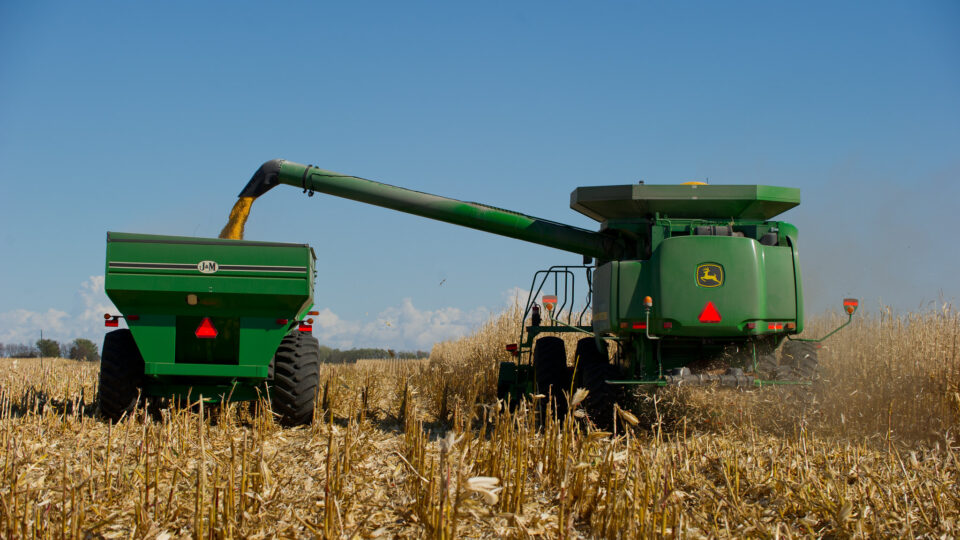
The global food system is responsible for as much as 40% of human-generated greenhouse gas emissions. The investor advocacy group Ceres has tracked whether the 50 largest North American food and agriculture companies have set targets to lower their emissions and whether doing so has actually resulted in lower emissions.

The emissions from food and agriculture companies are grouped into three so-called scopes.  Scope 1 are emissions from a company’s direct operations.  Scope 2 are emissions from its energy use.  Scope 3 are emissions from a company’s supply chain:  from the farmers who grow crops, raise cattle, and otherwise provide necessary items for a company’s final products.  In the food industry, the scope 3 category is responsible for about 90% of overall emissions.

Of the 50 food companies studied, 23 reduced their scope 1 and scope 2 emissions over the past 2 years, but only 12 reduced their scope 3 emissions.  Companies have more control over their scope 1 and scope 2 emissions. 

Reducing scope 3 emissions is more difficult.  And most companies haven’t set scope 3 reduction targets. 

The findings of the study suggest that reducing scope 3 emissions is especially difficult for companies whose supply chains are linked to carbon-intensive commodities, like meat, or crops linked to deforestation or land-use change, both of which result in increased emissions.

In March, the Securities and Exchange Commission finalized rules requiring companies to disclose their climate risk to regulators, increasing the visibility of the food industry emissions issue.

**********

Web Links

North America’s Biggest Food Companies Are Struggling to Lower Their Greenhouse Gas Emissions

Photo, posted October 13, 2011, courtesy of the United Soybean Board via Flickr.

Earth Wise is a production of WAMC Northeast Public Radio

Halloween pumpkins

October 28, 2024 By EarthWise Leave a Comment

According to the National Retail Federation, spending on Halloween festivities this year by the 72% of Americans who plan to celebrate is expected to total $11.6 billion – or about $104 per person.  The annual consumer survey also found that 67% of Americans plan to pass out candy this year, and nearly 50% of Americans plan to carve a pumpkin.

To produce enough pumpkins for Halloween, farmers grow lots of them every year.  In fact, more than two billion were grown in 2020 alone.  But the vast majority of pumpkins are never eaten; instead, most are carved and placed on porches across the country.  This means Americans spend hundreds of millions of dollars on pumpkins annually just to toss them in the trash when Halloween ends. 

When pumpkins are placed in landfills, they produce methane gas.  Methane is a potent greenhouse gas that affects climate change by contributing to increased warming. 

Instead of throwing pumpkins into the landfill, there are several responsible ways to dispose of them. 

If the pumpkin is still in good shape, use the outer, meaty part of the pumpkin to make pumpkin puree.  The pumpkin seeds can also be scooped out, rinsed, seasoned, and then baked in the oven, resulting in a delicious snack.

Pumpkins also have the potential to turn into great soil through composting. Pumpkins can help naturally add moisture to compost piles that need to be damp in order to effectively decompose food waste.   

If eating or composting the pumpkins isn’t an option, consider donating them to a local farm.  Farmers will often collect pumpkins as treats for their pigs, goats, and other animals. 

**********

Web Links

Halloween Retail Holiday and Seasonal Trends

Ready to toss out your pumpkins? Here’s how to keep them out of the landfill

US grows over 2 billion pumpkins yearly

Photo, posted November 8, 2014, courtesy of Martin Brigden via Flickr.

Earth Wise is a production of WAMC Northeast Public Radio

A structural battery

October 25, 2024 By EarthWise Leave a Comment

The size and especially the weight of batteries is a critical factor for most things that use them.  Battery weight is a key limitation for computers and cell phones. It is even more of a limitation for electric cars, ships, or planes.

If the battery of a device or vehicle can also function as a load-bearing structure, its weight and energy consumption can be dramatically reduced.  This concept of a structural battery is sometimes called massless energy storage.  It has the potential to halve the weight of a laptop computer, make cell phones as thin as a credit card, and increase the range of an electric car by as much as 70%.

Researchers at Chalmers University in Sweden have been working on structural battery technology for many years.  Their first published results in 2018 showed how stiff, strong carbon fibers could be used for chemical storage of electrical energy.

Since then, they have been creating batteries with increasing energy density.  Their latest versions still have only a quarter of the capacity of today’s lithium-ion batteries. But if batteries can be part of the structure of a vehicle, for example, and can be made of lightweight materials like carbon fiber, then the overall weight of the vehicle can be greatly reduced and not nearly as much energy will be needed to power it.

The goal of the Chalmers research is to achieve battery performance that makes it possible to commercialize the technology.  There is a lot of engineering work to be done before these structural batteries can go from laboratory proofs of concept to real world use.  But the potential is quite promising.

**********

Web Links

World’s strongest battery paves way for light, energy-efficient vehicles

Photo, posted August 8, 2024, courtesy of NOI Techpark via Flickr.

Earth Wise is a production of WAMC Northeast Public Radio

Ocean geoengineering

October 24, 2024 By EarthWise Leave a Comment

A start-up company is exploring ocean geoengineering

As greenhouse gas emissions continue to be dangerously large and the perils of climate change are increasingly apparent, the world is increasingly exploring ways to deliberately intervene in climate systems.  A number of these ideas involve introducing substances into the atmosphere, but there are also ways to tinker with the oceans.

The oceans naturally absorb about a third of the carbon dioxide that humans pump into the atmosphere, mostly by burning coal, gas, and oil.  People are exploring ways to get the ocean to take up even more of the carbon dioxide.  One approach that is gaining traction is known as alkalinity enhancement.  By adding limestone, magnesium oxide, or other alkaline substances to rivers and oceans, it changes their chemistry and makes them soak up more carbon dioxide.

This approach has been around for a while as a way to mitigate acid rain in rivers and has been very successful.  A start-up company in Canada called CarbonRun is building a machine that grinds up limestone and will release the powder it produces into a local river in Nova Scotia.  The limestone in the river will be naturally converted into a stable molecule that will eventually be washed into the seas, where it should remain for thousands of years.

Expanding this approach to oceans faces many challenges including the costs and complexities of obtaining, processing, and transporting vast amounts of limestone to where it is to be released.  There are also potential environmental issues to grapple with.  But CarbonRun and others are moving forward with testing the approach.

In any event, the biggest barrier to ocean alkalinity enhancement is proving that it works.  That effort is underway.

**********

Web Links

They’ve Got a Plan to Fight Global Warming. It Could Alter the Oceans.

Photo, posted May 27, 2007, courtesy of John Loo via Flickr.

Earth Wise is a production of WAMC Northeast Public Radio
Wildlife crossings

October 23, 2024 By EarthWise Leave a Comment

Building more wildlife crossings to reduce collisions between cars and animals

Every year, there are one to two million collisions between motor vehicles and large animals in the U.S.  About 200 people are killed annually.  Counting smaller vertebrates, around a million animals are killed by vehicles each day.  Research has shown that global warming is triggering widespread species redistribution.  As a result, more and more animals are on the move, changing their habitats to escape warming temperatures and climate extremes.

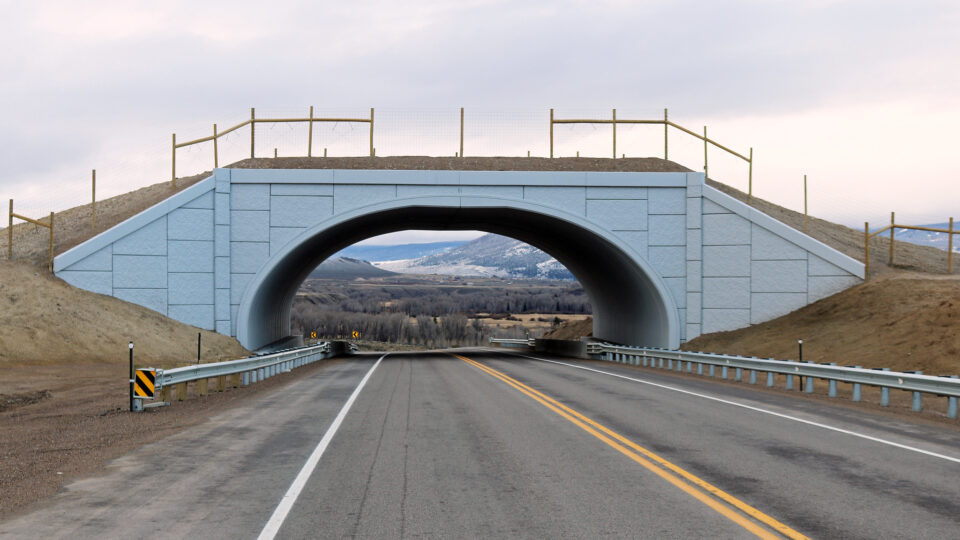
This situation has created renewed interest in creating wildlife crossings.  These are various kinds of structures that allow animals to traverse human-made barriers like highways.  They include such things as a grassy overpass that allows pronghorn to run across a highway in Wyoming and a long underpass that allows tigers to scamper beneath a highway in India.

In the U.S., there are more than 1,000 wildlife crossings and there are more being built all the time.  Data shows that they are highly effective.  A study of wildlife crossings on Highway 9 through the Blue River Valley in Colorado found that they reduced wildlife-vehicle collisions by nearly 90%. 

Wildlife crossing structures can be expensive to build, costing between $500,000 and $6 million, but research has shown that the money saved by avoiding crashes can recoup these costs in just a few years along with the fact that they potentially save lives.  Federal funding is largely distributed based on areas with the highest number of wildlife-vehicle collisions, which is crucial for addressing public safety issues.  However, a recent study suggests that future proposals need to incorporate climate-driven changes in animal behavior and habitat.

**********

Web Links

As Climate Changes Fuels Animal Movement, Will These Structures Still Help Species Cross the Road?

Photo, posted April 5, 2017, courtesy of Jeffrey Beall via Flickr.

Earth Wise is a production of WAMC Northeast Public Radio

Rising methane emissions

October 22, 2024 By EarthWise Leave a Comment

Methane is a colorless and odorless gas that occurs abundantly in nature and is also a product of certain human activities.  It’s a short-lived but highly potent greenhouse gas and, as a result, is a major driver of climate change.  In fact, methane heats the atmosphere nearly 90 times faster than carbon dioxide over a 20-year period. 

Despite a global pledge from more than 150 nations to reduce methane emissions by 30% this decade, methane emissions continue to rise.  In fact, according to a new paper led by researchers from Stanford University, total annual methane emissions have increased 20% over the past two decades. 

The paper, which was recently published in the journal Environmental Research Letters, found that atmospheric concentrations of methane today are more than 2.6 times higher than in pre-industrial times.  In fact, atmospheric methane concentrations are currently the highest they’ve been in at least 800,000 years.

Methane emissions from coal mining, oil and gas production and use, cattle and sheep ranching, and decomposing organic waste in landfills are responsible for driving the growth.  In 2020, the most recent year for which data was available, nearly 400 million tons – or about two-thirds – of global methane emissions came directly from human activities. 

Methane concentrations in Earth’s atmosphere have increased at record speed over the past five years.  According to the research team, only the European Union and possibly Australia seem to have decreased methane emissions from human activities over the past two decades.  This trend “cannot continue if we are to maintain a habitable climate.”

**********

Web Links

Methane emissions are rising faster than ever

Photo, posted December 4, 2010, courtesy of Dani Mettler via Flickr.

Earth Wise is a production of WAMC Northeast Public Radio

Electric cars and power outages

October 21, 2024 By EarthWise Leave a Comment

Examining the resiliency of electric cars during power outages

As more and more cars are powered by electricity instead of gasoline, people are beginning to worry about what happens during power outages caused by storms and other disruptive events.  It is easy to jump to the conclusion that this is a brand-new problem for drivers.  However, when electricity goes out over a sizeable area, most gas pumps stop working and it isn’t easy to keep gas cars running either.

Electric cars are often charged at home every day and such cars are more likely to be almost fully charged than nearly depleted at any time.  For those drivers, a power failure is unlikely to be much of a concern unless it persists for a very lengthy period.  On road trips, unless a power outage extends over a very wide area, one can probably get to a charger that is still operating.

Nonetheless, the federal government has commissioned researchers at Iowa State University to study potential solutions to possible difficulties in keeping electric cars running during power failures.  The goal of the study is to find ways to reduce the outage frequency of chargers by 75% and the power restoration time by 50%.

The study will evaluate the resiliency of charging stations in extreme weather events and identify ways to quickly restore power to charging stations in the event of outages.  Included are onsite solar power and battery storage at chargers as well as redundant power lines from different electrical substations.  There is even the possibility  of trucks delivering pre-charged batteries to charging stations after a storm.  Identifying and developing technologies to improve the resilience of charging stations is an important goal as the transition to electric vehicles continues.

***********

Web Links

Researchers working to keep electric vehicles charging, even when the lights go out

Photo, posted July 29, 2013, courtesy of Jeff Cooper via Flickr.

Earth Wise is a production of WAMC Northeast Public Radio

The impact of climate change on agriculture

October 18, 2024 By EarthWise Leave a Comment

Climate change is changing the landscape of global agriculture

Agriculture is a major part of the climate problem and remains one of the hardest human activities to decarbonize.  Agriculture is responsible for approximately 30% of global greenhouse gas emissions.

On farms around the world, excess fertilizer gets broken down by microbes in the soil, releasing nitrous oxide into the atmosphere.  Nitrous oxide is a greenhouse gas that is 300 times more potent than carbon dioxide.

According to a sweeping global research review recently published in the journal Science, greenhouse gas emissions from agriculture are now 18 times higher than they were in the 1960s. 

The research, which was co-written by professors at the University of Minnesota with more than 20 experts around the world, also reveals the likelihood of an emergent feedback loop between climate and agriculture.  As the changing climate puts more pressure on the global food supply, agriculture will, out of necessity, adopt practices that may exacerbate its environmental impact. Without changes in agriculture, this feedback loop could make it impossible to achieve the Paris Climate Agreement goal of limiting global warming to 1.5 degrees Celsius above pre-industrial levels. 

The research identifies several agricultural practices that could improve efficiency and stabilize our food supply in the decades to come, including precision farming, perennial crop integration, agrivoltaics, nitrogen fixation, and novel genome editing. 

Finding ways to reduce the warming impact of agriculture while maintaining high crop yields are essential to both mitigating climate change and protecting our food supply from its impacts.

**********

Web Links

Impact of Climate Change on Agriculture Suggests Even Greater Challenges to the Environment, Global Food Supply and Public Health

Photo, posted October 16, 2010, courtesy of Timlewisnm via Flickr.

Earth Wise is a production of WAMC Northeast Public Radio

Slow-moving landslides

October 17, 2024 By EarthWise Leave a Comment

Landslides are mass movements of rock, earth, or debris down a slope.  They can be initiated by rainfall, snowmelt, changes in water level, erosion by streams, earthquakes, volcanic activity, or by various human activities.  Most landslides we hear about are sudden events that can cause all sorts of calamities.  But not all landslides are rapid occurrences.  There are also slow-moving landslides.

A new study by the University of Potsdam in Germany has found that as urban centers in mountainous regions grow, more people are building homes on steeper slopes prone to slow-moving landslides.  Slow-moving landslides can move as little as one millimeter a year and up to as much as three meters per year.  Locations with slow-moving landslides can seem safe to settle on; in some cases, the movement itself can be inconspicuous or even completely undetected.

Slow slides can gradually produce damage in houses and other infrastructure and there can also be sudden acceleration from heavy rain or other influences.

The study compiled a new database of nearly 8,000 slow-moving landslides with areas of at least 25 acres located in regions classified as “mountain risk.”  Of the landslides documented, 563 are inhabited by hundreds of thousands of people.  The densest settlements on slow-moving landslides are in northwestern South America and southeastern Africa. 

In all regions of the study, urban center expansion was associated with an increase in exposure to slow-moving landslides.  As cities expand in mountainous areas, people are moving into unsafe areas, but poorer populations may have few other options.

**********

Web Links

Slow-moving landslides a growing, but ignored, threat to mountain communities

Photo, posted March 4, 2015, courtesy of Flickr.

Earth Wise is a production of WAMC Northeast Public Radio

And the heat goes on

October 16, 2024 By EarthWise Leave a Comment

August 2024 was the hottest August in the 175-years for which there are global records.  The last full month of summer also wrapped up the Northern Hemisphere‘s warmest summer on record.

The average global surface temperature in August was 62.39 degrees Fahrenheit, which is 2.29 degrees above the 20th century August average.  Furthermore, August was the 15th consecutive month of record-high global temperatures, which is a record in and of itself.

Regionally, Europe and Oceana had their warmest August on record.  Asia had its second-warmest August, and Africa and North America had their third-warmest August.

The summer in the Northern Hemisphere was a record-breaker with a temperature 2.74 degrees Fahrenheit above average.  Thinking about climate goals, this is 1.52 degrees Celsius above average, which is a troubling amount.  Meanwhile, in the Southern Hemisphere, where it was winter in the June-to-August period, it was also the warmest ever with a temperature 1.73 degrees Fahrenheit above average.

Globally, this year to date ranks as the warmest ever recorded with a temperature 2.3 degrees above the 20th-century average.  With a few months to go, the prediction is that there is a 97% chance that 2024 will rank as the world’s warmest year on record.

Other aspects of the global climate system were consistent with these record-breaking temperatures.  The global ocean surface temperature for June through August was the warmest on record. 

These monthly climate reports have an unfortunate similarity:  the heat goes on.

**********

Web Links

Earth had its hottest August in 175-year record

Photo, posted June 22, 2021, courtesy of Vicky Brock via Flickr.

Earth Wise is a production of WAMC Northeast Public Radio
Solar energy on federal land

October 15, 2024 By EarthWise Leave a Comment

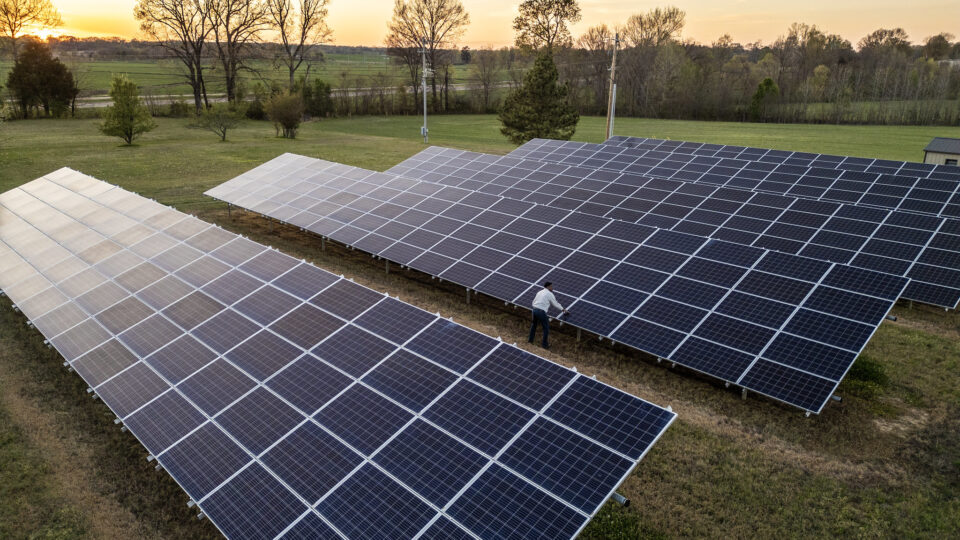
Officials at the federal Bureau of Land Management announced late in August that they had finalized a plan to add Oregon, Idaho, Montana, Washington, and Wyoming to the Western Solar Plan, which started during the Obama era.   The plan, created in 2012, provides permitting for solar projects on federal land.  The original plan included Arizona, California, Colorado, Nevada, New Mexico, and Utah.

The Western Solar Plan is a major expansion for clean energy production in the Bureau of Land Management’s land leasing portfolio.  For decades, the BLM has leased tens of millions of acres of federal land to fossil fuel companies for oil, coal, and natural gas exploration and production.

The new addition includes 1.1 million acres of land in Oregon, an area larger than the entire state of Rhode Island.  The land selected is deemed to be of low risk for any adverse environmental effects from solar installation, and the plots of land are all within 15 miles of existing or planned electrical transmission lines.  A little over 50% of Oregon’s land is owned by the federal government and is managed primarily by the Bureau of Land Management and the U.S. Forest Service.

The publication of the finalized plan at the end of August initiated a 30-day period for any participants in the initial planning to voice objections.  The governors of the 5 new states are reviewing the plan.  Final approval and adoption are expected later this year.

Western states need to expand solar and other clean energy production to meet their climate goals and federal lands will have to play an important role.

**********

Web Links

Plan would make 1 million acres of federal land in Oregon available for solar energy projects

Photo, posted May 20, 2024, courtesy of the U.S. Department of Agriculture via Flickr.

Earth Wise is a production of WAMC Northeast Public Radio

Canadian wildfires and global emissions

October 14, 2024 By EarthWise Leave a Comment

The wildfires that burned vast amounts of Canada’s boreal forests in 2023 produced enormous amounts of smoke that found its way into American cities, working its way down the eastern seaboard and even producing unsafe air in Florida.

Researchers at Cal Tech and the Jet Propulsion Laboratory analyzed the carbon emissions associated with these fires last year and found that they were greater than those of all but three countries:  China, the US, and India.

Boreal forests have historically been a natural defense against climate change by storing carbon in trees rather than adding carbon dioxide to the atmosphere.  The fires in Canada, fueled by hot and dry weather, were extraordinary when compared with historical records.  But such fires are likely to be increasingly common as the climate continues to warm.

However, the hot and dry weather that fueled the 2023 fires was exceptional in many ways, involving early snow melt and so-called flash droughts.  This year’s fires in Canada are still bigger than average, but so far have not been as destructive as last year’s. 

Canada has been warming at about twice the global rate.  The extreme temperatures last summer were a major factor in the fueling of the fires, which burned an area almost the size of Florida.

Forests absorb about a quarter of global carbon emissions, but the increasing frequency and intensity of fires are calling into question their ability to continue to do so.  Parts of the Canadian forests are not regrowing after fires as they have in the past, partly because blazes burn trees so frequently and intensely.

**********

Web Links

Canada’s Wildfires Were a Top Global Emitter Last Year, Study Says

Photo, posted June 8, 2023, courtesy of the Metropolitan Transportation Authority via Flickr.

Earth Wise is a production of WAMC Northeast Public Radio

Tourism and climate action

October 11, 2024 By EarthWise Leave a Comment

Australia’s Great Barrier Reef is one of the foremost natural wonders of the world and is a major tourist attraction.  It is well-known that the changing climate is threatening the survival of the Great Barrier Reef as well as other coral reefs around the world.  A recent study by researchers at the University of Queensland looked at the reactions of tourists to being informed about the impact of the changing climate on the reef.

The Great Barrier Reef faces many challenges.  Unprecedented marine heatwaves have triggered repeated mass coral bleaching events over the past decade. These climate driven disturbances are compounding the cumulative effects of chronic problems such as unsustainable fishing, pollution, and sedimentation as well as acute disturbances such as tropical cyclones and outbreaks of crown-of-thorns starfish.

Operators of five reef tourism boats assisted in the study.  As part of their boat trips, tourists were given climate information via a marine biology presentation and there were also posters around the vessel as well as regular mentions of climate change impacts and actions throughout the trip.

The tourism industry often has the idea that providing information on climate change might be detrimental to people’s enjoyment – basically a buzzkill.  But based on surveys conducted at the end of the trips, the researchers found that informing tourists about climate impact didn’t negatively affect their experience.  In fact, most tourists actually wanted more information, particularly about how they can take meaningful actions of their own.

The researchers believe that their study provides further opportunity to improve climate communication and effectively promote climate change engagement among tourists.

**********

Web Links

Reef tourism encourages climate action

Photo, posted October 7, 2008, courtesy of eGuide Travel via Flickr.

Earth Wise is a production of WAMC Northeast Public Radio
Predicting major earthquakes

October 10, 2024 By EarthWise Leave a Comment

Researchers are exploring how to predict major earthquakes

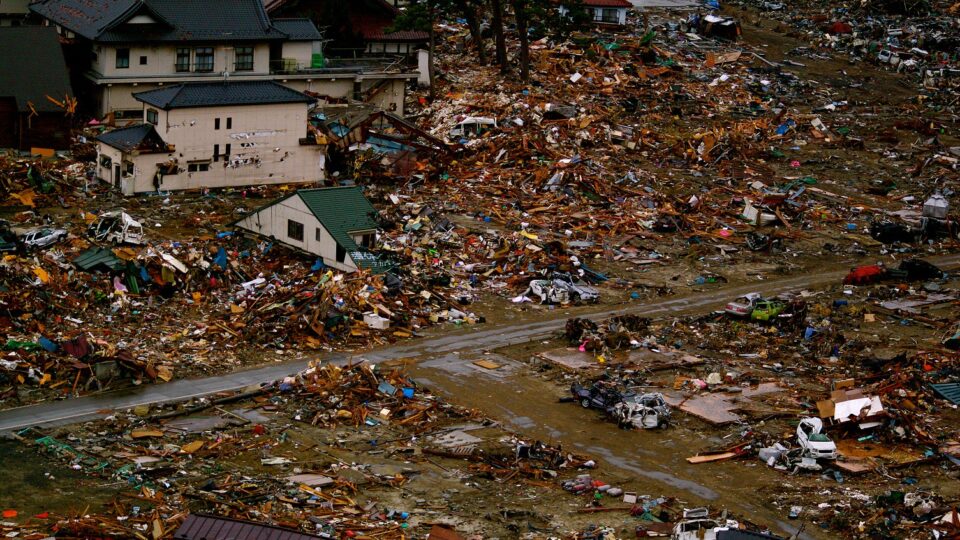
Natural disasters continue to be major threats for people, just as they always have been.  But modern technology has greatly improved our ability to prepare for and, in many cases, escape from the worst effects of these events.  A good example is hurricane forecasting.  Nowadays, there is plenty of warning when a major hurricane is headed toward a populous area.  It is still up to people to get away from the danger zone, but at least there is the opportunity to do so.

Major earthquakes are a different story.  There is generally little or no warning when one will strike.  But scientists at the University of Alaska Fairbanks and the Ludwig Maximilian University in Munich, Germany have developed a technique that may provide days or even months of warning about an impending major earthquake.

The detection method is based on machine learning and is described in a paper in the journal Nature Communications.  The researchers wrote a computer algorithm that looks for abnormal seismic activity.  Advanced statistical techniques found that approximately three months of abnormal low-magnitude regional seismicity occurred in the regions where two major earthquakes took place.  One was the magnitude 7.1 Anchorage earthquake in 2018 and the other was a similar-sized quake in Ridgecrest, California in 2019.

Considerably more testing – particularly in real-time rather than looking at historical data – is needed.  But accurate earthquake forecasting has the potential to save lives and reduce economic losses.  However, there are ethical and practical questions to answer.  False alarms could lead to unnecessary panic, economic disruption, and loss of public trust.  On the other hand, missed predictions can have catastrophic consequences.

**********

Web Links

UAF scientist’s method could give months’ warning of major earthquakes

Photo, posted January 22, 2012, courtesy of the Climate and Ecosystems Change Adaptation Research University Network via Flickr.

Earth Wise is a production of WAMC Northeast Public Radio
The doomsday glacier

October 9, 2024 By EarthWise Leave a Comment

The doomsday glacier is melting

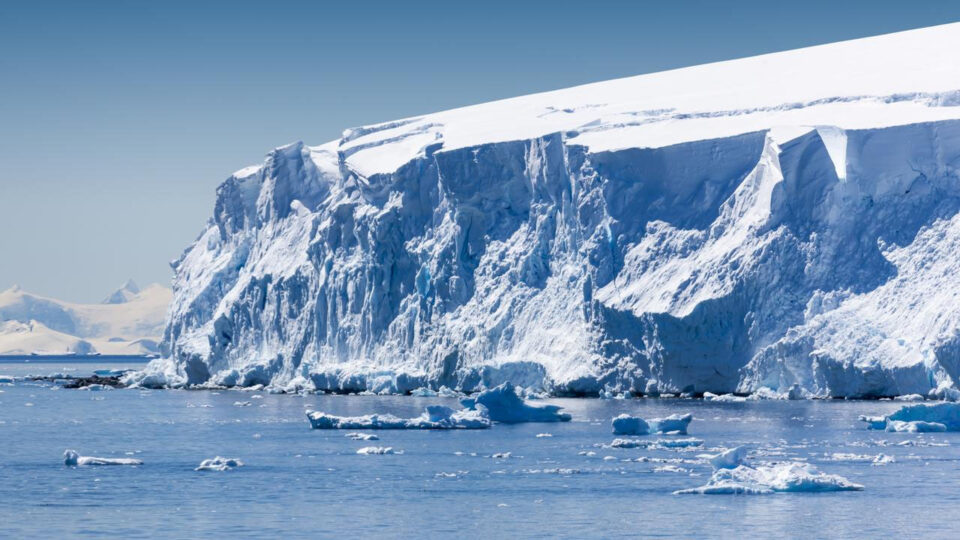
The Thwaites Glacier is an enormous Antarctic Glacier.  Its area is larger than that of Florida – in fact, larger than 30 other U.S. states – and it is melting.  It has been retreating for 80 years but has accelerated its pace in the past 30.  Its shedding of ice into the ocean already contributes 4% of global sea level rise.  If it collapsed entirely, it would raise sea levels by more than 2 feet.  For this reason, it has been dubbed the Doomsday Glacier.

A team of scientists has been studying it since 2018 in order to better understand what is happening within the glacier. They sent a torpedo-shaped robot to the glacier’s grounding line, which is the point at which the ice rises up from the seabed and starts to float.  The underside of Thwaites is insulated by a thin layer of cold water.  However, at the grounding line, tidal action is pumping warmer sea water at high pressure as far as six miles under the ice.  This is disrupting the insulating layer and is speeding up the retreat of the glacier.

The potential collapse of the glacier is not even the only massive risk it poses.  It also acts like a cork, holding back the vast Antarctic ice sheet.  If that ice sheet were ever to collapse, sea levels could rise 10 feet.

A critical unanswered question is whether the ultimate collapse of Thwaites Glacier is already irreversible.  There are regular heavy snowfalls that occur in the Antarctic which help replenish ice loss.  Whether nations’ progress in slowing climate change can change the balance between ice accumulation and ice loss on the glacier remains to be seen.

**********

Web Links

‘Doomsday’ glacier set to melt faster and swell seas as world heats up, say scientists

Photo, posted January 3, 2022, courtesy of Felton Davis via Flickr.

Earth Wise is a production of WAMC Northeast Public Radio
Trends in rooftop solar

October 8, 2024 By EarthWise Leave a Comment

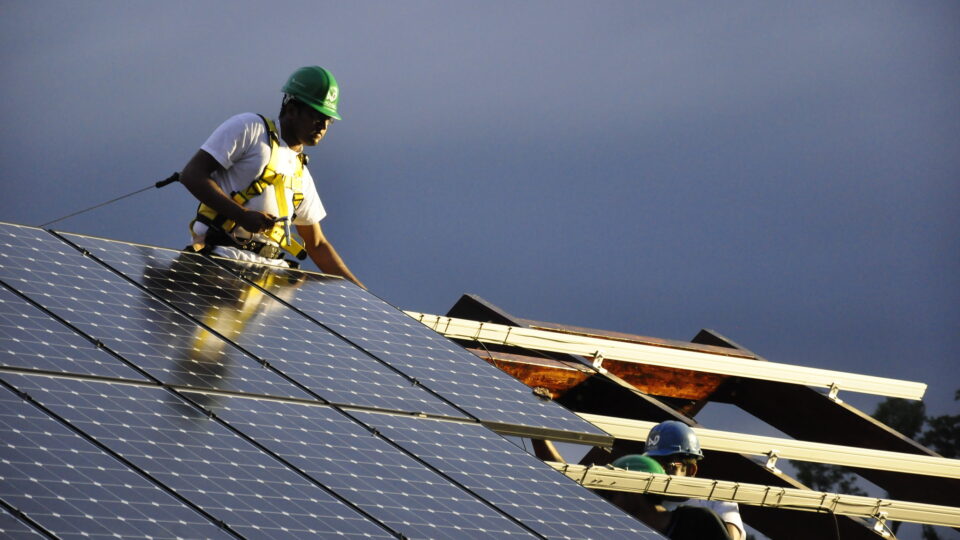
Rooftop solar power in the United States has increased by a factor of ten over the past decade and the majority of that growth has been in the past six or seven years.  At this point, about 7% of American homes have solar panels on their roofs – about 5 million in total. 

Rooftop solar really began experiencing widespread use about 20 years ago.  Over that time period, the amount of electricity that panels are able to produce has grown substantially and the cost of solar power systems has dropped dramatically.

Twenty years ago, the median sized residential solar system generated 2.4 kilowatts of power.  In 2023, the median size was 7.4 kilowatts.  Roofs haven’t gotten bigger; solar panels have gotten better.

More importantly, 20 years ago, the average cost of installing solar power was $12 a watt. In 2023, the cost was $4.20 a watt.

Americans in fact pay considerably more for solar power than citizens in many other countries.  The reason is not the price of the equipment; it is so-called soft costs.  These include labor, financing, and permitting. Driving down soft costs is complicated and difficult. For one thing, it is important for solar industry jobs to have high pay and good benefits.

The cost of solar also varies significantly by state.  California is the leading state for solar power and its median solar cost is the $4.20 a watt, the same as the national average.  Nevada has the lowest cost at $3.40 a watt and Utah has the highest at $5.20 a watt.

**********

Web Links

Bigger and Less Expensive: A Snapshot of U.S. Rooftop Solar Power and How It’s Changed

Photo, posted September 18, 2011, courtesy of Team Massachusetts 4D Home via Flickr.

Earth Wise is a production of WAMC Northeast Public Radio

Weather extremes for most people

October 7, 2024 By EarthWise Leave a Comment

Weather extremes are becoming common for many people

Scientists from the CICERO Center for International Climate Research in Norway along with researchers at the University of Reading in the UK have analyzed how global warming can combine with normal variations in the weather to produce decades-long periods of very rapid changes involving both extreme temperatures and extreme amounts of rainfall.

Many parts of the world have already been experiencing record temperatures and extreme rainfall events.  Previously, most analyses of the changing climate have focused on the global mean and not on the impact of extreme weather on specific countries.

The study made use of large climate model simulations to show that if global emissions continue on the path they have been on, large parts of the tropics and subtropics – which are home to 70% of the world’s population – are expected to experience strong rates of change in temperature and precipitation extremes over the next 20 years.  But even if there is strong emissions mitigation – meaning that emissions are reduced enough to reach the goals of the Paris Climate Agreement – the expectation is that 20% of the world’s population will face extreme weather risks. 

These extreme events currently account for a disproportionate share of the realized impacts of climate change.  Heatwaves cause heat stress and excess mortality of both people and livestock.  Extreme precipitation leads to flooding, damage to settlements, infrastructure, crops, and ecosystems, as well as to reduced water quality. 

Society will be increasingly vulnerable to these extreme events, especially when multiple hazards occur at the same time.

**********

Web Links

Extreme weather to strengthen rapidly over next two decades

Photo, posted May 20, 2024, courtesy of Dale Cruse via Flickr.

Earth Wise is a production of WAMC Northeast Public Radio

Rainfall and sea turtles

October 4, 2024 By EarthWise Leave a Comment

Rainfall has a major impact on sea turtles

There are seven species of sea turtles that inhabit the world’s oceans. Six of the seven sea turtle species – all of them except the flatback – are present in U.S. waters, and are listed as threatened or endangered under the Endangered Species Act. 

Sea turtles, which have been around for more than 100 million years, spend the majority of their lives in the ocean, but they do periodically come ashore to nest.  Female sea turtles lay their eggs in the sand and then return to the ocean.  Survival odds for sea turtle hatchlings are quite bleak.  In fact, only one out of every 1,000 makes it to adulthood. 

Research shows that both air and sand temperatures are critical for sea turtle hatchling development.  Cooler temperatures produce larger, heavier hatchlings with more males.  Hatchling size matters because larger hatchlings, which can move faster, are more likely to survive because they spend less time on risky beaches.  But rising temperatures might shorten incubation periods, and erratic rainfall can disrupt growth, potentially affecting survival.

A new international study by researchers from Florida Atlantic University and the University of Tübingen in Germany found that fluctuating rainfall patterns have a greater impact than changes in air temperature on sea turtle hatchling development. 

The results, which were recently published in the journal BMC Ecology and Evolution, reveal that the impact of rainfall varies between species.  As climate change shifts rainfall patterns, the impact on sea turtle nesting sites suggests that global conservation strategies for some species – like loggerhead and green sea turtles – likely need to be updated.

**********

Web Links

Rain or Shine? How Rainfall Impacts Size of Sea Turtle Hatchlings

Sea Turtle

Photo, posted August 27, 2015, courtesy of USFWS/Orsulak via Flickr.

Earth Wise is a production of WAMC Northeast Public Radio

  • « Go to Previous Page
  • Page 1
  • Interim pages omitted …
  • Page 12
  • Page 13
  • Page 14
  • Page 15
  • Page 16
  • Interim pages omitted …
  • Page 91
  • Go to Next Page »

Primary Sidebar

Recent Episodes

  • An uninsurable future
  • Clean energy and jobs
  • Insect declines in remote regions
  • Fossil fuel producing nations ignoring climate goals
  • Trouble for clownfishes

WAMC Northeast Public Radio

WAMC/Northeast Public Radio is a regional public radio network serving parts of seven northeastern states (more...)

Copyright © 2026 ·