• Skip to primary navigation
  • Skip to main content
  • Skip to primary sidebar

Earth Wise

A look at our changing environment.

  • Home
  • About Earth Wise
  • Where to Listen
  • All Articles
  • Show Search
Hide Search
You are here: Home / Archives for energy transition

energy transition

Clean energy and jobs

October 30, 2025 By EarthWise Leave a Comment

The clean energy industry is creating lots of new jobs

America’s clean energy industry is unquestionably under attack by the Trump administration.  The administration is blocking renewable energy projects on federal lands, slashing clean tech tax credits, and putting in place new regulatory hurdles for solar and wind power and electric vehicles.  During the first half of the year, businesses cancelled $22 billion worth of clean energy projects, which would have created more than 16,000 jobs, ironically mostly in Republican areas.  Federal clean energy tax credits have generated billions of dollars in economic value annually, providing a strong return on investment for every federal dollar spent.

Last year, clean energy jobs grew three times faster than the rest of the economy.  The U.S. added nearly 100,000 jobs in solar, wind, batteries, energy efficiency, grid upgrades, biofuels, and electric cars.  In total, more than 3.5 million Americans hold jobs related to clean energy. 

Clean energy investments create substantial economic growth.  The clean energy transition creates opportunities in manufacturing, engineering, installation, and maintenance.  These new jobs far outweigh job losses in the fossil fuel sector.  Investments in clean energy had been projected to create massive numbers of new jobs and significantly boost the U.S. GDP by 2030, often providing new opportunities for rural communities.

Overall, clean energy has been one of the hottest and most promising job sectors in the country.  Now that clean energy job growth is at serious risk, so is the health of the overall economy.

**********

Web Links

More Americans Working in Clean Energy Than as Servers or Cashiers

Photo, posted July 28, 2025, courtesy of Bronx Community College via Flickr.

Earth Wise is a production of WAMC Northeast Public Radio

Fossil fuel producing nations ignoring climate goals

October 28, 2025 By EarthWise Leave a Comment

The Paris Climate Agreement has the primary goal of limiting global average temperature rise to well below 2 degrees Celsius and preferably 1.5 degrees above pre-industrial levels.  Meeting this goal involves reaching global net-zero greenhouse gas emissions in the second half of the century.  Doing so requires the substantial adoption of renewable energy sources to replace fossil fuels.

The case for switching away from fossil fuels has never been stronger as the effects of the warming climate have become increasingly evident, the economics of renewable energy have become more and more favorable, and popular support for the changeover has continued to grow.  Despite all this, the world’s largest fossil fuel producers have expanded their planned output for the future, thereby pushing the world towards an ever-warmer climate.

According to the latest Production Gap Report produced by the Stockholm Environment Institute, governments now expect to produce more than twice as much coal, oil, and gas in 2030 as would be consistent with the goals of the Paris Agreement.  The increase is driven by a slower projected phaseout of coal and a higher outlook for gas production by some of the top producers, including China and the United States.

The United States is the most dramatic case of a country recommitting to fossil fuels.  This year, Congress has enacted billions of dollars in new subsidies to oil and gas companies and the Trump administration has forced retiring coal plants to continue operating, expanded mining and drilling access on public lands, and delayed deadlines for drillers to comply with limits on methane pollution.  Meanwhile, it has set new roadblocks for building wind and solar energy projects.

**********

Web Links

Top Fossil Fuel Producing Nations Plan to Blow Past Climate Targets

Photo, posted May 15, 2020, courtesy of James Watt via Flickr.

Earth Wise is a production of WAMC Northeast Public Radio

AI and the appetite for natural gas

October 20, 2025 By EarthWise Leave a Comment

Natural gas capacity growing as AI and data centers expand

A recent survey of the plans of U.S. electricity utilities for meeting projected future demand indicates that they are looking to build twice as much natural gas capacity as they had anticipated just 18 months earlier.  The reason?  Data centers.  These warehouses full of computers that form the backbone of the internet are multiplying rapidly as companies are adding power-hungry servers for artificial intelligence. 

Data centers used less than 2% of U.S. electricity prior to 2018.  They consumed 4.4% in 2023.  By 2028, they are projected to use anywhere between 6.7 and 12%.  While overall electricity demand had been relatively flat for the past 20 years, now the power grid is scrambling to keep up.

The long-term plans of utilities have been favoring renewables for a while.  Previous industry-wide projections had 258 gigawatts of new wind and solar versus 102 gigawatts of new natural gas plants through 2035.  These plans showed that wind and solar could overtake natural gas as the country’s largest source of electricity by that year.  But newer plans adding additional generating capacity have mostly added new gas and very little renewables.

Utilities are leaning heavily on natural gas in part due to the inertia of regulatory actions that define the rate-setting process.  The grid is simply not set up to adapt to new technology and to deal with the unprecedented changes that data centers bring about.

Ultimately, the continuing reliance on natural gas will be an unfortunate burden on the consumer and on the environment.

**********

Web Links

Riding the High From Data Centers, the Grid Cannot Kick Its Gas Habit

Photo, posted January 23, 2023, courtesy of Aileen Devlin / Jefferson Lab via Flickr.

XXXXXXXXXXXXX

Record energy transition investments

March 5, 2024 By EarthWise Leave a Comment

Record investments in the energy transition

Global investment in the energy transition – that is, the transition away from fossil fuels – increased by 17% in 2023, reaching a new high of $1.8 trillion dollars.  That number includes spending on electric vehicles and their associated infrastructure, electrification of the power grid, and various other changes to the energy system.

Electrified transport was the largest sector for spending, accounting for $634 billion dollars.  This figure includes spending on electric cars, trucks, buses, two- and three-wheeler, and commercial vehicles, as well as charging stations and other associated infrastructure.

The renewable energy sector – including wind, solar, geothermal, and biofuel power plants – accounted for $623 billion.  The third largest investment was $310 billion in power grid investments.

China spent the most of any country by a large margin, investing $676 billion. The EU, U.S., and UK combined accounted for $718 billion. 

These numbers reflect the rapid growth of clean energy across the globe and are obviously quite large.  However, the pace at which clean energy technology is growing is not fast enough to achieve the goal of net-zero emissions by mid-century that most countries have set.  By many accounts, energy transition investments would need to average $4.8 trillion per year for the rest of the decade to be on track.  This is about 5.6% of the global gross domestic product that is currently about $85 trillion per year.  By comparison, the U.S. currently spends about 5.7% of its GDP on energy.

**********

Web Links

Energy transition investments hit record $1.8 trillion in 2023

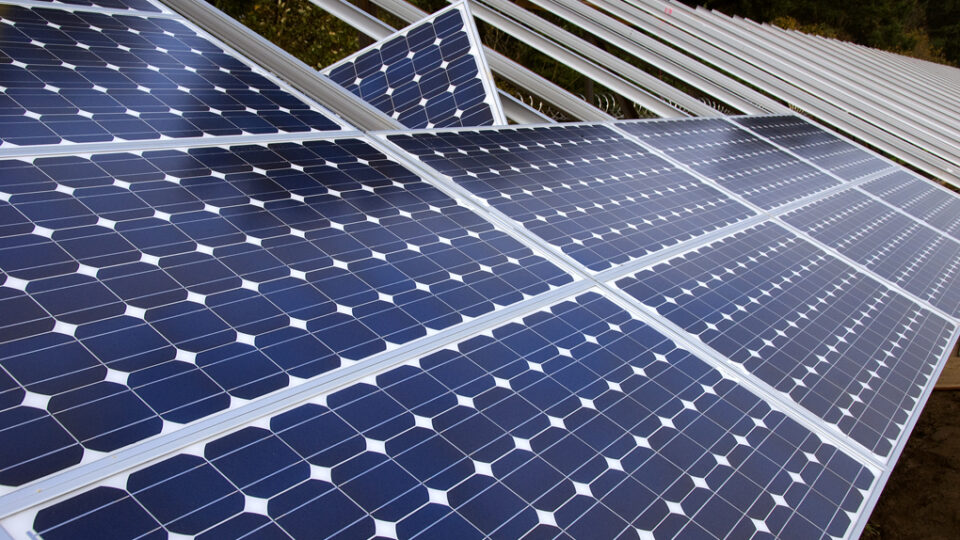
Photo, posted November 22, 2008, courtesy of Oregon Department of Transportation via Flickr.

Earth Wise is a production of WAMC Northeast Public Radio
Rare Earths And The Energy Transition | Earth Wise

May 19, 2023 By EarthWise Leave a Comment

Mining rare earths key to completing the energy transition

Limiting the rise in global temperature to no more than 1.5 degrees Celsius requires decarbonization.  This means slashing fossil fuel use, switching to renewable energy sources, and electrifying as many sectors of the economy as possible.  Doing these things requires huge numbers of wind turbines, solar panels, electric vehicles, and storage batteries.   All of them use rare earth elements and other critical metals.

The 17 rare earth elements are actually common, but they are called rare because they are seldom found in sufficient quantities to be extracted easily or economically. 

China once supplied 97% of the world’s rare earth elements as a result of government support, cheap labor, lax environmental regulations, and low prices.  Once the world started to realize the dangers of being so dependent on China, many countries began developing their own rare earth element production. (However, today China still produces 60-70% of the world’s rare earth elements).

It is difficult to mine rare earth elements without causing environmental damage.  The prevalent extraction techniques involve toxic chemicals that can leach into the environment and, because rare earths are often found near radioactive elements, mining often brings dangerous radioactive waste into the environment.

Researchers are working on ways to make rare earth mining more sustainable.  Some of these include biomining – which uses microbes to extract rare earths from ores, electrical methods to free rare earths from ores, and so-called agromining, which is growing plants that hyperaccumulate rare earths from the soil into their tissues.

Making rare earth mining more sustainable and less harmful to the environment is an essential part of the world’s future.

**********

Web Links

The Energy Transition Will Need More Rare Earth Elements. Can We Secure Them Sustainably?

Photo, posted November 18, 2008, courtesy of the Oregon Department of Transportation via Flickr.

Earth Wise is a production of WAMC Northeast Public Radio
Solar Power In Australia | Earth Wise

October 13, 2021 By EarthWise Leave a Comment

Solar power generation increasing in Australia

Historically, the electricity sector in Australia has been dominated by coal-fired power stations.  Even now, coal accounts for about 60% of Australia’s electricity generation.  But since 2005, wind power and rooftop solar have led to a fast-growing share of renewable energy in total electricity generation.

Australia is the second-largest exporter of coal in the world and has proven reserves equivalent to over 1,200 times its annual consumption.  Australia is home to four of the world’s ten biggest coal mines.  But despite this abundant resource, the country is increasing its use of renewable energy.

For just a few minutes on a sunny Sunday afternoon in August, more than half of Australia’s electricity came from solar power.  Low demand and sunny skies resulted in the contribution from coal dropping to a record low of 9,315 MW while solar power provided 9,427 MW.

In 2020, 24% of Australia’s electricity came from renewable energy, up from 21% the year before.  The increase was driven by a boom in solar installation.

Australia is still a long way from meeting its commitments under the Paris Climate Change agreement.  The country ultimately needs 51 GW of new renewable energy generation by 2042 but only 3 GW of new wind and solar projects have been committed to date.

Overall, Australia has promised what has been described as the fastest energy transition in the world.  It is all very ambitious, but Australia has a lot of work to do.

**********

Web Links

Solar power in Australia outstrips coal-fired electricity for first time

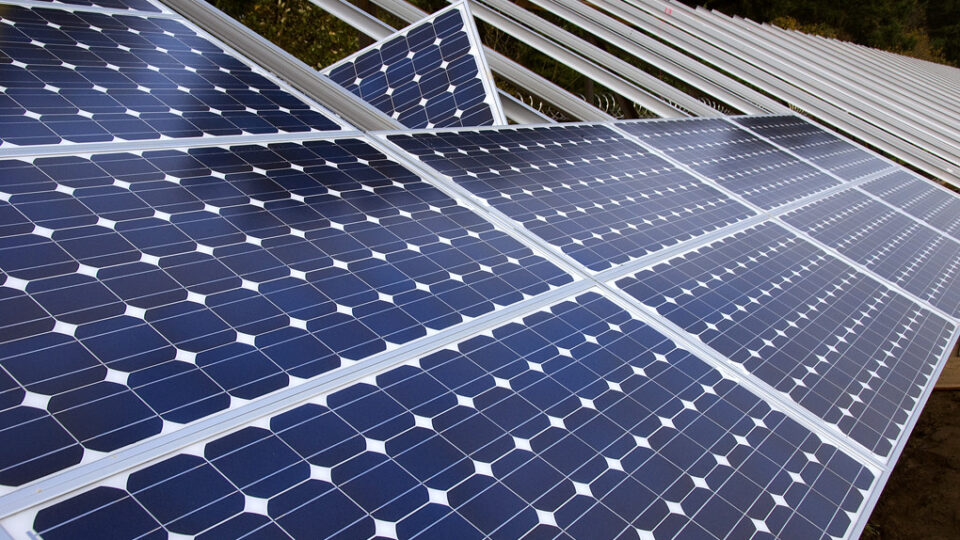
Photo, posted November 30, 2017, courtesy of D. O’Donnell / European Space Agency via Flickr.

Earth Wise is a production of WAMC Northeast Public Radio.

Primary Sidebar

Recent Episodes

  • An uninsurable future
  • Clean energy and jobs
  • Insect declines in remote regions
  • Fossil fuel producing nations ignoring climate goals
  • Trouble for clownfishes

WAMC Northeast Public Radio

WAMC/Northeast Public Radio is a regional public radio network serving parts of seven northeastern states (more...)

Copyright © 2025 ·