• Skip to primary navigation
  • Skip to main content
  • Skip to primary sidebar

Earth Wise

A look at our changing environment.

  • Home
  • About Earth Wise
  • Where to Listen
  • All Articles
  • Show Search
Hide Search
You are here: Home / Archives for energy source

energy source

The green grab for land

March 27, 2025 By EarthWise Leave a Comment

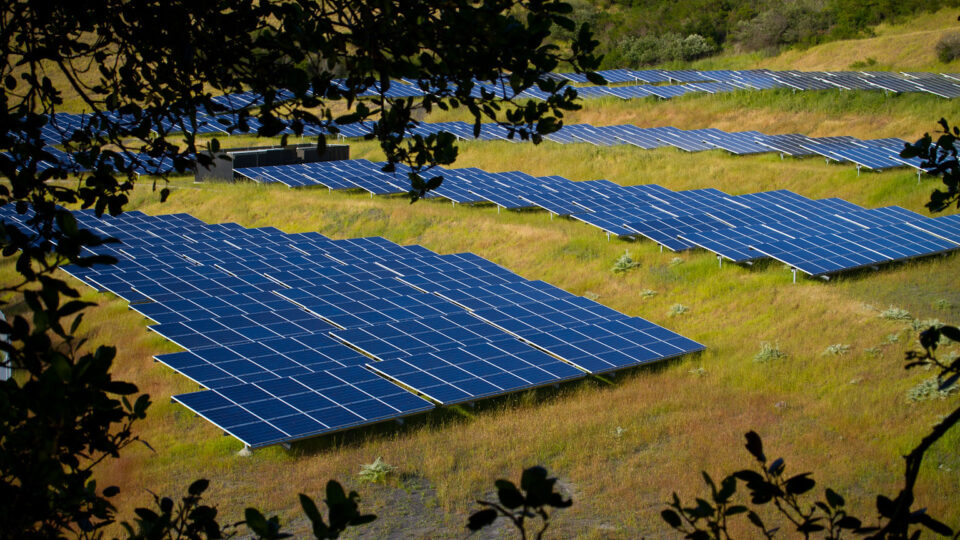
Solar and wind farms are spreading rapidly around the world.  Many economists believe that solar power has crossed the threshold where it is generally cheaper than other ways to make electricity and will become the dominant energy source in the next couple of decades.  As a result, both solar and wind farms are gobbling up more and more land around the world.  Estimates are that they will take up around 30,000 square miles by mid-century.

One concern is whether we are entering an era of trading food for energy.  Land conflicts seem inevitable since solar power operates best in unshaded areas with gentle winds and moderate temperatures, which are the same conditions favored by many crops.

China is installing more solar farms than the rest of the world combined.  Many of these are in the Gobi Desert, where there is no competing need for the land.  But some are in eastern China, in densely populated grain-growing areas.

There are a number of strategies that reduce the impact of solar farms on land use.  One approach is to put them on old industrial or brownfield sites that are otherwise unusable.  Another is floatovoltaics:  putting solar panels on the surface of lakes and reservoirs.  And then there is agrivoltaics, where solar panels are installed above crop fields or where livestock graze between or even beneath solar arrays.  China has more than 500 agrivoltaic projects that incorporate crops, livestock, aquafarming, greenhouses, and even tea plantations.

Green energy has both environmental and economic benefits to offer, but it must conserve nature and not excessively grab land needed for people, wildlife, and ecosystems.

***********

Web Links

‘Green Grab’: Solar and Wind Boom Sparks Conflicts on Land Use

Photo, posted May 25, 2011, courtesy of Michael Mees via Flickr.

Earth Wise is a production of WAMC Northeast Public Radio

The race for fusion power

December 9, 2024 By EarthWise Leave a Comment

The race for fusion power is heating up

The sun is powered by fusion energy.  Hydrogen atoms fuse together into helium atoms, liberating vast amounts of energy in the process.  Our understanding of this process emerged early in the 20th century and by the 1950s, research efforts were underway trying to replicate the process on Earth.  If it could be done, fusion would be a source of almost unlimited clean energy.  But there has been a cynical saying going around for half a century:  fusion power is the energy source of the future, and it always will be.

However, in recent years, there has been progress in developing fusion power.  Extraordinarily expensive and colossal machines have produced fusion energy albeit consuming more energy than they make.  However, for a brief moment in 2022, a fusion reactor at Lawrence Livermore National Laboratory did produce more energy than it took to run the machine.

Despite the less than encouraging history, there are now multiple start-up companies dedicated to developing fusion energy and they are optimistic that there will be significant progress over the next few years.

One such company, Commonwealth Fusion Systems, located 40 miles northwest of Boston, is building a fusion reactor called SPARC, that they claim will be producing net energy in 2027.  They say that their next machine, called ARC, will generate electricity for paying customers in the early 2030s.

A handful of other companies, including Type One Energy, Thea Energy, Realta Fusion, Zap Energy, General Fusion, and Helion Energy are also pursuing fusion reactor designs and also expect to have machines running over the next 5 to 10 years.

**********

Web Links

The Quest to Build a Star on Earth

Photo, posted April 21, 2015, courtesy of John Spiri via Flickr.

Earth Wise is a production of WAMC Northeast Public Radio
Extreme geothermal power

November 25, 2024 By EarthWise Leave a Comment

Extreme geothermal power in Iceland

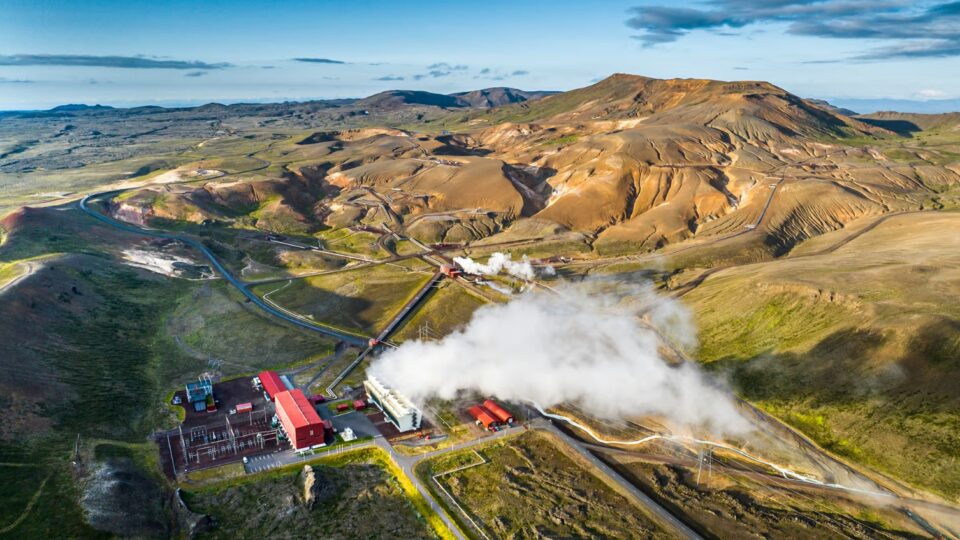
Krafla is one of the most explosive volcanoes in Iceland, which is home to many active volcanoes, including one recently in the news near Reykjavik that hadn’t erupted for 800 years .  Krafla is the site of the Krafla Magma Testbed, which may end up being for geoscientists what the Large Hadron Collider has been for particle physicists. 

For over a decade, researchers have been drilling straight into the ground at Krafla to study what goes on deep beneath an active volcano.  Ten years ago, they encountered an unexpected magma chamber a little over a mile down.  Their equipment was destroyed but the researchers decided that they had uncovered a unique opportunity to study magma dynamics and potentially be able to tap into a significant new energy source.

The plan is to use the tremendous heat energy contained in magma to dramatically improve the production of geothermal energy.  Krafla is already the site of a geothermal energy plant that makes use of the heat beneath the surface to boil water that then drives turbines to generate electricity.

Forthcoming drilling projects will make use of new equipment that can handle the harsh conditions that will be encountered in the magma chamber.  The goal is to tap directly into the magma to produce superheated steam that could produce ten times more power than conventional geothermal systems.  Conventional systems access temperatures around 200 to 300 degrees; the magma is at 1,800 degrees.

It will take a few years to complete the project, but if it is successful, it could have implications well beyond Iceland.  There are many active volcanoes all over the world.

**********

Web Links

Drilling into magma: Risky plan takes geothermal to supercritical extremes

Photo courtesy of Landsvirkjun.

Earth Wise is a production of WAMC Northeast Public Radio
The bloated carbon footprint of LNG

November 15, 2024 By EarthWise Leave a Comment

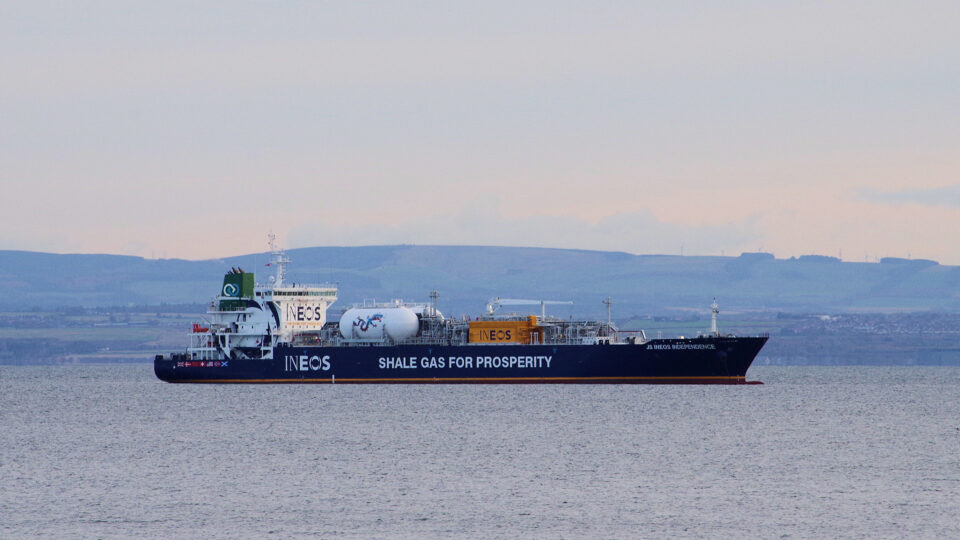
According to the U.S. Department of Energy, the United States is the world’s largest producer of natural gas.  In fact, natural gas supplies approximately one third of the United States’ primary energy consumption, most of which is used to heat buildings and to generate electricity.  While most natural gas is delivered in its gaseous form in this country, the demand for natural gas in international markets has given rise to the use of natural gas in a liquified form. 

Liquified natural gas (LNG) is natural gas that has been cooled to a liquid state, at about -260° Fahrenheit, for easier storage and transportation.  The volume of natural gas in its liquid state is about 600 times smaller than its volume in its gaseous state, which makes it possible to transport it to places pipelines do not reach.

Liquified natural gas is considered a clean fossil fuel because burning it produces less emissions than coal and oil.  However, according to a new study by researchers from Cornell University, LNG imported from the U.S. actually has a larger climate impact than any other fossil fuel—including coal – once processing and shipping are taken into account. 

The study, which was recently published in the journal Energy Science & Engineering, found that LNG leaves a greenhouse gas footprint that is 33% worse than coal when emissions are analyzed over a 20-year time frame. 

According to the research team, there is no need for LNG as an interim energy source because the transition requires massive infrastructure expenditures.  Instead, those financial resources should be used to “build a fossil-fuel-free future as rapidly as possible.”

**********

Web Links

Liquefied natural gas carbon footprint is worse than coal

Photo, posted November 17, 2017, courtesy of Colin Baird via Flickr.

Earth Wise is a production of WAMC Northeast Public Radio
Wind Power Update | Earth Wise

October 8, 2021 By EarthWise Leave a Comment

Wind power growth continues

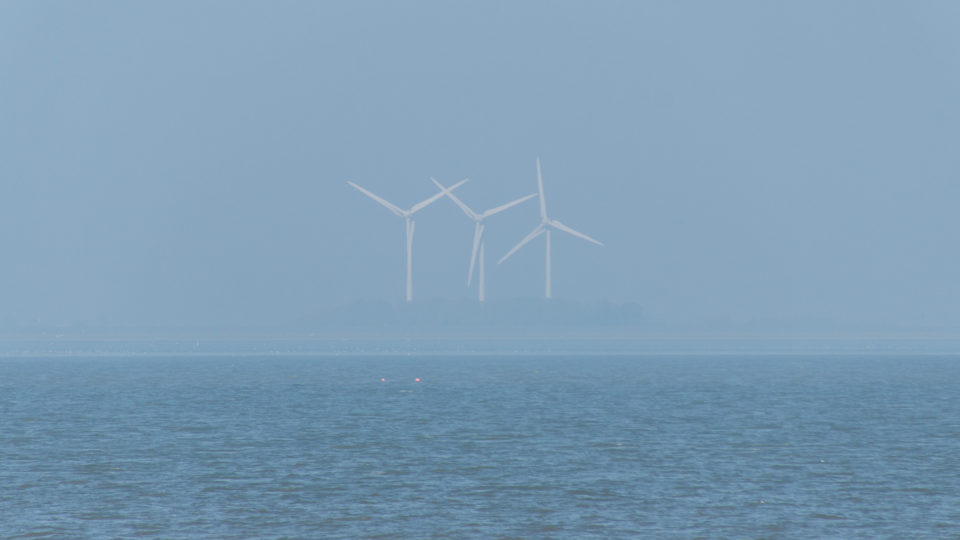
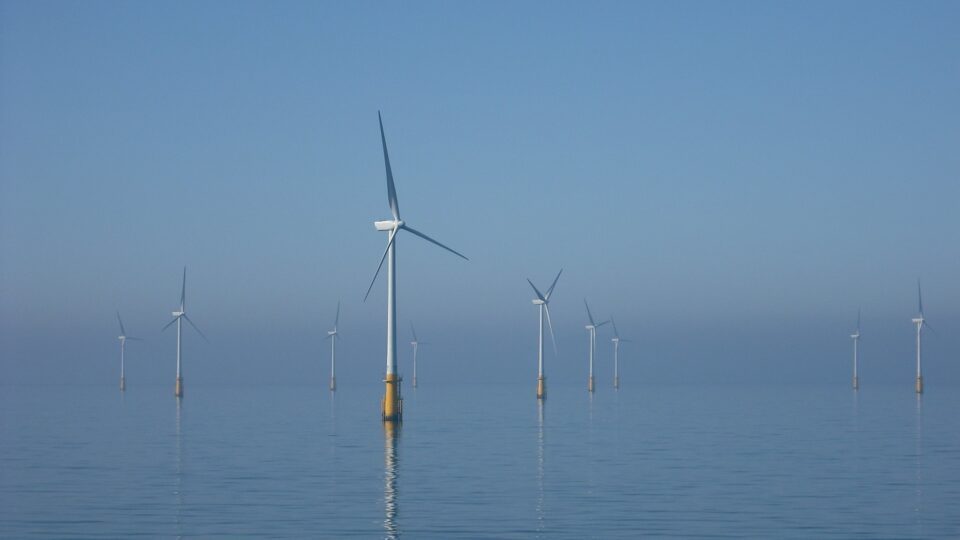
The Department of Energy recently released three reports showing record growth in land-based wind energy, a growing number of offshore wind projects, and the continuing reduction in the cost of wind power.

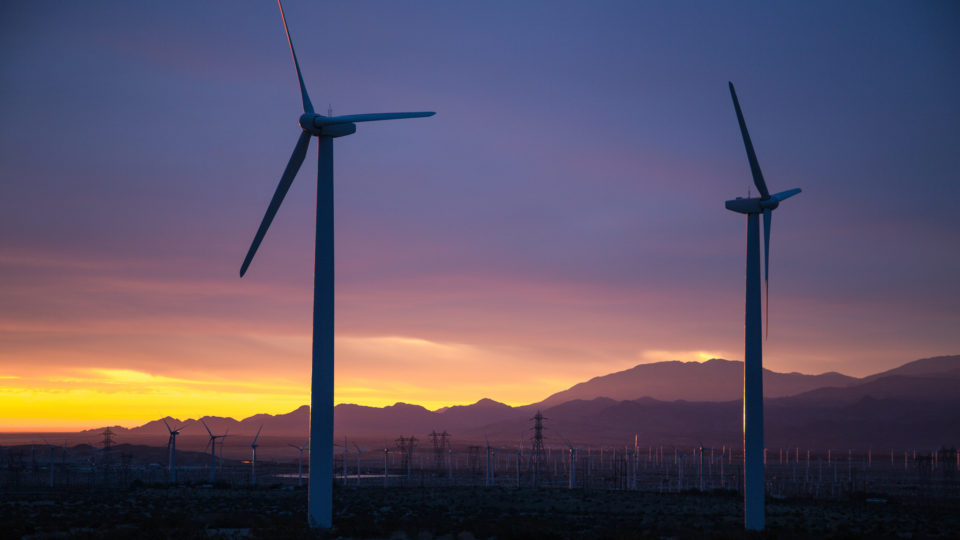
The U.S. installed a record amount of land-based wind energy in 2020.  In total, 16,836 MW of new utility-scale land-based wind power capacity was added during the year, representing $24.6 billion in new wind power projects.  This was more added than from any other energy source and represented 42% of new U.S. energy capacity.

For the year, wind energy provided more than 10% of in-state electricity generation in 16 states.  Notably, wind provided 57% of Iowa’s electricity and more than 30% in Kansas, Oklahoma, South Dakota, and North Dakota.

As wind turbines continue to grow in size and power, they are producing more energy at lower cost.  Turbine prices have gone from $1,800/kW in 2008 to $770-850/kW now.

The pipeline for U.S. offshore wind energy projects has grown to 35,324 MW, a 24% increase over the previous year.   The Bureau of Ocean Management created five new wind energy areas in the New York Bight with a total of 9,800 MW of capacity. 

Distributed wind power, which are systems connected on the customer’s side of the power meter as opposed to those on the utility side, also saw increased growth last year. 

Wind power is a key element in the adminstration’s goal of having a decarbonized electricity sector by 2035.

**********

Web Links

DOE Releases New Reports Highlighting Record Growth & Declining Costs Of Wind Power

Photo, posted March 24, 2016, courtesy of Adam Dingley via Flickr.

Earth Wise is a production of WAMC Northeast Public Radio.

The Changing Face of Electricity

March 15, 2019 By EarthWise Leave a Comment

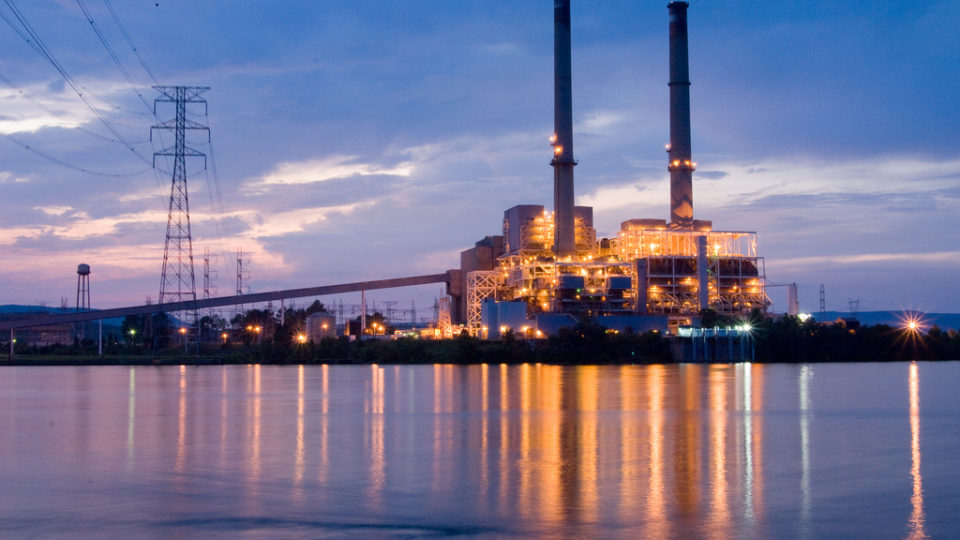
The New York Times recently published an article on how electricity is made in the United States on a state-by-state basis and how it has been changing over the past two decades.  Two conclusions to draw are that the mix of energy sources is wildly different from one state to another and that the mix has been changing rather dramatically in many places.

Overall, the past two decades have seen the dramatic rise in the use of natural gas and a dramatic drop in the use of coal.  Coal plants used to account for over half of the electricity produced in the U.S. at the turn of the 21st century.  Now natural gas has passed coal as the largest energy source at roughly 1/3 of the total generated.

Switching from coal to natural gas is a good thing since modern gas power plants emit only about half the carbon dioxide as modern coal plants.  But industry spin about “clean gas” is just spin.  Gas is not really clean; it is just cleaner than coal.  So, having the electric grid powered by gas is not really going to solve our emissions problems.

That being said, there are still states that make nearly all their electricity with coal.  Indiana, Kentucky, Missouri, Utah, Wyoming, and West Virginia are on that list.  Meanwhile, Delaware, Massachusetts, Mississippi, Nevada, and Rhode Island are powered mostly by gas. Idaho, Oregon, Washington, and Vermont rely heavily on hydropower.

Newer renewables like solar and wind are starting to make major contributions in many states.  Wind contributes only 6% nationwide but is much bigger in places like Iowa, Kansas, Minnesota, the Dakotas, Oklahoma and Texas. 

The face of electricity continues to change.

**********

Web Links

How Does Your State Make Electricity?

Photo, posted March 5, 2010, courtesy of Tennessee Valley Authority via Flickr.

Earth Wise is a production of WAMC Northeast Public Radio.

Renewable Energy Trends

February 5, 2018 By EarthWise Leave a Comment

https://earthwiseradio.org/wp-content/uploads/2018/02/EW-02-05-18-Renewable-Energy-Trends.mp3

There are major trends going on in the renewable energy world.  Several will merit close attention this year.

[Read more…] about Renewable Energy Trends

Renewables On The March

October 10, 2017 By EarthWise Leave a Comment

https://earthwiseradio.org/wp-content/uploads/2017/10/EW-10-10-17-Renewables-on-the-March.mp3

Solar power and wind power have both been growing by leaps and bounds in recent years and there is no end in sight to their progress.

[Read more…] about Renewables On The March

Primary Sidebar

Recent Episodes

  • An uninsurable future
  • Clean energy and jobs
  • Insect declines in remote regions
  • Fossil fuel producing nations ignoring climate goals
  • Trouble for clownfishes

WAMC Northeast Public Radio

WAMC/Northeast Public Radio is a regional public radio network serving parts of seven northeastern states (more...)

Copyright © 2026 ·