
• Skip to primary navigation
  • Skip to main content
  • Skip to primary sidebar

Earth Wise

A look at our changing environment.

  • Home
  • About Earth Wise
  • Where to Listen
  • All Articles
  • Show Search
Hide Search
You are here: Home / Archives for emissions

emissions

A big year for battery storage

January 29, 2025 By EarthWise Leave a Comment

2024 was a big year for battery storage

A decade ago, the ability of utilities to store large amounts of electricity in batteries was basically nonexistent.  In the past several years, growth in battery storage systems has exploded.  As of the end of November, the US had about 24 gigawatt-hours of storage capacity in place.  This is 71% more than just a year ago.  Nearly half of the battery storage in the US is located in California.  Texas, Arizona, and Nevada are also leaders in deploying battery storage.

Battery storage allows solar and wind generating plants to keep operating when there is reduced demand for their output and have the electricity that they produce be available later when demand rises.  Storing this excess electricity essentially extends the hours of the day when clean energy can be used.

Equally important, the existence of battery storage reduces the need for peaker plants, the fossil-fueled power plants that only turn on at times of peak demand, such as during hot afternoons.

There are 1,000 peaker plants in the US and they are generally heavily polluting, inefficient, and expensive to operate.  Some 63 million people live within a three-mile radius of one of them and are exposed to harmful pollutants like nitrogen oxides and sulfur dioxide.  Peaker plants also release more greenhouse gases than other power plants do for every unit of electricity they generate.

Many battery storage facilities are co-located with, or otherwise support, solar energy plants.  The amount of solar energy in the US is growing rapidly and surpassed the 100-gigawatt mark in 2024.  As solar power continues to expand, so will battery energy storage.

**********

Web Links

Battery projects soared again in 2024

Photo, posted August 3, 2024, courtesy of the Bureau of Ocean Energy Management via Flickr.

Earth Wise is a production of WAMC Northeast Public Radio

Energy storage with iron-air batteries

January 24, 2025 By EarthWise Leave a Comment

The Cambridge Energy Storage Project in Cambridge, Minnesota will be the first commercial deployment of iron-air battery technology.  Developed by startup company Form Energy, the battery system will provide 1.5 MW and 150 MWh of multi-day energy storage.

Iron-air batteries are based on the principle of reversible rusting.  When discharging, the battery releases energy by breathing in oxygen from the air and converting iron metal to rust.  When charging, the battery takes up electrical current that converts rust back into iron and breathes out oxygen.

An individual iron-air battery module is about the size of a washer/dryer set and contains about 50 individual cells filled with a water-based, non-flammable electrolyte.  For a utility-scale system like that being built in Cambridge, modules are grouped together in enclosures and hundreds of enclosures grouped together in megawatt-scale power blocks.  A one-megawatt low-density system would take up about half an acre of land.  High-density systems would be capable of producing more than 3 MW per acre. 

The technology has lower costs compared to lithium-ion battery technology but may be best suited as complementary with it since lithium-ion is primarily used for short-duration energy storage while air-iron can store energy for several days.

The system is expected to be operational by late 2025.  Great River Energy, the operator of the system, plans to conduct a multi-year study to evaluate the system’s performance and potential for broader development. 

**********

Web Links

Minnesota co-op breaks ground on multi-day energy storage project

Photo courtesy of Form Energy.

Earth Wise is a production of WAMC Northeast Public Radio

Investing in carbon capture

January 22, 2025 By EarthWise Leave a Comment

The interests of billionaires seldom seem to coincide with our own.  In fact, they often seem to be quite the opposite.  But there are a number of billionaires who are trying to help the world combat climate change.  Yes, they want to make money doing it, but doing it is nevertheless in everyone’s interest.

A group headed by Bill Gates that included some of the wealthiest people from around the world met last summer in London to evaluate companies working to mitigate the effects of climate change.  These included companies developing carbon dioxide removal technologies.  Stripping carbon dioxide out of the atmosphere is an obvious way to deal with the fact that we continue to dump too much of it into the atmosphere –   obvious, but extremely difficult to do at any scale that makes a difference.

Companies working on carbon capture have raised more than $5 billion since 2018.  There are hundreds of companies working on it and investors include billionaires, venture capitalists, private equity firms, and major corporations.  Companies like Microsoft, Google, and United Airlines have committed billions of dollars to purchase removal credits:  payments to companies for removing carbon dioxide.

There are only a few dozen carbon removal facilities operational today and together they only capture a tiny fraction of the carbon dioxide humans release into the atmosphere.  The hope is that such facilities will scale up in size and number so that they will make a real dent in the problem.  But it will take many years at best, and the planet doesn’t have that much time.  To make a difference, carbon emissions must be reduced as quickly as possible.

**********

Web Links

The New Climate Gold Rush: Scrubbing Carbon From the Sky

Photo, posted April 19, 2020, courtesy of Greg Rubenstein via Flickr.

Earth Wise is a production of WAMC Northeast Public Radio

Approaching critical global temperature thresholds

January 21, 2025 By EarthWise Leave a Comment

The globe is approaching critical temperature thresholds

The Paris Climate Agreement is a global treaty adopted in 2015 to combat climate change by limiting global warming to well below 2°C above pre-industrial levels, while striving to keep it below 1.5°C.  But according to recent research, the planet is quickly approaching these critical thresholds. 

An international research team led by scientists from Colorado State University, Stanford University, and ETH-Zurich in Switzerland combined insights from 10 global climate models, and – with the help of artificial intelligence – found that regional warming thresholds are likely to be reached faster than previously thought.

In fact, the researchers found that most land regions will likely surpass the critical 1.5°C threshold by 2040 or even earlier.  Additionally, several regions are on track to exceed the 3.0°C threshold by 2060.  Regions including Central Europe, the Mediterranean, South Asia, and parts of sub-Saharan Africa are expected to reach these thresholds faster. 

The research team relied on transfer learning, a cutting-edge machine learning technique that leverages pre-trained models to tackle new, related tasks.

The research, which was recently published in the journal Environmental Research Letters, found that 34 regions are likely to exceed 1.5°C of warming by 2040.  Of those 34 regions, 31 of them are expected to reach 2°C of warming by 2040, and 26 of these 34 regions are projected to surpass 3°C of warming by 2060.

**********

Web Links

AI predicts that most of the world will see temperatures rise to 3C much faster than previously expected

Photo, posted February 23, 2011, courtesy of 2011 CIAT / Neil Palmer via Flickr.

Earth Wise is a production of WAMC Northeast Public Radio

Tourism and greenhouse gas emissions

January 17, 2025 By EarthWise Leave a Comment

Tourism is a major contributor to global greenhouse gas emissions, accounting for about 9% of the global total.  Over the past 15 years, its emissions have grown more than twice as fast as those of the rest of the global economy.

Unless the tourism industry finds ways to slow down its growing emissions, those emissions will continue to increase by 3 to 4% each year, meaning that they will double every 20 years.  The major drivers behind tourism’s growing emissions have been slow improvements in tourism-related technologies coupled with the rapid growth in demand.

Transportation is tourism’s main source of greenhouse gas emissions.  Planes and cars generate the most carbon dioxide but there are contributions from tour buses, boat rides, ferries, and trains as well.  The increasing demand for international travel has been the largest contributor to the growth of tourism-related emissions.  But just as people’s homes generate emissions from energy use, so do hotels and other lodging used on vacations.

The United States, China, and India are responsible for 60% of the total increase in tourism’s carbon footprint.  Generally speaking, it is the world’s wealthiest nations that have the most tourists exploring the world.

Researchers from Australia’s University of Queensland recommended several measures to slow the growth of tourism’s carbon emissions.  These include reducing long-haul flights, imposing carbon dioxide taxes, setting carbon budgets, and the use of alternative transportation fuels.  At the local level, tourism businesses making use of renewable energy sources and electric vehicles would help.

**********

Web Links

Tourism leads the pack in growing carbon emissions

Photo, posted September 14, 2014, courtesy of Gary Campbell-Hall via Flickr.

Earth Wise is a production of WAMC Northeast Public Radio

Fertilizer from thin air

January 16, 2025 By EarthWise Leave a Comment

Creating fertilizer from thin air

Ammonia is one of the largest-volume synthetic chemicals produced in the world. Globally, manufacturing plants produce about 200 million tons of it each year.  About 70% of ammonia is used to produce fertilizers.

Most ammonia is produced using the Haber-Bosch process, which converts hydrogen and nitrogen into ammonia.  The process is energy-hungry, running at over 900 degrees Fahrenheit, and therefore results in lots of greenhouse gas emissions – about 1% of the world’s annual CO2 emissions.

Researchers at Stanford University and King Fahd University in Saudi Arabia have developed a prototype device that can produce ammonia using wind energy to draw air through a mesh.  The method allows sustainable production of ammonia using the nitrogen in the air.

The process gets nitrogen from the air along with hydrogen from water vapor.  A mesh coated with catalysts facilitates the necessary chemical reactions.  The process operates at room temperature and standard atmospheric pressure, eliminating the need  for the high temperatures and high pressures of the Haber-Bosch process.

In principle, farmers could run a portable device onsite, eliminating the need to purchase and ship fertilizer from a manufacturer. 

The device is two or three years away from being market ready.  The developers are designing increasingly large mesh systems to produce greater quantities of ammonia.  Ammonia has more uses beyond fertilizers including its use as an energy carrier that can store and transport energy more efficiently than hydrogen gas.

**********

Web Links

New device produces critical fertilizer ingredient from thin air, cutting carbon emissions

Photo, posted September 2, 2013, courtesy of Chafer Machinery via Flickr.

Earth Wise is a production of WAMC Northeast Public Radio
The UN Carbon Market

January 13, 2025 By EarthWise Leave a Comment

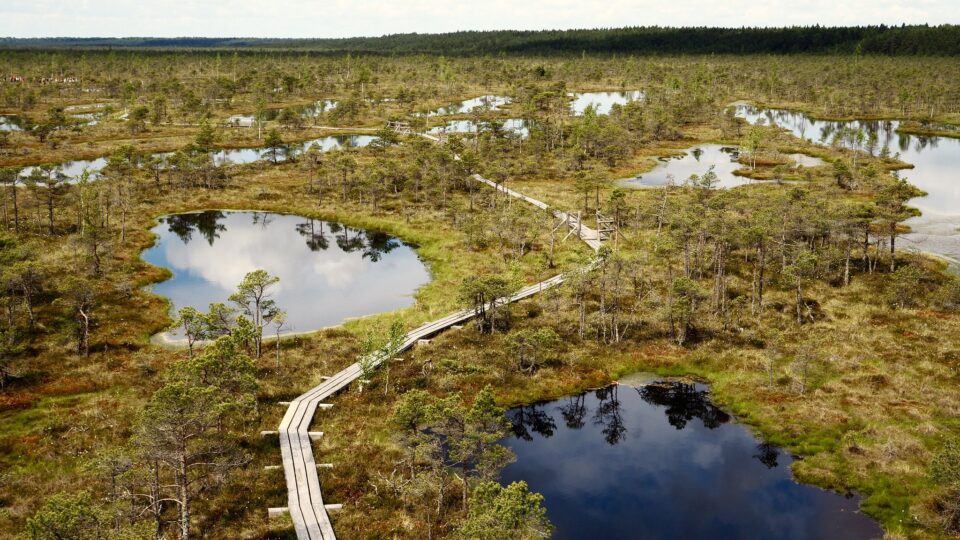
The UN climate conference in November approved an official market for large-scale trading of carbon credits.  This will allow industrial countries to help meet their emission reduction targets set by the Paris Climate Agreement by paying other nations to protect and restore forests and carbon-rich peatlands.

The first major participant in this multi-billion-dollar enterprise is Indonesia.  That country is home to the world’s third largest expanse of tropical rainforests and more than a third of the world’s carbon-storing peatlands.  Indonesia’s government plans to raise up to $65 billion by 2028 by selling carbon credits accrued by restoring and protecting its forests and peatlands.

The problem with carbon trading is that it can be filled with loopholes ranging from inaccurate carbon accounting to outright fraud.  Carbon trading with both individual companies and other countries can result in double- and even triple-counting of the same carbon.

For example, carbon credits are assigned when forests earmarked for agricultural or other development are preserved instead of being felled.  But what if that forest destruction wasn’t going to happen even without selling carbon credits? 

There are organizations in the business of verifying carbon accounting, but independent analysis of their methodologies has revealed serious shortcomings, and in many cases, the verifications have been deemed to be worthless.

There are real problems with carbon accounting and setting correct baselines for the carbon emission reductions associated with carbon credits.  Nevertheless, the existence of a global carbon market can be an important tool in the world’s efforts to mitigate the effects of climate change.

**********

Web Links

Will UN Carbon Market Work? Indonesia Will Provide First Test

Photo, posted June 12, 2017, courtesy of Runa S. Lindebjerg via Flickr.

Earth Wise is a production of WAMC Northeast Public Radio
Thermal batteries for heavy industry

January 3, 2025 By EarthWise Leave a Comment

Researchers are developing thermal batteries for heavy industry

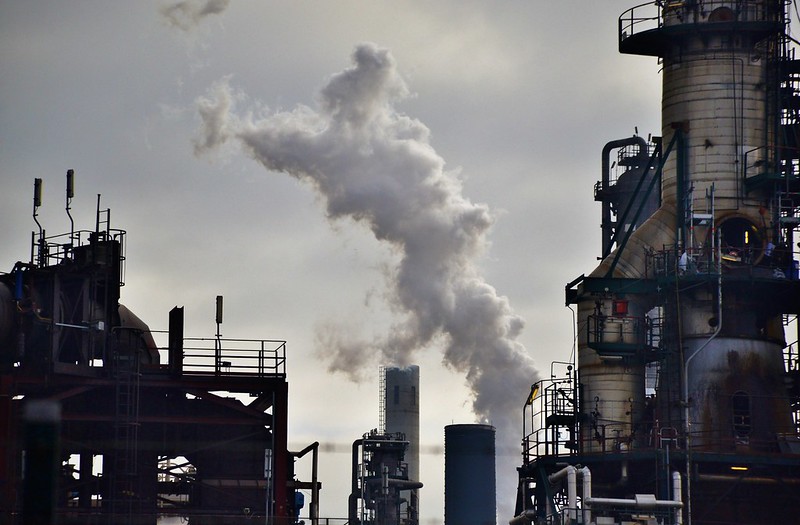
Heavy industries like cement, steel, chemicals, and paper require large amounts of heat and, for the most part, that heat comes from burning fossil fuels.  Other sectors of the economy have been making progress in reducing carbon emissions, but heavy industry has not found easy answers for supplying the heat it needs for manufacturing.

Researchers at MIT have developed a way to supply heat that only uses electricity, which in principle can come from carbon-free sources.  The idea is to use thermal batteries.  These are basically an electrically conductive equivalent of ceramic firebricks, which have been used to store heat for centuries in fireplaces and ovens.

A spinout company called Electrified Thermal Solutions has demonstrated that its firebricks can store heat efficiently for hours and release it by heating air or gas up to 3,272 degrees Fahrenheit. 

The firebrick arrays are contained in insulated, off-the-shelf metal boxes.  The standard system can collect and release about 5 megawatts of energy and store about 25 megawatt-hours.  The thermal battery can run hotter and last longer than any other electric heating solution on the market.

Using this technology can be a way to take advantage of the low cost of electricity in off-peak hours.  In the so-called wind belt in the middle of the U.S., electricity prices can even be negative at times.  Using the firebrick technology – called the Joule Hive Thermal Battery – it can be possible to provide industrial heating capability at very competitive prices, and that doesn’t even factor in the positive climate impact.

**********

Web Links

Decarbonizing heavy industry with thermal batteries

Photo, posted April 19, 2019, courtesy of Hans M. via Flickr.

Earth Wise is a production of WAMC Northeast Public Radio
Artificial intelligence and lost oil wells

January 2, 2025 By EarthWise Leave a Comment

Using artificial intelligence to find lost and abandoned oil wells

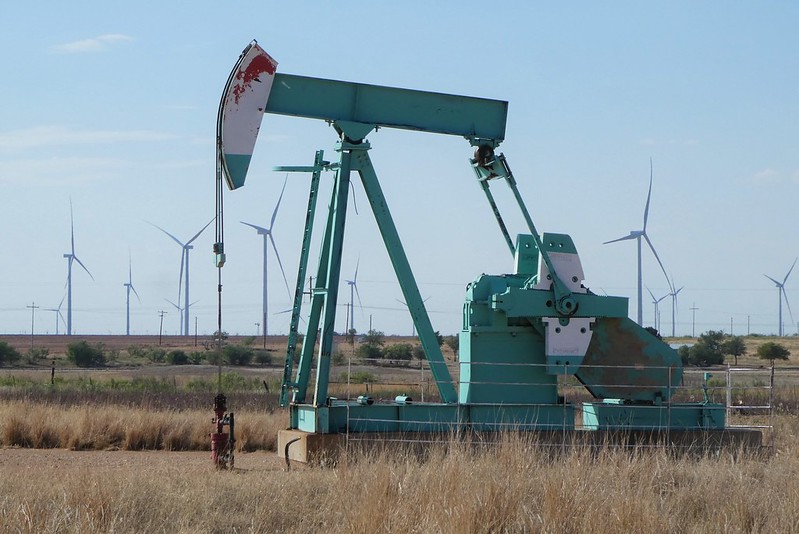
There have been commercial oil and gas wells across the United States for 170 years.  Researchers estimate that there are between two and three million wells that have been abandoned.  There are hundreds of thousands of them, across 27 states, that are “orphaned,” meaning that they are uncapped, unproductive, and nobody is responsible to manage their leakage or pollution.

Many are undocumented orphaned wells – UOWs – that are not listed in formal records and are basically out of sight and out of mind.  Besides having nobody responsible for them, nobody even knows where they are.  But they are potential sources of oil and chemical leaks into nearby water sources and can send toxic substances like benzene and hydrogen sulfide into the air. 

Researchers are using modern tools like drones, laser imaging, and advanced sensors to try to locate UOWs.  But these wells are scattered over an area of more than three million square miles.

To better predict where to look for undocumented wells, researchers are combining historical topographic maps with artificial intelligence. The US Geological Survey has scanned 190,000 topographic maps made between 1884 and 2006.  AI is being used to find the symbols for oil and gas wells on the maps.  People can recognize these symbols easily, but there are just too many maps to look at.  The problem is equivalent to finding a needle in a haystack; there is just an awful lot of hay to look through.

Abandoned wells are a big problem and it will take lots of modern technology to try to solve it.

**********

Web Links

AI Helps Researchers Dig Through Old Maps to Find Lost Oil and Gas Wells

Photo, posted August 16, 2022, courtesy of Larry Syverson via Flickr.

Earth Wise is a production of WAMC Northeast Public Radio
A solar peaker plant

January 1, 2025 By EarthWise Leave a Comment

Developing a solar power peaker plant

Peaker plants are power plants that the grid makes use of during times of particularly high electricity demand.  The power they supply is typically high in cost and usually high in greenhouse gas emissions.  When operating the electricity grid, power sources are generally called upon in order of marginal cost.  Only when demand is very high do grid operators make use of the highest-cost assets that tend to be fossil-fueled power plants that can start and ramp up quickly. 

For years, there has been the idea that solar-powered peaker plants could eventually replace the polluting fossil-fueled ones.  Recently, the renewable energy developer, owner, and operator Arevon Energy began commercial operations of the Vikings Solar-plus-Storage Project in Imperial County, California.  It is the first utility-scale solar peaker plant in the United States.

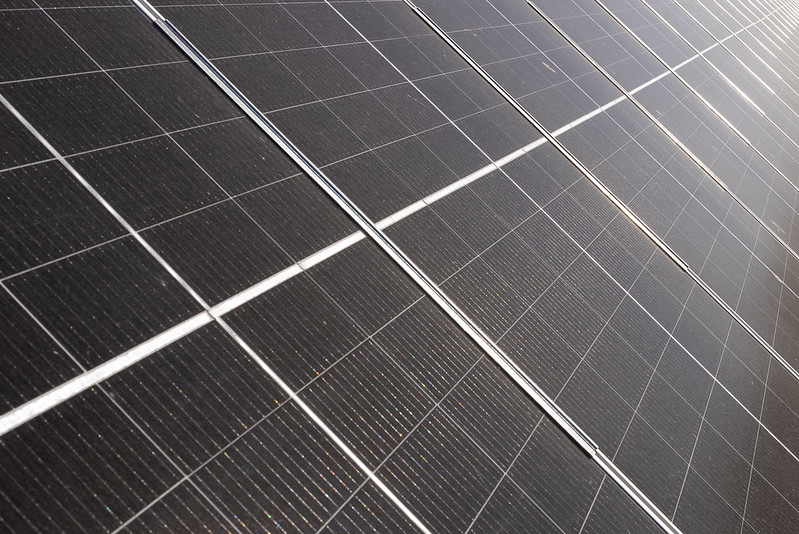
The plant utilizes a 157-megawatt solar array combined with 150 MW and 600 MWh of battery energy storage.  It can shift low-cost daytime solar energy to higher-cost peak demand periods.  The result is a lowered cost of electricity for nearly one million customers of San Diego Community Power.

The project contradicts the often-held notion that renewable energy is inherently unreliable.  It can provide carbon-free electricity at specific times of critical need.  Typical hybrid solar + storage plants provide electricity during daylight hours and store only excess generation in their battery systems.  The Vikings project is specifically designed to shift the entirety of its generation from solar hours to the peak demand period.

**********

Web Links

Arevon fires up the first solar + storage peaker plant in the U.S.

Photo, posted October 15, 2024, courtesy of Jay Inslee via Flickr.

Earth Wise is a production of WAMC Northeast Public Radio
Neighborhood geothermal energy

December 30, 2024 By EarthWise Leave a Comment

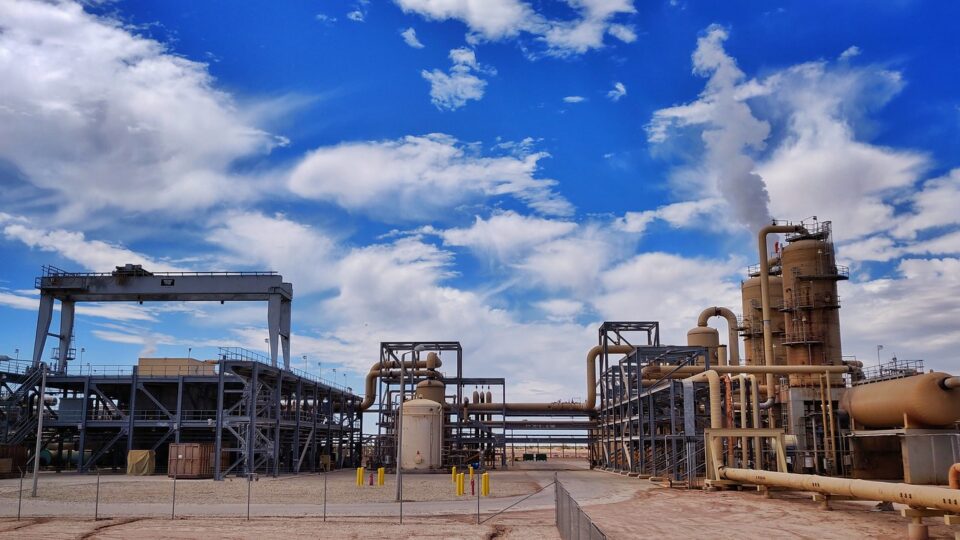
Residential geothermal energy makes use of the constant, year-round temperature of the earth below the surface to efficiently provide both heating and cooling for a home.  In the summer, the cool earth beneath a house sits at about 55 degrees and can be tapped into with a heat pump to provide cooling.  In the winter, that 55-degree underground expanse provides a much warmer source of air to heat instead of the often freezing-cold air outside.  Geothermal systems are appealing because they use far less energy than other sources of heating and cooling.

Using geothermal energy to heat and cool buildings is nothing new.  But after years of planning and months of drilling into the ground, the first neighborhood-scale geothermal heating and cooling project has come online in Framingham, Massachusetts.

The project ties together 31 residential and five commercial buildings that share the underground infrastructure needed to heat and cool them.  This sort of shared geothermal system has previously been used on college campuses and similar places, but never before across a neighborhood in the United States.

The $14 million project, built by Eversource, broke ground in June 2023, and comprises 90 boreholes or wells drilled 600-700 feet underground. Approximately 135 customers are connected to the system, including low- and moderate-income customers, apartment buildings, a gas station, and a kitchen cabinet showroom.

A total of 13 states, including Massachusetts and New York, are considering pilot projects or advancing legislation that would allow gas utilities to develop networked geothermal heating and cooling.

**********

Web Links

First-in-the-Nation Geothermal Heating and Cooling System Comes to Massachusetts

Photo, posted September 30, 2019, courtesy of Stephen D. Strowes via Flickr.

Earth Wise is a production of WAMC Northeast Public Radio

Reducing methane from cattle

December 26, 2024 By EarthWise Leave a Comment

Methods to reduce methane emissions from cattle

Livestock is responsible for almost 15% of global greenhouse gas emissions.  Most of that is in the form of methane that cattle release when they burp.  Grazing cattle produce more methane than feedlot cattle or dairy cows because they eat more fiber from grass.  There are 9 million dairy cows in the U.S. but more than 64 million beef cattle.

Beef cattle spend most of their lives grazing in pastures and producing methane.  Controlling the food of pasture-raised cattle is difficult because they often graze far from ranches for extended periods of time.  During the winter and during times when grass is scarce, ranchers supplement the diet of cattle.

A new study by researchers at the University of California – Davis has found that feeding grazing cattle a seaweed supplement in pellet form reduced their methane emissions by nearly 40% without affecting their health or weight.  There have been previous studies that showed seaweed cut methane emissions by 82% in feedlot cattle and over 50% in dairy cows.  But this is the first study to test the effects of seaweed on grazing beef cattle.

The seaweed pellets were made available to grazing cattle and they ate the supplement voluntarily.  Compared to a group of cattle who didn’t receive the supplements, the seaweed eaters had a 40% reduction in methane emissions.

Other research studies to reduce methane emissions using feed additives have taken place in controlled environments with daily supplements.  This method provides a way to make a seaweed supplement easily available to grazing animals.  It could even be introduced through a lick block for cattle.

**********

Web Links

Feeding Grazing Cattle Seaweed Cuts Methane Emissions by Almost 40%

Photo, posted February 18, 2016, courtesy of Beverly Moseley/NRCS via Flickr.

Earth Wise is a production of WAMC Northeast Public Radio
Faster electric vehicle charging

December 25, 2024 By EarthWise Leave a Comment

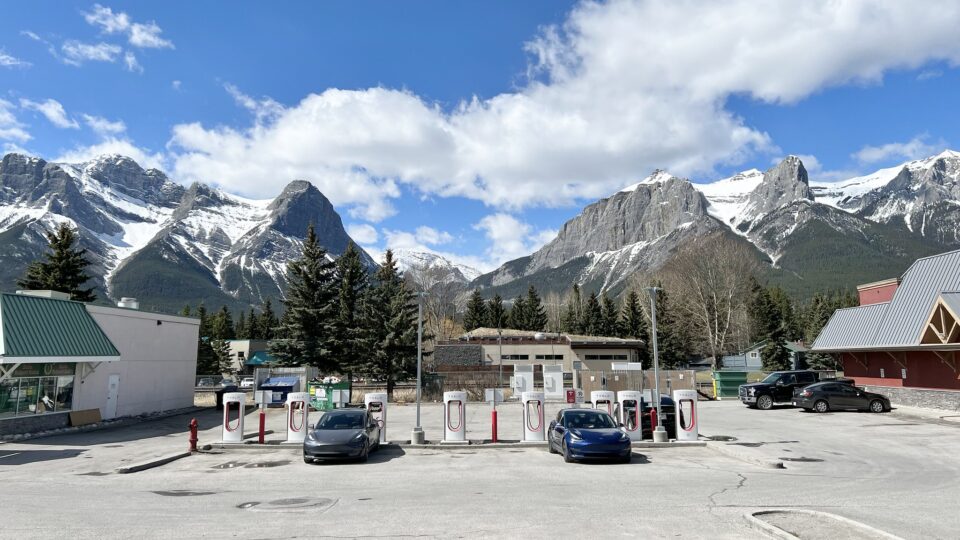
One concern that people have in replacing gas-powered vehicles with electric vehicles is the time it takes to charge them.  Charging an EV at home from an ordinary 110V electrical outlet is a slow process; installing a 220V outlet speeds things up considerably but it still can take all night to fully charge a car.  The driving range of electric cars has increased over the years so that now there are many cars that can go 300 miles or more on a charge. For most people, so-called range anxiety is mostly gone.  But on long road trips, charging time can be a real issue.

There are increasing numbers of high-speed chargers along or adjacent to major highways that can provide 200 miles of driving range in less than half an hour.  But people want more charge, and they want it faster.

There are multiple efforts in improving EV batteries and charger technology aimed at transforming a visit to a public charger to an experience comparable to filling up at a gasoline station.

Researchers at the University of Waterloo have designed a new kind of lithium-ion battery that will be able to go from zero battery power to 80% in just 15 minutes. This technology would certainly enhance the capabilities of today’s electric cars.  However, it is quite possible that other technologies that surpass this performance will emerge in the near future.  There is talk across the industry of cars that can charge up in 5 or 10 minutes.   There is also the prospect of many cars that can drive 500 miles on a charge.  These features would address the needs or desires of all but a very small number of drivers.

**********

Web Links

From zero to 80 per cent in just 15 minutes

Photo, posted May 7, 2022, courtesy of Sharon Hahn Darlin via Flickr.

Earth Wise is a production of WAMC Northeast Public Radio
Giant batteries in the Earth

December 23, 2024 By EarthWise 1 Comment

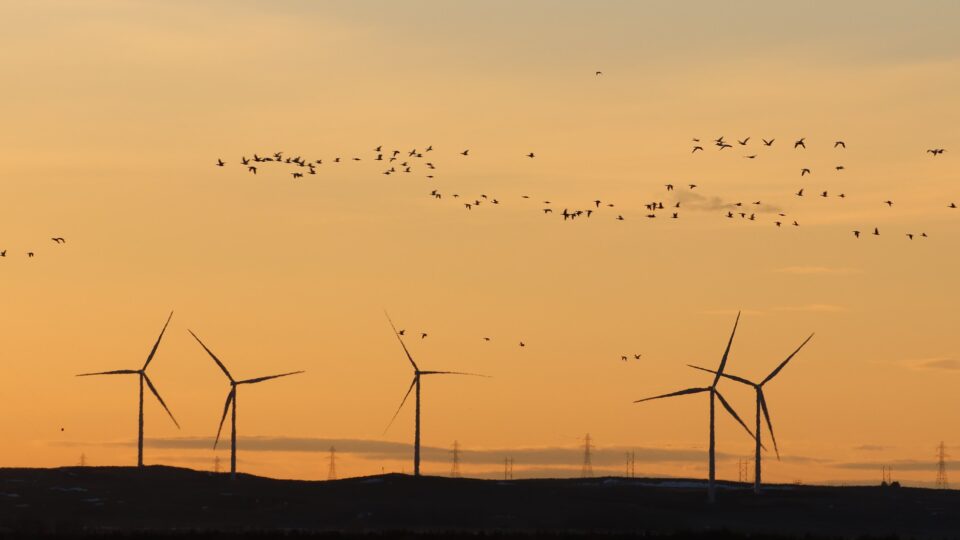
The wind and the sun are inexhaustible sources of energy, and we are tapping into them to produce electricity at a growing rate around the world.  But neither of them is always available when we need them.  When the sun isn’t shining and the wind isn’t blowing, they don’t work.

An opposite problem also exists.  When our energy needs are low, but it is sunny or windy, solar and wind power are all dressed up with nowhere to go.  Energy storage is the answer to both of these problems.   When there is excess generation, store the energy for later use.  When there is need for energy and not enough is being generated, tap into the energy that is stored.

Giant banks of lithium-ion batteries are the rapidly growing form of energy storage, and they are increasingly providing resilience in the electric grid.  But battery storage is short-term energy storage.  Even the largest battery banks can only provide a few hours of electricity. 

So, there is a real need for “long-duration energy storage” – systems that provide at least 10 hours of backup power and sometimes much more – for the grid to be fully reliable.

Pumped hydro storage, which uses water from elevated reservoirs to drive turbines, has been around for a long time.  Historically, this is the largest form of energy storage in the world.  Other methods include pumping compressed air into underground caverns or lifting massive blocks into elevated positions.  All of these techniques use excess electricity to place things like water, air, or cement into a position where they can be used to drive electrical generators.

The grid of tomorrow will store energy in giant battery banks, but also in the ground, in reservoirs, and in large structures.

**********

Web Links

How giant ‘batteries’ in the Earth could slash your electricity bills

Photo, posted March 21, 2024, courtesy of Sandra Uecker/USFWS via Flickr.

Earth Wise is a production of WAMC Northeast Public Radio

Manatees are not Florida natives

December 20, 2024 By EarthWise 1 Comment

Manatees might not be native to Florida

Florida is very proud of its manatees.  It has a county named after them and has pictures of them on license plates.  These gentle creatures are part of Florida culture.  But recent research indicates that manatees – also known as sea cows – might only be relatively recent residents of the Sunshine State.

Manatees have been spotted in Florida waters for several centuries but might have only been tourists visiting briefly before returning to their home waters in the Caribbean in places like Cuba.

The new research suggests that manatees might not have actually taken up residence in Florida until after Europeans colonized the area in the 1500s.  There is a rarity of manatee bones on archaeological sites that date back further.  It was particularly striking that Crystal River, which is an epicenter for modern manatee populations, had little evidence of their presence in earlier times.

Even into the early 1900s, Florida newspaper reports treated manatee sightings as a spectacle rather than a common occurrence.  In the 1920s and 1930s, there started to be more routine sightings in places like yacht basins and canal harbors.  In the 1950s, manatees became more plentiful in Tampa Bay and Crystal River. The warming waters and human activities creating shallow warm water refuges increased manatee populations, particularly near places like power plants.

The current Florida manatee population is between 8,000 and 12,000 and is classified as threatened under the Endangered Species Act, an improvement over its previous endangered status.  But pollution is killing a lot of the seagrass that they eat, and their safety is by no means assured.

**********

Web Links

Why manatees are likely not Florida natives

Photo, posted March 25, 2012, courtesy of David Hinkel / USFWS via Flickr.

Earth Wise is a production of WAMC Northeast Public Radio

Politics and plastic

December 19, 2024 By EarthWise Leave a Comment

Political differences are blocking plastic reforms

The world currently produces nearly half a billion tons of plastic each year.  This is more than twice the amount it produced 20 years ago.  Half of all plastics ever manufactured have been made in the past 20 years.  Plastic waste is everywhere.  About eight million tons of plastic waste escapes into the ocean each year.

Environmental groups have urged nations to adopt a legally binding treaty to address the ever-growing problem of plastic pollution. The United Nations climate conference in South Korea last month took up the issue of reaching agreement on such a treaty.  At what was supposed to be the final round of talks on the topic, delegates could not bridge wide differences on what such a treaty should contain.

The main bone of contention was whether the treaty should include limits on plastic production itself.  Saudi Arabia, Russia, Kuwait, and other oil-producing countries opposed any curbs on plastic production.   They also opposed the phase-out of harmful chemicals used in the production of plastic.

The Saudi delegation claimed that if the issue of plastic pollution is addressed, there should be no problem with producing plastics.  They said the problem is pollution itself, not plastics.  They proposed a focus on improving recycling and waste management.

Of course, preventing plastic pollution from occurring is an extremely challenging thing to do.  Delegates from countries pushing for a wide-ranging treaty – led by Rwanda – were unwilling to accept a toothless theory lacking real constraints on the plastics industry.

As the conference ended, delegates said that they would reconvene in future months to try again to produce a treaty.  No date or place has been announced.

**********

Web Links

Nations Fail to Reach an Agreement on Plastic Pollution

Photo, posted February 4, 2023, courtesy of Ingrid Taylar via Flickr.

Earth Wise is a production of WAMC Northeast Public Radio
When is a heat wave just a heat wave?

December 18, 2024 By EarthWise Leave a Comment

When is a heat wave just a heat wave, and when is it climate change?

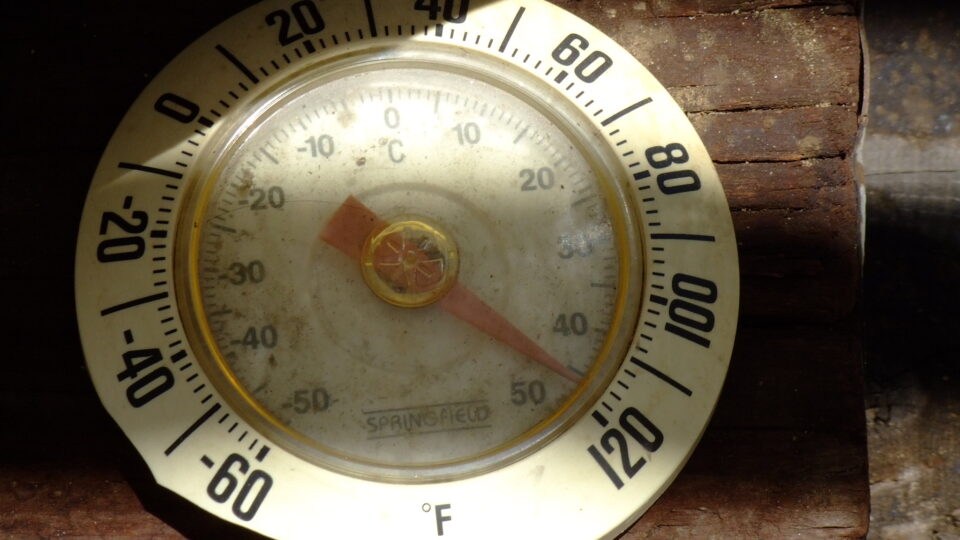
There are lots of extreme weather events of all kinds these days.  But there have always been extreme weather events.  Climate change results in more extreme weather but not all extreme weather should be attributed to climate change.  So, how do we know if an extreme weather event is a result of the changing climate?  Communities that are affected by extreme weather events need to know whether they are likely to see more such events in the future, or if they are anomalies like a “500-year storm” or such.

Researchers at North Carolina State University, the National Oceanic and Atmospheric Administration, the University of Colorado, Boulder, and Princeton University developed a routine process for evaluating extreme weather events.

The test case was an extreme heat wave that affected Texas and Louisiana in 2023.  This notable heat wave lasted almost the entire summer. The scientists used a two-step process to determine whether the heat wave was an anomaly or part of a new pattern.  They took historical data from the past 100 years to see how unusual 2023 was.  Then they compared that data with both past and present predictive computer models.  Comparing the predictive models can indicate whether climate change was a factor in the event.

In this case, a similar drought would not have been as hot 50 years earlier, which indicates that the heat wave is related to climate change and that even more intense heat waves are likely to occur in the future.

This sort of information is important for communities to prepare for future events.

**********

Web Links

When is a Heat Wave Just a Heat Wave, and When is it Climate Change?

Photo, posted July 22, 2006, courtesy of Saturnism via Flickr.

Earth Wise is a production of WAMC Northeast Public Radio

Regrowing forests naturally

December 17, 2024 By EarthWise Leave a Comment

Naturally regrowing forests is best

Deforestation is one of the major causes of climate change and restoring and enhancing forests is a major activity around the world as a way to mitigate its effects.  There are high-profile initiatives to plant millions of trees, but these projects are often ill-conceived and poorly managed.

One of the most dramatic failures was the planting of over a million mangrove seedlings on the Filipino island of Luzon back in 2012.  A study 8 years later found that fewer than 2 percent of the trees had survived.  The rest died or were washed away.

The causes of failure in tree planting programs include planting of trees that become vulnerable to disease, competing demands for land, changing climate, planting in areas not previously forested, and a lack of aftercare including watering seedlings.

A multinational study recently published in Nature has found that forests could regrow naturally on more than 800,000 square miles of land around the tropics without the need for planting trees by hand.  This is an area larger than Mexico.

The researchers mapped areas where forests would be likely to regrow – areas where soils are healthy and where there is already forest nearby to supply seeds.  In some places, lands are so degraded that it is necessary to plant trees by hand, but this is costly and prone to failure.  Forests that regrow naturally tend to fare better and make better habitats for wildlife.

The effect of regrown forests on the climate would be very substantial.  If these forests were allowed to grow for three decades, they would absorb enough carbon to offset 50 years of emissions by Australia, the home of the lead researcher of the study. 

**********

Web Links

Tropical Forests Could Regrow Naturally on Area the Size of Mexico

Photo, posted February 16, 2018, courtesy of Jason Houston / USAID via Flickr.

Earth Wise is a production of WAMC Northeast Public Radio

Hydrogen-powered aviation

December 16, 2024 By EarthWise Leave a Comment

The transportation sector is responsible for about a quarter of human-generated greenhouse gas emissions.  Most of the energy used by transport systems comes from fossil fuels.  The transition to electric vehicles – cars, trucks, and buses – is making a real difference.  However, the emissions from the aviation industry have continued to grow faster than those of other forms of transportation.  There have been increased efforts to develop hydrogen-powered aircraft, but the challenges are substantial.

Hydrogen can be used for aviation both as a directly combusted fuel, or to power electric fuel cells.  Its advantages are that its use produces no carbon dioxide, and, in fact, hydrogen produces more energy per pound than jet fuel.

A study by researchers at MIT looked at the prospects for hydrogen use in aircraft and what needs to be done to make it practical.  The biggest issue is that the extra bulk of a hydrogen fuel tank and fuel cells in a plane would have to be offset by weight reductions elsewhere, such as reducing payload (cargo or passengers).  This would mean there would need to be more flights, thereby reducing the gains made.  The researchers argued that improvements in fuel cell power and more weight efficient fuel systems could eliminate the need for additional flights.

The bigger challenge is the infrastructure for generating and distributing hydrogen.  There needs to be green hydrogen – hydrogen produced without carbon emissions – and the infrastructure for getting it to planes where it is needed has to also not produce substantial emissions.

The study suggests that the rollout of hydrogen-based aviation should start at locations that have favorable conditions for hydrogen production.

**********

Web Links

Fueling greener aviation with hydrogen

Photo, posted December 20, 2016, courtesy of Dylan Agbagni via Flickr.

Earth Wise is a production of WAMC Northeast Public Radio
Capturing hot carbon dioxide

December 13, 2024 By EarthWise Leave a Comment

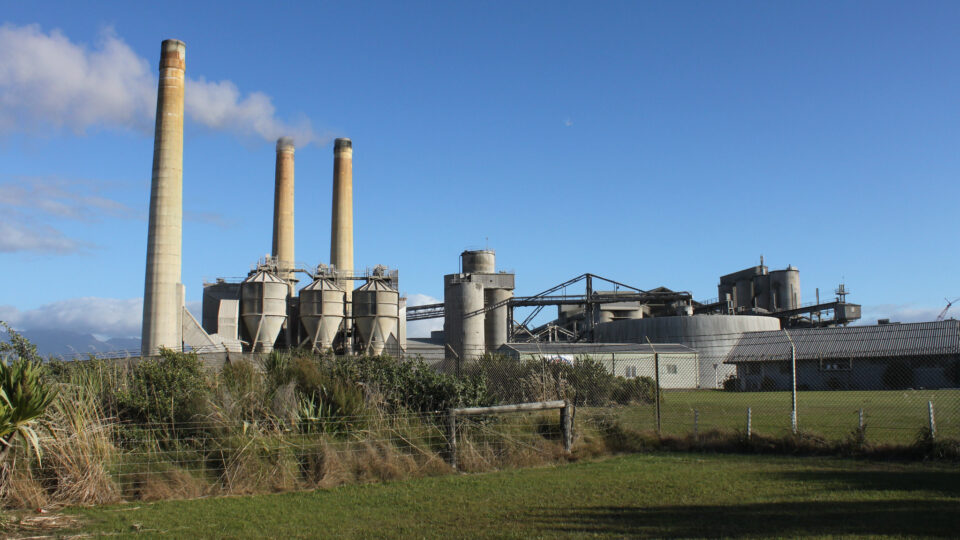
Researchers are developing new methods to capture hot carbon dioxide

Decarbonizing industries like steel and cement is a difficult challenge.  Both involve emitting large amounts of carbon dioxide both from burning fossil fuels and from intrinsic chemical reactions taking place.  A potential solution is to capture the carbon dioxide emissions and either use them or store them away.  But this sort of carbon capture is not easy and can be quite expensive.

The most common method for capturing carbon dioxide emissions from industrial plants uses chemicals called liquid amines which absorb the gas.  But the chemical reaction by which this occurs only works well at temperatures between 100 and 140 degrees Fahrenheit.  Cement manufacturing and steelmaking plants produce exhaust that exceeds 400 degrees and other industrial processes produce exhaust as hot as 930 degrees.

Costly infrastructure is necessary to cool down these exhaust streams so that amine-based carbon capture technology can work. 

Chemists at the University of California, Berkeley, have developed a porous material – a type of metal-organic framework – that can act like a sponge to capture CO2 at temperatures close to those of many industrial exhaust streams.  The molecular metal hydride structures have demonstrated rapid, reversible, high-capacity capture of carbon dioxide that can be accomplished at high temperatures.

Removing carbon dioxide from industrial and power plant emissions is a key strategy for reducing greenhouse gases that are warming the Earth and altering the global climate.  The captured CO2 can be used to produce value-added chemicals or can be stored underground or chemically-reacted into stable substances.

**********

Web Links

Breakthrough in capturing ‘hot’ CO2 from industrial exhaust

Photo, posted March 3, 2010, courtesy of Eli Duke via Flickr.

Earth Wise is a production of WAMC Northeast Public Radio

  • « Go to Previous Page
  • Page 1
  • Interim pages omitted …
  • Page 3
  • Page 4
  • Page 5
  • Page 6
  • Page 7
  • Interim pages omitted …
  • Page 35
  • Go to Next Page »

Primary Sidebar

Recent Episodes

  • An uninsurable future
  • Clean energy and jobs
  • Insect declines in remote regions
  • Fossil fuel producing nations ignoring climate goals
  • Trouble for clownfishes

WAMC Northeast Public Radio

WAMC/Northeast Public Radio is a regional public radio network serving parts of seven northeastern states (more...)

Copyright © 2026 ·