
• Skip to primary navigation
  • Skip to main content
  • Skip to primary sidebar

Earth Wise

A look at our changing environment.

  • Home
  • About Earth Wise
  • Where to Listen
  • All Articles
  • Show Search
Hide Search
You are here: Home / Archives for electronic

electronic

Bitcoin And Energy Use | Earth Wise

October 6, 2021 By EarthWise Leave a Comment

Cryptocurrencies consume astonishing amounts of electricity

In recent years we’ve heard more and more about cryptocurrencies.  They are digital currencies managed by a decentralized network of users.  No country, person, or other entity controls the value of a cryptocurrency.  Some people think that they will ultimately replace traditional currencies.

The eventual status of cryptocurrencies can be debated endlessly but there is one thing that is certain:  in the process of simply existing as they do today, cryptocurrencies like Bitcoin consume astonishing amounts of electricity.

Bitcoin, the most popular cryptocurrency, uses about half a percent of all the electricity consumed in the world.  The process of creating Bitcoin consumes over 90 terawatt-hours of electricity annually, which is more than the entire country of Finland with its 5.5 million people.  Where does all the energy go?

The answer is something called Bitcoin mining.  It is the process by which new Bitcoins are created.  It is something like playing a lottery.  Miners effectively have to guess an extremely long number called the “target hash” in order to be awarded Bitcoins.   There is no magic formula to finding the answer.  It isn’t really advanced math; it is brute force searching among trillions of possibilities.  Specialized computer equipment is designed to make as many guesses as possible as quickly as possible.  The faster the electronic circuits and the more of them there are, the better the chances are of beating out other miners to win the mining lottery.  As a result, the amount of power-hungry computing equipment dedicated across the globe to mining Bitcoins has mushroomed.

Whether it pays to be a Bitcoin miner is increasingly difficult, but those that are doing it are consuming extraordinary amounts of energy in the effort to make a few more digital bucks.

**********

Web Links

Bitcoin Uses More Electricity Than Many Countries. How Is That Possible?

Photo, posted February 14, 2018, courtesy of Stock Catalog via Flickr.

Earth Wise is a production of WAMC Northeast Public Radio.
A Camera For Insects | Earth Wise

August 26, 2020 By EarthWise Leave a Comment

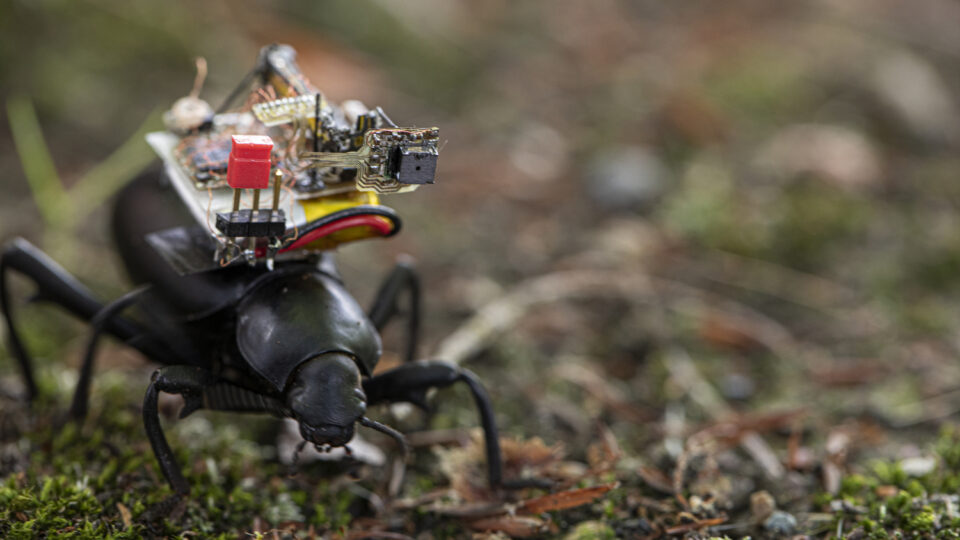
Developing tiny cameras for insects

Electronic devices get smaller and smaller all the time.  We are used to carrying around phones in our pockets that incorporate a whole host of sophisticated devices. But we can still be amazed by miniaturization.  Recently, scientists at the University of Washington announced the development of a tiny, wireless camera small enough to be worn by insects.  The work was published in the journal Science Robotics.

The device weighs only 250 milligrams, which is less than one hundredth of an ounce.  The camera streams high-resolution video to a smartphone at up to 5 frames per second, which allows scientists to record video of what insects see in real time.

The device has a mechanical arm that allows the camera to pivot 60 degrees, which can allow it to create panoramic shots.  It is controlled by a smartphone app and can be operated up to 120 meters away from the insect.

The new camera system enables scientists to better understand insect behavior and explore novel environments.  Having a first-person view from the back of a beetle while it is walking around allows researchers to explore how it responds to different stimuli that it sees in its environment.

Of more general interest, the technology can be used to help develop the next generation of small robots.  Insects can traverse rocky environments, which is really challenging for small robots to do.  The device will allow engineers to study how insects can move around in such environments.  It will also be useful for observing and collecting samples from hard-to-navigate spaces.

It is remarkable how sophisticated technology keeps getting smaller and smaller.

*********

Web Links

Scientists Develop Tiny Camera Backpack for Insects

Photo courtesy of Mark Stone/University of Washington.

Earth Wise is a production of WAMC Northeast Public Radio.

Primary Sidebar

Recent Episodes

  • An uninsurable future
  • Clean energy and jobs
  • Insect declines in remote regions
  • Fossil fuel producing nations ignoring climate goals
  • Trouble for clownfishes

WAMC Northeast Public Radio

WAMC/Northeast Public Radio is a regional public radio network serving parts of seven northeastern states (more...)

Copyright © 2026 ·