• Skip to primary navigation
  • Skip to main content
  • Skip to primary sidebar

Earth Wise

A look at our changing environment.

  • Home
  • About Earth Wise
  • Where to Listen
  • All Articles
  • Show Search
Hide Search
You are here: Home / Archives for egypt

egypt

Rising seas are destroying buildings

April 8, 2025 By EarthWise Leave a Comment

Alexandria is the second largest city in Egypt and is the largest city on the Mediterranean coast.  Its history goes back over 2,300 years and it was once home to a lighthouse that was among the Seven Wonders of the Ancient World and a Great Library that was the largest in the ancient world.  The modern city has more than 6 million residents but still has many historic buildings and ancient monuments.  But perhaps not for long.

Rising seas and intensifying storms are taking a toll on the ancient port city.  For centuries, Alexandria’s historic structures have endured earthquakes, storm surges, tsunamis, and more.  They are truly marvels of resilient engineering.  But now, climate change is undoing in decades what took millennia for humans to create.

Over the past two decades, the number of buildings collapsing in Alexandria has risen tenfold.   Buildings are collapsing from the bottom up as a rising water table weakens soil and erodes foundations.  Since 2001, Alexandria has seen 290 buildings collapse.  Comparing present-day satellite imagery with decades-old maps, the authors of a study by the Technical University of Munich have tracked the retreat of Alexandria’s shorelines to determine where seas have intruded into groundwater. The authors say that more than 7,000 buildings in Alexandria are at risk.  They call for building sand dunes and planting trees along the coast to block encroaching seawater.

The true cost of this gradual destruction goes far beyond bricks and mortar.  This is the gradual disappearance of historic coastal cities.  Alexandria is a warning for such cities around the world.

**********

Web Links

In This Storied Egyptian City, Rising Seas are Causing Buildings to Crumble

Photo, posted September 11, 2012, courtesy of Sowr via Flickr.

Earth Wise is a production of WAMC Northeast Public Radio

Strawberries and climate change

August 12, 2024 By EarthWise Leave a Comment

The changing climate threatens the future of strawberries

The demand for strawberries continues to climb around the world.  According to data from World Population Review, China remains the global leader in strawberry production, a spot it’s held since 1994.  Last year, China produced 3.3 million tons of strawberries, followed by the United States at 1.05 million tons, Egypt at 597,000 tons, and Mexico at 557,000 tons.

While strawberries are grown coast to coast in the U.S., California and Florida are the top two strawberry-producing states due to their favorable climate conditions.  In fact, California produces more than 90% of the domestic strawberry crop.  But Florida plays a key role in domestic strawberry production as well by growing the majority of the winter crop. 

A new study by researchers from the University of Waterloo in Canada has examined the effect of climate change on California’s strawberry crop.  According to the research team, strawberries could be fewer and more expensive because of the higher temperatures caused by climate change.  The report, which was recently published in the journal Sustainability, found that a 3° Fahrenheit rise in temperature could reduce strawberry yields by up to 40%.

According to the researchers, the impact of climate change on strawberry production could be mitigated by implementing certain sustainable farming practices.  These include optimizing irrigation to ensure adequate water supply during heat waves and using shading plants and shade structures to mitigate heat stress.

Understanding how rising temperatures affect crop yields should encourage farmers and governments to develop sustainable agriculture responses to global warming.

**********

Web Links

Influence of Regional Temperature Anomalies on Strawberry Yield: A Study Using Multivariate Copula Analysis

Strawberry Production by Country 2024

Researchers predict fewer, pricier strawberries as temperatures warm

Photo, posted June 3, 2007, courtesy of David Slack via Flickr.

Earth Wise is a production of WAMC Northeast Public Radio
Clean Energy From North Africa | Earth Wise

April 7, 2023 By EarthWise Leave a Comment

Europe turning to North Africa for its clean energy needs

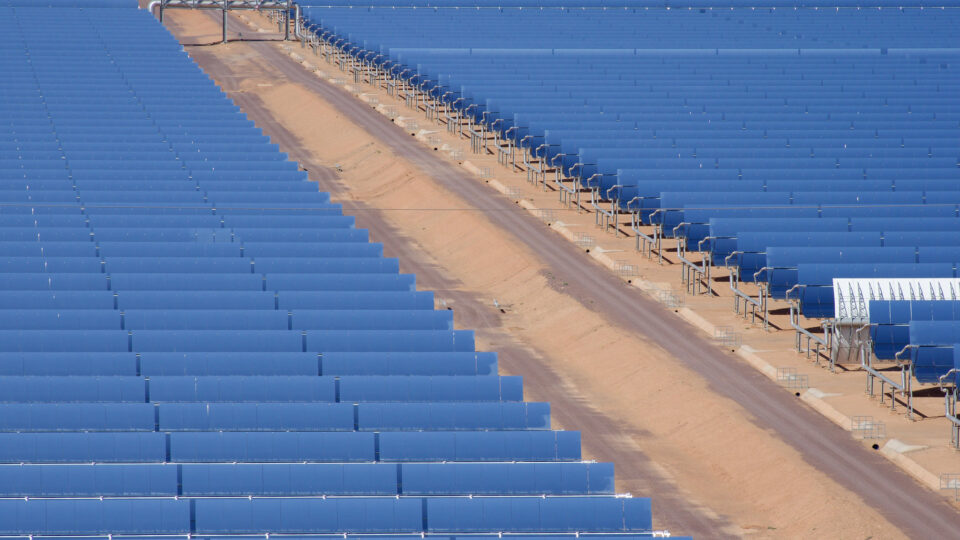
Europe is hungry for clean energy.  The war in Ukraine has amplified Europe’s desire to end its reliance on Russian natural gas.  Increasingly, Europe is pushing to install giant solar energy farms in sunny North Africa and transport the energy through underwater cables.

Solar panels in sunny North Africa generate up to three times more energy than those in Europe.  As a result, solar farms and wind farms as well are proliferating south of the Mediterranean Sea.  Morocco’s Noor and Egypt’s Benban solar farms are among the largest in the world.  Many of these farms were initially built to boost domestic power supplies and reduce dependence on coal.  But now these farms are increasingly supplying green energy to industrial neighbors in Europe.

Morocco has signed deals with the European Union to expand power exports.  Egypt is considering proposals for cables to link to Greece.  Another planned cable would link new solar farms in Tunisia to Italy’s grid.  These projects would certainly bring money and jobs to North African countries, but it isn’t all good news.

There are growing concerns about the environmental impacts of Europe outsourcing its energy needs.  Desert ecosystems could be greatly compromised.  And much of this development is likely to happen with only minimal community consultation or ecological assessment.  Half of Africa’s population does not have access to reliable power grids. Electricity becoming a major export is not likely to improve this situation.

Europe has long obtained many resources from the developing world.  Now it is tapping into the sunshine and wind in other lands.  It remains to be seen if North Africa’s countries will achieve the large potential gains those resources can offer them.

**********

Web Links

In Scramble for Clean Energy, Europe Is Turning to North Africa

Photo, posted October 17, 2019, courtesy of Richard Allaway via Flickr.

Earth Wise is a production of WAMC Northeast Public Radio
Heat-Resistant Corals

August 31, 2018 By EarthWise Leave a Comment

https://earthwiseradio.org/wp-content/uploads/2018/08/EW-08-31-18-Heat-Resistant-Corals.mp3

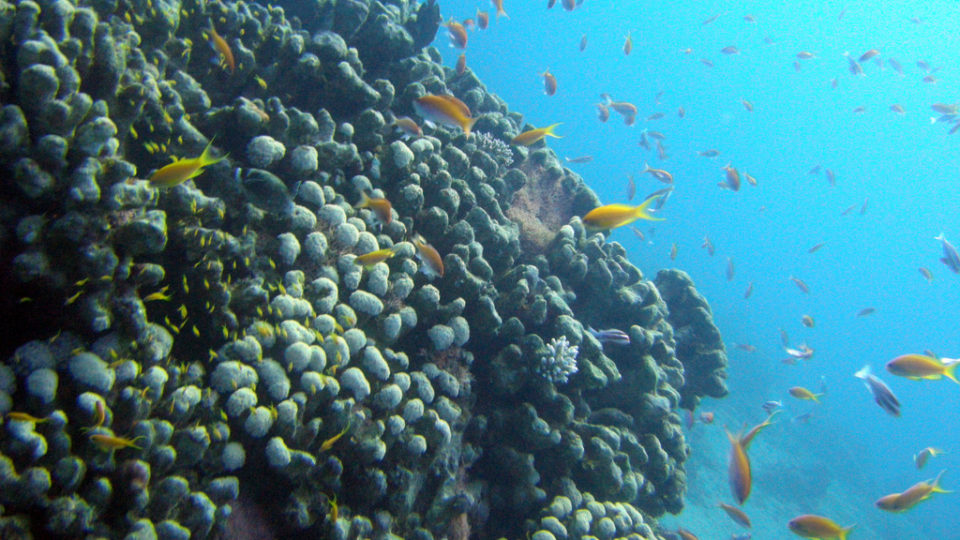
All over the world, coral reefs are being wiped out by rising sea temperatures brought about by climate change.  When sea temperatures get too high, the symbiotic relationship between coral polyps and microscopic algae living within the coral breaks down and the coral either digests or expels the algae.   The result is coral bleaching which weakens, and if it persists, kills the coral.

[Read more…] about Heat-Resistant Corals

Primary Sidebar

Recent Episodes

  • An uninsurable future
  • Clean energy and jobs
  • Insect declines in remote regions
  • Fossil fuel producing nations ignoring climate goals
  • Trouble for clownfishes

WAMC Northeast Public Radio

WAMC/Northeast Public Radio is a regional public radio network serving parts of seven northeastern states (more...)

Copyright © 2026 ·