• Skip to primary navigation
  • Skip to main content
  • Skip to primary sidebar

Earth Wise

A look at our changing environment.

  • Home
  • About Earth Wise
  • Where to Listen
  • All Articles
  • Show Search
Hide Search
You are here: Home / Archives for economic value

economic value

Cryopreserving Corals | Earth Wise

October 3, 2023 By EarthWise Leave a Comment

Cryopreserving corals

Recent climate models estimate that if the effects of climate change are not mitigated soon enough, 95% of the world’s corals could die by the mid 2030s.  Given the current rate of greenhouse gas emissions, this is an increasingly likely outcome.  Coral reefs are estimated to have a $10 trillion economic value apart from their essential role in marine ecosystems.

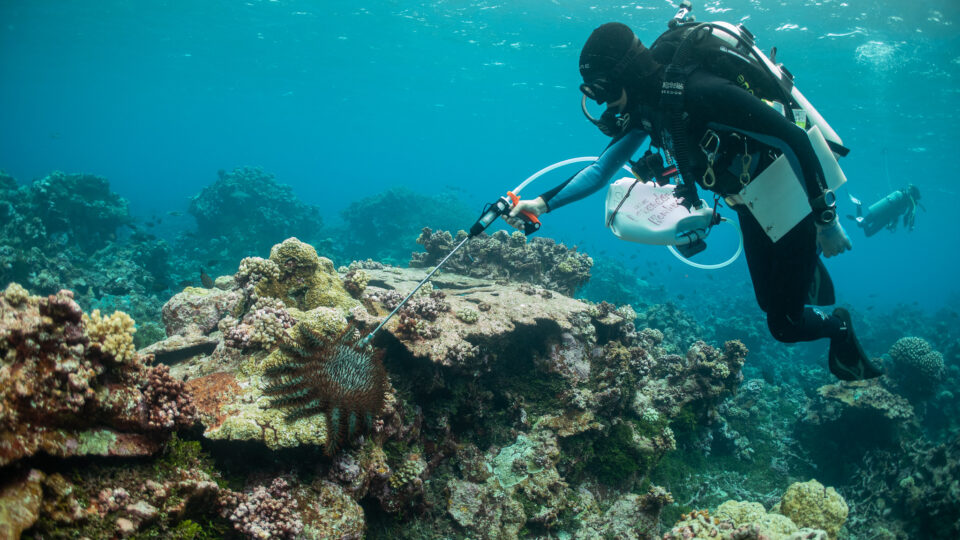
Researchers at the University of Hawaii at Manoa have demonstrated a successful technique for cryopreserving entire coral fragments; in other words, preserving coral using cold temperatures and successfully reviving them.

Existing coral cryopreservation techniques rely on freezing sperm and larvae, which can only be collected during spawning events, which occur only a few days each year for coral species.  This makes it logistically very challenging for researchers and conservationists.

The Hawaiian researchers focused on a process called isochoric vitrification, which is a method of freezing with liquid nitrogen that prevents the formation of ice crystals.  They tested the technique with thumbnail-sized fragments of coral, freezing them in small aluminum chambers which restrict the growth of ice crystals that would otherwise damage delicate polyp tissues.  Once the chambers were warmed, the fragments were transferred to seawater and allowed to recover.  They found that the revived corals behaved the same as those that were never cooled.

The process holds great promise to conserve the biodiversity and genetic diversity of coral.  If the process can be scaled up, it may be possible to preserve as many species of coral as possible by 2030, when it may no longer be viable for them to survive in the warming and acidifying oceans.

**********

Web Links

Cryopreservation breakthrough could save coral reefs

Photo, posted June 2, 2023, courtesy of USFWS – Pacific Region via Flickr.

Earth Wise is a production of WAMC Northeast Public Radio
Making Use Of Invasive Seaweed | Earth Wise

June 26, 2020 By EarthWise Leave a Comment

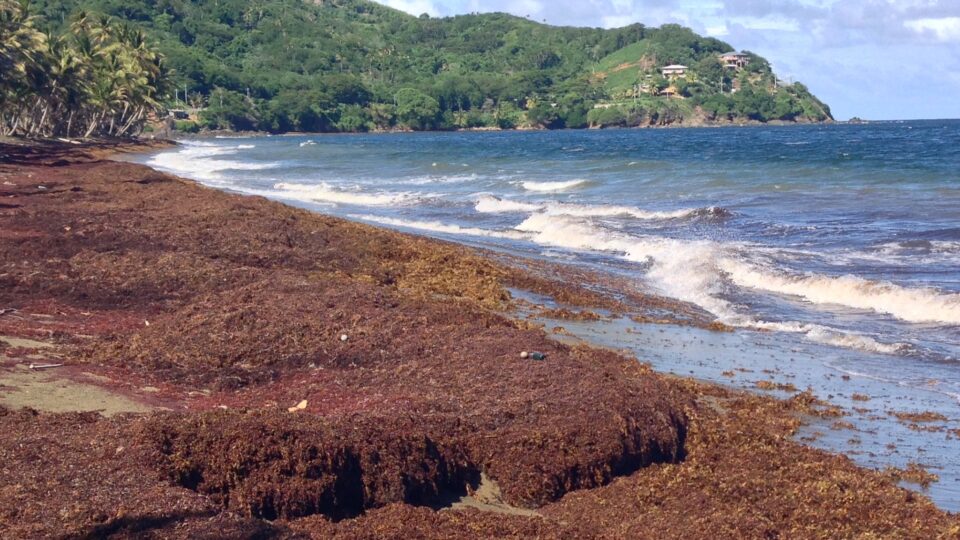
In recent years, millions of tons of brown Sargassum seaweed have formed gigantic blooms stretching all the way across the Atlantic Ocean from West Africa to the Gulf of Mexico.  The seaweed has become a problem for shorelines in the Caribbean, the Gulf of Mexico, and the east coast of Florida.  The massive increase in seaweed populations is related to changes in ocean chemistry resulting from nutrients from fertilizer use entering the water as well as from changes to the climate affecting ocean currents and temperatures.  The seaweed is harming the tourism industry as well as fisheries and ocean ecosystems.

Cleaning up the seaweed that washes ashore is labor-intensive and therefore expensive.  A research team led by two British universities has developed a cheap and simple way to pre-process seaweed to facilitate making it into bulk chemicals and biofuels.  With the new process, cleaning up the seaweed can be both economically and environmentally viable.

Previous techniques for processing seaweed generally required removing it from the saltwater, washing it in fresh water, and drying it – all of which add significant costs.  The new technique makes use of catalysts to release sugars from untreated seaweed that feed a yeast to produce a palm oil substitute.  At the same time, the process creates heat and pressure, turning the residual materials into a bio-oil that can be processed further into fuels, and a high-quality, low-cost fertilizer.

Apart from getting economic value out of the seaweed that is collected, any plastic collected alongside the seaweed can be converted to useful materials as well. 

It appears that the seaweed scourge is here to stay, so finding an economically viable way to deal with it is a welcome development.

**********

Web Links

Solve invasive seaweed problem by turning it into biofuels and fertilisers

Photo, posted August 10, 2015, courtesy of Flickr.

Earth Wise is a production of WAMC Northeast Public Radio.

Which Cities To Save From The Changing Climate

October 28, 2019 By EarthWise Leave a Comment

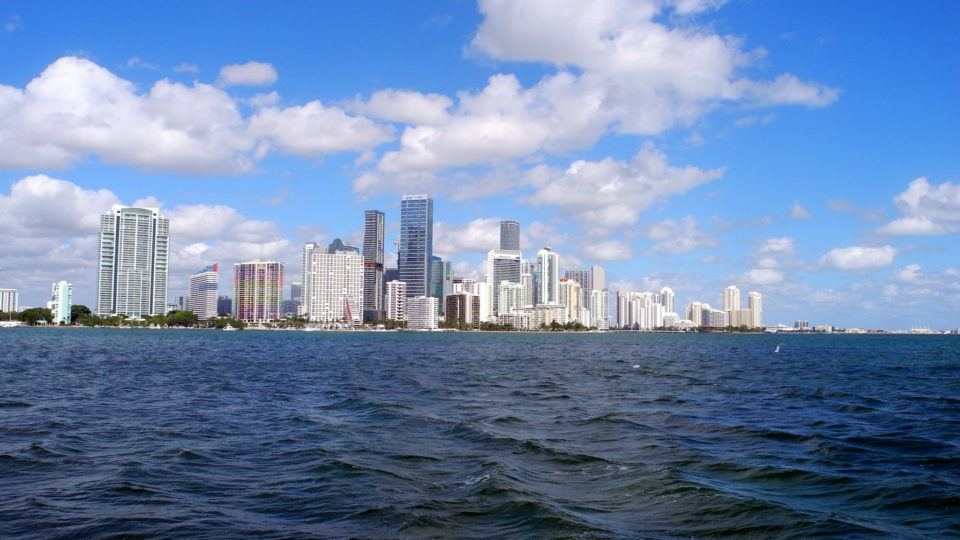
After several years of brutal flooding and hurricanes in the U.S., a distressing debate is emerging:  if there is not enough money available to protect every coastal community from the effects of global warming, how do we decide which ones to save first.

Recent research looked at the costs involved in providing basic storm-surge protection in the form of sea walls for all coastal cities with more than 25,000 residents.  That number was $42 billion.  Expanding the list to include communities smaller than 25,000 people would increase that cost to more than $400 billion.   Realistically, that is just not going to happen.

This particular study only looked at sea walls and no other methods for minimizing flood risk, such as moving homes and businesses away from the most flood-prone areas.   It also didn’t look at additional and costlier actions that will be required even with sea walls, such as revamping sewers, storm water, and drinking water infrastructure.

The facts are that many cities, especially small ones, will not be able to meet the costs facing them.  Those that can’t will depend on federal funding.  But even optimistically large proposals for federal infrastructure spending are likely to fall far short of the vast need.  Ultimately, the money will end up being spent where it can do the most good – even if it means that some places are left out.

But what criteria will be used to direct the money?  Economic value?  Historic significance?  Population?  Political influence?

This is a looming and massive issue whose chief obstacle may be that many officials refuse to acknowledge that it is happening.  This is the next wave of climate denial – denying the costs that we are all facing.

**********

Web Links

With More Storms and Rising Seas, Which U.S. Cities Should Be Saved First?

Photo, posted October 31, 2018, courtesy of Patrick Kinney via Flickr.

Earth Wise is a production of WAMC Northeast Public Radio.

The Problem With Flaring

October 12, 2018 By EarthWise Leave a Comment

https://earthwiseradio.org/wp-content/uploads/2018/10/EW-10-12-18-The-Problem-with-Flaring.mp3

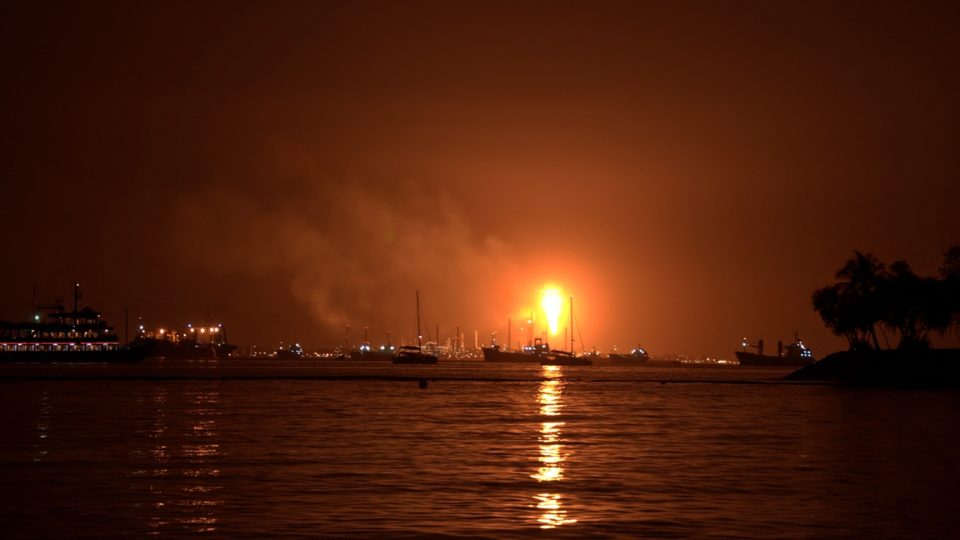
Oil and gas are typically produced together.  If oil wells are located near gas pipelines, then the gas gets used.  But if the wells are far offshore, or it is not economical to get the gas to market, then oil companies get rid of the gas by burning it – a process known as flaring.

[Read more…] about The Problem With Flaring

Primary Sidebar

Recent Episodes

  • An uninsurable future
  • Clean energy and jobs
  • Insect declines in remote regions
  • Fossil fuel producing nations ignoring climate goals
  • Trouble for clownfishes

WAMC Northeast Public Radio

WAMC/Northeast Public Radio is a regional public radio network serving parts of seven northeastern states (more...)

Copyright © 2026 ·