• Skip to primary navigation
  • Skip to main content
  • Skip to primary sidebar

Earth Wise

A look at our changing environment.

  • Home
  • About Earth Wise
  • Where to Listen
  • All Articles
  • Show Search
Hide Search
You are here: Home / Archives for drugs

drugs

Forest crimes

November 20, 2024 By EarthWise Leave a Comment

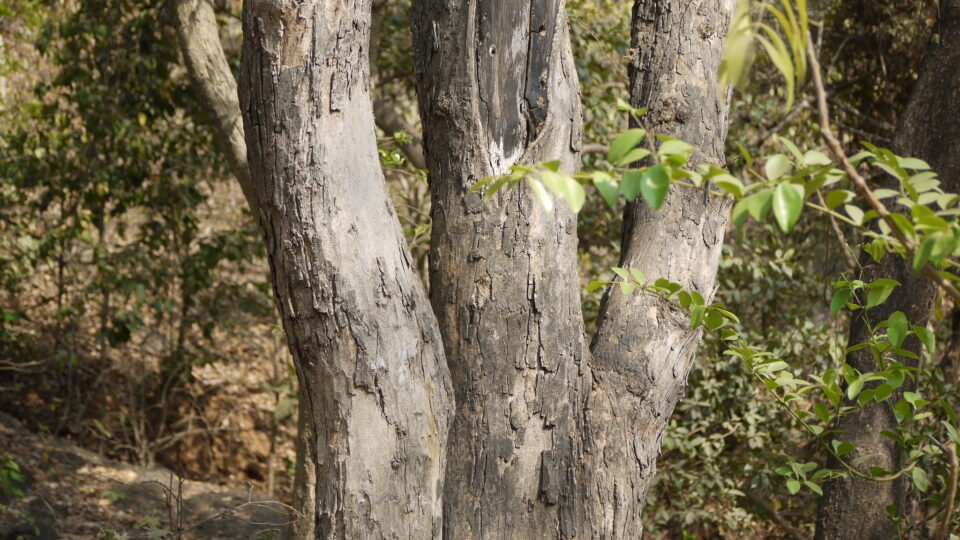
Poaching trees and illegal logging represent a massive part of wildlife trafficking globally.

Wildlife trafficking is the world’s fourth largest form of organized crime, behind only drug trafficking, counterfeiting, and human trafficking.  When we hear about wildlife trafficking, we think of elephant ivory, rhino horns, tiger parts, and the like.  But so-called forest crimes, which includes poaching protected trees and illegal logging added up to somewhere between $30 billion and $100 billion during the period 2014-2018.  A 2020 report by the United Nations estimated that illegal trade just in rosewoods comprised more than 40% of the value of all trafficked species – animal and plant – during that time.

Even though rosewood comprises multiple tree species, world stocks of nearly all of them have been depleted through overexploitation. Rosewood is now protected worldwide, and some 300 species are under trade restrictions.

With a value of as much as $1.5 million per cubic meter, rosewood is at the center of a great deal of illegal activity, government corruption, and controversy.  A shipment of 30,000 illegally felled rosewood logs from Madagascar was seized at a port in Singapore in 2014. Those rosewood logs, worth at least $50 million, have been hung up in multiple legal proceedings and disputes ever since and remain in Singapore.

With huge financial stakes, it is perhaps not surprising that the U.N. estimates that as much as a third of the supposedly legal global timber trade involves illegally harvested wood.

**********

Web Links

How Traffickers Got Away with the Biggest Rosewood Heist in History

Photo, posted April 19, 2010, courtesy of Dinesh Valke via Flickr.

Earth Wise is a production of WAMC Northeast Public Radio
Superstrong Nanofibers | Earth Wise

March 5, 2021 By EarthWise Leave a Comment

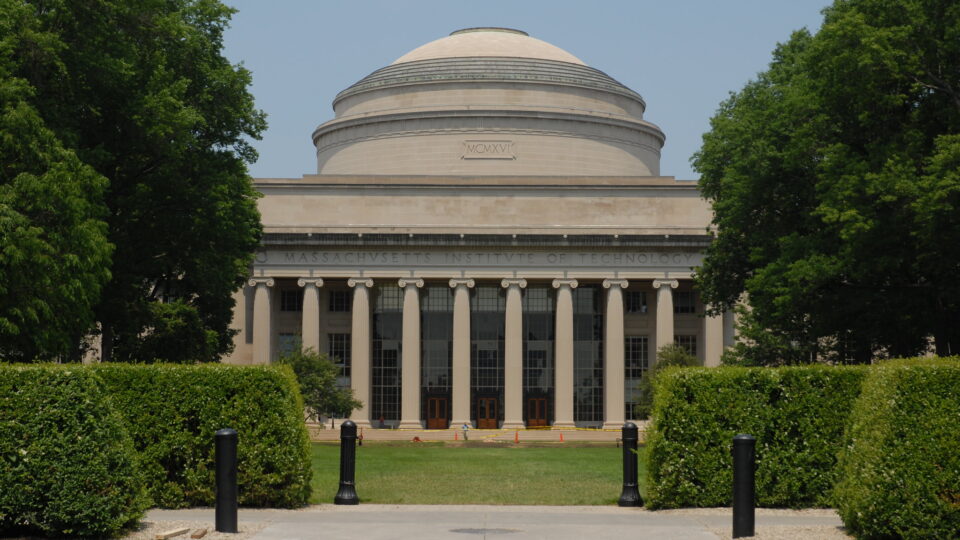
MIT research team has developed superstrong nanofibers

Self-assembly is a ubiquitous process in the natural world that leads to the formation of the DNA double helix, the creation of cell membranes, and to many other structures.   Scientists and engineers have been working to design new molecules that assemble themselves in water for the purpose of making nanostructures for biomedical applications such as drug delivery or tissue engineering.  For the most part, the materials created in this way have been chemically unstable and tended to degrade rapidly, especially when the water is removed.

A team at MIT recently published a paper describing a new class of small molecules they have designed that spontaneously assemble into nanoribbons with unprecedented strength and that retain their structure outside of water.

The material is modeled after a cell membrane.  Its outer part is hydrophilic (it likes to be in water) and its inner part is hydrophobic (it tries to avoid water.)  This configuration drives the self-assembly to create a specific nanostructure and by choosing the appropriate chemicals to form the structures, the result was nanoribbons in the form of long threads that could be dried and handled.  The resultant material in many ways resembles Kevlar.   In particular, the threads could hold 200 times their own weight and have extraordinarily high surface areas.  The fibers are stronger than steel and the high surface-to-mass ratio offers promise for miniaturizing technologies for such applications as pulling heavy-metal contaminants out of water and for use in electronic devices and batteries.

The goal of the research is to tune the internal state of matter to create exceptionally strong molecular nanostructures.  The potential for important new applications is considerable and exciting.

**********

Web Links

Researchers construct molecular nanofibers that are stronger than steel

Photo, posted June 19, 2007, courtesy of Andrew Hitchcock via Flickr.

Earth Wise is a production of WAMC Northeast Public Radio.

Drugs In The Water

April 15, 2019 By EarthWise Leave a Comment

According to a new study published in the journal Environmental Research Letters, concentrations of pharmaceuticals in rivers and lakes have dramatically increased across the globe over the past 20 years.

Traces of medicines get passed into waterways through the excretion of active drugs in human waste, the disposal of unused medicines down drains, and runoff from livestock farms.

The study looked in detail at two specific drugs:   carbamazepine, an anti-epileptic drug, and ciprofloxacin, an antibiotic.   The study found that the risk of ecological damage from the residue from these two drugs was 10 to 20 times higher in 2015 than in 1995.

Chronic exposure to carbamazepine, for example, has been shown to alter feeding behavior and reduce egg viability in zebrafish, as well as reduce reproductive success in crustaceans.  Antibiotics can alter major nutrient cycles and decrease the effectiveness of bacteria-based wastewater treatment systems.

The study, led by researchers from the Netherlands, created a new model estimating concentrations of the two drugs over a 20-year period in 449 aquatic systems around the globe.  The model predicts a relatively high environmental risk in densely populated and dry areas such as the Middle East. 

When the researchers compared the model’s results to samples from four river systems in various locations, they found that the actual drug concentrations were even higher than model results, in some cases by a factor of 10 to 100. 

The new model should act as a guide for a more thorough investigation into pharmaceutical residues in waterways, which pose significant environmental risks all over the world.

**********

Web Links

Concentrations of Pharmaceuticals in Freshwater Increasingly Globally

Photo, posted March 22, 2012, courtesy of Rajeev Rajagopalan via Flickr.

Earth Wise is a production of WAMC Northeast Public Radio.

Urban Streams Are Breeding Superbugs

August 14, 2018 By EarthWise Leave a Comment

https://earthwiseradio.org/wp-content/uploads/2018/08/EW-08-14-18-Urban-Streams.mp3

City streams are subjected to a constant onslaught of synthetic chemicals found in pharmaceuticals and personal care products. Wastewater treatment facilities are not designed to filter out these compounds. Instead, they flow into surface waters where they impact aquatic organisms like microbes – which perform key ecosystem services like removing excess nutrients and breaking down leaf litter.

[Read more…] about Urban Streams Are Breeding Superbugs

Primary Sidebar

Recent Episodes

  • An uninsurable future
  • Clean energy and jobs
  • Insect declines in remote regions
  • Fossil fuel producing nations ignoring climate goals
  • Trouble for clownfishes

WAMC Northeast Public Radio

WAMC/Northeast Public Radio is a regional public radio network serving parts of seven northeastern states (more...)

Copyright © 2026 ·