• Skip to primary navigation
  • Skip to main content
  • Skip to primary sidebar

Earth Wise

A look at our changing environment.

  • Home
  • About Earth Wise
  • Where to Listen
  • All Articles
  • Show Search
Hide Search
You are here: Home / Archives for distance

distance

Five-minute car charging

September 17, 2025 By EarthWise Leave a Comment

A long-standing complaint about electric cars is the amount of time it takes to charge their batteries.  A decade ago, this was a serious shortcoming.  Even at the fastest chargers available at the time, it could take hours to refill the electric fuel tank.  Combined with the limited range earlier electric cars had, this made long-distance road trips in an electric car something only for the adventurous.

Nowadays, electric cars can go much further on a charge – 300 miles and more – and the fastest public chargers can add 200 miles in 20 minutes.  With this kind of performance, electric cars are eminently practical for the great majority of drivers and the great majority of road trips.  But for some people, it just isn’t good enough.  They want to be able to charge up a car as fast as they can fill up a tank of gas.

That capability is about to be available in China.  Two Chinese companies announced technology breakthroughs that will allow electric cars to add 250 miles of range in five minutes.  China is the world’s largest user and producer of electric cars, and the country has invested heavily in charging technology, especially in the infrastructure enhancements required for high-speed charging.

When will this capability be available in the United States?  It isn’t clear.  The Trump Administration has been aggressively rolling back policies that support the EV industry.  The regulatory changes that would permit higher-power charging stations are unlikely to happen any time soon.

Electric cars are already very practical for most people, but if one wants them to be able to please everyone, one may have to go to China.

**********

Web Links

Why Can’t the U.S. Build 5-Minute E.V. Chargers?

Photo, posted April 17, 2023, courtesy of FirstEnergy via Flickr.

Earth Wise is a production of WAMC Northeast Public Radio

The coastal squeeze

June 26, 2025 By EarthWise Leave a Comment

Globally, coastal areas are being squeezed between rising seas on one side and human development on the other.  The average distance from the high waterline to the first built-up area with human structures or paved roads is less than 400 yards around the world.  The narrower a coast, the sooner rising sea levels cause problems.

Narrow coasts have reduced ability to defend against storm surges and other weather events.  Construction close to the sea makes coastal areas extra vulnerable.  Narrow coasts are also bad news for biodiversity.  A study by the Royal Netherlands Institute for Sea Research investigated plant diversity in both the Netherlands and the United States.  They found that the wider the coast was, the greater the plant diversity.

In Florida and Georgia, whenever coastal zones reached a couple of kilometers in width, diversity increased rapidly.  In the Netherlands, only coastal areas at least 3.8 kilometers wide reached their maximum plant diversity, but such areas are rare.  Dutch sand dune areas are typically no more than a kilometer wide, leaving plant diversity at no more than half the possible level.

Limited biodiversity in narrow coastal strips can be somewhat boosted by nature management but would benefit much more by spatial planning.  In the Netherlands, a spot called The Sand Motor is where a gigantic amount of sand was deposited off the coast in 2011.  Since then, natural forces have spread it along the coast.  Such coastal expansion could increase biodiversity.  Biodiversity is not a luxury.  It makes for a better future for coastal defense, a healthy drinking water supply, and a better human food supply.

**********

Web Links

Coastal squeeze is bad for biodiversity, and for us!

Photo, posted June 21, 2017, courtesy of Mark Bias via Flickr.

Earth Wise is a production of WAMC Northeast Public Radio
Water For Arizona | Earth Wise

July 17, 2023 By EarthWise Leave a Comment

Arizona looking for creative solutions to solve its water crisis

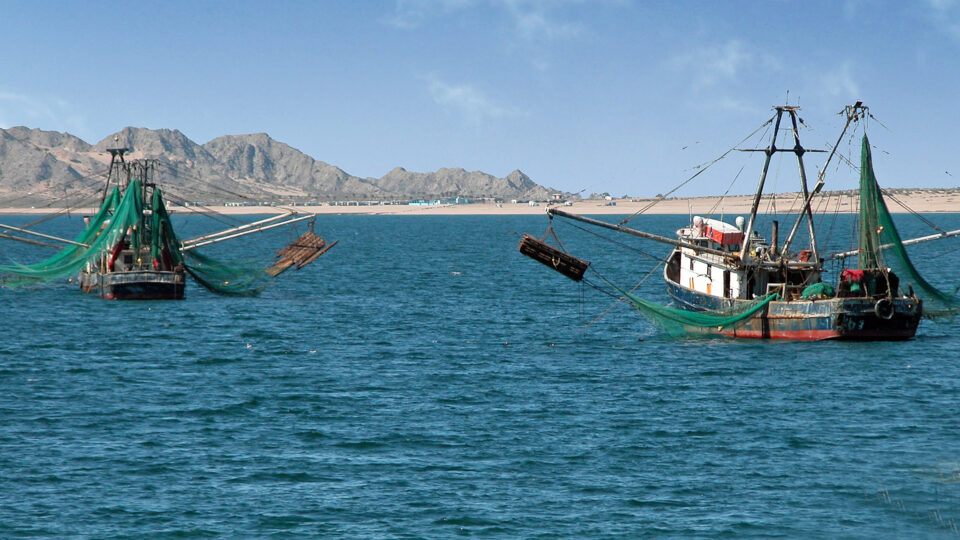
The Phoenix area is the fastest growing region in the country.  Arizona’s two major sources of water – groundwater and the Colorado River – are dwindling from drought, climate change, and overuse.  Officials in the state are considering a radical plan to construct a desalination plant off the Mexican coast that will take the salt out of seawater, and then pipe that water hundreds of miles, much of it uphill, to Phoenix.

The project is the brainchild of the Israeli company, IDE, which is one of the world’s largest desalination companies.  IDE has asked Arizona to sign a 100-year contract to buy water from the project. 

There are multiple complications surrounding the plan.  Desalination plants are common in California, Texas, and Florida, and in more than 100 other countries.  But the Arizona project is unusual because of the distance involved and because the state is landlocked.  The water would have to travel 200 miles and climb 2,000 feet along the way.

There is also the issue of waste brine, which is a major output of desalination plants.  In this case, the brine would flood the northern Gulf of California, potentially threatening a productive fishery.  In addition, the pipeline, as well as electrical transmission lines, would have to go through the Organ Pipe Cactus National Monument, a UNESCO biosphere reserve.

The plant would be located in Puerto Peñasco, a struggling town with its own water problems.

With booming home construction going on in the Phoenix area, the need for more water continues to grow.  Whether this plan will be approved by Arizona and by Mexico remains to be seen.

**********

Web Links

Arizona, Low on Water, Weighs Taking It From the Sea. In Mexico.

Photo, posted September 26, 2008, courtesy of Dan via Flickr.

Earth Wise is a production of WAMC Northeast Public Radio
Earthquakes And Injection Wells

October 8, 2018 By EarthWise Leave a Comment

https://earthwiseradio.org/wp-content/uploads/2018/10/EW-10-08-18-Earthquakes-and-Injection-Wells.mp3

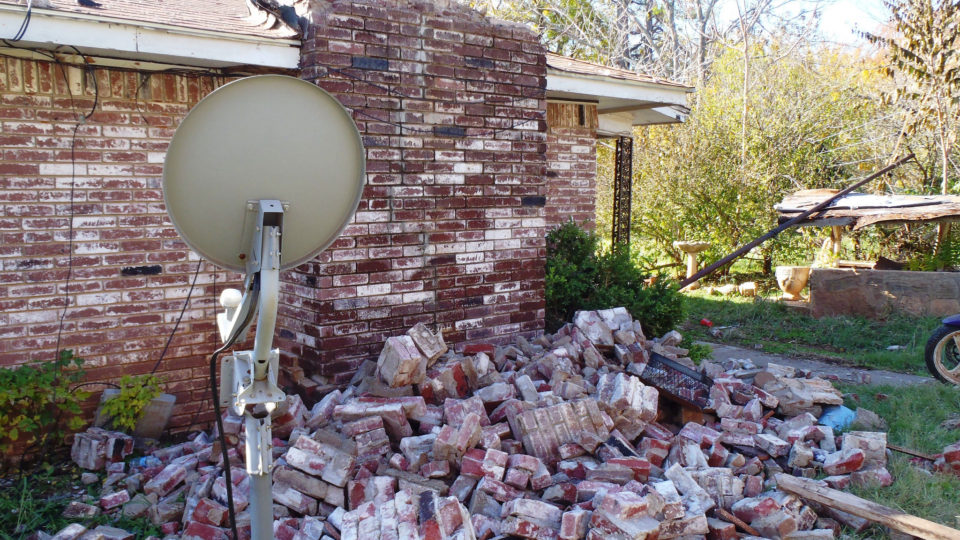
The expanded use of injection wells and fracking has brought about a significant increase in earthquakes in places that didn’t have very many before.  Wastewater injection in Oklahoma increased earthquake totals from dozens per year to over 900 in 2015 before collapsing oil prices reduced the use of the technique.  Increased earthquakes in Alberta, Canada were triggered by fracking in that area.

[Read more…] about Earthquakes And Injection Wells

Air Travel And Global Warming

September 25, 2017 By EarthWise Leave a Comment

https://earthwiseradio.org/wp-content/uploads/2017/09/EW-09-25-17-Air-Travel-and-Global-Warming.mp3

Air travel is pretty carbon intensive.  For those of us who take plane trips, it represents a substantial part of our individual carbon footprints. It isn’t that plane travel is inefficient fuel-wise on a miles-per-gallon-per-passenger basis compared with driving, for example.  It is just that we go so much farther on planes.   Currently, aviation accounts for only a few percent of overall carbon emissions, but that is changing for two reasons.

[Read more…] about Air Travel And Global Warming

Primary Sidebar

Recent Episodes

  • An uninsurable future
  • Clean energy and jobs
  • Insect declines in remote regions
  • Fossil fuel producing nations ignoring climate goals
  • Trouble for clownfishes

WAMC Northeast Public Radio

WAMC/Northeast Public Radio is a regional public radio network serving parts of seven northeastern states (more...)

Copyright © 2026 ·