• Skip to primary navigation
  • Skip to main content
  • Skip to primary sidebar

Earth Wise

A look at our changing environment.

  • Home
  • About Earth Wise
  • Where to Listen
  • All Articles
  • Show Search
Hide Search
You are here: Home / Archives for develop

develop

Lithium in Arkansas

November 28, 2024 By EarthWise Leave a Comment

Exploring lithium in Arkansas

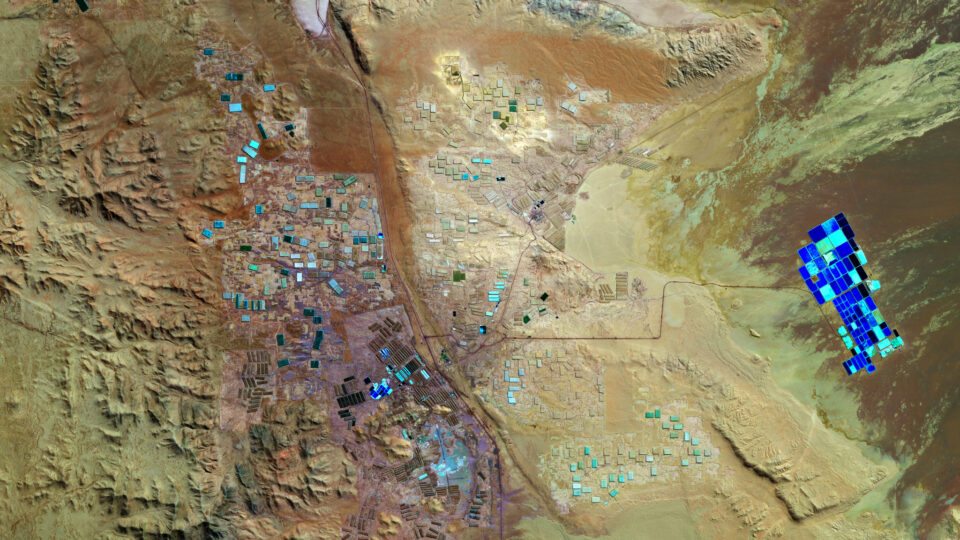
Lithium is the critical raw material in the batteries that power electric cars as well as cell phones, computers, and other gadgets.  The stuff has been nicknamed “white gold” for good reason.  Chile and Australia are the world’s largest producers of the metal, which is mostly extracted from brine in evaporation ponds.  The majority of it is then processed in China.  The energy industry has been increasingly working to produce the raw materials needed to produce lithium-ion batteries in the United States and process those materials domestically.  There are multiple projects at various stages across the country.

Researchers at the US Geological Survey and the Arkansas state government recently announced that they have discovered a vast trove of lithium in an underground brine reservoir in Arkansas.

With a combination of water testing and machine learning, the researchers determined that there could be 5 to as much as 19 million tons of lithium in the geological area called the Smackover Formation.  This is more than enough to meet all the world’s demand for it.

Several companies – including Exxon Mobil, which is covering its bets on the future of oil as an energy source – are developing projects in Arkansas to produce lithium.  If these companies can develop and scale up economical new ways to extract lithium from salty water, the region in Arkansas could become the lithium capital of the world.

Energy and mining companies have produced oil, gas, and other natural resources in the Smackover Formation, which extends from Texas to Florida.  The same brines have long been the source of other valuable substances. 

**********

Web Links

Arkansas May Have Vast Lithium Reserves, Researchers Say

Photo, posted May 22, 2020, courtesy of the European Space Agency via Flickr.

Earth Wise is a production of WAMC Northeast Public Radio

An Agreement To Protect Biodiversity | Earth Wise

January 18, 2023 By EarthWise Leave a Comment

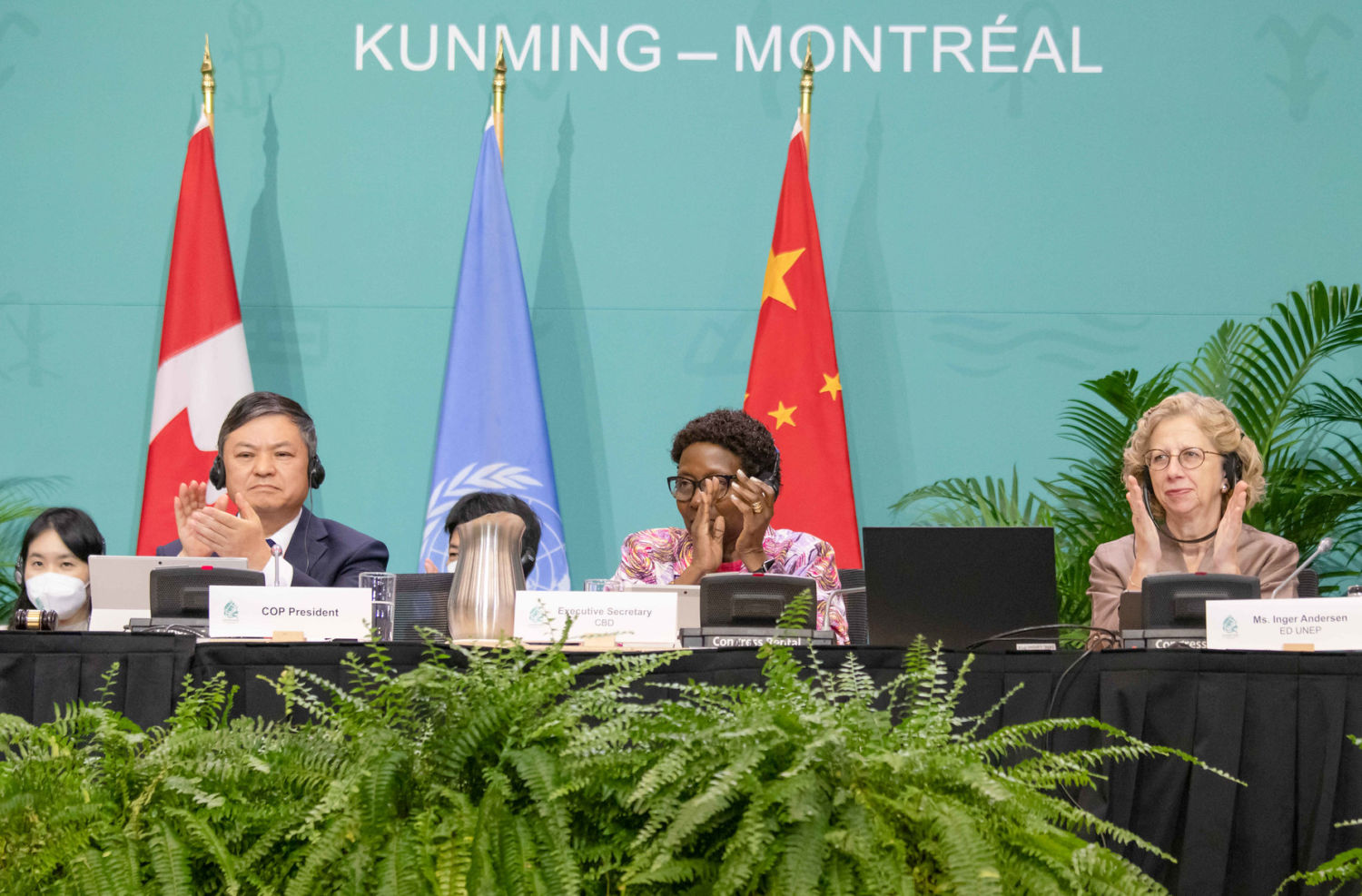
The UN Biodiversity Conference in Montreal in December concluded with a historic deal aimed at stemming the rising tide of extinctions.  Nearly 200 countries signed on to the agreement to protect 30% of the Earth’s land and sea by the end of this decade.

Part of the agreement also pledges that countries will reduce fertilizer runoff from farms by 50%, reduce the use of harmful pesticides by 50%, and stem the flow of invasive species. 

Of course, all of these promises are only words unless they are backed up by actions and actions cost money.  The agreement promises to direct $200 billion a year towards biodiversity by the end of this decade.  Wealthy countries were urged to provide $100 billion a year to fund the actions of poorer countries, but they resisted the pressure.  Eventually, they did agree to send $30 billion a year to developing countries by 2030.

It is a significant step forward to establish clear targets for stopping biodiversity loss.  However, the ultimate success of the pact will depend on the willingness of countries to cooperate and compromise.

According to UN estimates, about a million species across the globe face extinction as a result of rising temperatures, air and water pollution, invasive species, and habitat loss due to development.   At present, only 16% of land and 8% of the oceans are within protected areas. 

The UN Environment Program stated that “for far too long humanity has paved over, fragmented, over-extracted, and destroyed the natural world on which we all depend.  Now is our chance to shore up and strengthen the web of life, so it can carry the full weight of generations to come.”

**********

Web Links

In Historic Deal, Countries Agree to Protect 30 Percent of Earth to Halt Biodiversity Loss

Photo, posted August 13, 2015, courtesy of Andrew H via Flickr.

Earth Wise is a production of WAMC Northeast Public Radio

A Miracle Tree | Earth Wise

September 27, 2022 By EarthWise Leave a Comment

Pongamia could be a miracle tree

The world needs to be fed without destroying the environment.   We need to grow more trees to store more carbon on earth and reduce the amount in the atmosphere.  But meanwhile, we decimate rainforests to produce palm oil and grow soybeans.

A startup company in California called Terviva thinks they have a solution.  It’s called pongamia, which is an ordinary looking tropical tree.  It produces beans packed with protein and oil, much like soybeans.  However, it has the potential to produce much more nutrition per acre than soybeans and it is hardy enough to grow on pretty much any kind of land without the use of pesticides, fertilizers, or irrigation.  In short, it is a miracle crop for a hot and hungry planet that is running out of fertile farmland and fresh water.

Pongamia is not a new or rare tree.  It is common in India but grows all over the world.  It is often planted as an ornamental here in the U.S.

The initial idea for making use of the hardy tree was to use its oil as a biofuel.  The seeds of pongamia are known to have a bitter taste and disagreeable odor, which is why the seeds or oil were never used for human or animal feed.  However, Terviva has developed a way to de-bitter pongamia oil.  Once this is done, it becomes a golden-colored substitute for olive oil. It also has enormous potential as a protein for plant-based milks and meats, since it contains all nine essential amino acids.

Terviva has raised more than $100 million to further develop pongamia and is now partnering with Danone, a $25 billion multinational food company, to develop pongamia as a climate-friendly, climate-resilient, non-GMO alternative to soy and palm oil.

***********

Web Links

This super-tree could help feed the world and fight climate change

Photo, posted December 15, 2015, courtesy of Lauren Gutierrez via Flickr.

Earth Wise is a production of WAMC Northeast Public Radio

Reducing Emissions From Shipping And Aviation | Earth Wise

November 19, 2021 By EarthWise Leave a Comment

The global marine shipping and aviation industries are each responsible for about 3% of greenhouse gas emissions.  These are relatively small numbers, but as other industries decarbonize, the contributions from shipping and aviation will loom larger and larger.

In October, both of these industries made commitments to reach net zero emissions by 2050.  How can they do it?  We don’t really have the details of the technologies to be used, and neither do these industries.  But there are ideas being considered.

For both ships and planes, the solution for short-distance trips can be electrification.  Electric planes are in the works for short distances.  Battery-powered container ships are also under development.  But the electrification of longer international and intercontinental routes for both industries is very difficult.  The size and weight of batteries needed for long hauls are major challenges to overcome.

The low-carbon solution slowly being deployed in aviation is sustainable aviation fuel made from renewable sources. Longer term, green hydrogen fuel for planes may be a solution.  For shipping, hydrogen may play an even larger role.  As in the other potential uses for hydrogen, the essential requirement is to be able to produce hydrogen in a way that does not emit greenhouse gases.

There are multiple ways to move towards the decarbonization of both aviation and shipping.  Which will turn out to be the most practical and successful is not yet known.  What is essential is for both industries to follow through on their commitments to research, develop, and deploy zero-carbon solutions.  They appear to have embraced the vision for the future.  Now comes the hard work of achieving that vision.

**********

Web Links

Shipping & Aviation Plan To Go Net Zero. How?

Photo, posted August 8, 2014, courtesy of Tomas Del Coro via Flickr.

Earth Wise is a production of WAMC Northeast Public Radio.

Primary Sidebar

Recent Episodes

  • An uninsurable future
  • Clean energy and jobs
  • Insect declines in remote regions
  • Fossil fuel producing nations ignoring climate goals
  • Trouble for clownfishes

WAMC Northeast Public Radio

WAMC/Northeast Public Radio is a regional public radio network serving parts of seven northeastern states (more...)

Copyright © 2025 ·