• Skip to primary navigation
  • Skip to main content
  • Skip to primary sidebar

Earth Wise

A look at our changing environment.

  • Home
  • About Earth Wise
  • Where to Listen
  • All Articles
  • Show Search
Hide Search
You are here: Home / Archives for desalination plants

desalination plants

Minerals from seawater

June 27, 2024 By EarthWise Leave a Comment

Using the minerals from desalination plants

There are about 18,000 desalination plants around the world that take in 23 trillion gallons of water each year.  The plants produce more than 37 billion gallons of brine – enough to fill 50,000 Olympic-size swimming pools – every day.  Disposing of this brine is an ongoing challenge.  Dumping it into the ocean can damage marine ecosystems.  Inland desalination plants either bury this waste or inject it into wells, adding further cost and complexity to the already expensive process of desalination.

According to researchers at Oregon State University, this waste brine contains large amounts of copper, zinc, magnesium, lithium, and other valuable metals.  A company in Oakland, California called Magrathea Metals has started producing modest amounts of magnesium from waste brine in its pilot projects.  With support from the U.S. Defense Department, it is building a larger-scale facility to produce hundreds of tons of the metal over two to four years. 

Most of the world’s magnesium supply comes from China, where producing it requires burning lots of coal and utilizing lots of labor.  Magrathea’s brine mining makes use of off-peak wind and solar energy and is much less labor intensive.

No large-scale brine mining operations currently exist and when there are some, they might end up having negative environmental impacts.  But in principle, the process should produce valuable metals without the massive land disturbance, acid-mine drainage, and other pollution associated with traditional mining.  Brine mining could turn a growing waste problem into a valuable resource.

**********

Web Links

In Seawater, Researchers See an Untapped Bounty of Critical Metals

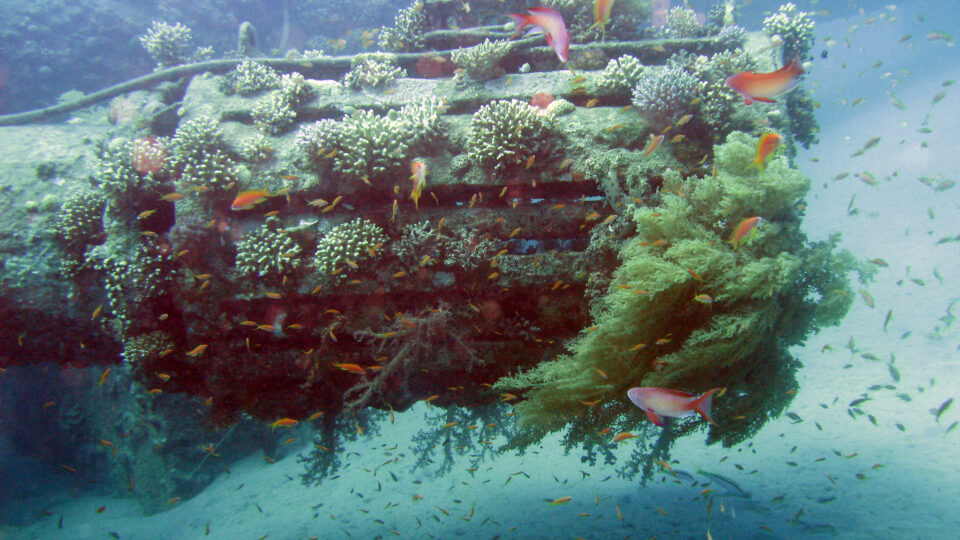
Photo, posted February 18, 2017, courtesy of Jacob Vanderheyden via Flickr.

Earth Wise is a production of WAMC Northeast Public Radio
Using CO2 To Convert Seawater Into Drinking Water | Earth Wise

October 27, 2020 By EarthWise Leave a Comment

Converting Seawater into Drinking Water

A chemist at the University of Copenhagen has invented a technology that uses carbon dioxide to convert seawater into drinking water within minutes.  This desalination technology has the potential to replace electricity with CO2 and be used in survival gear and in large-scale industrial plants in places where people don’t have clean drinking water.

Over 800 million people worldwide lack access to clean drinking water and that number is growing rapidly.  Seawater is a vital source of drinking water in many parts of the world, but desalination faces the major challenge of being highly energy intensive.  Desalination plants use huge amounts of fossil fuel-generated electricity and therefore contribute to climate change.

The Copenhagen technology is reminiscent of a SodaStream machine.  Carbon dioxide is added to water, initiating a chemical reaction.  But instead of using it for bubbly carbonation, it is used to separate salt from water.  It works by adding a chemical called CO2-responsive diamine to saltwater.  The diamine compound binds with the added CO2 and acts as a sponge to absorb the salt, which can then be separated.  The entire process takes one to ten minutes.  Once the CO2 is removed, the salt is released again, allowing the diamine to be reused for several more rounds of desalination.

In the laboratory, the method removed 99.6% of the salt in seawater.  The technology is still being developed to lower its price and optimize the recycling process.  It is also being tested on a small scale in the form of water bottles fitted with special filters that can be used in lifeboats or in other outdoor settings.  Ultimately, it could be used to greatly reduce the energy consumption of desalination plants.

**********

Web Links

Chemist uses CO2 to convert seawater into drinking water

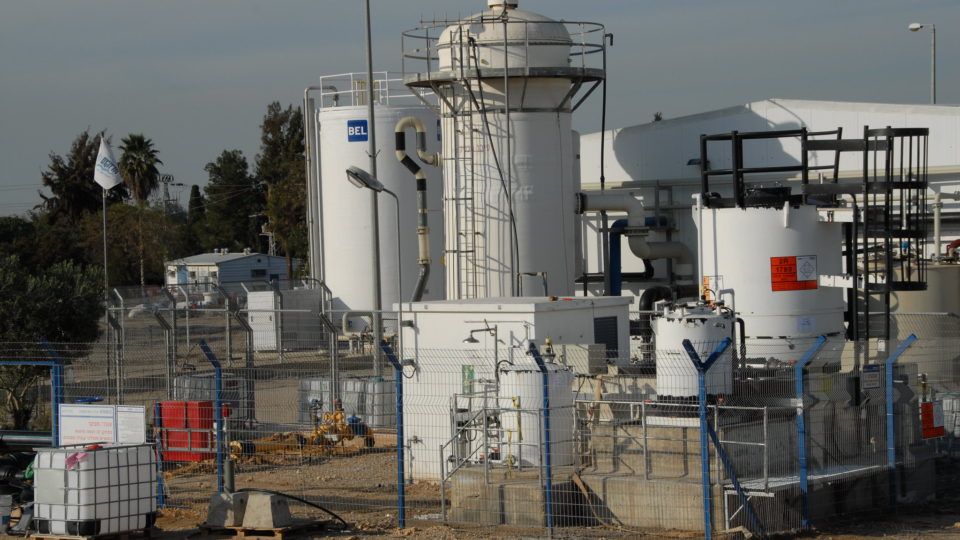
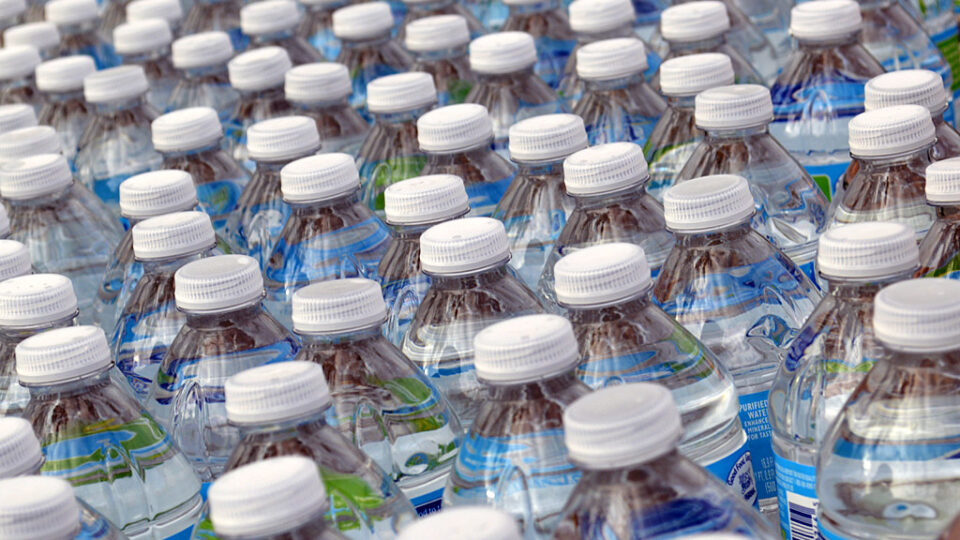
Photo, posted January 10, 2015, courtesy of Daniel Orth via Flickr.

Earth Wise is a production of WAMC Northeast Public Radio.

The Blue Acceleration | Earth Wise

February 24, 2020 By EarthWise Leave a Comment

Human pressures on world's oceans show no sign of slowing

The oil and gas sector is the largest ocean industry.  It’s responsible for about one third of the value of the ocean economy.  Sand and gravel, destined for the construction industry, are the most mined minerals in the ocean.  And during the past 50 years, approximately 16,000 desalination plants have popped up around the world to help supply people with an increasingly scarce commodity: freshwater. 

As a result of these and other human pressures, the world’s oceans have suffered a lot over time.  But according to a comprehensive new analysis on the state of the ocean, human pressure on the world’s oceans, driven by a combination of technological progress and declining land-based resources, sharply accelerated at the start of the 21st century.  Scientists have dubbed this dramatic increase, which shows no signs of slowing down, the “Blue Acceleration.”

A  research team from Stockholm University analyzed 50 years of data from aquaculture, bioprospecting, shipping, drilling, deep-sea mining, and more.  Their findings were recently published in the journal One Earth.

While claiming ocean resources and space is not new, lead author Jean-Baptiste Jouffray from the Stockholm Resilience Centre says “the extent, intensity, and diversity of today’s aspirations are unprecedented.”

The researchers also highlight how not all human impacts on the ocean are negative.  For example, offshore wind farm technology has reached commercial viability allowing the world to reduce reliance on fossil fuels.

But how can the Blue Acceleration be slowed?  Since only a handful of multinational companies dominate sectors like the seafood industry, oil and gas exploitation, and bioprospecting, one idea is to have banks and other investors adopt more stringent sustainability criteria for making ocean investments. 

**********

Web Links

Human pressure on world’s ocean shows no sign of slowing

Photo, posted October 29, 2008, courtesy of Silke Baron via Flickr.

Earth Wise is a production of WAMC Northeast Public Radio.

Desalination On The Rise

July 23, 2019 By EarthWise Leave a Comment

Desalination has been regarded for decades as a solution for providing fresh water to places where it is scarce.  With drought becoming more common around the world – sometimes even in places where water supplies were thought to be ample – there is increasing pressure to bring new desalination plants online.

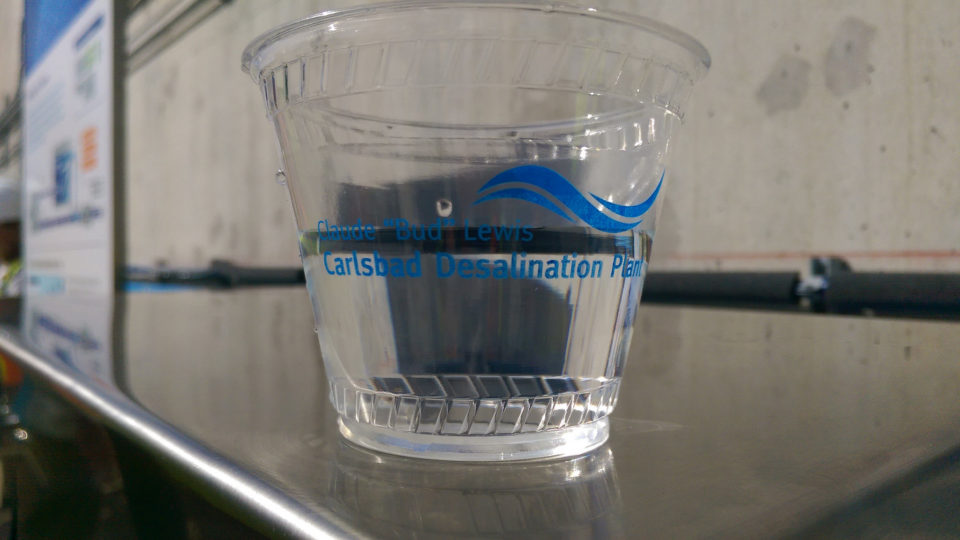
San Diego gets only 12 inches of rain a year and has no groundwater.  It gets half its water from the distant Colorado River, and that source is becoming increasingly unreliable.  Thus, it is no surprise that America’s largest desalination plant is in Carlsbad, about 30 miles north of San Diego.  That plant provides about 10% of the fresh water needs of the region’s 3.1 million people.

There are 11 desalination plants in California, and 10 more are proposed. Desalination is huge in Saudi Arabia, Australia and Israel.  Globally, more than 300 million people get their water from desalination.

But there are problems.  Desalination is expensive and energy-intensive.  If the process is powered by fossil fuels, it contributes to global warming.  There are ecological impacts as well since it takes two gallons of sea water to make a gallon of fresh water, and the gallon left behind is extremely briny and potentially harmful to dump back into the sea.  The intake systems of desalination plants are also harmful to fish and other aquatic creatures.

The cost of desalination has dropped by more than half over the last 30 years but water from it still costs about twice as much as that from other main sources.  The technology is getting better and cheaper, but the industry must confront and solve serious environmental and economic problems in order for desalination to be able to meet the needs of an increasingly thirsty world.

**********

Web Links

As Water Scarcity Increases, Desalination Plants Are on the Rise

Photo, posted January 12, 2011, courtesy of Flickr.

Earth Wise is a production of WAMC Northeast Public Radio.

A Better Filter For Saltwater

November 26, 2018 By EarthWise Leave a Comment

https://earthwiseradio.org/wp-content/uploads/2018/10/EW-11-26-18-A-Better-Saltwater-Filter.mp3

Turning seawater into drinkable water is a highly desirable capability given that fresh water is generally in short supply and seawater is endlessly abundant.  Desalination plants typically strain salt out of seawater by pumping it through films made of polyamide.  Polyamide filters are riddled with tiny pores that allow water molecules to squeeze through, but not sodium ions.

[Read more…] about A Better Filter For Saltwater

Energy From Jellyfish

February 7, 2017 By EarthWise

https://earthwiseradio.org/wp-content/uploads/2017/02/EW-02-07-17-Energy-from-Jellyfish.mp3

Jellyfish are fascinating in appearance but generally are nothing but trouble.  Their stings can ruin a tropical vacation but they can cause far more damage than that.

[Read more…] about Energy From Jellyfish

Primary Sidebar

Recent Episodes

  • An uninsurable future
  • Clean energy and jobs
  • Insect declines in remote regions
  • Fossil fuel producing nations ignoring climate goals
  • Trouble for clownfishes

WAMC Northeast Public Radio

WAMC/Northeast Public Radio is a regional public radio network serving parts of seven northeastern states (more...)

Copyright © 2025 ·