• Skip to primary navigation
  • Skip to main content
  • Skip to primary sidebar

Earth Wise

A look at our changing environment.

  • Home
  • About Earth Wise
  • Where to Listen
  • All Articles
  • Show Search
Hide Search
You are here: Home / Archives for deploy

deploy

A giant plane for giant wind turbines

May 22, 2025 By EarthWise Leave a Comment

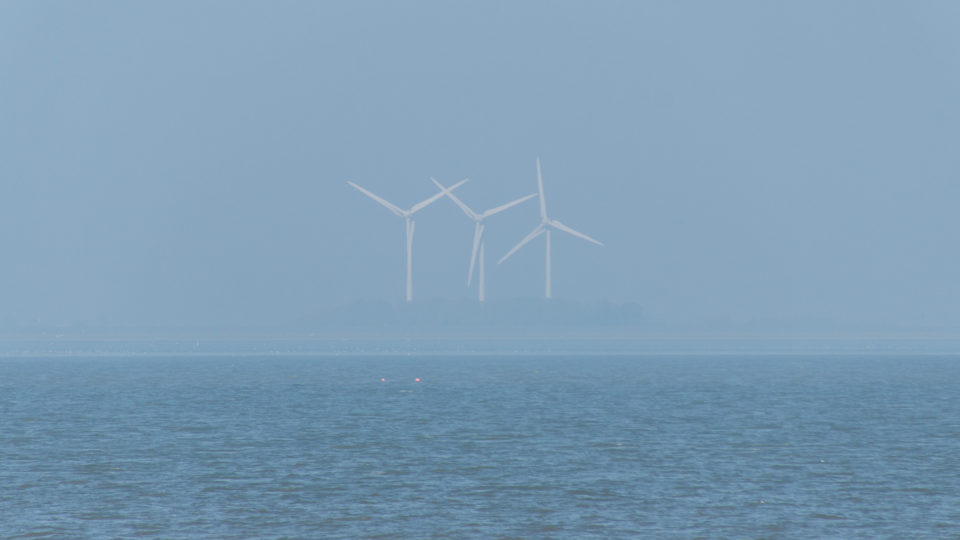
Wind turbines have been getting bigger all the time.  Larger turbines have real advantages.  They can operate at lower speeds so they can be deployed in more places.  They capture more wind, so they make more power.  Large wind turbines can have blades more than 200 feet long and even larger ones are on the way.  An offshore wind farm in China has turbines with 400-foot blades.

Giant wind turbines face a thorny problem:  getting the blades to where they are to be installed.  The enormous blades can’t be easily shipped across aging roads and bridges.   Tunnels are too narrow, bridges are too low, and roads can be too tight to allow turns when transporting these massive turbine parts.  Some developers have actually had to build special roads for wind projects.

For nearly a decade, a Boulder Colorado company called Radia has been working on what would be the world’s largest plane.  The WindRunner aircraft would have a dozen times the cargo volume of a Boeing 747.  The WindRunner will be 356 feet long and 79 feet tall.  While its primary purpose would be transporting wind turbine blades, the plane could also be used to aid the military or businesses that are thinking really big.  Product developers often don’t even try to invent really big things because there is no way to transport them.  Radia expects the WindRunner to be rolled out before the end of the decade.

The wind industry is currently facing strong opposition from the Trump administration, but wind energy is not going away and bigger and better wind turbines will ultimately be built and will have to be transported.

**********

Web Links

Building the World’s Biggest Plane to Help Catch the Wind

Photo, October 10, 2013, courtesy of Allan Der via Flickr.

Earth Wise is a production of WAMC Northeast Public Radio
Floating Solar And Hydropower | Earth Wise

August 16, 2023 By EarthWise Leave a Comment

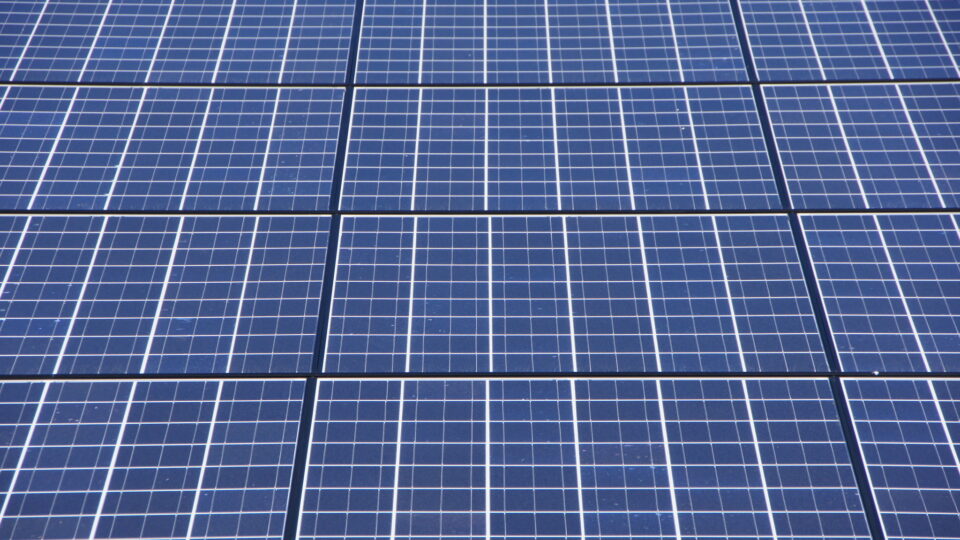
Installing solar panels on the surface of reservoirs is an up-and-coming trend.  The arrays of solar panels produce renewable energy while at the same time shielding significant expanses of water from the sun’s heat, thereby reducing evaporation.  The panels also help to inhibit the growth of algae.

Two recent floating solar installations are demonstrating the synergy between solar power and hydroelectric power.

The Lazer floating solar plant in France comprises over 50,000 solar panels and is capable of producing 30 MW of power.  The reservoir serves a 16.5 MW hydropower plant.  During the summer, the water from Lazer Reservoir is used primarily for crop irrigation and the solar plant supplements power generation as the reservoir water level experiences variations.  This is the first facility of its kind to be installed in France.  The company that built it – the EDF Group – had already built four floating solar power plants in Israel and the US. 

In Colombia, the Aquasol solar project is installed at the 340 MW Urrá hydropower plant.  Its 2,800 solar panels produce enough power to offset the amount of energy it takes to operate the dam.  The floating solar system is designed to withstand water-level fluctuations of up to 120 feet.

Floating solar systems can help keep power flowing when low water levels or other adverse conditions reduce hydroelectric output.  About 60% of the world’s renewable energy comes from hydropower.  Given this fact, there are countless opportunities to deploy floating solar that maximizes zero-emission energy generation as well as diversifying clean energy sources.

**********

Web Links

Floating solar and hydropower: A match made in renewable energy heaven

Photo, posted October 25, 2010, courtesy of Martin Abegglen via Flickr.

Earth Wise is a production of WAMC Northeast Public Radio
Prospects For Floating Solar | Earth Wise

October 10, 2022 By EarthWise Leave a Comment

Floating solar may power the future

Countries are trying to figure out how to get enough energy from solar and wind generation to completely decarbonize their economies.  According to some estimates, nations might have to devote between half a percent and five percent of their land area to solar panels to get the job done.  Half a percent is about the amount of the U.S. that is covered by paved roads.  While there is lots of open land in many parts of the country, covering it with solar panels might not be acceptable to farmers, conservationists, or other interested parties.

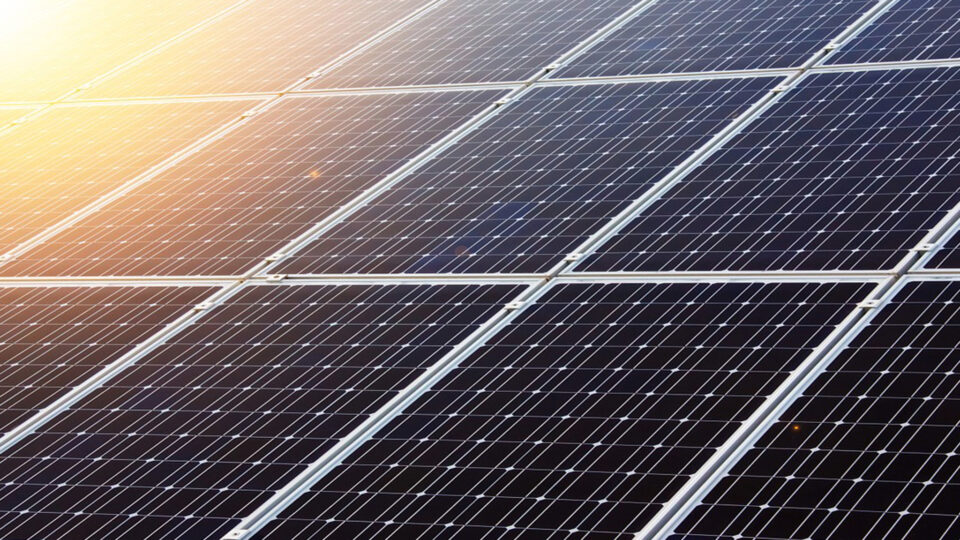
One way to deploy more solar panels without using up land is the use of floating solar panels.  Floating photovoltaic systems – also known as floatovoltaics – are becoming increasingly common, especially in Asia.  This year, China installed one of the largest floatovoltaic systems in the world on a reservoir near the city of Dezhou.

Floating solar panels stay cooler and run more efficiently than those on land.  The panels also help prevent evaporation from their watery homes and the shading they provide also help to minimize algal blooms.  Solar installations on reservoirs generally puts them near cities, making it easier to feed power into urban grids.

On the other hand, floating solar systems need to be able to withstand water and waves and are generally more expensive to build than land-based systems.

At present, the installed global capacity of floating solar is only about 3 gigawatts, compared with more than 700 gigawatts of land-based systems. However, reservoirs around the world collectively cover an area about the size of France.  Covering just 10 percent of them with floating solar could produce as much power as all the fossil-fuel plants in operation worldwide.

**********

Web Links

Solar Takes a Swim

Photo, posted March 7, 2019, courtesy of Hedgerow INC via Flickr.

Earth Wise is a production of WAMC Northeast Public Radio

Reducing Emissions From Shipping And Aviation | Earth Wise

November 19, 2021 By EarthWise Leave a Comment

The global marine shipping and aviation industries are each responsible for about 3% of greenhouse gas emissions.  These are relatively small numbers, but as other industries decarbonize, the contributions from shipping and aviation will loom larger and larger.

In October, both of these industries made commitments to reach net zero emissions by 2050.  How can they do it?  We don’t really have the details of the technologies to be used, and neither do these industries.  But there are ideas being considered.

For both ships and planes, the solution for short-distance trips can be electrification.  Electric planes are in the works for short distances.  Battery-powered container ships are also under development.  But the electrification of longer international and intercontinental routes for both industries is very difficult.  The size and weight of batteries needed for long hauls are major challenges to overcome.

The low-carbon solution slowly being deployed in aviation is sustainable aviation fuel made from renewable sources. Longer term, green hydrogen fuel for planes may be a solution.  For shipping, hydrogen may play an even larger role.  As in the other potential uses for hydrogen, the essential requirement is to be able to produce hydrogen in a way that does not emit greenhouse gases.

There are multiple ways to move towards the decarbonization of both aviation and shipping.  Which will turn out to be the most practical and successful is not yet known.  What is essential is for both industries to follow through on their commitments to research, develop, and deploy zero-carbon solutions.  They appear to have embraced the vision for the future.  Now comes the hard work of achieving that vision.

**********

Web Links

Shipping & Aviation Plan To Go Net Zero. How?

Photo, posted August 8, 2014, courtesy of Tomas Del Coro via Flickr.

Earth Wise is a production of WAMC Northeast Public Radio.

Renewable Energy Trends

February 5, 2018 By EarthWise Leave a Comment

https://earthwiseradio.org/wp-content/uploads/2018/02/EW-02-05-18-Renewable-Energy-Trends.mp3

There are major trends going on in the renewable energy world.  Several will merit close attention this year.

[Read more…] about Renewable Energy Trends

Primary Sidebar

Recent Episodes

  • An uninsurable future
  • Clean energy and jobs
  • Insect declines in remote regions
  • Fossil fuel producing nations ignoring climate goals
  • Trouble for clownfishes

WAMC Northeast Public Radio

WAMC/Northeast Public Radio is a regional public radio network serving parts of seven northeastern states (more...)

Copyright © 2026 ·