• Skip to primary navigation
  • Skip to main content
  • Skip to primary sidebar

Earth Wise

A look at our changing environment.

  • Home
  • About Earth Wise
  • Where to Listen
  • All Articles
  • Show Search
Hide Search
You are here: Home / Archives for deep ocean

deep ocean

California Offshore Wind Auction | Earth Wise

January 10, 2023 By EarthWise Leave a Comment

In December, the Bureau of Ocean Energy Management held the first auction for offshore wind energy leases on the West Coast.  The BOEM lease sale offered five lease areas covering 373,268 acres off the central and northern California coast.  The leased areas have the potential to produce over 4.6 gigawatts of wind energy, which is enough to power 1.5 million homes.

The auction drew competitive bids from five companies totaling over $750 million.  The winning bidders were RWE Offshore Wind Holdings, California North Floating, Equinor Wind, Central California Offshore Wind, and Invenergy California Offshore. 

RWE is a German company with subsidiaries across the globe.  California North Floating is an affiliate of the Danish developer Copenhagen Infrastructure Partners.  Equinor Wind is a Norwegian company already heavily involved in offshore wind projects on the East Coast.  Central California Offshore Wind is managed by a joint venture between Spanish and French energy companies.   Invenergy is a privately held global developer and operator of renewable energy headquartered in Chicago.

The bidders will receive credits for participating in programs that support work force training programs for the floating offshore wind industry and/or the development of a US domestic supply chain for that industry. 

Offshore wind off the Pacific coast has enormous potential for enhancing the country’s energy future but represents a significant challenge because the deep ocean floors necessitate the use of floating wind technology as opposed to turbines that are affixed to the sea floor.

**********

Web Links

Biden-Harris Administration Announces Winners of California Offshore Wind Energy Auction

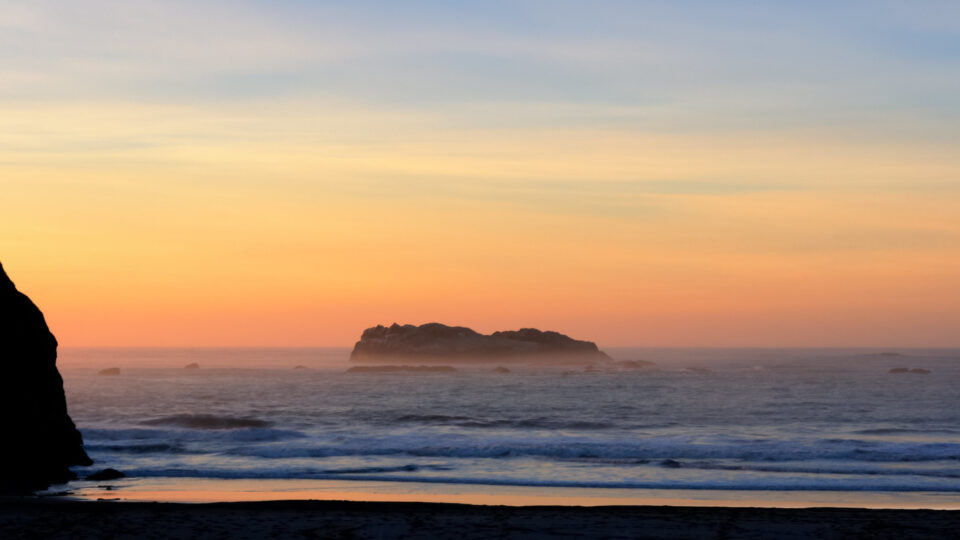
Photo, posted December 30, 2013, courtesy of Derek Finch via Flickr.

Earth Wise is a production of WAMC Northeast Public Radio.
Microplastic Hotspots In The Ocean | Earth Wise

June 4, 2020 By EarthWise Leave a Comment

microplastics pollution

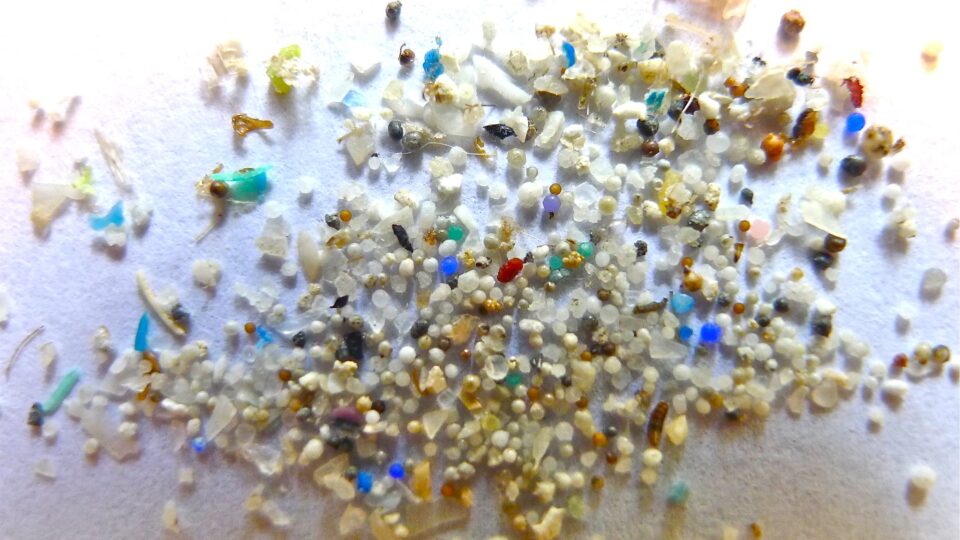
Many of us are aware of the infamous ocean “garbage patches” of floating plastic.  The Great Pacific Garbage Patch is roughly the size of Texas.  But over 10 million tons of plastic waste enter the oceans each year and the floating patches only account for 1% of that total.  The remaining 99% of the plastic ends up in the deep ocean, generally in the form of microplastics – tiny fragments of large plastic debris that have broken down as well as manufactured polyethylene beads used in various products.

According to a new study published in the journal Science, there are actually microplastic hotspots on the ocean floor, formed by deep-sea currents that act as conveyer belts moving the tiny plastic fragments around.  One of these hotspots – in the Tyrrhenian Sea off the west coast of Italy – contained 1.9 million microplastic pieces in just one square meter of seafloor.  This is the highest reported value for any place in the world.

Because of their small size, microplastics can be ingested by organisms across all levels of the marine food chain and eventually find their way into human diets. 

The spatial distribution and ultimate fate of ocean microplastics are strongly controlled by near-bed thermohaline currents.  These are deep-ocean currents driven by differences in water density, which is controlled by temperature and salinity.  Thermohaline currents are known to supply oxygen and nutrients to the flora and fauna found at the ocean bottom.  As a result, deep sea biodiversity hotspots are likely to be in same places where there are microplastic hotspots.

The discovery of these deep- sea hotspots is just another reason why we need behavior and policy interventions to limit the flow of plastics into natural environments.

**********

Web Links

Seafloor microplastic hotspots controlled by deep-sea circulation

Photo, posted September 6, 2012, courtesy of Oregon State University via Flickr.

Earth Wise is a production of WAMC Northeast Public Radio.

Turning CO2 Into Rock

January 6, 2020 By EarthWise Leave a Comment

CO2 rock reduce carbon emissions

As the world continues to struggle to find ways to reduce carbon emissions, there is increasing attention being paid to so-called negative emission technologies (NET), which remove and permanently sequester carbon dioxide from the atmosphere.

The University of Victoria in British Columbia has brought together an international team of experts to explore the possibilities of permanently and safely sequestering CO2 as rock beneath the ocean floor.  The Solid Carbon Project seeks to extract carbon dioxide directly from the air and then, using deep-ocean technology powered by offshore solar and wind energy, inject it into sub-seafloor basalt, where it would mineralize into solid carbonate rock.

When CO2 is injected into porous basalt, a type of volcanic rock, it reacts relatively quickly with minerals to form solid carbonate, thereby permanently removing it from the atmosphere.  Because 90% of the planet’s basalt is located beneath the ocean floor, the deep ocean is the place to do this kind of carbon sequestration.

The team includes experts in ocean science, carbon mineralization, renewable energy, engineering design, and oil-and-gas drilling/injection operations. Other experts are focusing on the social and legal implications of the NET technology.

Over the next four years, the Solid Carbon Project will assess the integration of multiple existing technologies that will be needed to successfully develop this kind of carbon storage.  One of these is the direct air capture technology itself, which will need to be adapted to a renewable energy-powered offshore platform.  The best outcome technologies explored by the project will be selected for a real-world demonstration at Ocean Networks Canada’s observatory site, 9,000 feet underwater in the Cascadia Basin, off the coast of British Columbia.

**********

Web Links

A rock-solid solution for CO2

Photo courtesy of the University of Victoria.

Earth Wise is a production of WAMC Northeast Public Radio.

Primary Sidebar

Recent Episodes

  • An uninsurable future
  • Clean energy and jobs
  • Insect declines in remote regions
  • Fossil fuel producing nations ignoring climate goals
  • Trouble for clownfishes

WAMC Northeast Public Radio

WAMC/Northeast Public Radio is a regional public radio network serving parts of seven northeastern states (more...)

Copyright © 2026 ·