• Skip to primary navigation
  • Skip to main content
  • Skip to primary sidebar

Earth Wise

A look at our changing environment.

  • Home
  • About Earth Wise
  • Where to Listen
  • All Articles
  • Show Search
Hide Search
You are here: Home / Archives for cultivate

cultivate

A Food For The Future | Earth Wise

September 19, 2022 By EarthWise Leave a Comment

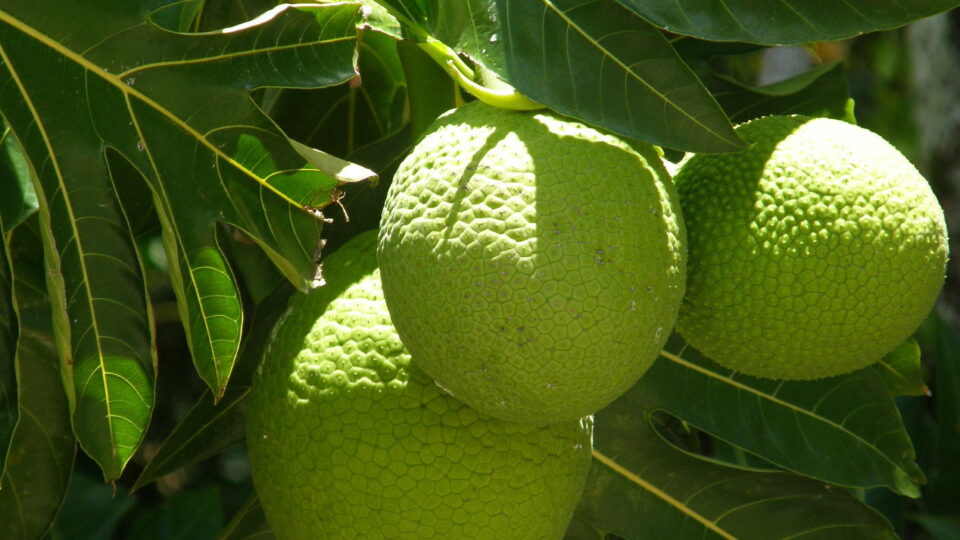
Breadfruit is a climate resilient food for the future

Researchers predict that climate change will negatively impact most staple food crops, including rice, corn, and soybeans.  Therefore, climate resilient food crops – those that are salt, drought, and heat resilient – will have an important role to play in global food security.  Examples of climate resilient crops include quinoa, kernza, amaranth, millet, and tepary beans.    

According to a new study by researchers from Northwestern University, breadfruit – a starchy tree fruit native to the Pacific Islands – will be relatively unaffected by climate change.  Because breadfruit is climate resilient and well-suited to grow in regions with high levels of food insecurity, the research team suggests breadfruit could be a part of the solution to global hunger.

While it has ”fruit” in its name, breadfruit is more like a potato.  It’s starchy and seedless, and is closely related to jackfruit.  Breadfruit is nutrient-rich, and high in fiber, vitamins, and minerals.  It can be steamed, roasted, fried, fermented, and even turned into flour.  People in tropical regions around the world have been eating breadfruit for thousands of years. 

In the study, which was recently published in the journal PLOS Climate, researchers determined the climate conditions necessary to cultivate breadfruit and then looked at how these conditions are predicted to change in the future.  They examined two future climate scenarios: one that reflects high greenhouse-gas emissions and another in which emissions stabilize.

In both scenarios, the regions suitable for breadfruit cultivation were mostly unaffected.  Additionally, the researchers identified new suitable land where breadfruit cultivation could expand.   

As the climate continues to change, breadfruit might soon be on a table near you.

**********

Web Links

Climate-resilient breadfruit might be the food of the future

Photo, posted August 11, 2007, courtesy of Malcolm Manners via Flickr.

Earth Wise is a production of WAMC Northeast Public Radio
Mealworms And Plastic | Earth Wise

January 21, 2020 By EarthWise Leave a Comment

Mealworms and Plastic

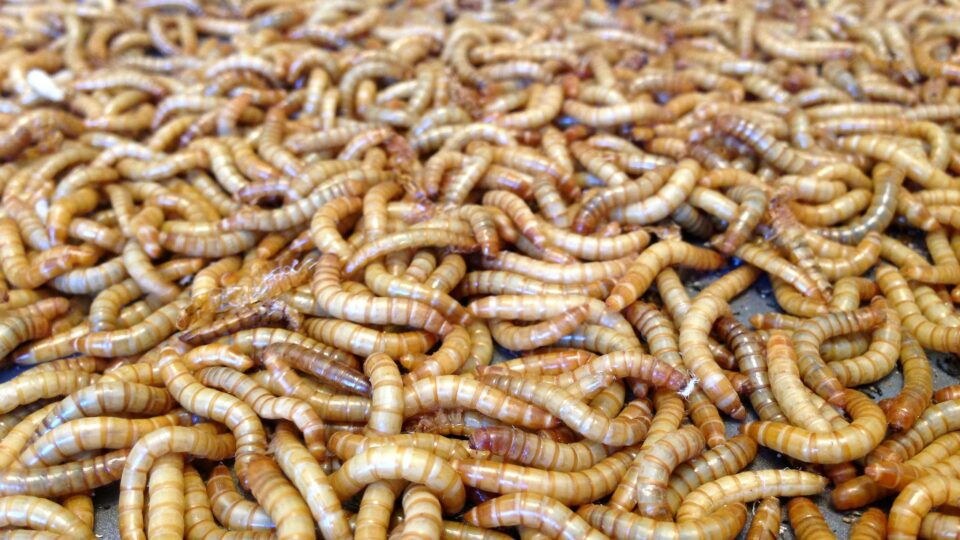
Mealworms are widely cultivated beetle larvae that people feed to pets and to wild birds.  But it turns out, they may have an even more valuable purpose:  they can eat plastic and even plastic containing dangerous chemical additives.

Four years ago, researchers at Stanford discovered that mealworms can actually subsist on a diet of various types of plastic.  They found that microorganisms in the worms’ guts actually biodegrade the plastic.  It might be possible to cultivate the worms using unrecyclable plastic, rather than feeding them grains and fruits.   However, there is the issue of whether it would be safe to feed the plastic-eating worms to other animals, given the possibility that harmful chemicals in plastic additives might accumulate in the worms over time.

Recently, the Stanford researchers studied what happens when the worms ingested Styrofoam or polystyrene.  The plastic commonly used for packaging and insulation typically contains a flame retardant called hexabromocyclododecane, or HBCD.  Studies have shown that HBCD can have significant health and environmental impacts, ranging from endocrine disruption to neurotoxicity.

According to the study, mealworms in the experiment excreted about half of the polystyrene they consumed as tiny, partially degraded fragments and the other half as carbon dioxide.  With it, they excreted the HBCD.  Mealworms fed a steady diet of HBCD-laden polystyrene were as healthy as those eating a normal diet.  And shrimp fed a steady diet of the HBCD-ingesting mealworms also had no ill effects.

It is true that the HBCD excreted by the worms still poses a hazard and must be dealt with in some manner, but mealworms may have a role to play in dealing with unrecyclable plastics like Styrofoam.

**********

Web Links

Stanford researchers show that mealworms can safely consume toxic additive-containing plastic

Photo, posted May 11, 2015, courtesy of Flickr.

Earth Wise is a production of WAMC Northeast Public Radio.

Primary Sidebar

Recent Episodes

  • An uninsurable future
  • Clean energy and jobs
  • Insect declines in remote regions
  • Fossil fuel producing nations ignoring climate goals
  • Trouble for clownfishes

WAMC Northeast Public Radio

WAMC/Northeast Public Radio is a regional public radio network serving parts of seven northeastern states (more...)

Copyright © 2026 ·