• Skip to primary navigation
  • Skip to main content
  • Skip to primary sidebar

Earth Wise

A look at our changing environment.

  • Home
  • About Earth Wise
  • Where to Listen
  • All Articles
  • Show Search
Hide Search
You are here: Home / Archives for continuous

continuous

The East Coast is sinking

March 11, 2024 By EarthWise Leave a Comment

Most of the world’s largest cities are located in coastal regions and coastal regions are on the front lines of the climate crisis.  Human populations continue to migrate towards low-elevation coastal areas at the same time that sea level rise is accelerating.  Coastal communities worldwide are increasingly vulnerable to the dangers of flooding and erosion.  With these hazards occupying a great deal of attention, there has been less attention paid to the dangers of land subsidence.

A recent study by researchers at Virginia Tech and the US Geological Survey using satellite data shows that parts of America’s east coast are sinking, and the culprit is the withdrawal of too much water from the aquifers beneath these coastal areas.

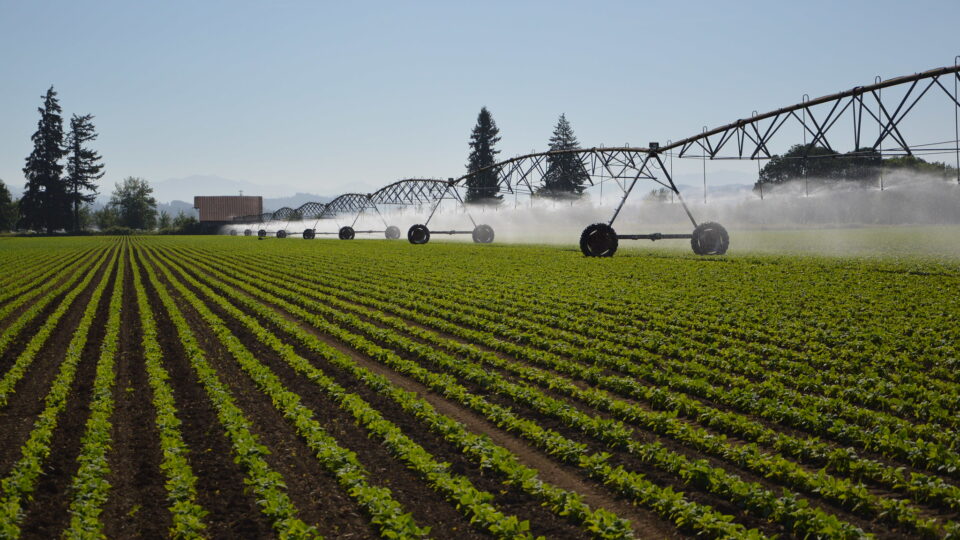
A series of overlapping aquifers extends all the way from New Jersey to Florida along the coast, providing a reliable source of water for drinking, irrigation, and industrial uses.  Even though these areas get regular rainfall, the deeper aquifers can take hundreds or even thousands of years to refill once water is pumped out.  Once water is removed, soils can compress and collapse, causing the land surface to sink.

Cities that were built on drained marshland or on fill soil are especially vulnerable to compaction. 

Seal level rise is slow, but it is insidious and continuous.  Add land subsidence to the mix and effects multiply.  Places like Boston, New York, Washington DC, Roanoke, Savannah, Jacksonville, and Miami, among others, all are increasingly vulnerable to these coastal hazards.  The combined effects of sea level rise and subsidence may even triple the prospects for flooding areas over the next few decades.

**********

Web Links

As Aquifers Are Depleted, Areas Along The East Coast Of The US Are Sinking

Photo, posted August 7, 2015, courtesy of Tracy Robillard / NRCS Oregon via Flickr.

Earth Wise is a production of WAMC Northeast Public Radio
Solar Power At Night | Earth Wise

March 16, 2023 By EarthWise Leave a Comment

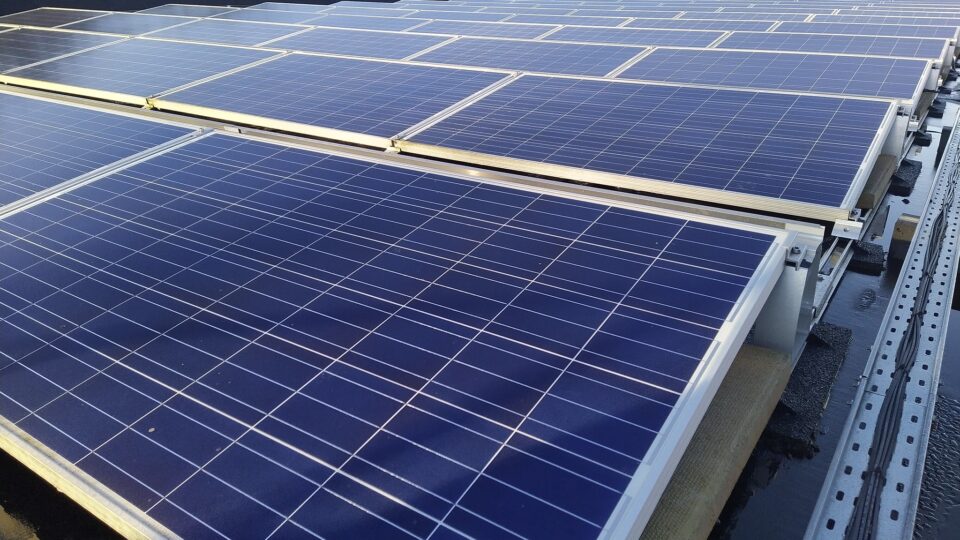
The use of solar power has grown tremendously in recent years as it has declined in price and become far more competitive with other forms of electricity generation.  Its fundamental drawback, of course, is that it only works when the sun is shining.  Solar panels don’t produce any power at night.  That is, until now, apparently.

A team of engineers at Stanford University have developed a new kind of solar cell that is capable of generating at least some electricity at night.  Published in the journal Applied Physics Letters, the research describes a device that can be a continuous renewable power source for both day and nighttime.

The device incorporates a thermoelectric generator that produces electricity from the small difference in temperature between the ambient air and the solar cell itself.  The amount of power produced is far less than the solar cell generates from sunlight, but the device can provide nighttime standby lighting and power in off-grid and mini-grid applications.

Mini-grid applications are independent electricity networks that are used for small populations that may be too isolated to be connected to the main power grid.  Nearly 600 million people in Africa currently live without access to electricity, primarily in rural areas.  A standalone solar system operating independently of any power grid can meet many electricity needs such as phone charging and lighting, but such systems may not be able to handle large electrical need such as powering machinery and agricultural equipment.  Mini-grids are larger installations that can provide power to a small rural community.

With innovations like the new Stanford device, a solar mini-grid may be able to keep running at some level even at night.

**********

Web Links

Solar panels that can generate electricity at night have been developed at Stanford

Photo, posted December 15, 2021, courtesy of Pete via Flickr.

Earth Wise is a production of WAMC Northeast Public Radio
Mauna Loa Eruption And Climate Tracking | Earth Wise

January 9, 2023 By EarthWise Leave a Comment

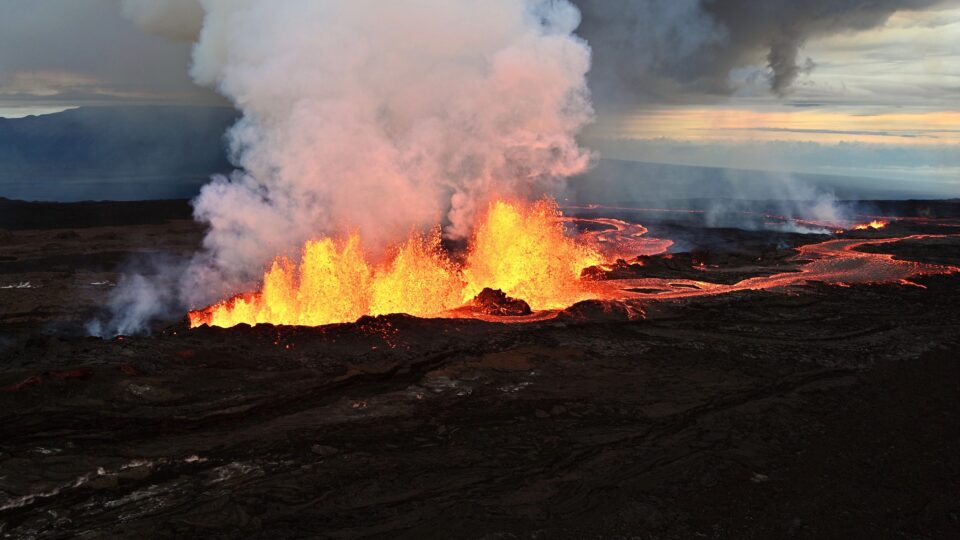
Mauna Loa eruption disrupts global climate tracking

Mauna Loa, the largest active volcano in the world, erupted for the first time in nearly 40 years in late November.  A 124-foot aluminum tower at the top of the volcano has been the site of carbon dioxide measurements for over 60 years but the eruption cut off power to the site, stopping the monitoring.

Carbon dioxide measurements on Mauna Loa began in 1958.  The project was started by geochemist Charles Keeling and eventually taken over by his son Ralph Keeling upon his father’s death in 2005.  It is the longest continuous record of the rising levels of carbon dioxide in the world.

Mauna Loa is an ideal location for carbon dioxide monitoring because it is a remote location away from both carbon dioxide sources like dense population centers and roads, and carbon sinks like areas of heavy vegetation.

There are hundreds of carbon dioxide monitoring stations around the world, including more than 70 operated by the National Oceanic and Atmospheric Administration, so the interruption will not stop global recordkeeping.  But Mauna Loa holds significant symbolism as the first and most frequently sited source of carbon dioxide data.

There have been other interruptions in the measurements.  Federal budget cuts in 1964 paused them for about 3 months.  A 1984 eruption also cut off power to the facility and shut it down for about a month.

When the facility first started operating, the average carbon dioxide concentration was measured at 313 parts per million.   Most recently, levels have peaked at around 421 parts per million, the greatest concentration in at least 4 million years. 

Power will be restored to the Mauna Loa facility and its measurements will resume.

**********

Web Links

Mauna Loa Eruption Threatens a Famous Climate Record

Photo, posted November 29, 2022, courtesy of L. Gallant / USGS via Flickr.

Earth Wise is a production of WAMC Northeast Public Radio.

More Renewables Without Storage In Texas

February 27, 2019 By EarthWise Leave a Comment

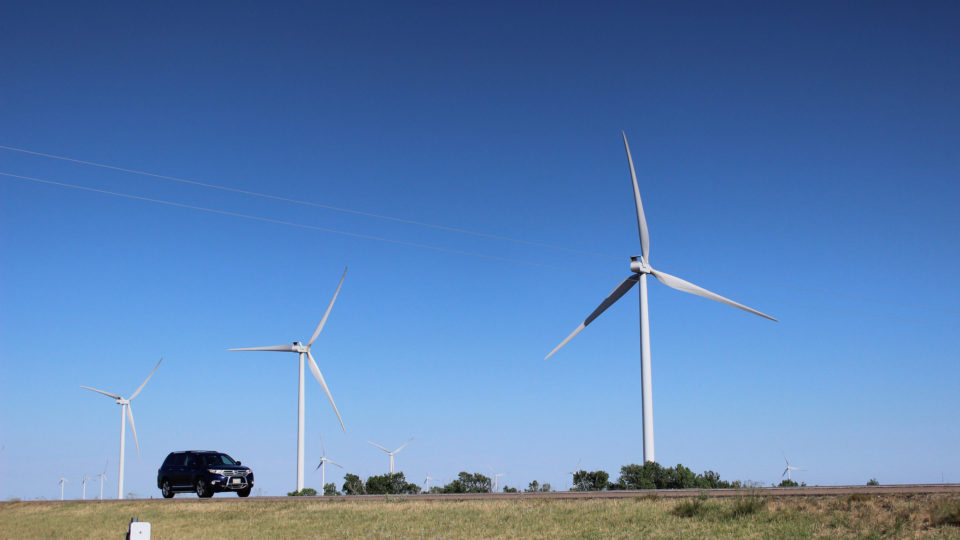
Texas has a Texas-sized appetite for electricity and relies most heavily on natural gas, coal and nuclear power to get it.  But in recent times, wind power has grown tremendously in the Lone Star State and it has already leapfrogged past nuclear power.  Coal could be the next domino to fall.

In the past few years, solar power has become competitive with wind in terms of price.  Texas is a large, coastal state in the sunny southwestern U.S. and has significant solar resources.  As a result, the amount of solar power in Texas is now growing rapidly.

In order for a combination of solar and wind power to address the bulk of electricity demand in Texas, there needs to be a way to provide reliability that these intermittent sources don’t necessarily provide.  Energy storage is a solution that ultimately is likely to be part of most electricity grids, but currently it is still expensive on a utility scale.

A new study from Rice University looked at the complementarity of solar and wind power in Texas.  Complementarity refers to balancing the output of solar and wind systems.  The peak performance of wind and solar occurs at very different times in different regions of the state.  The study suggests that the right mix of solar and wind systems in the right parts of Texas could provide a continuously reliable energy system.  On both a yearly and daily basis, wind and solar power resources in Texas complement each other in terms of peak performance.  It is a matter of locating the solar power and wind farms in the right places.

With the Texas solar industry really starting to boom, there is a real opportunity to integrate far more renewable energy into the Texas grid.

**********

Web Links

More Renewables with Less Energy Storage: Texas Shows How

Photo, posted June 8, 2018, courtesy of Laura Lee Dooley via Flickr.

Earth Wise is a production of WAMC Northeast Public Radio.

Llamas And The Flu

December 21, 2018 By EarthWise Leave a Comment

https://earthwiseradio.org/wp-content/uploads/2018/11/EW-12-21-18-Llamas-and-the-Flu.mp3

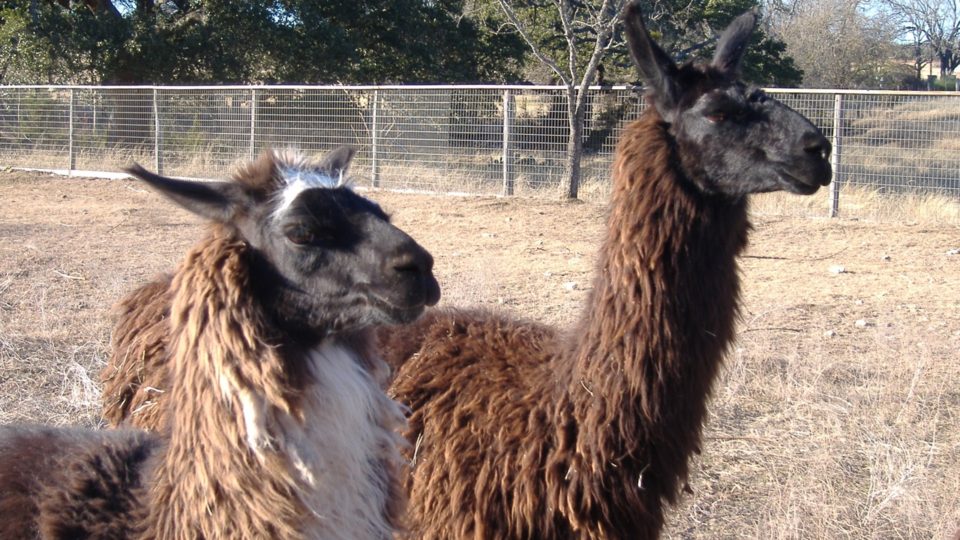
Last year’s flu season was the worst in 40 years.  More than 80,000 people died in the U.S. last year from the flu and its complications.  Flu vaccines are the best preventative we have, but there are still high mortality rates around the world.  Some individuals respond poorly to vaccination, and variations in viruses makes targeting with the optimal antigen very difficult.  The World Health Organization estimates that between 290,000 and 650,000 people die from seasonal flu worldwide each year.

[Read more…] about Llamas And The Flu

Primary Sidebar

Recent Episodes

  • An uninsurable future
  • Clean energy and jobs
  • Insect declines in remote regions
  • Fossil fuel producing nations ignoring climate goals
  • Trouble for clownfishes

WAMC Northeast Public Radio

WAMC/Northeast Public Radio is a regional public radio network serving parts of seven northeastern states (more...)

Copyright © 2025 ·