• Skip to primary navigation
  • Skip to main content
  • Skip to primary sidebar

Earth Wise

A look at our changing environment.

  • Home
  • About Earth Wise
  • Where to Listen
  • All Articles
  • Show Search
Hide Search
You are here: Home / Archives for concentration

concentration

An eco-friendly detergent

May 8, 2025 By EarthWise Leave a Comment

Researchers developing an eco-friendly detergent

Household products such as laundry detergents and dishwasher tablets are an indispensable part of everyday life, but such products contain all sorts of chemicals that have undesirable properties.  Many are difficult to break down when they enter the environment, and some add nutrients that trigger environmentally harmful algal blooms.   The ingredient lists for even what are described as environmentally friendly cleansing products can be filled with lots of polysyllabic chemicals with unknown potential impacts.  Detergents made from harmless stuff are often difficult to make, hard to rinse off, and sometimes potentially damaging to fabrics.

Researchers at Tianjin University in China have developed an environmentally friendly detergent made of tiny wood fibers and corn protein that removes stains from clothes and dishes as well as commercial products.

The researchers combined cellulose nanofibers from wood with zein protein, which is taken from corn, to produce an emulsion.  The cellulose can attract and repel water and can form emulsions and attract various kinds of stains.  The zein protein helps to stabilize the emulsion and trap oils.

They tested the new detergent by cleaning cotton cloth and dishes stained with ink, chili oil, and tomato paste.  They compared the results against commercial laundry detergent and dish soap.  Their new detergent was somewhat less effective than the commercial products when used at 1% concentration but was more effective when used at a 5% concentration. 

The results suggest that this natural detergent could be an efficient, cost-effective, and sustainable alternative to the synthetic cleaning agents that currently dominate the market.

**********

Web Links

Researchers create eco-friendly detergent from wood fiber and corn protein

Photo, posted July 31, 2009, courtesy of Mei Anne Mendoza via Flickr.

Earth Wise is a production of WAMC Northeast Public Radio
Record carbon dioxide levels

June 25, 2024 By EarthWise Leave a Comment

Record carbon dioxide levels

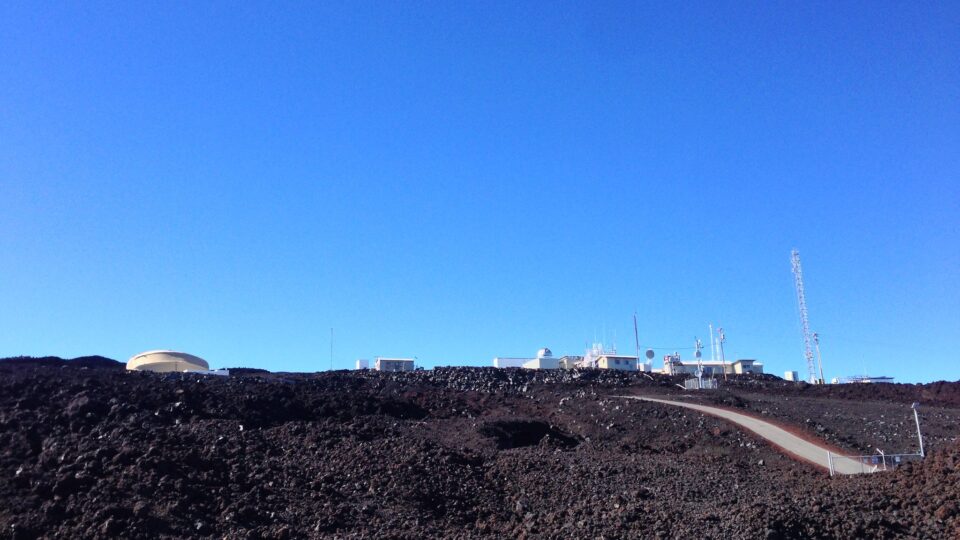
Despite the increasing concern about the warming climate, the period between March of last year and March of this year has set a new record for the largest 12-month gain in atmospheric CO2 concentration ever observed.  The new level, measured at Hawaii’s Mauna Loa Observatory was nearly 5 parts per million higher than last year’s level reaching more than 426 parts per million.

CO2 levels averaged 280 ppm for the past 800,000 years until the Industrial Revolution began and people started burning fossil fuels.  Levels started being measured at Mauna Loa in 1958, when they were 315 ppm.  Between 1958 and 2005, the CO2 level rose to 380 ppm.  Over the past 19 years, the amount of CO2 has continued to rise rapidly and with it, global temperatures.

The record increase in carbon dioxide over this past year is probably associated with the end of an El Niño event.  The previous record increase in 2015-2016 was also associated with El Niño.

But the overall trend is clear and discouraging.  Over the past 66 years, the amount of carbon dioxide in the atmosphere has increased by 35%.  This increase is a result of the burning of coal, oil, and natural gas, as well as the effects of deforestation and livestock agriculture.

Carbon dioxide absorbs heat radiating from the Earth’s surface and re-releases it in all directions, including back toward Earth’s surface.  Without this greenhouse effect, the Earth would actually be frozen.  But people are supercharging the natural greenhouse effect and causing the global temperature to rise.  Global energy demand continues to grow and if we continue to meet that demand mostly with fossil fuels, temperatures will continue to rise.

**********

Web Links

Scripps Institution of Oceanography: CO2 levels have largest 12-month gain

Photo, posted March 3, 2014, courtesy of Jon Roig via Flickr.

Earth Wise is a production of WAMC Northeast Public Radio
Rising fossil fuel emissions

April 22, 2024 By EarthWise Leave a Comment

Fossil fuel emissions are rising globally

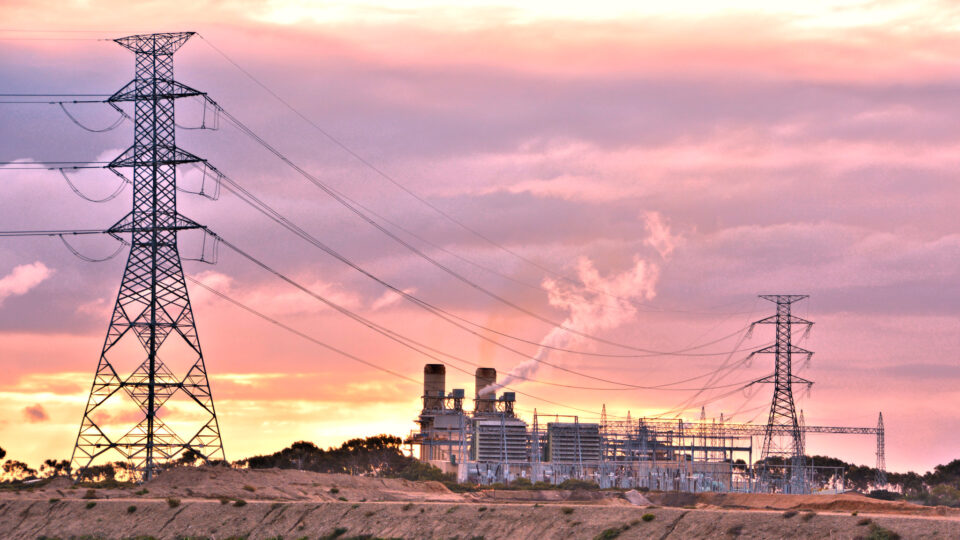
Almost every nation in the world has pledged to reduce carbon dioxide emissions.  There is expanding use of renewable energy sources and growing numbers of electric cars.  But despite all this, carbon dioxide emissions from fossil fuels rose again in 2023, reaching record levels.

The world’s population continues to grow and nations with large, rapidly growing populations are becoming increasingly industrialized and are embracing more and more of the trappings of modern life.  As a result, the global burning of oil, coal, and natural gas is increasing.

Analysis of 2023 date shows that emissions from fossil fuels rose 1.1 percent compared to 2022 levels.  The total fossil fuel emissions in 2023 was 40 billion tons of carbon dioxide. 

Clearly, the world continues to head in the wrong direction in order to limit global warming.  The concentration of carbon dioxide in the atmosphere has increased from about 278 parts per million in 1750 – considered to be the start of the industrial era – to 420 parts per million in 2023.

The rise in heat-trapping carbon dioxide along with other greenhouse gases such as methane is the primary reason that the planet’s temperature is continuing to rise.  The average global surface temperature in 2023 was 1.2 degrees Celsius – or 2.1 degrees Fahrenheit – higher than it was in the NASA baseline period of 1951-1980.  Last year was the hottest year on record.  Unfortunately, the rise in global ocean temperature was even larger, compounding the effects of global warming.

**********

Web Links

Emissions from Fossil Fuels Continue to Rise

Photo, posted June 22, 2020, courtesy of John Morton via Flickr.

Earth Wise is a production of WAMC Northeast Public Radio

Mauna Loa Eruption And Climate Tracking | Earth Wise

January 9, 2023 By EarthWise Leave a Comment

Mauna Loa eruption disrupts global climate tracking

Mauna Loa, the largest active volcano in the world, erupted for the first time in nearly 40 years in late November.  A 124-foot aluminum tower at the top of the volcano has been the site of carbon dioxide measurements for over 60 years but the eruption cut off power to the site, stopping the monitoring.

Carbon dioxide measurements on Mauna Loa began in 1958.  The project was started by geochemist Charles Keeling and eventually taken over by his son Ralph Keeling upon his father’s death in 2005.  It is the longest continuous record of the rising levels of carbon dioxide in the world.

Mauna Loa is an ideal location for carbon dioxide monitoring because it is a remote location away from both carbon dioxide sources like dense population centers and roads, and carbon sinks like areas of heavy vegetation.

There are hundreds of carbon dioxide monitoring stations around the world, including more than 70 operated by the National Oceanic and Atmospheric Administration, so the interruption will not stop global recordkeeping.  But Mauna Loa holds significant symbolism as the first and most frequently sited source of carbon dioxide data.

There have been other interruptions in the measurements.  Federal budget cuts in 1964 paused them for about 3 months.  A 1984 eruption also cut off power to the facility and shut it down for about a month.

When the facility first started operating, the average carbon dioxide concentration was measured at 313 parts per million.   Most recently, levels have peaked at around 421 parts per million, the greatest concentration in at least 4 million years. 

Power will be restored to the Mauna Loa facility and its measurements will resume.

**********

Web Links

Mauna Loa Eruption Threatens a Famous Climate Record

Photo, posted November 29, 2022, courtesy of L. Gallant / USGS via Flickr.

Earth Wise is a production of WAMC Northeast Public Radio.

Converting A Toxin Into An Industrial Chemical | Earth Wise

January 16, 2020 By EarthWise Leave a Comment

Converting toxin into industrial chemical

Nitrogen dioxide is a prominent air pollutant produced by internal combustion engines burning fossil fuels as well as by a variety of industrial processes.  It is a toxic material associated with a number of respiratory illnesses. 

Researchers at the University of Manchester in the UK along with an international team of scientists have developed a new advanced material that can convert nitrogen dioxide from an exhaust gas stream into useful industrial chemical using only water and air.

The material is a metal-organic framework (or MOF) that provides a selective, fully reversible, and repeatable capability to capture nitrogen dioxide.  MOFs are tiny three-dimensional structures that are porous and can trap gases inside as though there were tiny cages.  MOFs have enormous amounts of surface area for their size.  One gram of material can have a surface area as large as a football field.

The material, named MOF-520, can capture nitrogen dioxide at ambient temperatures and pressures and even at low concentration and during flow in the presence of moisture, sulfur dioxide, and carbon dioxide.  Such conditions are typical of the exhaust of internal combustion engines. In fact, the process works best at the typical temperature of automobile exhausts.

Once the nitrogen oxide is absorbed, treating the material with water in air converts it into nitric acid and restores the MOF for additional use.  Nitric acid is the basis of a multi-billion dollar industry with uses including agricultural fertilizers, rocket propellant, and nylon.  Thus, there is great potential for recouping the costs of using the MOF technology and even profiting from it.

It would be great to convert a toxic pollutant into valuable industrial chemicals.

**********

Web Links

Clean air research converts toxic air pollutant into industrial chemical

Photo courtesy of the University of Manchester.

Earth Wise is a production of WAMC Northeast Public Radio.

Primary Sidebar

Recent Episodes

  • An uninsurable future
  • Clean energy and jobs
  • Insect declines in remote regions
  • Fossil fuel producing nations ignoring climate goals
  • Trouble for clownfishes

WAMC Northeast Public Radio

WAMC/Northeast Public Radio is a regional public radio network serving parts of seven northeastern states (more...)

Copyright © 2026 ·