• Skip to primary navigation
  • Skip to main content
  • Skip to primary sidebar

Earth Wise

A look at our changing environment.

  • Home
  • About Earth Wise
  • Where to Listen
  • All Articles
  • Show Search
Hide Search
You are here: Home / Archives for computer modeling

computer modeling

Groundwater loss

December 21, 2023 By EarthWise Leave a Comment

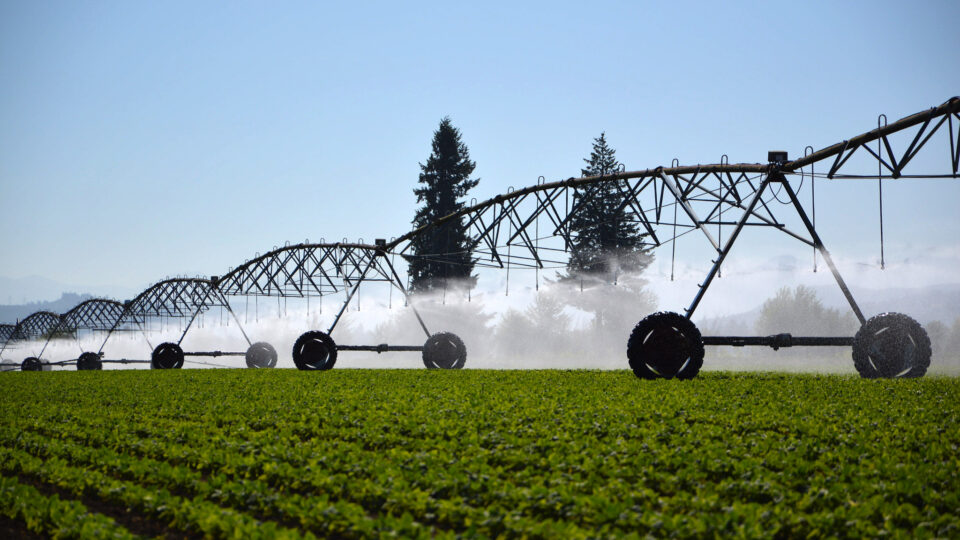
Groundwater is the water found underground in the cracks and spaces in soil, sand, and rock.  It is held in aquifers and bubbles up naturally into springs, streams, and rivers, but also is pumped out for use by people.  Groundwater provides almost half the drinking water in the U.S. and is a main source of water for agriculture.

The world’s supply of groundwater is steadily declining.  The combination of climate change and human population growth is increasingly diminishing groundwater.

A study by the Desert Research Institute published in the journal Nature Communications has mapped the global permanent loss of aquifer storage capacity for the first time.  Computer modeling with advanced machine learning techniques has provided a detailed picture of the world’s groundwater situation.

The study found that global aquifer storage capacity is disappearing at a rate of 10 miles a year, about the size of 7,000 Great Pyramids of Giza.  The loss of groundwater storage is permanent, forever reducing the amount of water that can be captured and stored because the pumping of groundwater can cause the ground surface above to sink, collapsing the space where water can be stored.

About 75% of this subsidence is occurring over cropland and urban regions.  The United States, China, and Iran account for most of the global groundwater storage loss but many other places in the Middle East and Asia are experiencing significant groundwater withdrawal as well.

Most regions of the world do not have monitoring programs for groundwater pumping.  The study underscores the need to better understand this issue on a global scale and take appropriate action before it is too late.

**********

Web Links

Scientists Map Loss of Groundwater Storage Around the World

Photo, posted August 7, 2015, courtesy of NRCS Oregon via Flickr.

Earth Wise is a production of WAMC Northeast Public Radio
cancun airport to tulum private transfer cost

Can We Tow Icebergs To Use Their Water? | Earth Wise

February 23, 2021 By EarthWise Leave a Comment

Using icebergs for freshwater

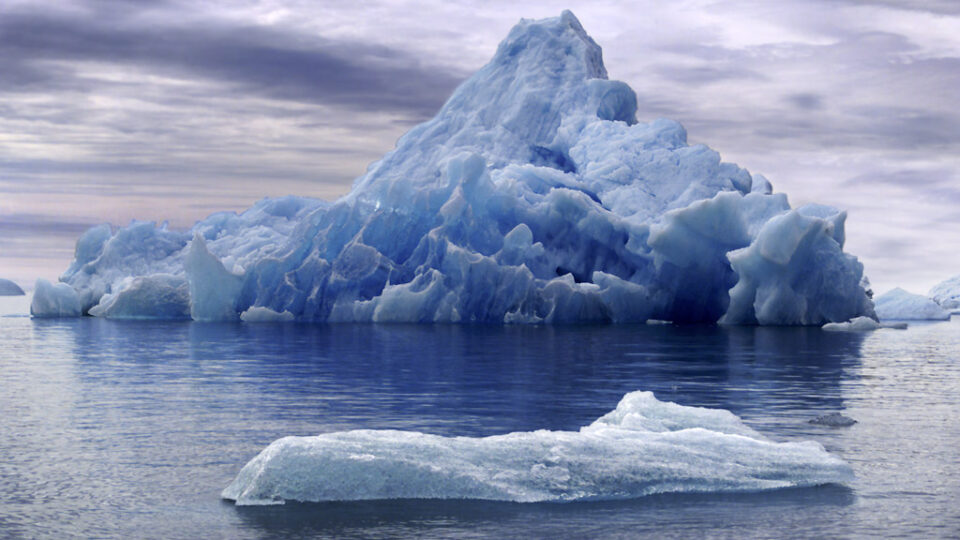
At any given time, there are thousands of icebergs adrift in Antarctica that are hundreds or even thousands of feet across.  For at least fifty years, there has been speculation about whether such icebergs could be towed from the Antarctic to places experiencing freshwater shortages.  The feasibility of such a scheme is still the subject of studies that nowadays include sophisticated computer modeling.

Places like the Persian Gulf, Cape Town, South Africa, and Perth, Australia all experience water shortages and could benefit tremendously from having a large iceberg towed to their waters.

How big an iceberg would it take to quench the thirst of a city like Cape Town?  Computer models show that an iceberg 2,000 feet long and 650 feet thick could produce enough water to supply the city for more than a year.  However, with water temperatures in the 60s in the area, even such a large iceberg would melt away within weeks.  So, to get enough water for a year, it would require a much larger iceberg – one at least a couple of miles long.

Daunting problems include figuring out how many and what sort of ships would be required.  An alternative to such giant icebergs would be finding a way to insulate the icebergs so they don’t melt as quickly, thereby allowing much smaller and more towable icebergs to be harvested.

Beyond these issues, there are the ecological issues of the effects of huge amounts of very cold fresh water affecting local marine ecosystems. 

Despite a wide range of challenges, there is continued interest in the idea of using icebergs as a source of very pure fresh water.  In an increasingly thirsty world, it might someday actually happen.

**********

Web Links

Can icebergs be towed to water-starved cities?

Photo, posted November 1, 2007, courtesy of M A Felton via Flickr.

Earth Wise is a production of WAMC Northeast Public Radio.

Why The Arctic Is Warming So Fast | Earth Wise

April 7, 2020 By EarthWise Leave a Comment

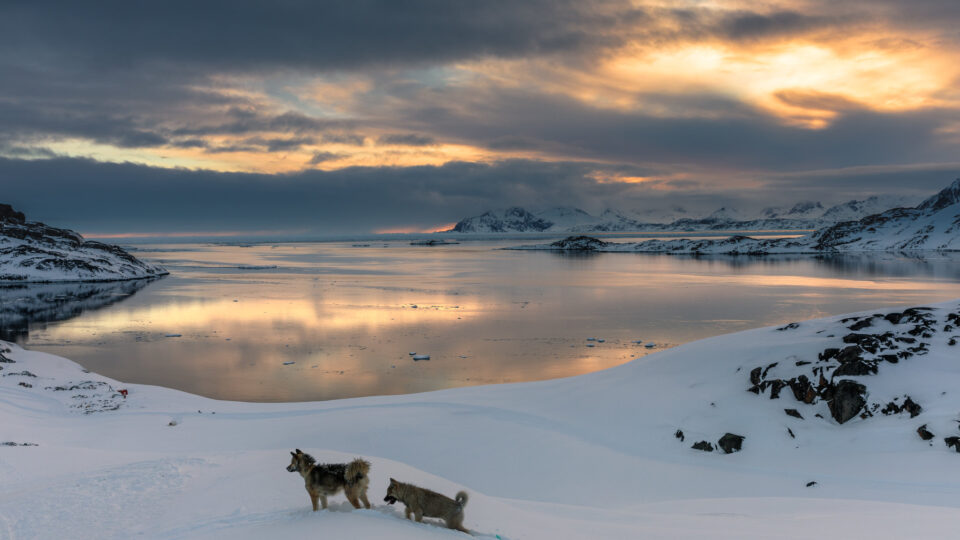
rapid arctic warming

The Arctic has been warming at the fastest rate of any place on Earth.  There have long been observations of amplification of Arctic warming, meaning that its temperature increases have been well above what would be expected from the global temperature rise.

Many climate models have attributed this warming to the melting of sea ice.  As the bright white ice disappears for longer periods of the year, the dark surface waters that are exposed absorb sunlight rather than reflecting it back into space the way the ice does.  This is known as the ice-albedo feedback.  But it does not entirely explain the amount of warming in the Arctic.

Researchers at the Scripps Institution of Oceanography have developed a new theory that helps to explain what is going on.

In the areas of the Arctic Ocean where there is sea ice, the water is actually warmer at depth and colder near the surface.  The deeper waters are fed by the relatively warm Pacific and Atlantic Oceans while the surface water is cooled by the ice.  The increasing temperature difference between surface and deeper water causes a greater upward flow of heat.  This was first observed in research cruises that revealed evidence that the Arctic Ocean water was becoming more turbulent over time.

According to computer modeling, this phenomenon is responsible for about 20% of the amplification of global warming that occurs in the Arctic.

There are multiple ongoing studies looking at the Arctic warming trend.  Other factors that have contributed over time are the presence of chlorfluorocarbons in the atmosphere.   That contribution is waning since the use of CFCs has been phasing out over time.

**********

Web Links

Researchers Find New Reason Why Arctic is Warming So Fast

Photo, posted April 19, 2017, courtesy of Markus Trienke via Flickr.

Earth Wise is a production of WAMC Northeast Public Radio.

Primary Sidebar

Recent Episodes

  • An uninsurable future
  • Clean energy and jobs
  • Insect declines in remote regions
  • Fossil fuel producing nations ignoring climate goals
  • Trouble for clownfishes

WAMC Northeast Public Radio

WAMC/Northeast Public Radio is a regional public radio network serving parts of seven northeastern states (more...)

Copyright © 2026 ·