
• Skip to primary navigation
  • Skip to main content
  • Skip to primary sidebar

Earth Wise

A look at our changing environment.

  • Home
  • About Earth Wise
  • Where to Listen
  • All Articles
  • Show Search
Hide Search
You are here: Home / Archives for closing

closing

Golf courses gone wild

March 18, 2024 By EarthWise Leave a Comment

Rewilding golf courses is catching on

Golf courses are a significant burden on the environment.  The US has 16,000 golf courses which use 1.5 billion gallons of water a day and are treated with 100,000 tons of nitrogen, phosphorus, and potassium each year.  In recent years, the golf industry has taken steps to lighten its environmental toll by using less water, introducing pollinator-friendly plants, and decreasing pesticide and fertilizer use.  The US has more golf courses than any other country, accounting for 42% of all courses worldwide.

There is really an oversupply of golf courses and, as a result, more golf courses have closed than have opened since 2006.  Most closed golf courses end up in the hands of commercial or residential developers, but some of them are allowed to return to nature.

For this to happen, there has to be a willing seller and, more importantly, a conservation-minded buyer who can afford both to purchase the land and to restore it to a natural state.  There have been 28 former golf courses transformed into public green spaces between 2010 and the end of 2022.  But that number seems to be growing.

In 2023, the former Cedar View Golf Course on the eastern shore of Cayuga Lake in upstate New York was bought by the Finger Lakes Land Trust.  In California, places like Santa Barbara, Marin County, and even Palm Springs have all undertaken the transformation of former golf courses into public parklands.

Rewilding a golf course is undoubtedly a disappointment to local golfers, but it can bring big benefits to animals, plants, and people. 

**********

Web Links

After Shutting Down, These Golf Courses Went Wild

Photo, posted October 19, 2016, courtesy of Cabo Girao via Flickr.

Earth Wise is a production of WAMC Northeast Public Radio
Last New York Coal Plant Closing | Earth Wise

April 13, 2020 By EarthWise Leave a Comment

closing coal power plants

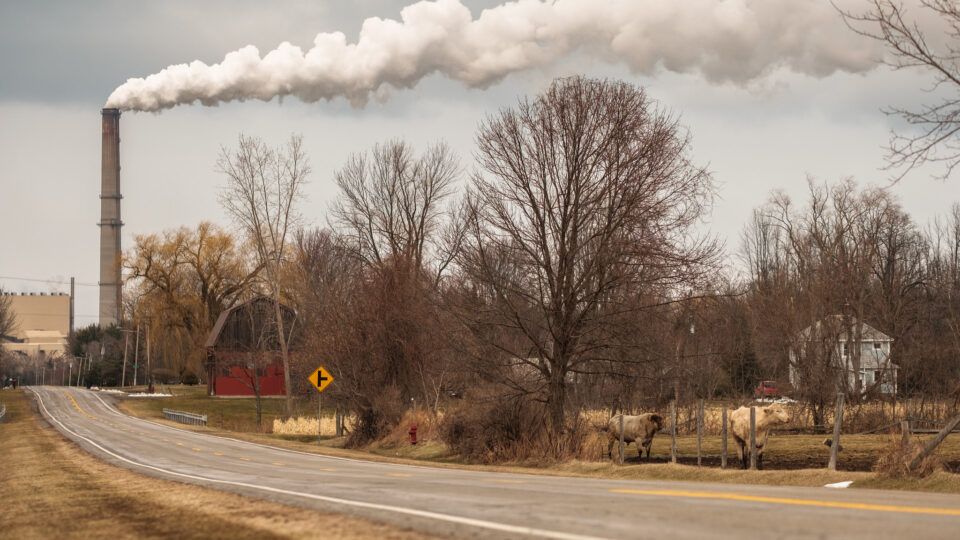
The last coal-fired power plant in New York State is closing.  The plant, located in Barker, about an hour’s drive from Buffalo, employs 44 people.  The plant’s closure is an early test of New York’s new climate law, which is one of the most ambitious in the country.  The law is supposed to transform the state’s energy grid to carbon-free by 2040. 

Coal plants across the country are going offline, priced out by natural gas and targeted by regulations and incentives aimed at reducing greenhouse gas emissions.  Coal plant closures bring common challenges:  lost tax revenues and jobs as well as efforts to retrain workers and clean up sites.  Every plant has a specific place in a community, and each community has its own story.

The new climate law is supposed to create thousands of new jobs, including high-paying union jobs like the ones the employees in Barker are losing.  But jobs are scarce in the northwest corner of the state where Barker is located.

The state government has recently issued rules that would make it easier to get permission to build renewable energy sites, including wind turbines and solar farms, allowing applicants to bypass zoning rules and other local regulations.  But residents of rural towns have environmental and aesthetic concerns about these potential new energy plants.

In 2010, the United States had 580 coal-fired power plants providing 45% of the country’s electricity. By March 2018, there were fewer than 350 plants and coal’s market share had dropped to 30%.  At this point, there are about 224 plants producing 18% of the country’s power.  The writing is on the wall for coal power.

**********

Web Links

New York’s Last Coal-Fired Power Plant Is Closing

Photo, posted March 13, 2018, courtesy of Joed Viera via Flickr.

Earth Wise is a production of WAMC Northeast Public Radio.

Primary Sidebar

Recent Episodes

  • An uninsurable future
  • Clean energy and jobs
  • Insect declines in remote regions
  • Fossil fuel producing nations ignoring climate goals
  • Trouble for clownfishes

WAMC Northeast Public Radio

WAMC/Northeast Public Radio is a regional public radio network serving parts of seven northeastern states (more...)

Copyright © 2026 ·