• Skip to primary navigation
  • Skip to main content
  • Skip to primary sidebar

Earth Wise

A look at our changing environment.

  • Home
  • About Earth Wise
  • Where to Listen
  • All Articles
  • Show Search
Hide Search
You are here: Home / Archives for climates

climates

Planting trees to cool the planet

July 16, 2025 By EarthWise Leave a Comment

Planting lots of trees is one of many strategies being pursued to combat climate change. Forests absorb carbon dioxide, provide shade, and help regulate temperatures. They also support biodiversity and improve air and water quality.

According to a new study by researchers from the University of California – Riverside, restoring forests to their pre-industrial extent could reduce global average temperatures by 0.34 degrees Celsius. That’s equivalent to about 25% of the warming the Earth has already experienced.

The study models restoring 4.6 million square miles of forest.  While previous studies have focused on the role trees play in removing carbon, this research adds that trees also alter atmospheric chemistry in ways that boost their cooling impact.

Trees release natural chemicals called BVOCs – biogenic volatile organic compounds – which interact in the atmosphere to form particles that reflect sunlight and promote cloud formation. These effects enhance the cooling impact of forests, especially in climate models that take these chemical reactions into account.

But not all reforestation is created equal. The benefits of reforestation vary by region, with tropical forests offering stronger cooling and fewer drawbacks.  Importantly, the researchers emphasize that meaningful climate benefits don’t require restoring every lost forest. Small, localized efforts can still shift regional climates.

While forest restoration can meaningfully aid climate efforts, the researchers stress that it must complement – not replace – fossil fuel reductions.

**********

Web Links

Does planting trees really help cool the planet?

Photo, posted May 20, 2005, courtesy of Ben Britten via Flickr.

Earth Wise is a production of WAMC Northeast Public Radio
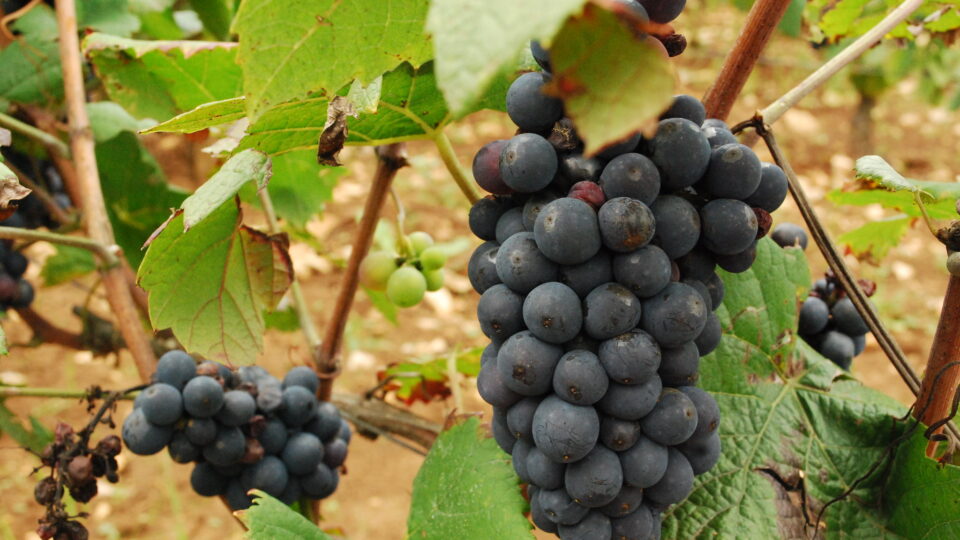
Winegrowing regions and climate change

April 29, 2024 By EarthWise Leave a Comment

Climate change will impact winegrowing regions around the world

Grapes grown to make wine are sensitive to climate conditions including temperatures and amount of rainfall.  The warming climate is already having visible effects on yields, grape composition, and the quality of wine.  This has significant consequences on the geography of wine production and is of major concern for the $350 billion global industry.

Winegrowing regions are mostly at the mid-latitudes where temperatures are warm enough to allow grapes to ripen but not excessively hot.  The climates are relatively dry so that fungal diseases are not rampant.

Because of the warming climate, harvesting in most vineyards now begins two or three weeks earlier than it did 40 years ago and this affects the grapes and the resultant wines.  Temperature changes affect acidity, wine alcohol, and aromatic signatures.

If global temperature rise crosses the 2-degree level, 90% of all traditional winegrowing areas throughout Spain, Italy, Greece, and southern California may become unable to produce high-quality wines.  Conversely, areas of northern France, the states of Washington and Oregon, British Columbia, and Tasmania will see improved conditions for producing quality wines. 

As the climate warms, winegrowers face new challenges such as the emergence of new diseases and pests as well as an increasing number of extreme weather events.  Wine producers are using more drought-resistant grape varieties and are adopting management methods that better preserve soil water.

The changing climate poses many threats to the quality of wines produced in traditional vineyards.  In the future, the wine industry may look very different in terms of where and how the best wines are produced. 

**********

Web Links

A global map of how climate change is changing winegrowing regions

Photo, posted November 14, 2008, courtesy of Curtis Foreman via Flickr.

Earth Wise is a production of WAMC Northeast Public Radio

Tick-Borne Pathogens In Canada | Earth Wise

December 27, 2022 By EarthWise Leave a Comment

Ticks spreading disease in Central Canada

Measuring only three to five millimeters in size, tiny ticks are a big problem.  They are widely distributed in many parts of the world, especially in warm and humid climates.  Ticks are arachnids – not insects – meaning they’re more closely related to spiders than to flies or mosquitos.  They are external parasites that feast on the blood of birds, reptiles, amphibians, and mammals – including humans.

In the United States, ticks are responsible for spreading potentially life-threatening infectious diseases.  According to estimates from the Centers for Disease Control and Prevention, ticks infect more than 300,000 people with Lyme disease in the U.S. every year, and the numbers continue to rise.  Other common tick-borne diseases include anaplasmosis, babesiosis, Rocky Mountain Spotted Fever, and powassan encephalitis.

Ticks are becoming a problem in Canada as well.  According to a new study by researchers from McGill University and the University of Ottawa, tick-borne pathogens are on the rise in Central Canada – a region where ticks were never previously detected. 

In the study, the researchers collected ticks across Ontario and Quebec.  They found that five emerging pathogens were present across their study sites, including the pathogens that cause Lyme disease and babesiosis.  The researchers also found that pathogens can transmit in different ways.  Typically, pathogens are transmitted to a tick after feeding from the blood of an infected host, like a small mammal.  But the research team found evidence of pathogens that could be directly transmitted from adult female ticks to larval ticks.

According to the researchers, more comprehensive testing and tracking is needed to detect the spread and risks of tick-borne pathogens to humans and wildlife in Canada.

**********

Web Links

Tick-borne pathogens increasingly widespread in Central Canada

Photo, posted May 4, 2009, courtesy of Jerry Kirkhart via Flickr.

Earth Wise is a production of WAMC Northeast Public Radio
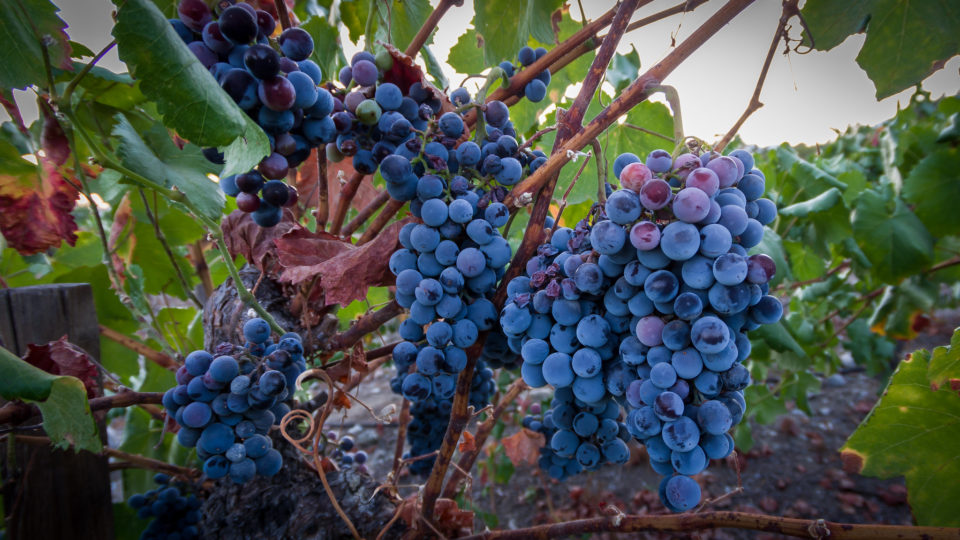
Scandinavian Wine

December 20, 2019 By EarthWise Leave a Comment

The warming climate is creating some unexpected entrepreneurial opportunities.  Many places that have traditionally dominated the wine industry are starting to be worried that the local climates that made them ideal for vineyards are changing and becoming much less ideal.  On the other hand, places where wine-making was regarded as a losing proposition are becoming much more hospitable.  A prime example is Scandinavia.

Nordic vintners are increasingly convinced that they can develop thriving commercial operations in what used to be places that are too cold for successful wine-making.

Denmark now has 90 commercial vineyards, up from just two 15 years ago.  Forty vineyards have sprung up in Sweden.  About a dozen vineyards are now operating as far north as Norway.

Many of these Nordic vineyards are in the startup stage and are tiny compared with the established wineries of Europe.  Europe has 10 million acres of vineyards, which is enough to cover almost the entire country of Denmark.  At the moment, there are only about 1,000 acres of vineyards in Denmark and Sweden.

But, looking forward, Scandinavia’s climate is forecast to be more like northern France, as regional temperatures climb as much as 10 degrees Fahrenheit.  Over the past decade, warming has produced milder winters, a longer growing season, and even a small but rising number of award-winning Scandinavian wines.

Meanwhile, traditional wine-growing regions are also dealing with climate change.  Winemakers in France, for example, are experimenting with grapes from warmer countries like Tunisia to see if they can retain the tastes and yields that are the basis of a multibillion-dollar wine industry.  Spanish and Italian winemakers are planting grapes higher up on mountainsides or on shaded north-facing slopes to preserve the quality of their wine.

**********

Web Links

Scandinavian Wine? A Warming Climate Tempts Entrepreneurs

Photo, posted August 24, 2019, courtesy of Ron Reiring via Flickr.

Earth Wise is a production of WAMC Northeast Public Radio.

Widespread Local Extinctions

January 17, 2017 By EarthWise

https://earthwiseradio.org/wp-content/uploads/2016/12/EW-01-17-17-Widespread-Local-Extinctions.mp3

Plants and animals have evolved over time to live in specific environmental niches.  As the climate warms, parts of the ranges in which they live may no longer offer the conditions under which they can thrive.  Species can respond to these changes in three ways:   they can adapt to new conditions by undergoing niche shifts; they can relocate to better conditions, such as by moving to higher elevations or latitudes; or they can locally go extinct.

[Read more…] about Widespread Local Extinctions

Primary Sidebar

Recent Episodes

  • An uninsurable future
  • Clean energy and jobs
  • Insect declines in remote regions
  • Fossil fuel producing nations ignoring climate goals
  • Trouble for clownfishes

WAMC Northeast Public Radio

WAMC/Northeast Public Radio is a regional public radio network serving parts of seven northeastern states (more...)

Copyright © 2026 ·