• Skip to primary navigation
  • Skip to main content
  • Skip to primary sidebar

Earth Wise

A look at our changing environment.

  • Home
  • About Earth Wise
  • Where to Listen
  • All Articles
  • Show Search
Hide Search
You are here: Home / Archives for climate conditions

climate conditions

Why are bees making less honey?

February 8, 2024 By EarthWise Leave a Comment

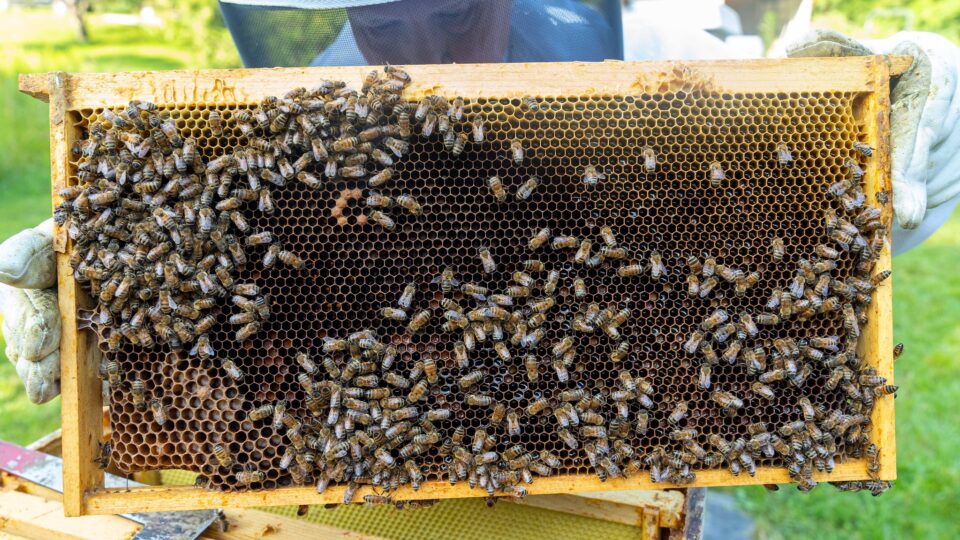
Honey bees are making less honey in the United States

Scientists have been sounding the alarm on the global struggle of pollinators for a long time.  According to the United Nations, nearly 35% of the invertebrate pollinator species, such as bees and butterflies, are facing extinction. And since 75% of the world’s food crops depend on pollination to some extent, the decline of pollinators poses a major threat to global food security.

Honey bees are among the struggling pollinators.  Honey bee colonies in the United States have experienced annual population declines since 2006.  But in addition to there being fewer bees, the bees that remain are also making less honey.  In fact, honey yields in the United States have been declining since the 1990s. 

A new study by researchers from Penn State University has solved some of the mystery.  Using five decades of data across the United States, the research team analyzed the factors that could be affecting the number of flowers growing in different regions, which, in turn, affects the amount of honey produced by bees. 

In the study, which was recently published in the journal Environmental Research, the scientists found that climate conditions and soil productivity were two of the biggest factors in estimating honey yields.  States in both warm and cool regions produced higher honey yields when they had productive soils.  These two factors set a baseline production level of honey, while herbicide use, weather, and land use changes influenced how much honey was produced in a given year. 

The study’s findings  provide valuable insights that should help beekeepers, growers, and land managers better support honey bees.

**********

Web Links

Why are bees making less honey? Study reveals clues in five decades of data

Photo, posted August 30, 2021, courtesy of Brandon O’Connor / NRCS via Flickr.

Earth Wise is a production of WAMC Northeast Public Radio
Fire And Ice | Earth Wise

January 17, 2022 By EarthWise Leave a Comment

As the climate changes, fire and ice are related

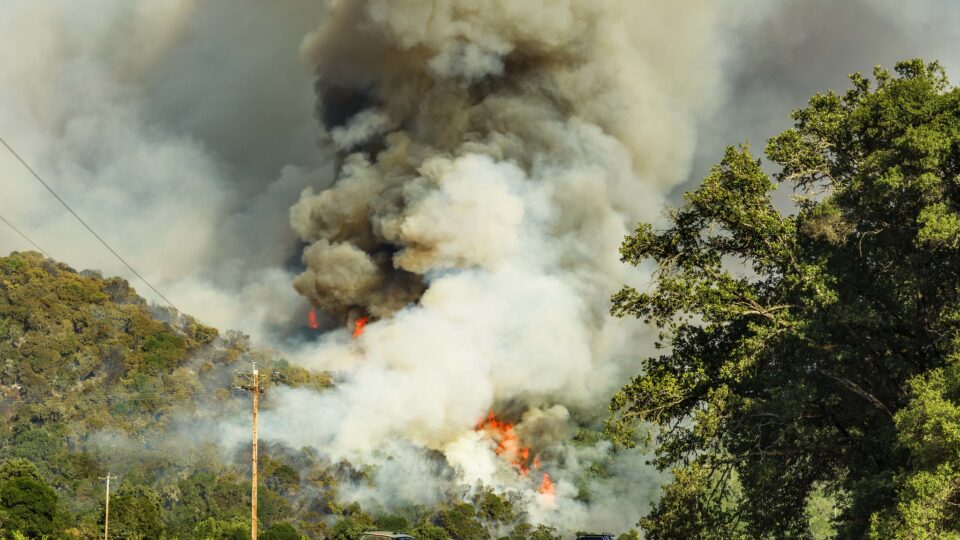
In recent years, there have been countless stories about the effects of the changing climate.  Many of those stories have been about the dwindling sea ice in the Arctic and many others have been about the worsening wildfires in the western United States.   According to a recent study published by the Pacific Northwest National Laboratory, those two things are very much related.

As sea ice in the Arctic melts from July to October, sunlight warms the surrounding land and sea surfaces.  The resulting differences in air pressure create and strengthens a vortex in the atmosphere above the heated area which spins counterclockwise like a cyclone.

The powerful vortex pushes the polar jet stream out of its typical pattern and diverts moist air away from the western United States.  With the jet stream moved off its usual course, a second vortex, this time spinning clockwise, forms under the ridge of the polar jet stream above the Western U.S.  This second vortex brings with it clear skies and dry conditions:  fire-favorable weather.

Arctic sea ice has continually declined at least since the late 1970s.  It is predicted that there will be periods of entirely iceless Arctic waters before the 2050s.  In turn, conditions in the already fire-ravaged West are likely to be further exacerbated.  More than three million acres have burned across California alone during the 2021 wildfire season.

Climate conditions in one part of the world can, over time, influence climate outcomes thousands of miles away.  The research at Pacific Northwest Laboratory reveals how regional land and sea surface warming caused by Arctic ice melting can trigger hotter and drier conditions in the West later in the year.

**********

Web Links

Fire and Ice: The Puzzling Link Between Western Wildfires and Arctic Sea Ice

Photo, posted July 28, 2018, courtesy of Bob Dass via Flickr.

Earth Wise is a production of WAMC Northeast Public Radio.

Primary Sidebar

Recent Episodes

  • An uninsurable future
  • Clean energy and jobs
  • Insect declines in remote regions
  • Fossil fuel producing nations ignoring climate goals
  • Trouble for clownfishes

WAMC Northeast Public Radio

WAMC/Northeast Public Radio is a regional public radio network serving parts of seven northeastern states (more...)

Copyright © 2026 ·