• Skip to primary navigation
  • Skip to main content
  • Skip to primary sidebar

Earth Wise

A look at our changing environment.

  • Home
  • About Earth Wise
  • Where to Listen
  • All Articles
  • Show Search
Hide Search
You are here: Home / Archives for clearing

clearing

Forest-based agroforestry

July 30, 2025 By EarthWise Leave a Comment

Exploring forest-based agroforestry as a natural climate solution

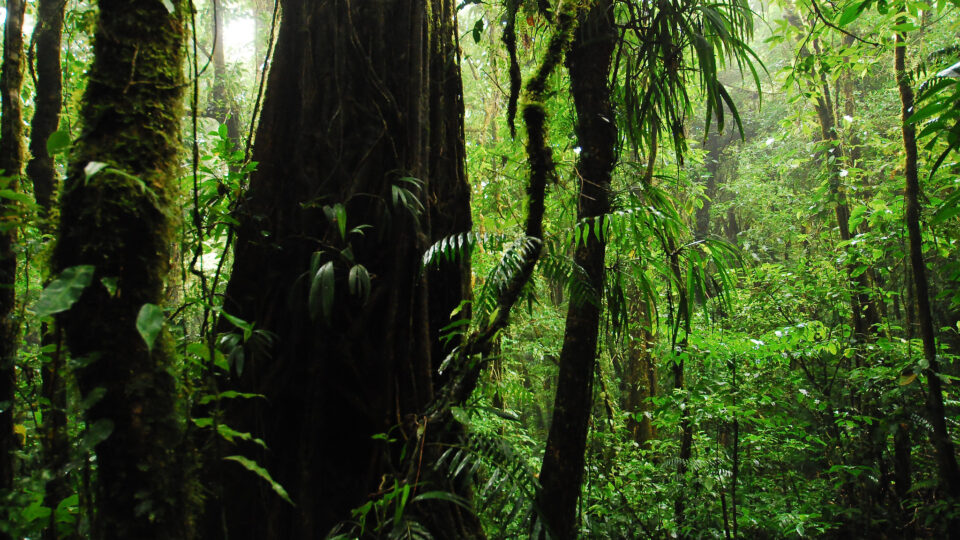
Tree plantings have become a go-to climate solution for governments and conservation groups due to the carbon-storing potential of trees.  While planting new trees on open farmland would help capture additional carbon, a new study led by scientists from Yale School of the Environment suggests a powerful alternative: forest-based agroforestry.

Instead of clearing land for crops or starting fresh with new trees, forest-based agroforestry (or FAF) brings agriculture into existing forests.  Think fruits, nuts, and medicinal plants, for example, grown sustainably under a forest canopy – all while maintaining biodiversity and storing carbon.

According to the researchers, human activity in forests is often seen as harmful. But for thousands of years, Indigenous and local communities have managed forests in ways that actually strengthen them.

The study, which was recently published in the journal Nature Climate Change, found that FAF not only rivals tree planting in terms of climate benefits, but it can also generate income and support cultural practices tied to the land.

Despite these benefits, forest-based agroforestry receives far less funding and policy support due to two key misconceptions. It’s frequently confused with industrial systems focused on global commodity crops, and results from tropical regions are wrongly assumed to apply to temperate and boreal forests.

The researchers recommend including FAF in agroforestry policies, clearly distinguishing it from harmful industrial practices, and expanding research on FAF in temperate and boreal regions to guide better land management.

Forest-based agroforestry appears to be a natural climate solution hiding in plain sight.

**********

Web Links

Agriculture in Forests Can Provide Climate and Economic Dividends

Photo, posted May 8, 2023, courtesy of Preston Keres / USDA Forest Service via Flickr.

Earth Wise is a production of WAMC Northeast Public Radio
Threats to the Amazon Rainforest

August 1, 2024 By EarthWise Leave a Comment

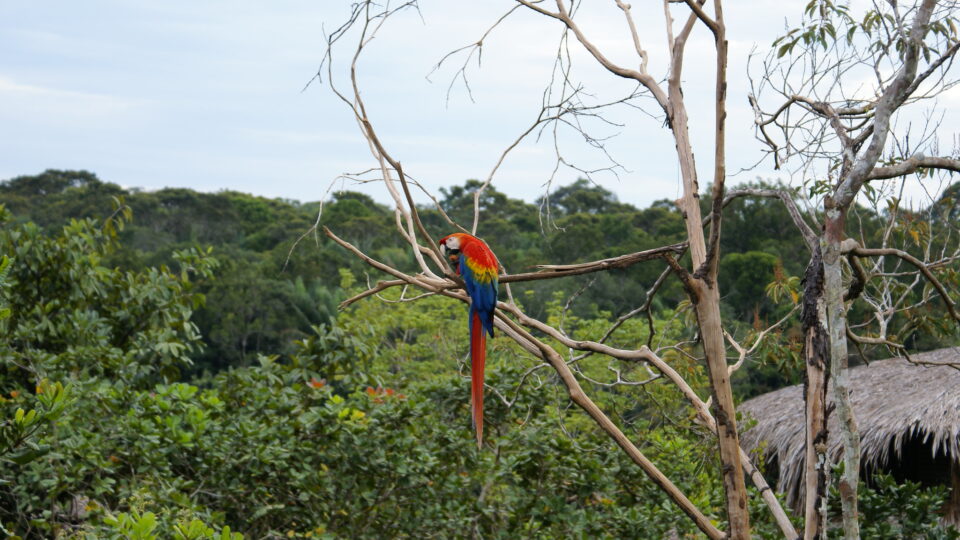
Brazil has made great progress in reducing deforestation in its Amazon Rainforest.  In 2023, the rate of deforestation in Brazil dropped by 50% over the previous year. This was the result of the efforts by conservation-minded President Luiz da Silva, who replaced Jair Bolsonaro, a big proponent of deforestation.  Da Silva’s government has cracked down on land clearing by farmers and ranchers.

In the first quarter of this year, deforestation decreased by 40% over the previous year’s quarter.   Deforestation levels are the lowest they’ve been in six years, although the amount of forest cleared in the period was still nearly 200 square miles.

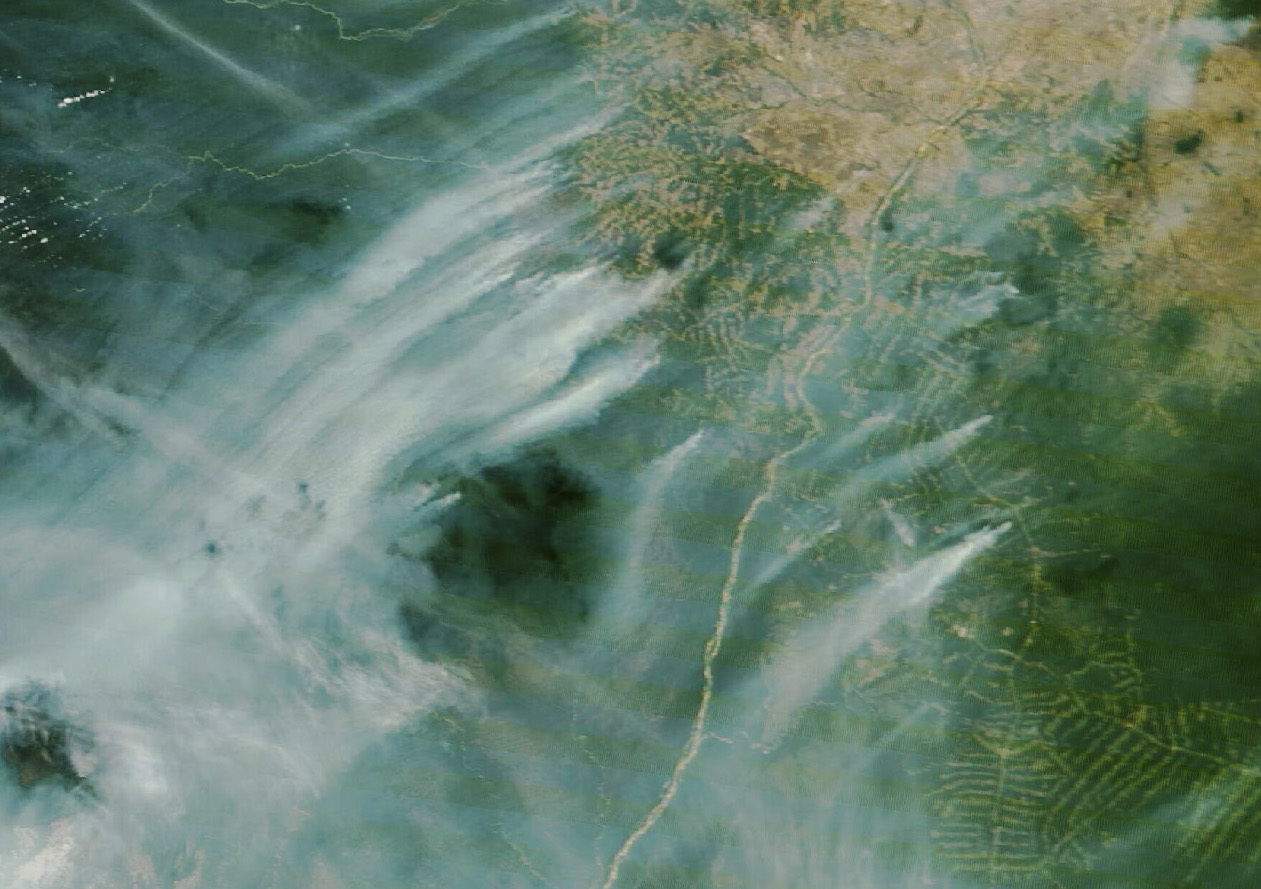
Unfortunately, the Amazon Rainforest is facing another growing threat:  climate change.  Because of pervasive drought and increasing temperatures, the number of wildfires in the region have hit a 20-year high.

According to satellite data from the national space agency, from January through June, Brazil recorded 13,489 wildfires in the Amazon.  That is 61% more fires than during the same period last year.  And the wildfire season has yet to reach its peak, which usually is in August or September.

Many of these fires begin in pastures or recently cleared rainforest, but then spread into the surrounding rainforest areas.  Many are huge fires.  Hundreds of square miles of rainforest have been consumed by fire, comparable in size to the areas deforested by farmers and ranchers.

Going forward, worsening wildfires could reverse the gains being made by the government’s deforestation policies.  This could not only threaten forest protection, but also weaken public support for the government’s commitment to protecting the region.

**********

Web Links

Brazil Is Seeing a Record Number of Wildfires This Year

Photo, posted January 26, 2018, courtesy of Chris Parker via Flickr.

Earth Wise is a production of WAMC Northeast Public Radio

Koalas Are Endangered | Earth Wise             

March 22, 2022 By EarthWise Leave a Comment

Koalas are endangered

The koala is one of the world’s most iconic animal species and is widely considered to be the symbol of Australia.   Koalas are not bears; they are marsupials. 

Being iconic symbols is not sufficient to prevent koalas from going extinct.  In the 1920s, hundreds of thousands of koalas were shot for the fur trade, greatly reducing their population.

More recently, drought, bush fires, disease, and habitat loss have drastically reduced the numbers of koalas.  Since 2018, there has been a 30% decline in koala populations across Australia.  It is difficult to get an accurate count of the animals because they don’t move around much, and they live high up in tree canopies where they are hard to spot.

 Estimates are that the koala population has dropped from between 45,000-82,000 in 2018 to between 32,000-58,000 in 2021.  The koala is now extinct in 47 Australian electorates and in many others, there are only handfuls of animals remaining.   The population decline was accelerated by devastating wildfires in late 2019 into early 2020.  Some estimates are that koalas could be extinct by 2050.  Conservation organizations around the world have been demanding greater protection for koalas for years.

Given this dire situation, the Australian government recently declared the koala an endangered species, reclassifying it from being a vulnerable species.  The government plans to adopt a recovery plan that will include new laws protecting koalas and their natural woodland environments.  The details of the plan remain to revealed.

According to the Australian Koala Foundation, however, the new status of the koala means very little in and of itself.  If the clearing of the koala habitat continues, the species has little chance of surviving in the wild.

**********

Web Links

‘In rapid decline’: Australia has lost 30% of its koalas in just 3 years, foundation says

Australia Declares Koalas an Endangered Species

Photo, posted September 18, 2019, courtesy of Guido Konrad via Flickr.

Earth Wise is a production of WAMC Northeast Public Radio.

Restoring Tropical Forests | Earth Wise

September 10, 2020 By EarthWise Leave a Comment

forest restoration

Tropical forests store more than half of the world’s above-ground carbon.  For this reason, deforestation is one of the greatest threats to global climate regulation.   Once forests are degraded through partial clearing and agricultural conversion, they are often perceived as no longer having much ecological value even though degraded forests still provide important ecosystem services despite no longer storing as much carbon.

As a result, once forests have been degraded, they tend to be seen as prime candidates for full conversion to agricultural plantations.   But this is not actually the case.

An international team of scientists, including researchers from Arizona State University’s Center for Global Discovery and Conservation Science, has provided the first long-term comparison of above-ground carbon recovery rates between naturally regenerating and actively restored forests in Southeast Asia.

First of all, the research shows that allowing forests to regenerate naturally results in significant amounts of restored above-ground carbon storage.  It is definitely worthwhile to allow forests to recover rather than giving up on them and putting the land to other uses.

But more importantly, the researchers found that forest areas that undergo active restoration recover their carbon-storing ability 50% faster than naturally recovering forests.

Restoration methods include planting native tree species and thinning vegetation around saplings to improve their chances of survival.   

These findings suggest that restoring tropical forests is a viable and highly scalable solution to regaining lost carbon stocks on land.  What is needed is sufficient incentive to engage in active forest restoration.  The current price of carbon is not sufficient to pay for restoration, but as the climate crisis intensifies, this is likely to change.

**********

Web Links

Tempe to Hawaii: ASU professors teach Hawaiian youth about coral reef conservation

Photo, posted May 22, 2008, courtesy of Eric Chan via Flickr.

Earth Wise is a production of WAMC Northeast Public Radio.

Deforestation-Free Palm Oil

July 10, 2018 By EarthWise Leave a Comment

https://earthwiseradio.org/wp-content/uploads/2018/07/EW-07-10-18-Deforestation-Free-Palm-Oil.mp3

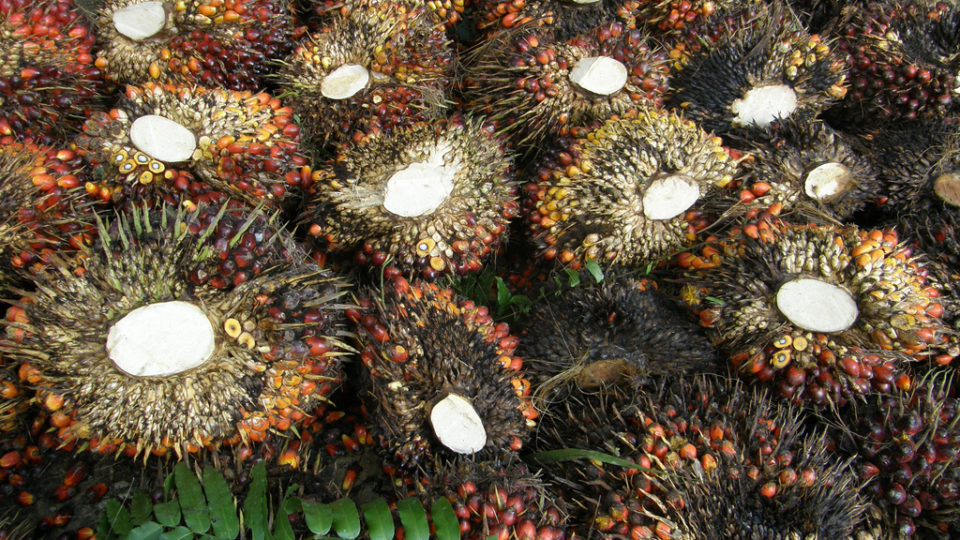
Few of us cook with palm oil or have ever even seen the stuff.  Nevertheless, 50% of all packaged grocery items – everything from ice cream and pizza to detergents and cosmetics – include it as an ingredient.  The global market for palm oil was $65 billion in 2015, and that number was projected to grow by more than 7% each year through 2021.

[Read more…] about Deforestation-Free Palm Oil

Primary Sidebar

Recent Episodes

  • An uninsurable future
  • Clean energy and jobs
  • Insect declines in remote regions
  • Fossil fuel producing nations ignoring climate goals
  • Trouble for clownfishes

WAMC Northeast Public Radio

WAMC/Northeast Public Radio is a regional public radio network serving parts of seven northeastern states (more...)

Copyright © 2026 ·