• Skip to primary navigation
  • Skip to main content
  • Skip to primary sidebar

Earth Wise

A look at our changing environment.

  • Home
  • About Earth Wise
  • Where to Listen
  • All Articles
  • Show Search
Hide Search
You are here: Home / Archives for chemist

chemist

Using CO2 To Convert Seawater Into Drinking Water | Earth Wise

October 27, 2020 By EarthWise Leave a Comment

Converting Seawater into Drinking Water

A chemist at the University of Copenhagen has invented a technology that uses carbon dioxide to convert seawater into drinking water within minutes.  This desalination technology has the potential to replace electricity with CO2 and be used in survival gear and in large-scale industrial plants in places where people don’t have clean drinking water.

Over 800 million people worldwide lack access to clean drinking water and that number is growing rapidly.  Seawater is a vital source of drinking water in many parts of the world, but desalination faces the major challenge of being highly energy intensive.  Desalination plants use huge amounts of fossil fuel-generated electricity and therefore contribute to climate change.

The Copenhagen technology is reminiscent of a SodaStream machine.  Carbon dioxide is added to water, initiating a chemical reaction.  But instead of using it for bubbly carbonation, it is used to separate salt from water.  It works by adding a chemical called CO2-responsive diamine to saltwater.  The diamine compound binds with the added CO2 and acts as a sponge to absorb the salt, which can then be separated.  The entire process takes one to ten minutes.  Once the CO2 is removed, the salt is released again, allowing the diamine to be reused for several more rounds of desalination.

In the laboratory, the method removed 99.6% of the salt in seawater.  The technology is still being developed to lower its price and optimize the recycling process.  It is also being tested on a small scale in the form of water bottles fitted with special filters that can be used in lifeboats or in other outdoor settings.  Ultimately, it could be used to greatly reduce the energy consumption of desalination plants.

**********

Web Links

Chemist uses CO2 to convert seawater into drinking water

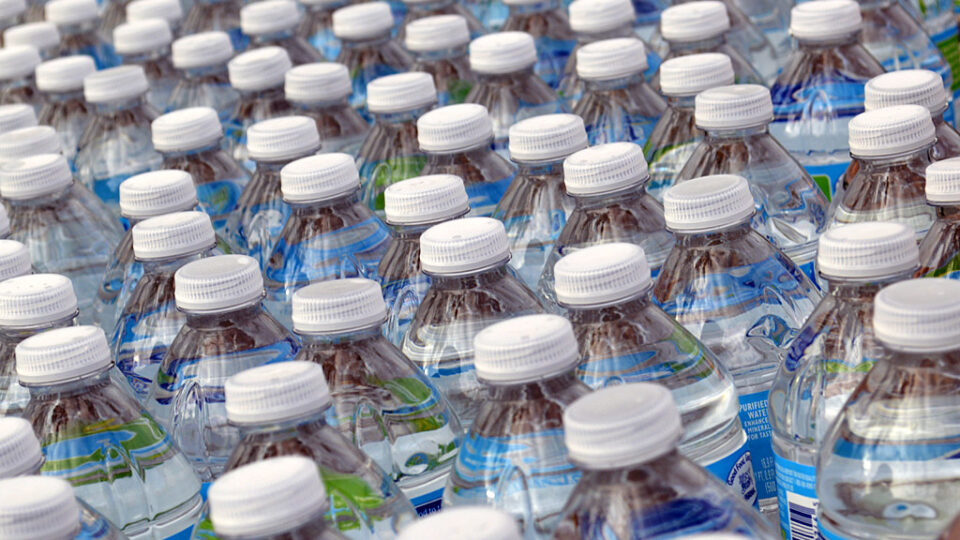
Photo, posted January 10, 2015, courtesy of Daniel Orth via Flickr.

Earth Wise is a production of WAMC Northeast Public Radio.

Safer Ways To Be Blue | Earth Wise

May 5, 2020 By EarthWise Leave a Comment

A safer way to create blue

Creating blue fabric has always been desirable for people.  It has never been easy, but the original way to do it – by using indigo from plants – has been around for 6,000 years.  Natural indigo is a rare commodity, often referred to as blue gold.  In the 19th century, synthetic indigo was developed and ultimately replaced the natural substance.

Synthetic indigo dye is not an environmentally friendly substance.  In order to get it to adhere to fabrics, substances called mordants are required.  These are commonly made from metals like chromium and aluminum, are generally toxic, and kill off plants exposed to factory wastewater, destroy ecosystems, and poison drinking water.   The dye itself is slow to decompose and is bad for the environment. 

Recently, an organic chemist in Brazil named Erick Bastos has figured out a new way to produce blue dye using, of all things, a pigment from beets.  By extracting the pigment and tweaking its molecular pattern, he has managed to transform the red color of the pigment to a brilliant blue.

Beet roots contain pigments called betalains and just a tiny amount of beetroot juice can render a lot of dye.  By mixing these pigments with a couple of ingredients, a chemical reaction occurred, and the color transformed from red, to yellow, then green, and finally blue.

Testing so far on human liver cells, retinal cells, and developing zebrafish has revealed no toxicity.  The results suggest that the new dye – dubbed BeetBlue – is safe.  Further testing is needed to know if it is truly safe and whether it will last in the wash.  Meanwhile, Professor Bastos is not patenting the dye and hopes it will provide a better way to be blue.

**********

Web Links

How Do You Make a Less Toxic Blue Dye? Start With Red Beets

Photo, posted November 7, 2005, courtesy of Lain Buchanan via Flickr.

Earth Wise is a production of WAMC Northeast Public Radio.

Primary Sidebar

Recent Episodes

  • An uninsurable future
  • Clean energy and jobs
  • Insect declines in remote regions
  • Fossil fuel producing nations ignoring climate goals
  • Trouble for clownfishes

WAMC Northeast Public Radio

WAMC/Northeast Public Radio is a regional public radio network serving parts of seven northeastern states (more...)

Copyright © 2026 ·