• Skip to primary navigation
  • Skip to main content
  • Skip to primary sidebar

Earth Wise

A look at our changing environment.

  • Home
  • About Earth Wise
  • Where to Listen
  • All Articles
  • Show Search
Hide Search
You are here: Home / Archives for cardiovascular

cardiovascular

Deadly Heatwaves On The Rise | Earth Wise

September 20, 2023 By EarthWise Leave a Comment

Deadly heatwaves are increasing as climate change ramps up

The European heatwave in the summer of 2003 resulted in at least 30,000 deaths with more than 14,000 in France alone. At the time, such a heatwave was considered to be a once-in-a-hundred-year event. But the warming climate is dramatically changing the odds for deadly heatwaves.

A new study by the ETH Institute in Zurich has found that the risk of fatal heatwaves has risen sharply over the past 20 years, and in the future, such extreme weather will become more frequent and heat-related excess mortality will increase, particularly in Europe.  According to a paper published in Nature Medicine, more than 61,000 deaths in Europe could be blamed on the heat during the summer of 2022, which was the hottest summer on record for the continent.  When the readings from this summer are analyzed, that record is likely to be surpassed.

Heatwaves lead to excess deaths due to dehydration, heat stroke, and cardiovascular collapse.  They are particularly deadly for the elderly, the sick, and the poor.  The ETH researchers analyzed comprehensive data from 748 cities and communities in 47 countries.   They determined the relationship between increased temperature and excess mortality.  Their models look at how excess mortality would develop with an average global temperature increase of 0.7 degrees Celsius (the value in 2000), 1.2 degrees (the value in 2020), and both 1.5 degrees (the limit sought by the Paris Agreement) and 2 degrees.

Even with the current global temperature, heatwaves that were a once-in-a-century event are now expected to occur every 10 years.  With 2 degrees of warming, such heatwaves could happen every 2 to 5 years.

**********

Web Links

Heatwaves are becoming more frequent and more deadly

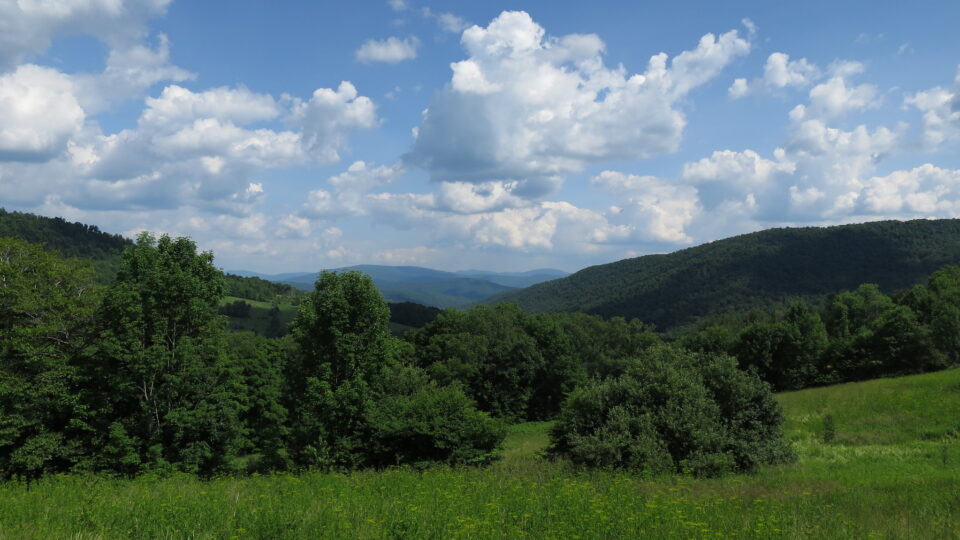
Photo, posted July 22, 2009, courtesy of Matt McGee via Flickr.

Earth Wise is a production of WAMC Northeast Public Radio
Dangerous Smoke From Australia’s Wildfires | Earth Wise

January 13, 2020 By EarthWise Leave a Comment

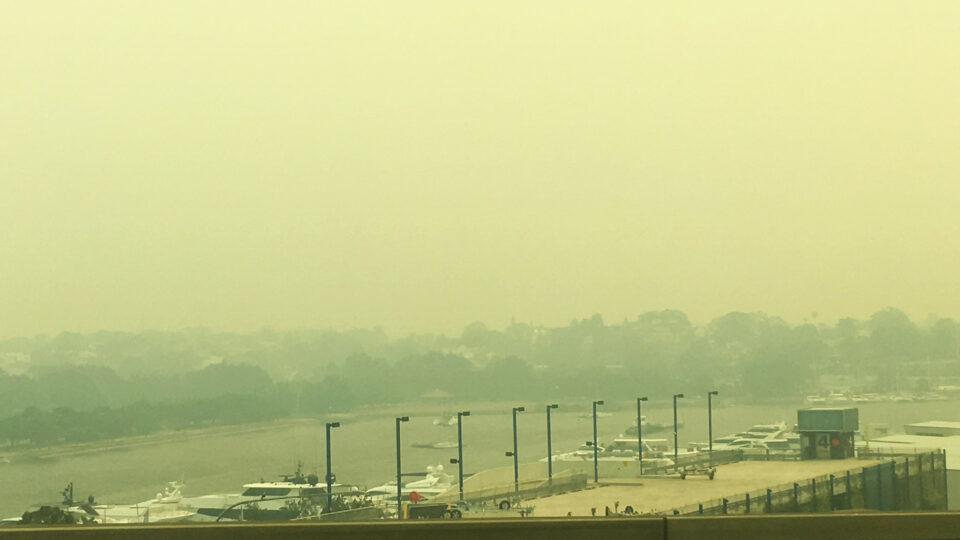
wildfire smoke in Sydney, Australia

Wildfires raging across Australia have devastated large swathes of land and prompted one of the largest evacuations in the country’s history.  The fires, which have scorched approximately 20 million acres, have also killed 27 people and affected an estimated one billion animals at the time of this recording. The fire season, though still young, already ranks as among the worst in Australia’s recorded history. 

Away from the flames, millions more in Australia are breathing unhealthy air as a result of the smoke from these wildfires. Wildfires release all sorts of dangerous air pollutants, like carbon monoxide and nitrous oxide.  But wildfires also release fine particulate matter (more commonly referred to as PM2.5), which can be transported long distances.  Breathing in these microscopic particles can lead to respiratory and cardiovascular problems.  High levels of PM2.5 are particularly harmful to older people, young children, and those with weakened immune systems.  

The Australian capital city of Canberra has been covered in a thick haze of smoke from nearby wildfires.  Canberra recorded its worst air quality day on January 2nd, when levels of PM2.5 spiked to more than 200 micrograms per cubic meter during the worst hour.

Smoke has also been fouling Sydney’s air off and on for months, with PM2.5 readings hitting nearly 400 micrograms per cubic meter last month during the highest hour of pollution. 

The U.S. EPA has in place an annual PM2.5 standard of 12 micrograms per cubic meter and a daily (or 24 hour) standard of 35. 

According to the IPCC, southern Australia is expected to see increased risk of fire as the planet continues to warm.  Regrettably, this could be the new normal. 

********** 

Web Links

Millions of Australians Are Choking on Smoke From Wildfires

Photo, posted December 5, 2019, courtesy of Flickr.

Earth Wise is a production of WAMC Northeast Public Radio.

Cleaner Air Saves Lives

September 25, 2019 By EarthWise Leave a Comment

A new study by Columbia University has concluded that lower air pollution levels saved an estimated 5,660 lives in New York State in 2012, compared to 2002 mortality levels.

The study looked at New York State levels of the specific type of pollution known as fine particulate matter, referred to as PM2.5.  These microscopic particulates are a mixture of solid particles and liquid droplets that either come from burning fuel or are formed in the atmosphere as a result of complex reactions of chemicals such as sulfur dioxide and nitrogen oxides from power plants, industries, and automobiles.

Long-term exposure to PM2.5 can lead to respiratory and cardiovascular problems.

The study looked at extensive amounts of data to analyze trends in PM2.5 levels across New York State.  The data showed that PM2.5 levels dropped by 28 to 37% between 2002 and 2012.  This was a result of continued progress in cleaner vehicles, the reduction of high sulfur-dioxide emitting coal-burning power plants, and other air pollution reduction programs.  They calculated that this amount of reduction in PM2.5 reduced the air pollution mortality burden for New York State residents by 67% – from 8,410 premature deaths in 2002 to 2,750 deaths in 2012.

The study provides evidence that emission controls on air pollutants – which were initiated by the Clean Air Act of 1970 and later expanded in 1990 – have improved public health across New York State.  According to the researchers, the study is a key step to documenting the health benefits from cleaner air.

**********

Web Links

Air Pollution Cuts Are Saving Lives in New York State

Photo, posted June 29, 2014, courtesy of Paul Comstock via Flickr.

Earth Wise is a production of WAMC Northeast Public Radio.

Primary Sidebar

Recent Episodes

  • An uninsurable future
  • Clean energy and jobs
  • Insect declines in remote regions
  • Fossil fuel producing nations ignoring climate goals
  • Trouble for clownfishes

WAMC Northeast Public Radio

WAMC/Northeast Public Radio is a regional public radio network serving parts of seven northeastern states (more...)

Copyright © 2026 ·