• Skip to primary navigation
  • Skip to main content
  • Skip to primary sidebar

Earth Wise

A look at our changing environment.

  • Home
  • About Earth Wise
  • Where to Listen
  • All Articles
  • Show Search
Hide Search
You are here: Home / Archives for carbon

carbon

Tourism and greenhouse gas emissions

January 17, 2025 By EarthWise Leave a Comment

Tourism is a major contributor to global greenhouse gas emissions, accounting for about 9% of the global total.  Over the past 15 years, its emissions have grown more than twice as fast as those of the rest of the global economy.

Unless the tourism industry finds ways to slow down its growing emissions, those emissions will continue to increase by 3 to 4% each year, meaning that they will double every 20 years.  The major drivers behind tourism’s growing emissions have been slow improvements in tourism-related technologies coupled with the rapid growth in demand.

Transportation is tourism’s main source of greenhouse gas emissions.  Planes and cars generate the most carbon dioxide but there are contributions from tour buses, boat rides, ferries, and trains as well.  The increasing demand for international travel has been the largest contributor to the growth of tourism-related emissions.  But just as people’s homes generate emissions from energy use, so do hotels and other lodging used on vacations.

The United States, China, and India are responsible for 60% of the total increase in tourism’s carbon footprint.  Generally speaking, it is the world’s wealthiest nations that have the most tourists exploring the world.

Researchers from Australia’s University of Queensland recommended several measures to slow the growth of tourism’s carbon emissions.  These include reducing long-haul flights, imposing carbon dioxide taxes, setting carbon budgets, and the use of alternative transportation fuels.  At the local level, tourism businesses making use of renewable energy sources and electric vehicles would help.

**********

Web Links

Tourism leads the pack in growing carbon emissions

Photo, posted September 14, 2014, courtesy of Gary Campbell-Hall via Flickr.

Earth Wise is a production of WAMC Northeast Public Radio
The UN Carbon Market

January 13, 2025 By EarthWise Leave a Comment

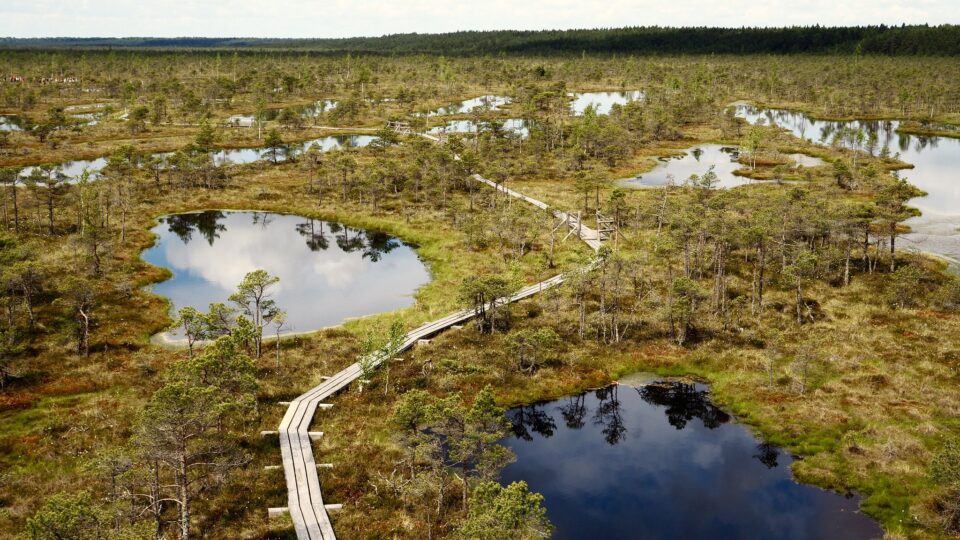
The UN climate conference in November approved an official market for large-scale trading of carbon credits.  This will allow industrial countries to help meet their emission reduction targets set by the Paris Climate Agreement by paying other nations to protect and restore forests and carbon-rich peatlands.

The first major participant in this multi-billion-dollar enterprise is Indonesia.  That country is home to the world’s third largest expanse of tropical rainforests and more than a third of the world’s carbon-storing peatlands.  Indonesia’s government plans to raise up to $65 billion by 2028 by selling carbon credits accrued by restoring and protecting its forests and peatlands.

The problem with carbon trading is that it can be filled with loopholes ranging from inaccurate carbon accounting to outright fraud.  Carbon trading with both individual companies and other countries can result in double- and even triple-counting of the same carbon.

For example, carbon credits are assigned when forests earmarked for agricultural or other development are preserved instead of being felled.  But what if that forest destruction wasn’t going to happen even without selling carbon credits? 

There are organizations in the business of verifying carbon accounting, but independent analysis of their methodologies has revealed serious shortcomings, and in many cases, the verifications have been deemed to be worthless.

There are real problems with carbon accounting and setting correct baselines for the carbon emission reductions associated with carbon credits.  Nevertheless, the existence of a global carbon market can be an important tool in the world’s efforts to mitigate the effects of climate change.

**********

Web Links

Will UN Carbon Market Work? Indonesia Will Provide First Test

Photo, posted June 12, 2017, courtesy of Runa S. Lindebjerg via Flickr.

Earth Wise is a production of WAMC Northeast Public Radio

Planting trees in Europe

January 7, 2025 By EarthWise Leave a Comment

Planting lots of trees is one of many strategies being pursued to combat climate change.  Trees are storehouses of carbon from the atmosphere and planting more of them helps remove carbon dioxide.  But trees do more than that.  Trees are natural air conditioners in cities.

Trees significantly cool urban environments by providing shade and via a process called evapotranspiration by which they release water vapor into the air, which provides cooling.  This helps mitigate the urban heat island effect. Areas under trees in cities can be as much as 25 degrees cooler than in unshaded areas covered in asphalt.

The city of Paris has laid out a plan to help the city prepare for increasing amounts of extreme heat.  The goal is to replace 60,000 parking spaces across the city with trees by the end of this decade.  The plan to rip up parking spaces is part of a greater aim to create more than 700 acres of green space by 2030.  The Paris plan also includes creating more car-free zones and installing reflective roofs on 1,000 public buildings.  Nearly 80% of the buildings in Paris have zinc roofs – an affordable, corrosion-resistant and pretty much inflammable innovation of the 19th century.  However, these roofs can heat up to 194 degrees on a summer day, transferring heat into largely uninsulated top-floor garrets below.

Elsewhere in Europe, Danish lawmakers have agreed on a plan to rewild 10% of the country’s farmland and plant one billion trees.   According to the Danish government, this plan would bring about the biggest change to the Danish landscape in over 100 years.

**********

Web Links

To Cope with Extreme Heat, Paris Will Swap Parking Spaces for Trees

Photo, posted April 11, 2014, courtesy of Val H. via Flickr.

Earth Wise is a production of WAMC Northeast Public Radio

Regrowing forests naturally

December 17, 2024 By EarthWise Leave a Comment

Naturally regrowing forests is best

Deforestation is one of the major causes of climate change and restoring and enhancing forests is a major activity around the world as a way to mitigate its effects.  There are high-profile initiatives to plant millions of trees, but these projects are often ill-conceived and poorly managed.

One of the most dramatic failures was the planting of over a million mangrove seedlings on the Filipino island of Luzon back in 2012.  A study 8 years later found that fewer than 2 percent of the trees had survived.  The rest died or were washed away.

The causes of failure in tree planting programs include planting of trees that become vulnerable to disease, competing demands for land, changing climate, planting in areas not previously forested, and a lack of aftercare including watering seedlings.

A multinational study recently published in Nature has found that forests could regrow naturally on more than 800,000 square miles of land around the tropics without the need for planting trees by hand.  This is an area larger than Mexico.

The researchers mapped areas where forests would be likely to regrow – areas where soils are healthy and where there is already forest nearby to supply seeds.  In some places, lands are so degraded that it is necessary to plant trees by hand, but this is costly and prone to failure.  Forests that regrow naturally tend to fare better and make better habitats for wildlife.

The effect of regrown forests on the climate would be very substantial.  If these forests were allowed to grow for three decades, they would absorb enough carbon to offset 50 years of emissions by Australia, the home of the lead researcher of the study. 

**********

Web Links

Tropical Forests Could Regrow Naturally on Area the Size of Mexico

Photo, posted February 16, 2018, courtesy of Jason Houston / USAID via Flickr.

Earth Wise is a production of WAMC Northeast Public Radio
Capturing hot carbon dioxide

December 13, 2024 By EarthWise Leave a Comment

Researchers are developing new methods to capture hot carbon dioxide

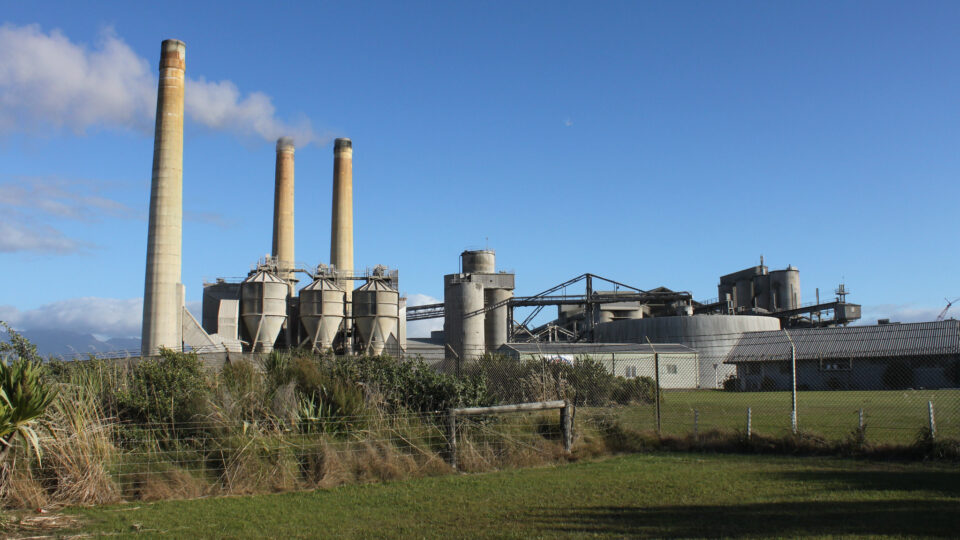
Decarbonizing industries like steel and cement is a difficult challenge.  Both involve emitting large amounts of carbon dioxide both from burning fossil fuels and from intrinsic chemical reactions taking place.  A potential solution is to capture the carbon dioxide emissions and either use them or store them away.  But this sort of carbon capture is not easy and can be quite expensive.

The most common method for capturing carbon dioxide emissions from industrial plants uses chemicals called liquid amines which absorb the gas.  But the chemical reaction by which this occurs only works well at temperatures between 100 and 140 degrees Fahrenheit.  Cement manufacturing and steelmaking plants produce exhaust that exceeds 400 degrees and other industrial processes produce exhaust as hot as 930 degrees.

Costly infrastructure is necessary to cool down these exhaust streams so that amine-based carbon capture technology can work. 

Chemists at the University of California, Berkeley, have developed a porous material – a type of metal-organic framework – that can act like a sponge to capture CO2 at temperatures close to those of many industrial exhaust streams.  The molecular metal hydride structures have demonstrated rapid, reversible, high-capacity capture of carbon dioxide that can be accomplished at high temperatures.

Removing carbon dioxide from industrial and power plant emissions is a key strategy for reducing greenhouse gases that are warming the Earth and altering the global climate.  The captured CO2 can be used to produce value-added chemicals or can be stored underground or chemically-reacted into stable substances.

**********

Web Links

Breakthrough in capturing ‘hot’ CO2 from industrial exhaust

Photo, posted March 3, 2010, courtesy of Eli Duke via Flickr.

Earth Wise is a production of WAMC Northeast Public Radio

Mangrove forests and rising seas

December 6, 2024 By EarthWise Leave a Comment

Mangrove forests are drowning in the Maldives

Mangrove forests play a vital role in the health of our planet.  They protect coastal regions by acting as natural barriers against storms, erosion, and flooding. The intricate root systems of mangrove forests, which allow the trees to handle the daily rise and fall of tides, also serve as biodiversity hotspots, attracting fish and other species seeking food and shelter from predators.

But mangrove forests around the world are under increasing threat from deforestation, coastal development, and climate change.  In fact, according to a new study led by researchers from Northumbria University in England, the mangrove trees in the Maldives are actually drowning. 

The research, which was recently published in the journal Scientific Reports, found that sea levels around the Maldives rose more than 1.18 inches per year from 2017 to 2020.  An unusually intense climate phenomenon, known as the Indian Ocean Dipole, occurred toward the end of this period, causing warmer sea surface temperatures and an increase in sea level in the Western Indian Ocean. 

While mangrove forests can naturally keep pace with gradually rising seas, this rate of sea level rise was too fast.  The rising sea level meant that seawater effectively flooded mangrove forests, causing many trees to lose their resilience and die.  Some islands in the Maldives have lost more than half of their mangrove cover since 2020.

Since mangrove forests also store massive amounts of carbon, the research team fears that the loss of mangrove forests could release large amounts of carbon, further accelerating climate change.

The researchers warn that the findings in the Maldives could have implications for coastal ecosystems around the world.

**********

Web Links

“Drowning” mangrove forests in Maldives signal global coastal threat

Photo, posted February 11, 2015, courtesy of Alessandro Caproni via Flickr.

Earth Wise is a production of WAMC Northeast Public Radio

The bloated carbon footprint of LNG

November 15, 2024 By EarthWise Leave a Comment

According to the U.S. Department of Energy, the United States is the world’s largest producer of natural gas.  In fact, natural gas supplies approximately one third of the United States’ primary energy consumption, most of which is used to heat buildings and to generate electricity.  While most natural gas is delivered in its gaseous form in this country, the demand for natural gas in international markets has given rise to the use of natural gas in a liquified form. 

Liquified natural gas (LNG) is natural gas that has been cooled to a liquid state, at about -260° Fahrenheit, for easier storage and transportation.  The volume of natural gas in its liquid state is about 600 times smaller than its volume in its gaseous state, which makes it possible to transport it to places pipelines do not reach.

Liquified natural gas is considered a clean fossil fuel because burning it produces less emissions than coal and oil.  However, according to a new study by researchers from Cornell University, LNG imported from the U.S. actually has a larger climate impact than any other fossil fuel—including coal – once processing and shipping are taken into account. 

The study, which was recently published in the journal Energy Science & Engineering, found that LNG leaves a greenhouse gas footprint that is 33% worse than coal when emissions are analyzed over a 20-year time frame. 

According to the research team, there is no need for LNG as an interim energy source because the transition requires massive infrastructure expenditures.  Instead, those financial resources should be used to “build a fossil-fuel-free future as rapidly as possible.”

**********

Web Links

Liquefied natural gas carbon footprint is worse than coal

Photo, posted November 17, 2017, courtesy of Colin Baird via Flickr.

Earth Wise is a production of WAMC Northeast Public Radio

Canadian wildfires and global emissions

October 14, 2024 By EarthWise Leave a Comment

The wildfires that burned vast amounts of Canada’s boreal forests in 2023 produced enormous amounts of smoke that found its way into American cities, working its way down the eastern seaboard and even producing unsafe air in Florida.

Researchers at Cal Tech and the Jet Propulsion Laboratory analyzed the carbon emissions associated with these fires last year and found that they were greater than those of all but three countries:  China, the US, and India.

Boreal forests have historically been a natural defense against climate change by storing carbon in trees rather than adding carbon dioxide to the atmosphere.  The fires in Canada, fueled by hot and dry weather, were extraordinary when compared with historical records.  But such fires are likely to be increasingly common as the climate continues to warm.

However, the hot and dry weather that fueled the 2023 fires was exceptional in many ways, involving early snow melt and so-called flash droughts.  This year’s fires in Canada are still bigger than average, but so far have not been as destructive as last year’s. 

Canada has been warming at about twice the global rate.  The extreme temperatures last summer were a major factor in the fueling of the fires, which burned an area almost the size of Florida.

Forests absorb about a quarter of global carbon emissions, but the increasing frequency and intensity of fires are calling into question their ability to continue to do so.  Parts of the Canadian forests are not regrowing after fires as they have in the past, partly because blazes burn trees so frequently and intensely.

**********

Web Links

Canada’s Wildfires Were a Top Global Emitter Last Year, Study Says

Photo, posted June 8, 2023, courtesy of the Metropolitan Transportation Authority via Flickr.

Earth Wise is a production of WAMC Northeast Public Radio

Ecofriendly Glass

October 2, 2024 By EarthWise Leave a Comment

Designing and producing ecofriendly glass

Glass has been used for thousands of years to make everything from windows to bottles to microscope slides.  For all that time, most glass has been in the form of soda lime silicate glass, which is made by melting quartz sand with carbon-based ingredients – soda ash and limestone – at high melting temperatures of about 2600 degrees Fahrenheit.

The process results in substantial carbon emissions.  Worldwide, glass manufacturing produces over 86 million tons of carbon dioxide per year.  Most of that comes from burning fuel to reach the high temperatures needed to make the glass, but about a quarter of it comes from the decomposition of the carbon-based materials used.

Researchers at Penn State University have developed an entirely new type of glass that represents an alternative to soda lime glass.  The glass – that they call LionGlass – eliminates the use of carbonate batch materials and has a melting temperature 700 degrees lower than traditional glass.   The new material has the potential to cut the carbon footprint of glass manufacturing in half.  It is also 10 times more crack-resistant than ordinary glass, which would enable light weighting of glass products, lowering the emissions associated with transporting glass and glass products.

Recently, Penn state has entered into a partnership with the Italian company Bormioli, one of the world’s leading glass manufacturers that specializes in high-end packaging for fragrances, cosmetics, and tableware.  By focusing on a smaller, high-end market, the focus can be on fine-tuning the glass and determining the feasibility of scaling it up further for other uses.

**********

Web Links

Ecofriendly glass invented at Penn State secures partner for product development

Photo, posted December 26, 2005, courtesy of Lachlan Hardy via Flickr.

Earth Wise is a production of WAMC Northeast Public Radio

Better wood for storing carbon

August 29, 2024 By EarthWise Leave a Comment

A better wood for storing carbon

Scientists have discovered a new type of wood that is highly efficient at storing carbon.  A comprehensive survey of the microscopic structure of the wood from many species of trees revealed that there is a type of wood that is neither softwood, such as pine and conifers, or hardwood, such as oak, ash, and birch.

The scientists from Cambridge University and Jagiellonian University in Poland analyzed some of the world’s most iconic trees using electron microscopy to survey their microscopic structure.

They found that tulip trees, which are related to magnolias and can grow over 100 feet tall, have a unique type of wood.  The trees, which diverged from magnolias far back to a time when atmospheric CO2 concentrations were low, grow very tall and very quickly.  These features were an adaptation to those conditions and result in the ability to store larger concentrations of carbon to compensate based on their microstructure.  The elementary units of wood are known as macrofibrils, and tulip trees have much larger macrofibrils than hardwoods but smaller than those of softwoods.  This unusual intermediate structure makes the trees highly effective at carbon storage.

Based on the research, it may be the case that tulip trees will end up being useful for carbon capture plantations – tree plantings specifically for the purpose of mitigating the effects of climate change.  Some east Asian countries are already using various tulip tree species in plantations for locking in carbon.  This was based on their large size and rapid growth, but it turns out that their novel wood structure may be the most compelling reason to use them.

**********

Web Links

Scientists discover entirely new wood type that could be highly efficient at carbon storage

Photo, posted March 3, 2021, courtesy of Thomas Quine via Flickr.

Earth Wise is a production of WAMC Northeast Public Radio
Wildfires and carbon storage

August 14, 2024 By EarthWise Leave a Comment

Wildfires impacting carbon storage potential

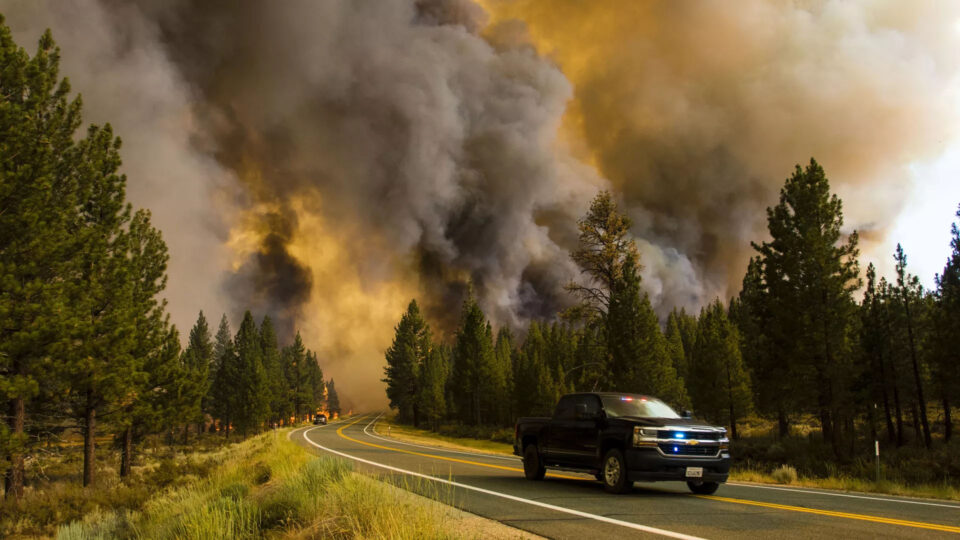
Forests are known to be a key natural solution to the increasing amounts of carbon dioxide in the atmosphere.  For this reason, there are widespread efforts to plant more trees around the world and to prevent increasing deforestation for development and agriculture.  But a new study has highlighted the fact that wildfires in the western US are degrading the potential for forests to help curb climate change.

The study has established a baseline for how much carbon is currently stored in Western forests, how that amount is changing, and how fires and droughts are affecting the ability of the forests to mitigate climate change.

The study made use of survey data collected by the US Forest Service to estimate how much carbon is stored in 19 ecoregions across the West.  These ecoregions range from hot and dry areas in the Southwest to the wet and cool regions of the Pacific Northwest.

The study reveals that the carbon stored in living trees declined across much of the Western US between 2005 and 2019.  Carbon stored in dead trees and woody debris increased.  These things do not provide long-term carbon storage.  Instead, they release it back into the atmosphere through decomposition or combustion in forest fires.

The increasing frequency and intensity of wildfires, especially since 2020, indicate that the decline in live carbon stored in the forests will become increasingly pronounced.  The result, according to the study’s authors, is that we cannot rely on increasing carbon storage in Western US forests.  It may be possible to increase the stability of carbon storage in the forests with mechanical thinning and prescribed burning, but the carbon carrying capacity of those forests is not likely to be what is needed.

**********

Web Links

Forest carbon storage has declined across much of the Western US, likely due to drought and fire

Photo, posted July 25, 2021, courtesy of Felton Davis via Flickr.

Earth Wise is a production of WAMC Northeast Public Radio
The carbon cost of wind farms

July 31, 2024 By EarthWise Leave a Comment

Reviewing the carbon cost of wind farms

Opponents of electric vehicles and renewable energy often try to make arguments to the effect that the carbon footprint associated with producing electric cars, solar panels, and wind turbines negates their advantages over legacy technologies that involve burning fossil fuels.  These arguments have been soundly refuted for the case of electric vehicles but there have been fewer studies related to other green technologies.

A new peer-reviewed study by engineers at the Te Herenga Waka Victoria University in Wellington, New Zealand, has analyzed the carbon emissions associated with wind farm operation.

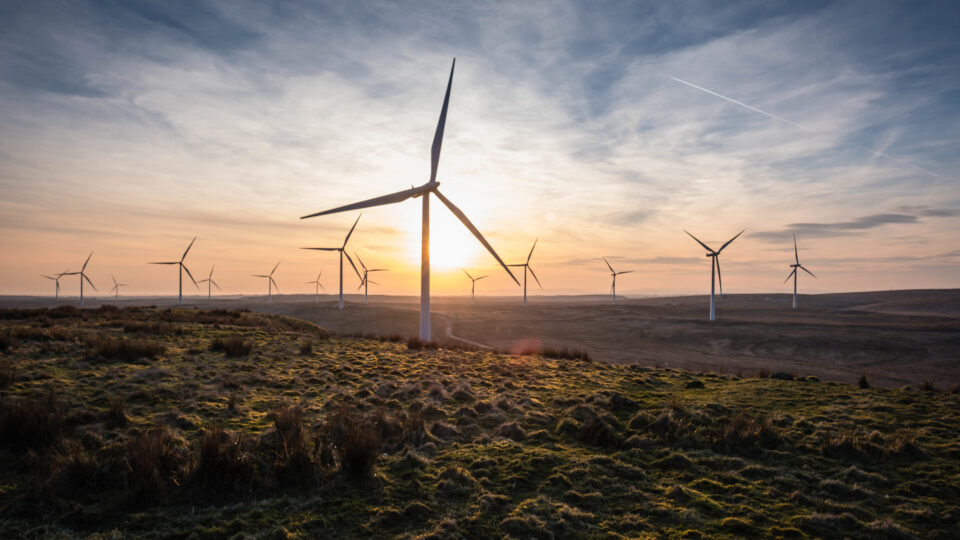
The main result is that after operating for less than two years, a wind farm can offset the carbon emissions generated across its entire 30-year lifespan.   The study takes into account everything from the manufacturing of individual turbine parts, to transporting them and installing them into place, to decommissioning the entire wind farm at its life’s end.  The environmental impacts of the installation and transportation phases are important, accounting for about 10% of the overall emissions.

The decommissioning phase is also important.  The study recommended the development of a recycling process for end-of-life turbine blades.  Currently, such blades are disposed of in landfills, but a recycling process could reduce emissions.

The manufacturing of wind turbines is the primary contributor to the carbon and energy consumption footprints and continues to be the subject of efforts to be improved.

There are other aspects of wind farms that are subject to criticism including physical impacts on the local environment and various social, wildlife and economic impacts.  But with respect to carbon emissions, wind farms are a winning strategy.

**********

Web Links

Wind Farms can Offset Their Emissions Within Two Years, New Study Shows

Photo, posted April 2, 2017, courtesy of Ian Dick via Flickr.

Earth Wise is a production of WAMC Northeast Public Radio
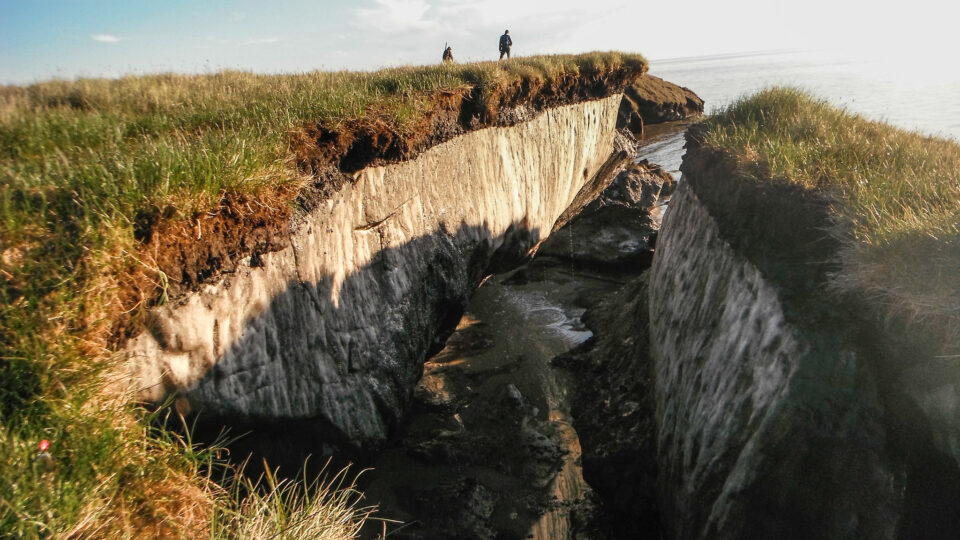
Thawing permafrost:  Is it a ticking timebomb?

July 8, 2024 By EarthWise Leave a Comment

Permafrost covers about a quarter of the landmass in the Northern Hemisphere.  It stores vast quantities of organic carbon in the form of dead plant matter.  As long as it stays frozen, it is no threat to the climate.  But as it thaws, microorganisms start breaking down that plant matter and large amounts of carbon are released into the atmosphere in the form of carbon dioxide and methane.

This process has often been described as a ticking timebomb for the climate.  The theory is that once global warming reaches a certain level, the process will become self-amplifying setting off a catastrophic amount of warming.  If that level was reached, it would be a tipping point in the changing climate.

An international research team from the Alfred Wegener Institute in Germany has extensively researched this hypothesis.  Their conclusion is that within the permafrost, there are multiple geological, hydrological, and physical processes that are self-amplifying and, in some cases, irreversible.  However, these processes act only locally or regionally.  There is no evidence that some particular threshold in global warming could affect all permafrost and accelerate its thawing on a global level.

This research does not mean that Arctic permafrost is nothing to worry about.  In fact, there are ways in which it is more worrisome.  Because the permafrost is very heterogenous – meaning it is very different in different places – there will be numerous small, local tipping points that will be exceeded at different times and at different levels of warming.  All of this will proceed in step with global warming, contributing to the overall worsening situation.  There is no warming level below which permafrost thawing is not a problem.

**********

Web Links

Thawing permafrost: Not a climate tipping element, but nevertheless far-reaching impacts

Photo, posted January 24, 2014, courtesy of Brandt Meixell / USGS via Flickr.

Earth Wise is a production of WAMC Northeast Public Radio

Benefits of electric school buses

July 1, 2024 By EarthWise Leave a Comment

Converting to electric school buses

There are about half a million school buses in use in the U.S.  A large number of them are older, highly polluting diesel buses.  There are well-established health and climate benefits of switching from diesel vehicles to electric vehicles but making the switch is expensive.  Diesel buses generally cost between $65,000 to $120,000, depending on the type and configuration.  Electric buses cost about $250,000 each.

The substantial cost makes it a difficult decision for local, state, and federal officials, particularly since the actual magnitude of the benefits is not well known.

A new study by researchers at Harvard’s T.H. Chan School of Public Health has quantified these benefits.  According to the study, replacing each bus may yield up to $247,600 in climate and health benefits. These benefits derive from fewer greenhouse gas emissions and from reduced rates of adult mortality and childhood asthma. 

The study compared the amounts of carbon dioxide emitted from diesel bus tailpipes to the emissions associated with generating electricity for the buses and producing their batteries.  It also compared how these respective emissions contribute to fine particulate air pollution, which is linked to adult mortality and the onset of childhood asthma.  The study concluded that particularly in dense urban settings, the savings incurred from electrifying older school buses easily outweigh the costs of replacing them.

An important question not tackled in the study is how electric school buses impact children’s exposure to in-cabin air pollution while riding the bus.  This issue could further inform policy decisions.

**********

Web Links

Electric school buses may yield significant health and climate benefits, cost savings

Photo, posted May 9, 2008, courtesy of Christine H. via Flickr.

Earth Wise is a production of WAMC Northeast Public Radio
Cloud brightening

June 17, 2024 By EarthWise Leave a Comment

Solar geoengineering is a type of climate intervention:  deliberate actions designed to affect the climate.  There are several ways to try to reduce the amount of sunlight reaching the surface of the earth and all of them are controversial.  Perhaps the least controversial approach is cloud brightening.

The idea is based on something called the Twomey effect, which is that large numbers of small droplets in the atmosphere reflect more sunlight than small numbers of large droplets.  Spraying vast quantities of minuscule aerosols into the sky, thereby forming many small droplets, could change the reflective properties of clouds.  If clouds are more reflective, then less sunlight reaches the surface, and the temperature goes down.

This form of geoengineering is thought to be less risky because it can be performed on a localized basis and can use relatively benign materials such as sea salt. 

In early April, scientists from the University of Washington started testing a device that sprays tiny sea-salt particles into the air from the deck of a decommissioned aircraft carrier in Alameda, California.  The test was simply to see whether the machine propelled a mist of suitable size.

Within two weeks, Alameda officials ordered a stop to the experiment, citing potential health and environmental risks.  After a month-long investigation, Alameda ruled that the experiment does not generate a measurable risk to health, wildlife, or the environment.

But before more ambitious experiments take place, there are potential side effects of cloud brightening that need to be studied.  It may turn out to be a useful tool in fighting global warming, but in any case, such technology should not be viewed as a substitute for moving away from fossil fuels.

**********

Web Links

A Test of Cloud-Brightening Machines Poses No Health Risk, Officials Say

Photo, posted September 8, 2011, courtesy of Justin Ladia via Flickr.

Earth Wise is a production of WAMC Northeast Public Radio
The largest carbon removal plant

June 11, 2024 By EarthWise Leave a Comment

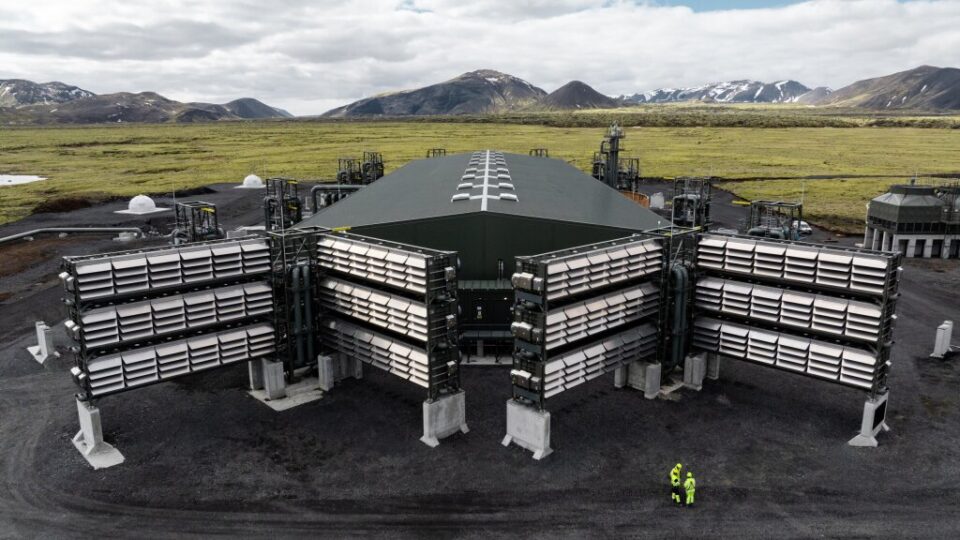
Direct air capture (DAC) is process that removes carbon dioxide out of the air and stores it away where it can no longer trap heat in the atmosphere.  It is intended to be a way of getting rid of the greenhouse gases that have built up in the atmosphere.  In principle, it’s a great idea.  In practice, it is a huge challenge.

In 2017, a company called Climeworks became the first company to take carbon dioxide out of the air and sell it as a product for use in carbonated drinks and in greenhouses.  In 2021, the company opened a DAC plant called Orca in Iceland that captures CO2 and permanently stores it underground.  Clients like Microsoft pay Climeworks for doing this as a way of offsetting their own emissions.

Recently, Climeworks has started operating a new plant called Mammoth – also in Iceland – that will be able to capture about 10 times more carbon dioxide than Orca.  Iceland is a prime location for DAC technology because its abundant geothermal energy makes powering it cheap and environmentally friendly.

Mammoth, when fully operational, will remove about 36,000 tons of carbon dioxide a year, the largest DAC system in the world.  But there is a long, long way to go.  Microsoft alone emits nearly 13 million tons of carbon dioxide a year.

There are multiple DAC projects in development including several in the United States being funded by the Bipartisan Infrastructure Law.  The four DAC hubs being developed under the program are each supposed to have the capacity to capture at least a million metric tons of CO2 a year.

Whether DAC can make a real difference remains to be seen.

**********

Web Links

The world’s largest carbon removal plant is here, and bigger ones are on the way

Photo credit: Climeworks

Earth Wise is a production of WAMC Northeast Public Radio

Marine carbon dioxide removal

May 23, 2024 By EarthWise Leave a Comment

Marine CO2 removal

About 30% of the carbon dioxide emitted by human activity is absorbed by the oceans.  As a result, they are getting warmer and more acidic, and the currents that help shape global weather are shifting.  To try to reduce global warming, people want to be able to store even more carbon dioxide in the oceans without the negative effects of doing so.

There are multiple efforts across the globe to achieve effective marine carbon dioxide removal.  Some are based on sinking carbon-rich materials to the bottom of the sea.  This is the marine equivalent of capturing CO2 from the air and storing it underground.  Other efforts involve increasing the alkalinity of the ocean, which increases its ability to chemically react with carbon dioxide as well as lowers its acidity, which is desirable in many ways.

Running Tide, a U.S.-based company, has been dumping thousands of tons of wood-industry waste 190 miles off the coast of Iceland.  The company has also been experimenting with dumping algae and kelp and sinking it deep below the ocean.  Such materials on land either get burned or decay, in both cases releasing CO2 into the atmosphere.  On the deep-sea bottom, the carbon is trapped.

Other efforts involve pumping seawater through electrodialysis filter systems to remove excess acidity or adding alkaline rocks to increase water alkalinity.

All of these efforts are a form of geoengineering, and like proposed ideas to cool the atmosphere, pose potential risks.  There is no silver bullet to solve the climate crisis.  It will take a combination of many solutions to address the issue of excess carbon dioxide in the atmosphere.  Marine carbon dioxide removal is one of the solutions that may play a role.

**********

Web Links

Scientists Are Trying to Coax the Ocean to Absorb More CO2

Photo, posted February 22, 2018, courtesy of Bobbie Halchishak/USFWS via Flickr.

Earth Wise is a production of WAMC Northeast Public Radio
Where not to plant trees

May 10, 2024 By EarthWise Leave a Comment

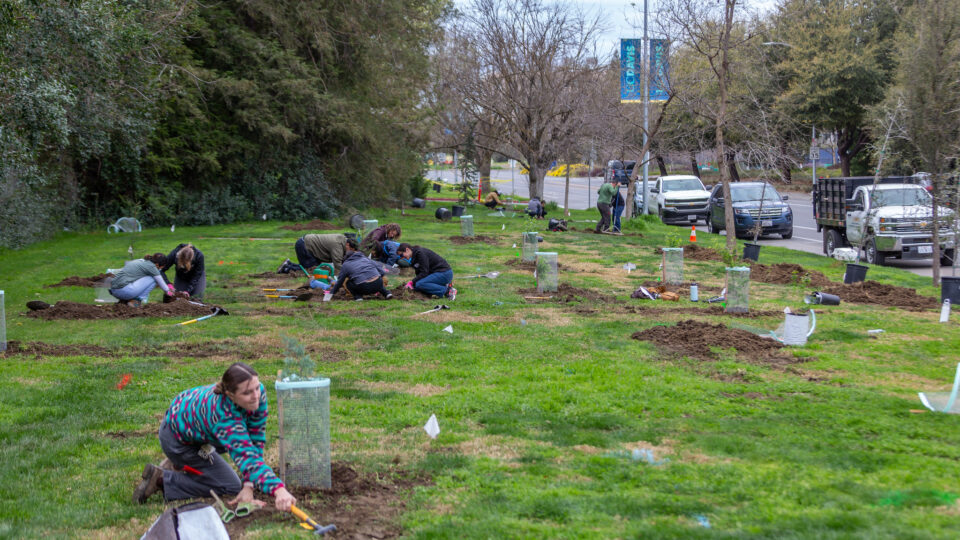
Tree plantings are not always a good thing

Planting huge numbers of trees is often proposed as a way to reduce the severity of climate change.  Studies have looked at the potential for Earth‘s ecosystems to support large additional areas of forest and have found that it would be possible to have at least 25% more forested area than we do now.  This in turn could capture large amounts of carbon and substantially reduce the amount in the atmosphere.

A recent study by researchers at Clark University in Massachusetts and The Nature Conservancy mapped the climate impact of tree planting across the globe, identifying where it would be most and also least beneficial.  The study, published in Nature Communications, found that trees planted in arid, desert regions or in snowy places like the Arctic would, on balance, worsen warming rather than reduce it.

Trees take up carbon dioxide from the atmosphere, which helps to keep warming in check.  But trees with dark, green leaves also absorb heat from sunlight.   Snow and desert sand, on the other hand, are light-colored and reflect more sunlight back into space.  For this reason, trees planted in snowy areas or in the desert will absorb more sunlight than their surroundings.  This can negate the climate benefits of soaking up carbon dioxide.

Previous studies only looked at how much carbon dioxide would be removed by planting trees in order to determine how much warming would be prevented.  The new study finds that it matters where the trees are planted.

Fortunately, the new study also shows that tree planting projects that are currently underway or that are in the pipeline are largely concentrated in regions where they will indeed help slow global warming.

**********

Web Links

This Map Shows Where Planting Trees Would Make Climate Change Worse

Photo, posted April 5, 2022, courtesy of UC Davis Arboretum and Public Garden via Flickr.

Earth Wise is a production of WAMC Northeast Public Radio
Biochar and carbon

April 25, 2024 By EarthWise Leave a Comment

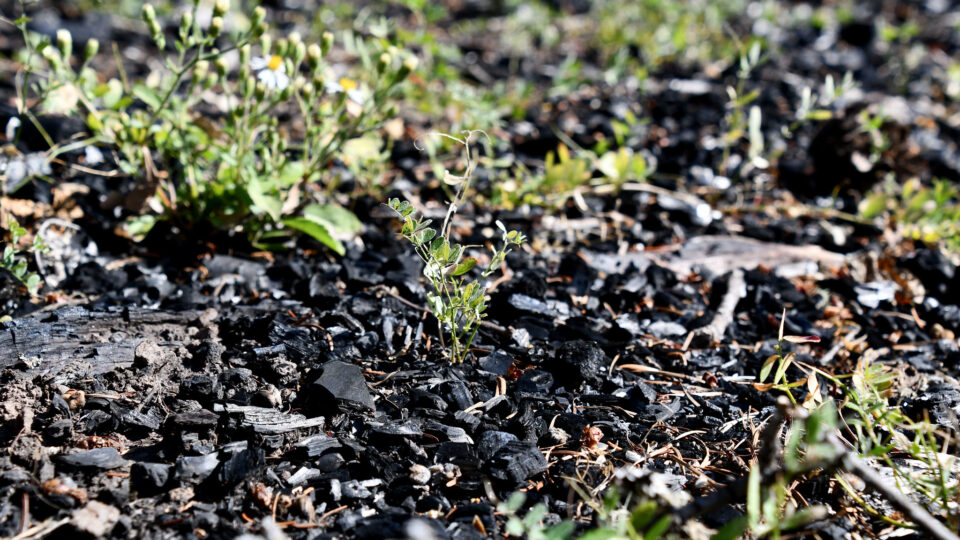
Biochar is a charcoal-like substance that is made by burning organic materials like crop and forestry wastes in a controlled process called pyrolysis, which is burning in an oxygen-deprived environment.  Pyrolysis produces little or no contaminating fumes and results in a stable form of carbon that can’t easily escape into the atmosphere.  Biochar is a very efficient way to convert carbon into a stable form.

Adding charred biomass to improve soil quality has been done for thousands of years.  Indigenous people in the Amazon added charcoal, food residue, and other waste to their soil.  When mixed with soil, biochar creates favorable conditions for root growth and microbial activities, which reduces greenhouse gas emissions. 

Last year, 125,000 tons of carbon dioxide were removed worldwide in the durable carbon market, which is a carbon credit marketplace for carbon removal.  About 93% of that was in the form of biochar. 

Biochar represents a value-added way to deal with agricultural waste and also to make use of dead trees in forests that should be removed to lower the risk of wildfires caused by the presence of all that dry tinder material. 

A bill to fund biochar research is pending before the Senate Agricultural Committee.  It is a rare example of bipartisan legislation.

Biochar is currently expensive to make in the US because large amounts of biomass must be shipped to one of the fewer than 50 small-scale production facilities in the country.   But with appropriate infrastructure, biochar could play an important role in efforts to sequester carbon and combat climate change.

**********

Web Links

Biochar Is ‘Low-Hanging Fruit’ for Sequestering Carbon and Combating Climate Change

Photo, posted September 3, 2019, courtesy of Tracy Robillard / NRCS via Flickr.

Earth Wise is a production of WAMC Northeast Public Radio

Storing carbon underground and abandoned wells

April 18, 2024 By EarthWise Leave a Comment

Energy companies pushing for expansion of underground carbon storage

Using government support in the form of subsidies and tax credits, energy companies and others are planning to capture millions of tons of industrial carbon dioxide emissions and pipe the greenhouse gas into underground storage.  It is a strategy enthusiastically supported by the fossil fuel industry because it allows them to keep burning the stuff.

There are currently 69 projects being reviewed by federal and state regulators seeking to store CO2 underground.  The sorts of places where carbon dioxide can be injected are geologic zones containing porous rock formations which, in no way coincidentally, are the same places where oil and gas deposits are found.  As a result, these places are studded with abandoned wells that have accumulated over the past century.

In Louisiana, there are about 120,000 abandoned wells that overlie geological zones that could store carbon dioxide.  Environmental watchdog groups have identified numerous abandoned wells within a few miles of proposed storage sites.

The problem is that abandoned wells leak – even ones that have been plugged – and many haven’t been.  The question is how much leakage will occur and what will be the consequences of the leakage.  In Texas, pumping oilfield wastewater into abandoned wells has led to geysers of toxic water, artificial saline lakes, and earthquakes.

Underground carbon dioxide sequestering on a scale large enough to really matter will have to extend to very large areas.  For example, injecting 100 million tons per year could create a pressurized zone as large as 100 miles.  How large a problem this might create from abandoned wells in the zone is not at all clear but cannot be ignored.

**********

Web Links

Companies Are Poised to Inject Millions of Tons of Carbon Underground. Will It Stay Put?

Photo, posted December 3, 2023, courtesy of Jason Woodhead via Flickr.

Earth Wise is a production of WAMC Northeast Public Radio

  • « Go to Previous Page
  • Page 1
  • Page 2
  • Page 3
  • Page 4
  • Interim pages omitted …
  • Page 11
  • Go to Next Page »

Primary Sidebar

Recent Episodes

  • An uninsurable future
  • Clean energy and jobs
  • Insect declines in remote regions
  • Fossil fuel producing nations ignoring climate goals
  • Trouble for clownfishes

WAMC Northeast Public Radio

WAMC/Northeast Public Radio is a regional public radio network serving parts of seven northeastern states (more...)
Copyright © 2026 ·