• Skip to primary navigation
  • Skip to main content
  • Skip to primary sidebar

Earth Wise

A look at our changing environment.

  • Home
  • About Earth Wise
  • Where to Listen
  • All Articles
  • Show Search
Hide Search
You are here: Home / Archives for cans

cans

Soda can hydrogen

August 15, 2025 By EarthWise Leave a Comment

Produce green hydrogen from soda cans

Hydrogen is an ideal climate-friendly fuel because it doesn’t release carbon dioxide when it is used.  But most hydrogen is produced in ways that result in significant carbon emissions. Thus, the search for green hydrogen goes on. 

Last year, engineers at MIT developed a new process for making hydrogen that significantly reduces the carbon footprint of its production.  The recipe uses seawater and recycled soda cans. 

Pure aluminum reacts with water, breaking up the water molecules to produce aluminum oxide and pure hydrogen.  But when aluminum is exposed to oxygen, it forms a shield-like layer that prevents the reaction.

The MIT researchers found that the shield can be removed by treating aluminum with a small amount of gallium-indium alloy.  Mixing the pure aluminum with seawater not only produces hydrogen, but the salt in the seawater precipitates out the gallium-indium, making it available for reuse.

The research team carried out a “cradle-to-grave” life cycle assessment of the process, taking into account every step in using the hydrogen-production process at an industrial scale.  They found that using recycled aluminum – chopped-up soda cans – is environmentally and economically superior to using “primary” aluminum, mined from the earth. The cans would be shredded into pellet and treated with the gallium-indium alloy.  The pellets would be processed near a source of seawater where they would be combined to generate hydrogen on demand.

According to their analysis, the hydrogen produced would be at least competitive economically and environmentally with other potential methods of producing green hydrogen.

**********

Web Links

Study shows making hydrogen with soda cans and seawater is scalable and sustainable

Photo, posted July 29, 2020, courtesy of Bruce Dupree via Flickr.

Earth Wise is a production of WAMC Northeast Public Radio
Are today’s refrigerants safe?

March 21, 2025 By EarthWise Leave a Comment

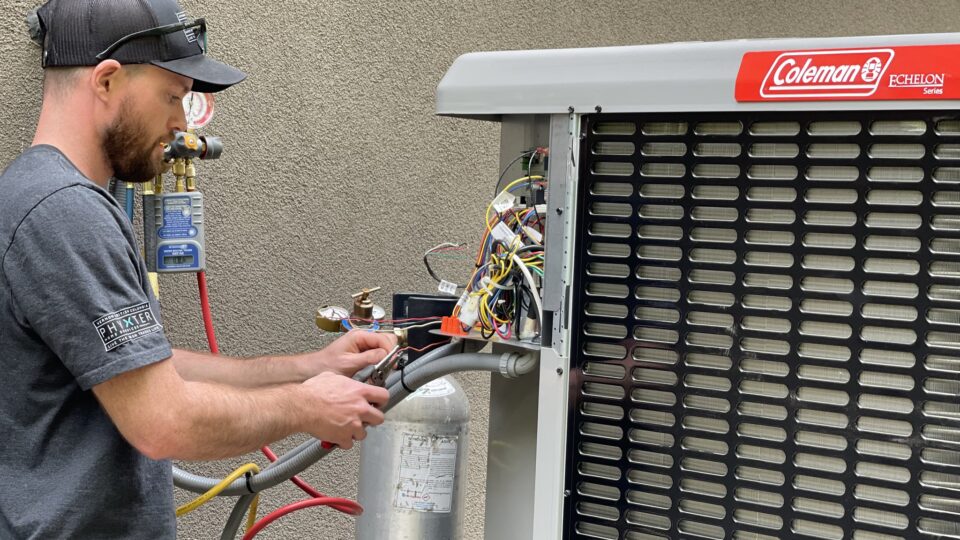
The refrigerants being used today may not be safe

Refrigeration is based on heat transfer mediums that absorb heat from the area being cooled and transfer it to the outside environment.

The earliest refrigerants were dangerous substances like ammonia.  In the 1930s, chlorofluorocarbons (CFCs) like Freon became the standard refrigerant for use in refrigeration systems and even in aerosol cans.  When these substances were found to be depleting the earth’s ozone layer, the Montreal Protocol dictated their phaseout and by the mid-1990s, CFCs were largely replaced by hydrofluorocarbons (HFCs).

HFCs don’t deplete the ozone layer, but they were eventually determined to be potent greenhouse gases, thousands of times more planet-warming than carbon dioxide.   As a result, the global phaseout of HFCs began in 2016, and have been increasingly replaced by hydrofluoroolefins (HFOs), which are considered a more environmentally-friendly alternative to all their predecessors.

Trying to not be surprised by additional unpleasant discoveries about refrigerants, researchers are studying the potential environmental impacts of HFOs.  Researchers at the University of New South Wales in Australia have found that HFOs can break down in the atmosphere and that some small amounts of the resultant products are in fact fluoroforms, which are the HFC with the greatest global warming potential and can stay in the atmosphere for up to 200 years.

That only a small amount of HFC gets into the atmosphere is good, but nevertheless it reveals that the consequences of replacing widely-used chemicals are not a simple matter to determine.

**********

Web Links

Are our refrigerants safe? The lingering questions about the chemicals keeping us cool

Photo, posted July 19, 2021, courtesy of Vernon Air Conditioning via Flickr.

Earth Wise is a production of WAMC Northeast Public Radio
Octopuses And Litter | Earth Wise

April 8, 2022 By EarthWise Leave a Comment

Octopuses are using ocean trash

Octopuses are remarkably intelligent animals.  They have a larger brain for their body size than all other animals apart from birds and mammals.  They exhibit high-order cognitive behaviors including tool use and problem solving.  Some captive octopuses learned to shoot jets of water at aquarium light switches to turn them off.  Others have learned to unscrew jar lids to get at food.

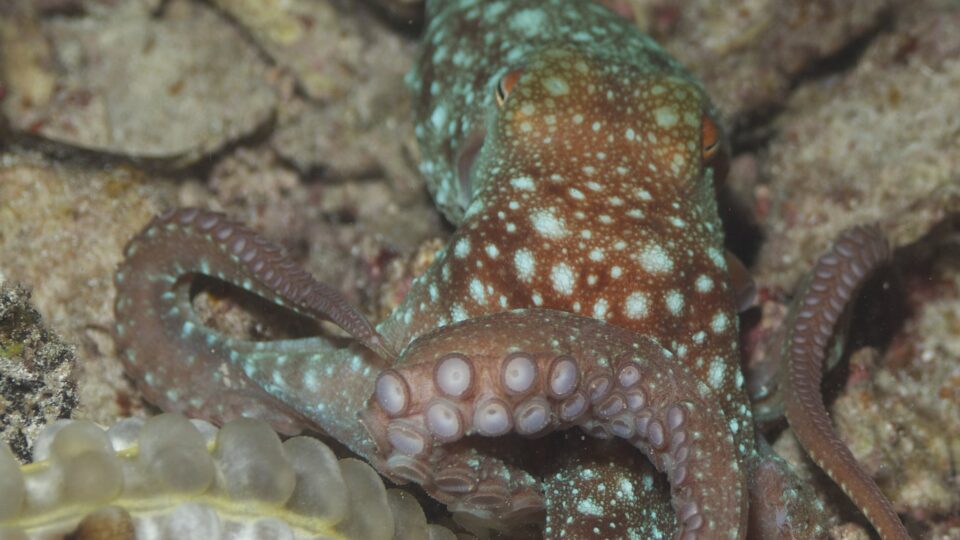
A recent analysis of underwater imaging has shown that octopuses are increasingly using discarded bottles, cans, and other human-generated litter as shelter or as a place to lay eggs.

The research documented 24 species of octopus sheltering inside glass bottles, cans, and even an old battery.  Some buried themselves under a mixture of bottle caps and seashells.  Others even carried plastic items around while walking on just two tentacles to disguise themselves from predators.

The octopuses showed a preference for unbroken items and for darker or opaque containers.  Normally, octopuses make use of natural shelters such as seashells.  Whether they are making use of litter simply because there is so much of it around or because there is an increasing lack of natural items is not clear.

As with all other aspects of the growing problem of litter in the oceans, this new trend is not a good one.  Sheltering or laying eggs inside discarded tires, batteries, or plastic items has the potential to expose octopuses to heavy metals and other harmful chemicals.

Octopuses are intelligent and resourceful animals, and they will use whatever they have at their disposal to continue sheltering or moving around with protection from potential predators.

**********

Web Links

Octopuses Have Learned to Make Use of Ocean Litter, Study Finds

Photo, posted May 13, 2014, courtesy of Elias Levy via Flickr.

Earth Wise is a production of WAMC Northeast Public Radio.

Cleaning Up Mount Everest

May 31, 2019 By EarthWise Leave a Comment

Mount Everest is the highest mountain above sea level with an elevation over 29,000 feet.  As such, it is a prime attraction for mountain climbers seeking that ultimate achievement.  The summit was first reached in 1953 and for a long time, only major expeditions by the best mountaineers sought to repeat the feat.

In recent years, climbing Everest has become much more common.  In fact, since 1953, more than 4,000 people have reached the summit of the world’s highest mountain.  A record 807 accomplished the feat last year alone.  Thousands more visit lower elevations.

But climbing Everest is neither safe nor easy.  Ice and snow, powerful winds, and generally harsh conditions make Everest a treacherous place.  Over the decades, hundreds of climbers have died on its slopes and many of their bodies are still up there.  Apart from human remains, there are decades worth of garbage left behind by hikers and tourists.

The government of Nepal has mounted an ambitious project to clean up the refuse on Mount Everest.  In just the first two weeks, volunteers removed more than three tons of trash from the mountain. Among the rubbish removed from Everest are tents, climbing equipment, bottles, cans, empty oxygen containers, and human waste.  They also discovered the bodies of four climbers that had emerged from melting snow and ice.

Helicopters carried a third of the garbage to Kathmandu for recycling.  The rest was taken to a local district for disposal in landfills.  The initial work started at Everest’s base camp.  They are next moving to sites higher on the mountain.  They hope to remove at least 10 tons of trash this year.

Nepal would like to make the world’s tallest mountain clean.

**********

Web Links

Volunteers Remove 3 Tons of Trash From Mount Everest in Two Weeks

Photo, posted May 23, 2012, courtesy of Gunther Hagleitner via Flickr.

Earth Wise is a production of WAMC Northeast Public Radio.

Legos And Plastics

October 23, 2018 By EarthWise Leave a Comment

https://earthwiseradio.org/wp-content/uploads/2018/10/EW-10-23-18-Legos-and-Plastics.mp3

Globally, consumers are voicing concerns about the impact of plastic waste on the planet. Conscious of these consumer concerns, many companies are trying to switch to recyclable or less-polluting packaging.  Some are even ditching plastics all together. 

[Read more…] about Legos And Plastics

Primary Sidebar

Recent Episodes

  • An uninsurable future
  • Clean energy and jobs
  • Insect declines in remote regions
  • Fossil fuel producing nations ignoring climate goals
  • Trouble for clownfishes

WAMC Northeast Public Radio

WAMC/Northeast Public Radio is a regional public radio network serving parts of seven northeastern states (more...)

Copyright © 2026 ·