• Skip to primary navigation
  • Skip to main content
  • Skip to primary sidebar

Earth Wise

A look at our changing environment.

  • Home
  • About Earth Wise
  • Where to Listen
  • All Articles
  • Show Search
Hide Search
You are here: Home / Archives for calculations

calculations

Potential for floating solar

July 16, 2024 By EarthWise Leave a Comment

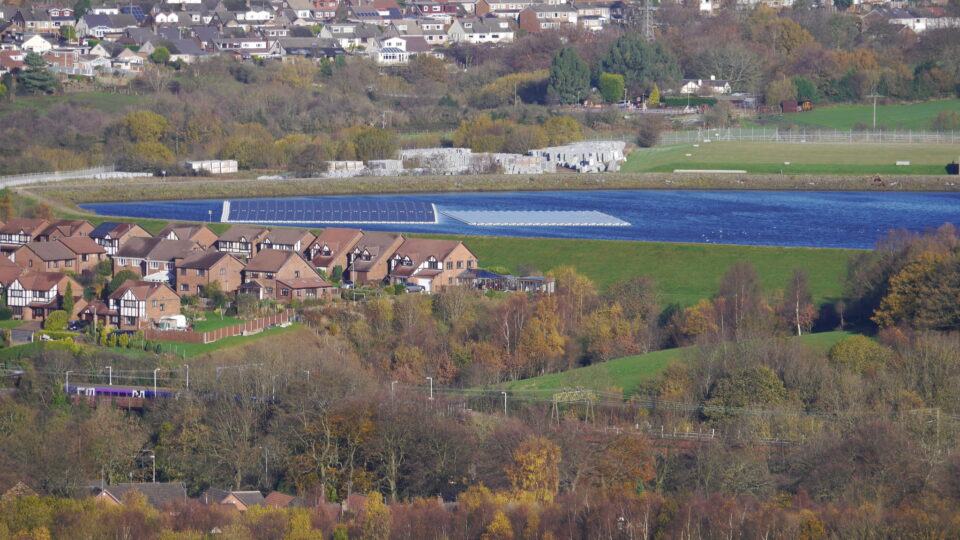
As installations of utility-scale solar power continue to expand around the world, there is the issue of where to put them.  They do take up considerable amounts of space and, in many places, available land is at a premium.

An alternative to taking up available land with solar panels is to deploy them on the surfaces of lakes and reservoirs.  A study by researchers at Bangor and Lancaster Universities in the UK calculated the potential electrical output for floating photovoltaic installation on nearly 68,000 lakes and reservoirs around the world.  The lakes and reservoirs selected were no more than 6 miles from a population center, were not in a protected area, and didn’t dry up and didn’t freeze for more than six months each year.  The calculations were based on covering just 10% of the surface area of the bodies of water.

The calculations were evaluated country-by-country.  Five countries could meet their entire electricity needs by floating installations including Papua New Guinea, Ethiopia, and Rwanda.  Many countries, mostly in Africa, South America, and Central Asia, could get between 40% and 70% of their electricity this way.  Most European countries could only meet a few percent of their electricity needs from floating solar, but even that could be significant. 

There are other benefits to floating solar apart from freeing up land.  The panels stay cooler, making them more efficient, and reservoirs lose less water through evaporation and the growth of algal blooms is reduced because there is less light reaching the water.

**********

Web Links

Some countries could meet their total electricity needs from floating solar panels, research shows

Photo, posted November 25, 2015, courtesy of Smabs Sputzer via Flickr.

Earth Wise is a production of WAMC Northeast Public Radio
Greenhouse Gas Emissions Are Still Increasing | Earth Wise

July 21, 2023 By EarthWise Leave a Comment

Greenhouse gas emissions are still rising

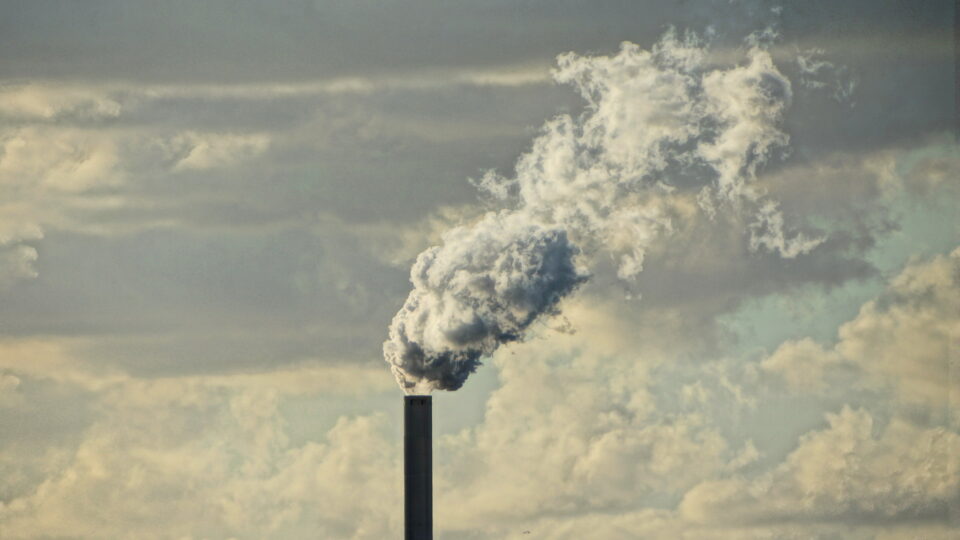
Recent research has found that the level of greenhouse gases emitted by human activity has reached an all-time high level of nearly 60 billion tons a year.  Despite increasing public attention, policy measures, and adoption of green technologies, the pace at which these changes have been taking place has simply not kept up with the ongoing burning of fossil fuels by increasingly industrialized societies.  The rate at which greenhouse gas emissions has increased over time has indeed slowed, but emissions need to start decreasing and as soon and as much as possible.

Human-induced warming has reached a ten-year average from 2013-2022 of 1.14 degrees Celsius above pre-industrial levels, up from a 1.07 degrees average between 2010-2019. 

Scientists have calculated a carbon budget that describes how much more carbon dioxide can be emitted before global warming exceeds the threshold of 1.5 degrees Celsius that is widely predicted to lead to potentially catastrophic changes to the climate.  In 2020, the Intergovernmental Panel on Climate Change calculated that the remaining carbon budget was about 500 billion tons of carbon dioxide.  Over the past three years, nearly half of that carbon budget has already been exhausted by the continuing onslaught of carbon emissions.

Researchers describe their study as a timely wake-up call that the pace and scale of climate action to date has been insufficient and that we need to change policy and approaches in light of the latest evidence about the state of the climate system.  Time is no longer on our side in trying to stave off the worst effects of climate change.

**********

Web Links

Greenhouse gas emissions at ‘an all-time high’, warn scientists

Photo, posted September 18, 2015, courtesy of In Hiatus via Flickr.

Earth Wise is a production of WAMC Northeast Public Radio

The Living Planet Index | Earth Wise

November 22, 2022 By EarthWise Leave a Comment

The World Wildlife Fund and the Zoological Society of London recently published the latest Living Planet Index, which is designed to measure how animal populations are changing through time.  The purpose is to provide an assessment of the health of ecosystems and the state of biodiversity.

The LPI only looks at the population of vertebrates:  birds, mammals, reptiles, amphibians, and fish.  The latest survey looked at how populations have changed between 1970 and 2018.  The results are that populations of these animal groups have declined by an average of 69% over that 48-year period.

This result highlights a very real and very severe crisis of biodiversity loss.  However, it does not mean that there are 2/3 fewer animals today than 48 years ago.  The way the index is calculated is to look at the changes in individual populations of over 5,000 different species.  Then these individual relative declines are averaged to get the result.  

There are shortcomings in the LPI.  For example, individual species that have seen massive population declines will bring the average down.  But even removing the outliers both of a negative and a positive impact does not dramatically change the result.

There is no perfect indicator for biodiversity and ecosystem health.  The Living Planet Index is nonetheless a useful metric and indicates that many species around the world are in decline.  Policymakers and environmental advocates need to make decisions about conservation and protection measures and this index is one tool they can use.

**********

Web Links

There’s a frightening new report about wildlife declines. But many are getting the story wrong.

Photo, posted October 12, 2019, courtesy of Visit Rwanda via Flickr.

Earth Wise is a production of WAMC Northeast Public Radio

Emissions From Global Computing

October 20, 2021 By EarthWise Leave a Comment

Global computing creates enormous amounts of carbon emissions

A recent study from Lancaster University in the UK has concluded that global computing is likely to be responsible for a greater share of greenhouse gas emissions than previously thought and that share is continuing to grow.

Previous calculations of the contributions from information and communications technology (or ICT) estimated that globally it accounts for 1.8 to 2.8% of total emissions.  According to the new study, these estimates likely fall short of the sector’s real climate impact because they only show a partial picture.

Prior estimates do not account for the full lifecycle and supply chain of ICT products and infrastructure.  They do not include the energy expended in manufacturing the products and equipment, the carbon cost associated with all the components in the products, and the operational carbon footprint of the companies producing those components. 

The study argues that the true contribution of ICT to global greenhouse gas emissions could be between 2.1 and 3.9%, which is more than the aviation industry.  Furthermore, the study warns that new trends in computing and ICT such as the use of big data and artificial intelligence, the so-called Internet of Things, and the use of blockchain and cryptocurrencies, risk driving further substantial growth in ICT’s greenhouse gas footprint.

It has been a commonly held believe that ICT and computing technologies lead to greater efficiencies across many other sectors, leading to savings in net greenhouse gas emissions.  According to the new study, the historical evidence indicates the opposite.  ICT has driven wide-ranging efficiency and productivity improvements, but the net result in emissions has been that they have been growing steadily.

**********

Web Links

Emissions from computing and ICT could be worse than previously thought

Photo, posted March 13, 2018, courtesy of Flickr.

XXXXXXXXXX

Protecting Nature Is Valuable | Earth Wise

April 15, 2021 By EarthWise Leave a Comment

Preserving nature is the best economic decision

A study by the University of Vermont, the University of Cambridge, and several other institutions compared the value of protecting nature at particular locations with that of exploiting it.   The study concluded that the economic benefits of conserving or restoring natural sites outweigh the profit potential of converting them for intensive human use.

The study analyzed dozens of sites across the globe – from Kenya to Fiji and China to the UK across six continents.  It was published in the journal Nature Sustainability.

The analysis utilized a methodology devised ten years ago called TESSA (the Toolkit for Ecosystem Service Site-based Assessment) which enables users to measure, and in many cases, assign monetary values to services provided by sites – clean water, nature-based recreation, crop pollination, and so on.  This is then compared with the economic benefits that can be derived by converting the site for farming, logging, or other human uses.

A major economic benefit of natural sites comes from their ability to sequester carbon and thereby help regulate the quantity of greenhouse gases in the atmosphere.  If one assigns a value to global society of $31 a ton of carbon removed, over 70% of the sites surveyed had a greater value to society when kept natural rather than being converted.  Many scientists actually consider this carbon price to be conservative.  Nevertheless, if carbon is assigned the paltry cost of $5 a ton, 60% of the sites are still more valuable in their natural state.

Beyond these economic calculations, there is the pressing issue that current rates of habitat conversion are driving a species extinction crisis unprecedented in human history.  But even if one is only interested in dollars and cents, conserving and restoring nature is now very often the best bet for human prosperity.

**********

Web Links

Economic Benefits of Protecting Nature Exceed Value of Exploiting it, Global Study Finds

Photo, posted June 7, 2017, courtesy of Mouli Choudari via Flickr.

Earth Wise is a production of WAMC Northeast Public Radio.

Clouds And Global Warming | Earth Wise

March 9, 2020 By EarthWise Leave a Comment

clouds global warming

Recent climate models from multiple organizations project that the amount of warming that doubling atmospheric carbon dioxide would cause would be much more than previously estimated.  And one of the significant changes to the models relates to the role of clouds.

Clouds have long been a major uncertainty in climate calculations.  Clouds can shade the earth and thereby provide cooling.  But clouds can also trap heat.  Which effect dominates depends on how reflective the clouds are, how high up they are, and whether it is day or night.  The dynamics of clouds are complicated.

If you fly across the ocean, you will see blankets of low clouds extending for hundreds of miles.  These marine stratus and stratocumulus clouds predominantly cool the Earth.  In fact, they shade roughly a fifth of the oceans and reflect 30-60% of the solar radiation that hits them back into space.

Recent studies indicate that as global temperatures rise, these clouds are likely to become thinner or burn off entirely, leaving more clear skies through which the sun may add another degree Celsius or more to global warming.

The concerns about clouds are part of the larger issue about feedbacks in warming the world.  It has long been clear that the greenhouse effect of doubling CO2 levels in the atmosphere would raise global temperature.  But there are amplifying feedback effects.  Melting large areas of snow and ice reduces reflectivity and allows the land and oceans to absorb more heat.  More water vapor entering the atmosphere traps more heat.  And now clouds are another concern.

Overall, these effects are leading to climate models predicting much larger global temperature increases, which is a scary prospect for the world.

**********

Web Links

Why Clouds Are the Key to New Troubling Projections on Warming

Photo, posted September 10, 2006, courtesy of Nicholas A. Tonelli via Flickr.

Earth Wise is a production of WAMC Northeast Public Radio.

A Record European Heatwave

August 1, 2019 By EarthWise Leave a Comment

Sahara Desert winds blasted Europe in June, especially during a five-day heatwave that set many records.  Between that and weather elsewhere, June was not only one of the hottest ever for that continent, but also for the world as a whole.

In Europe, the average temperature was about 5 degrees Fahrenheit above the June average of a century ago.  The global temperature was nearly 2 degrees Fahrenheit higher.

The European heatwave broke temperature records in France, Switzerland, Austria, Germany, and Spain.  A temperature above 114 degrees was recorded near the French city of Nîmes.

The intense heat lead to wildfires in Spain and Germany, and widespread disruption across Europe.  Undoubtedly, the heatwave has caused many premature deaths, but it will take some time to compile those statistics.  The European heatwave of 2003 caused more than 70,000 premature deaths.


According to calculations by climate scientists, the record-breaking heatwave in June was made at least 5 and as much as 100 times more likely by climate change.  Global heating caused by the carbon emissions from burning fossil fuels and other human activities means that heatwaves are becoming more probable and severe.  So-called attribution studies estimate how much more likely and severe such events are.

The researchers used temperature records stretching back to 1901 to assess the probability of a heatwave last month and in the past.  They also examined climate change models to assess the impact of global heating.  More than 230 attribution studies to date around the world have found that 95% of heatwaves were made more likely or worse by climate change.

It was the hottest June on record in Europe by a country mile and there are likely to be more months like it in the future.

**********

Web Links

Climate Change Made Last Month’s European Heatwave At Least Five Times More Likely

Photo, posted February 13, 2018, courtesy of Guilhem Vellut via Flickr.

Earth Wise is a production of WAMC Northeast Public Radio.

Primary Sidebar

Recent Episodes

  • An uninsurable future
  • Clean energy and jobs
  • Insect declines in remote regions
  • Fossil fuel producing nations ignoring climate goals
  • Trouble for clownfishes

WAMC Northeast Public Radio

WAMC/Northeast Public Radio is a regional public radio network serving parts of seven northeastern states (more...)

Copyright © 2026 ·