• Skip to primary navigation
  • Skip to main content
  • Skip to primary sidebar

Earth Wise

A look at our changing environment.

  • Home
  • About Earth Wise
  • Where to Listen
  • All Articles
  • Show Search
Hide Search
You are here: Home / Archives for birth

birth

California’s Silent Health Hazard | Earth Wise

April 23, 2021 By EarthWise Leave a Comment

California oil wells a silent public health hazard

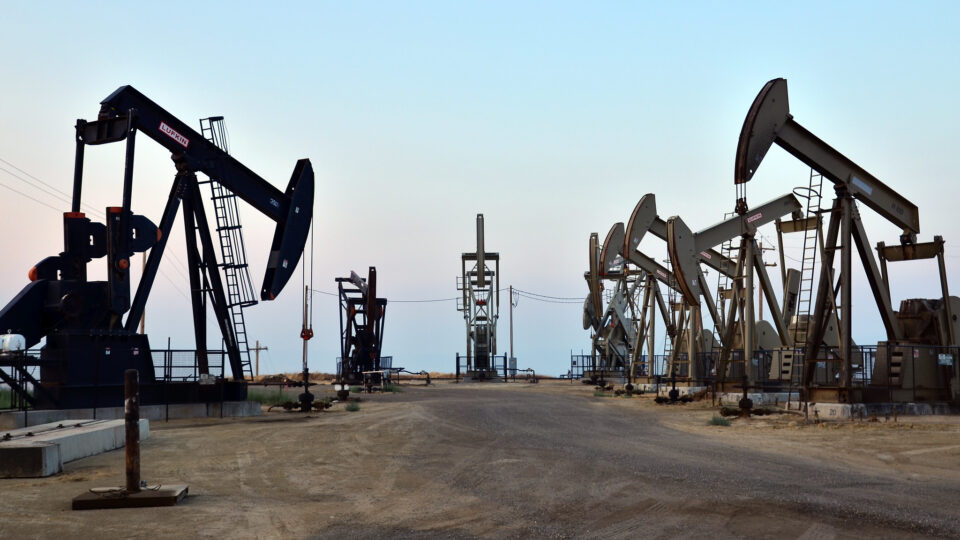
For people in the Los Angeles area, it is a familiar sight to see oil wells pumping away on hillsides, in residential neighborhoods, and other places.  In fancier parts of town, oil wells are hidden behind facades located next door to dry cleaners and lamp stores.

Every year, more than 140 million barrels of oil are extracted from the state of California, coming from a vast subterranean formation that spans nearly the entire state along the coast and spreading inland as well.  About 30% of the state’s oil comes from the Los Angeles area.

The oilfields are mostly old, and their wells played out.  As a result, high-tech drilling and a slew of toxic chemicals are needed to extract the last dregs of crude oil.

Unlike more rural oil-producing states, where oilfields might be uninhabited except for the people who work on them, drilling in California happens to a large degree in residential settings.  Over the years, it has become increasingly clear that certain chemical byproducts of oil extraction, among them benzene and hydrogen sulfate, can cause a variety of health problems.  For example, recent research has found connections between exposure to oil and gas well sites and spontaneous pre-term births, low-birthweight babies, and other adverse birth outcomes.

Statewide, little is being done to protect residents and schoolchildren from any of the suspected consequences of living near an oil or gas well.  Regulations are weak and spottily enforced because the oil industry still wields a lot of political power in the state.  Environmental groups and justice advocates are actively seeking to create new protections for California citizens, but it remains an uphill battle.

**********

Web Links

The Oil Well Next Door: California’s Silent Health Hazard

Photo, posted July 11, 2017, courtesy of John Ciccarelli / Bureau of Land Management California via Flickr.

Earth Wise is a production of WAMC Northeast Public Radio.
Global Warming And Sea Turtle Births | Earth Wise

January 11, 2021 By EarthWise Leave a Comment

Climate change poses a serious threat to sea turtles

Climate change is a serious threat to species whose sex is determined by temperature.  Among these are sea turtles.  Whether marine turtles are born male or female turns out to depend on the temperature of their nest during incubation.

Sea turtle nests need to be around 84.6 degrees Fahrenheit on average to produce a 50:50 sex ratio for embryos developing in eggs.  If temperatures are higher, embryos predominantly become female.  There is a transitional range of temperatures over which both males and females are produced.  Below that range, only males are produced; above that range, only females are produced.

According to recent research published in the journal Conservation Science and Practice, sand temperatures along the Red Sea exceeded the 84.6-degree threshold in all but one of the sites studied.  Some sites measured nearly 96 degrees.  The Red Sea region is home to five of the world’s seven species of sea turtles, including endangered green turtles and critically endangered hawksbill turtles.

Skewing the sex distribution of a species is a serious threat to the future survival of the population.

The Red Sea findings are similar to observations around the world.  In Florida, sea turtle hatchlings were born 100% female in seven out the past 10 years, and in the other three years, males only made up 10-20% of the brood.  In Australia’s Raine Island, the largest green turtle nesting ground in the Pacific Ocean, the ratio of female to male turtle hatchlings in 2018 was 116:1.

Marine turtles have been around since the late Triassic period and have adapted to previous climate shifts.  But the rapid pace of human-driven climate change is threatening the future survival of these creatures.

**********

Web Links

Rising Temperatures Driving a Shift to All-Female Sea Turtle Populations

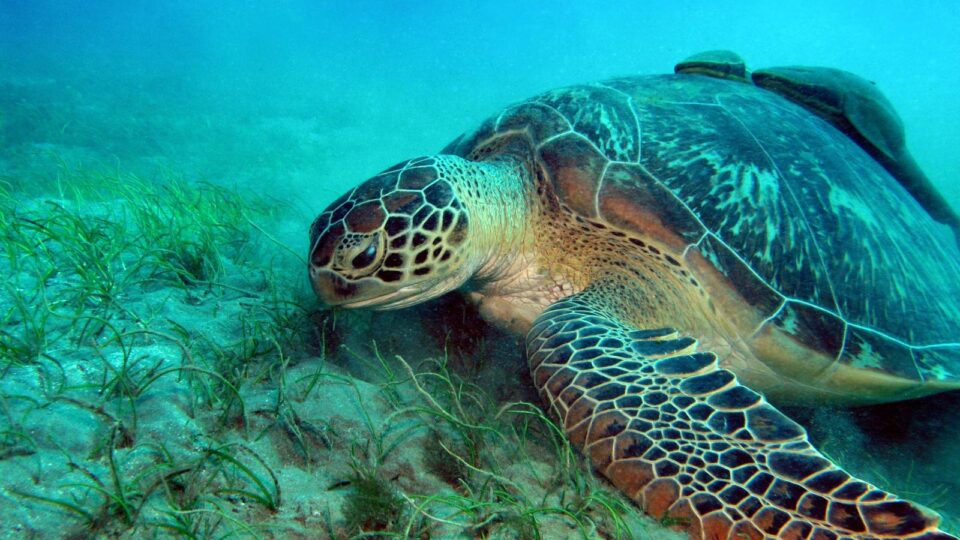
Photo, posted in October, 2005, courtesy of Frank_am_Main via Flickr.

Earth Wise is a production of WAMC Northeast Public Radio.
Climate Change And Dolphins

May 27, 2019 By EarthWise Leave a Comment

We don’t think of heatwaves as something that affects the ocean, but increasingly, as the planet warms, there have been instances where ocean water temperatures become much higher than normal for extended periods of time.  There has been much discussion of this phenomenon with regard to coral reefs where the catastrophic rise in coral bleaching events has been the result.

Recently, a study at the University of Zurich looked at the effects of ocean heatwaves on marine life higher in the food chain.  They studied the well-known dolphin population in Shark Bay, Western Australia.

In early 2011, a heatwave caused water temperatures in Shark Bay to rise more than 4 degrees above the annual average for an extended period.  This led to a substantial loss of seagrass, which is a driving factor in the Shark Bay ecosystem.

The researchers investigated how this environmental damage affected survival and reproduction of dolphins, using long-term data on hundreds of animals collected over a ten-year period from 2007 to 2017.

Their analysis showed that dolphins’ survival rate dropped by 12% and female dolphins were giving birth to fewer calves.  That phenomenon that began in 2011 lasted at least until 2017.

The researchers were surprised by the extent and the duration of the influence of the heatwave, especially the fact that the reproductive rate of dolphins had not returned to normal even after 6 years.

This study shows for the first time that marine heatwaves not only affect organisms at the lower levels of the food chain, but also might have considerable long-term consequences for the animals at the top, such as dolphins.

**********

Web Links

Climate change is a threat to dolphins’ survival

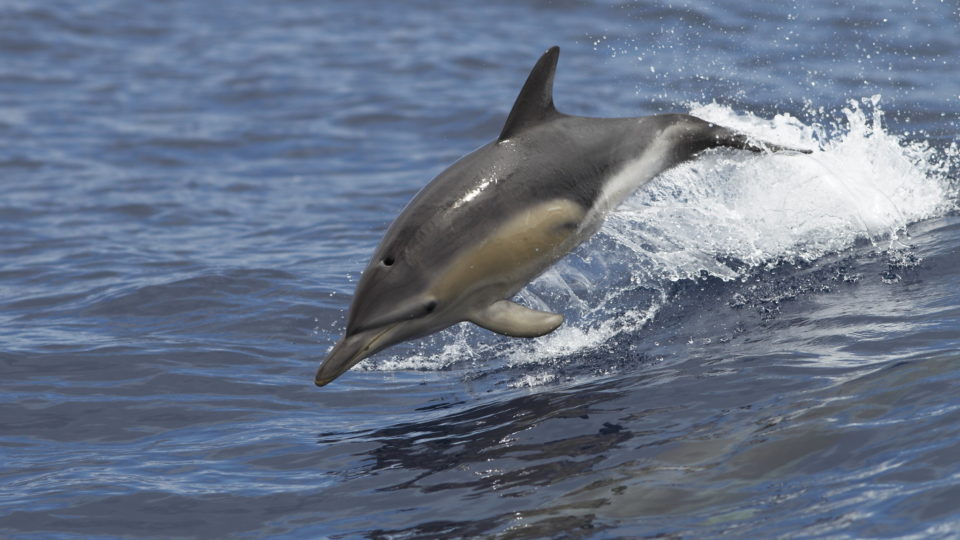
Photo, posted December 14, 2014, courtesy of Ed Dunens via Flickr.

Earth Wise is a production of WAMC Northeast Public Radio.

Primary Sidebar

Recent Episodes

  • An uninsurable future
  • Clean energy and jobs
  • Insect declines in remote regions
  • Fossil fuel producing nations ignoring climate goals
  • Trouble for clownfishes

WAMC Northeast Public Radio

WAMC/Northeast Public Radio is a regional public radio network serving parts of seven northeastern states (more...)

Copyright © 2026 ·